

How to Grow Zucchini and Summer Squash at Home
Few vegetables are as prolific and easy to grow as zucchini and summer squash. Here's how to get growing!
Quick Reference: How to Grow Zucchini
- Plant when: the soil is warm and the danger of frost has passed. Sow seeds directly into the ground.
- How deep: 1 to 2 seeds, 1 inch deep, 36 inches apart. Thin to one plant once two sets of leaves show.
- Light and water: full sun, with 1 to 2 inches of rain per week from one or two deep soakings.
- Soil: well-drained and amended with compost, pH 6.0 to 7.5.
- Harvest: early and often, 45 to 60 days from seed, when fruits are small, shiny, and 6 to 8 inches long.
- Watch for: squash bugs and squash vine borers, the two pests most likely to set a plant back.
Few vegetables are as prolific and easy to grow as zucchini and summer squash. The hardest part is figuring out what to do with the abundance of squash you will find yourself having. Plant a couple of hills in late spring and you can be picking fruit by midsummer of this 2026 season, often more than one family can eat. Here is how to get growing, from sowing the seed to keeping the squash bugs at bay.
How to Plant Zucchini and Summer Squash
Start: Sow directly into fertile, warm soil after the danger of frost has passed. Plant 1 to 2 seeds 1 inch deep and 36 inches apart. When the seedlings have two sets of leaves, thin to one plant. Squash resents being moved, so direct sowing beats transplanting in most gardens.
Water: Zucchini need plenty of water, 1 to 2 inches of rain per week. Keep the soil moist but not saturated. One or two deep waterings a week is better than many light ones, since deep soakings send the roots down where the moisture lasts.
Soil: Zucchini grow best in a well-drained soil amended with compost, at a pH of 6.0 to 7.5. Work in a few inches of finished compost before planting and the fast-growing vines will have the rich feeding they want.
Light: Full sun. Six to eight hours of direct sun a day keeps the plants vigorous and the fruit setting.
Fertilize: An all-purpose fertilizer with plenty of nitrogen will suffice for the fast-growing zucchini. Use it according to the manufacturer’s recommendations. Ease off once the flowers appear, since too much nitrogen late in the season grows leaves at the expense of fruit.
Harvest: Harvest early and often when the fruits are small and still shiny. Do not let fruits mature, as this may cause the plant to stop producing. To pick, twist the squash until it snaps off, or cut the stem with a knife.
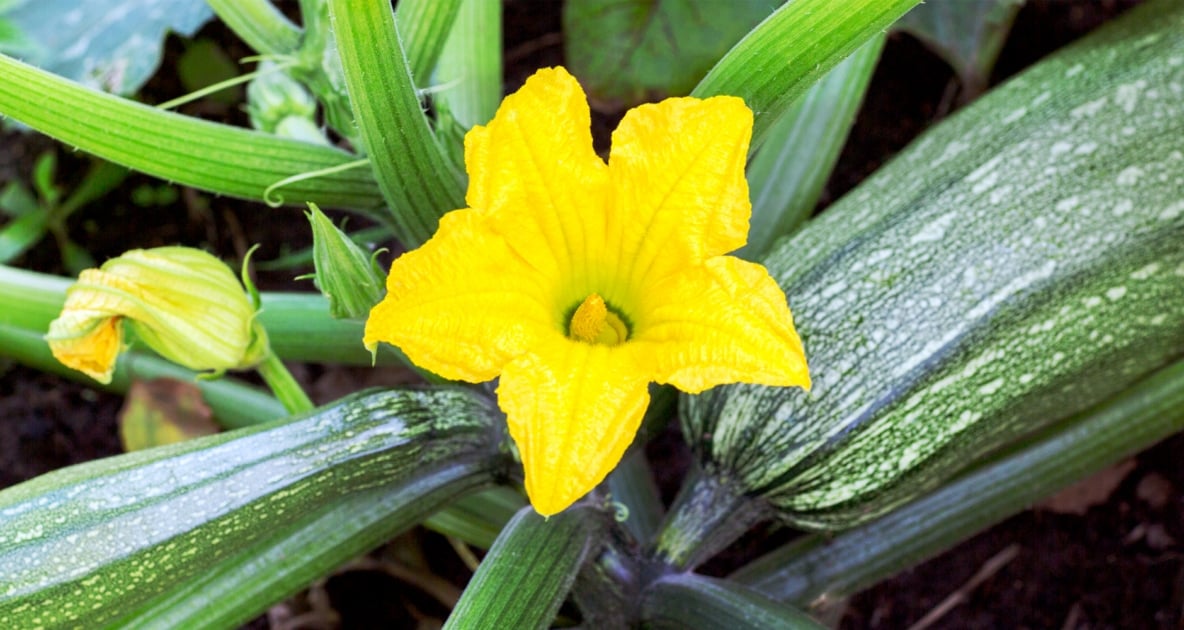
Notes: The male flowers are also delicious and can be stuffed and fried. Picking a few of them does no harm, since each plant carries far more male blossoms than it needs to pollinate the fruit.
Days to Maturity and Harvest Size
Summer squash is one of the quickest vegetables in the garden. Most varieties run 45 to 60 days from seed to first harvest, so a planting in late spring is ready by midsummer. Once the plants start producing, they keep at it for weeks if you pick steadily.
Size is the whole game. Pick zucchini at 6 to 8 inches long, while the skin is glossy and the seeds are still soft. Left on the vine, a fruit turns into a baseball bat overnight, the flesh goes pithy, and the plant reads the seed-bearing fruit as a signal to slow down. Check the plants every day or two at peak season, because squash hides under those big leaves and grows faster than you expect.

Common Pests: Squash Bugs and Vine Borers
Two pests give squash growers the most trouble. The squash bug is a flat, gray-brown insect that gathers on the undersides of leaves and lays clusters of bronze, oval eggs along the stems and leaf veins. The squash vine borer is the grub of a clear-winged moth, and it tunnels into the base of the stem, causing a healthy vine to wilt and collapse seemingly overnight.
Catch both early. Scout the undersides of the leaves a couple of times a week and crush any egg clusters you find. For vine borers, watch for a small hole near the base of the stem with sawdust-like frass around it, a telltale sign the grub is inside. Clemson University’s Home and Garden Information Center guide to cucurbit insect pests walks through identifying and managing both, region by region. Cleaning up old vines at the end of the season removes the overwintering spots and gives you a cleaner start next year.
Companion Plants for Zucchini
Squash keeps good company in the garden. Corn and beans are the classic partners in the old “Three Sisters” planting, where the corn gives shade, the beans feed the soil, and the squash leaves shade out weeds. Nasturtiums and marigolds tucked nearby help draw aphids and beetles away, and herbs such as oregano and dill bring in the pollinators that set your fruit. Keep squash away from potatoes, which compete hard for the same water and feeding. For a fuller pairing chart, see our companion planting guide.
Helpful Zucchini and Summer Squash Links
Farmer’s Almanac Gardening By the Moon Calendar
Companion Planting: 10 Veggies That Should Grow Together
There’s Still Time To Grow These 5 Summer Vegetables!
Zucchini and Summer Squash Recipes
When the harvest piles up, and it will, put it to work in the kitchen. Two reader favorites are a fine place to start.
Summer Vegetable Gratin
What Are Zoodles?

Growing Zucchini and Summer Squash: Frequently Asked Questions
How far apart should I plant zucchini?
Sow 1 to 2 seeds 1 inch deep and 36 inches apart, directly into warm soil after the danger of frost has passed. Once the seedlings have two sets of leaves, thin to one plant per spot so each vine has room to spread and air can move through the leaves.
How long does zucchini take to grow?
Most summer squash and zucchini varieties are ready 45 to 60 days from seed. A planting in late spring usually starts producing by midsummer, and the plants keep bearing for weeks as long as you pick the fruit steadily.
When should I pick zucchini, and how big should it be?
Pick early and often, while the fruits are small and shiny, usually around 6 to 8 inches long. Twist the squash until it snaps off, or cut the stem. Do not let fruits mature on the vine, because that signals the plant to stop producing.
How much water and sun does zucchini need?
Zucchini want full sun and 1 to 2 inches of rain or water per week. Keep the soil moist but not saturated, and give the bed one or two deep soakings a week rather than many light sprinklings, which keeps the roots growing down where moisture lasts.
What soil is best for growing squash?
Squash grow best in a well-drained soil amended with compost, with a pH between 6.0 and 7.5. Work a few inches of finished compost into the bed before planting, and feed with an all-purpose fertilizer that has plenty of nitrogen, following the manufacturer’s recommendations.
How do I get rid of squash bugs and vine borers?
Scout the undersides of the leaves twice a week and crush the egg clusters of squash bugs. For vine borers, watch for a hole and sawdust-like frass at the base of the stem. Clean up old vines at the end of the season to remove overwintering spots, which gives you a cleaner start the following year.
Can you eat zucchini flowers?
Yes. The male flowers are delicious stuffed and fried. Picking a few does no harm, since each plant produces far more male blossoms than it needs to pollinate the fruit. Leave enough flowers behind for the bees to do their work.


This article was published by the Staff at FarmersAlmanac.com. Any questions? Contact us at [email protected].
- Farmers' Almanac Staff

- Farmers' Almanac Staff

- Farmers' Almanac Staff

- Farmers' Almanac Staff




Can you plant in Mid August or later for squash and zucchini?
Can you plant squash in mid August or later
I have a lot of leaves and male flowers with my zucchini and squash but no females at all, how can I get the females to come? I saw it on my cucumber plants and now I have cucumbers growing but I don’t have any female squash or zucchini. What can I do?
Never plant zychini near strawberries !!! I learned this the hard way !!!
Why not?
My squash has wonderful very large leaves and blossom’s that bloom and fall off, but not squash has grown, just very large plants and leaves and a few blossom’s. What do I need to do?
pollinate the female flowers (easy to id…they have an immature, miniature squash at their base…the males have only thin, bare stalks at their bases). Take the pollen-stalk from a male flower and brush it onto the inner stigma of the female flower, before the female flower withers. You’ll see the miniature squash at the base begin to grow.
My squash plants are blooming, but plants are still small, should I cut the flowers off so the plants will mature more?