Lady’s Slippers: Legends, Lore, and How to Grow
If you're hiking in the woods and happen upon a group of these interesting-looking wild orchids, it's perfectly normal to get a little excited. Read about lady's slippers' interesting legends and how to grow them in your garden.
Quick Reference: Lady’s Slippers
- What they are: wild native orchids in the Cypripedium genus, with 58 species across the northern hemisphere.
- Common names: lady’s slippers, slipper orchids, moccasin flowers.
- Colors: pink, pink and white (showy), and yellow.
- Where they grow: shady North American woodlands, hardiness zones 3 through 8.
- Leave them be: many are protected. Do not pick or dig wild plants. Buy from a specialized grower instead.
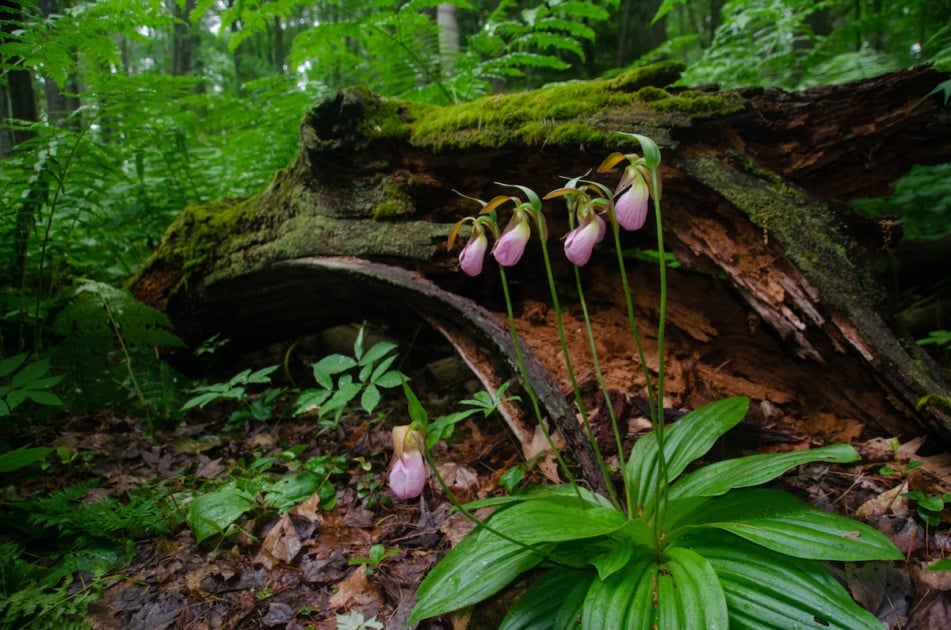
If you are walking a shady North American woodland this June and come upon a cluster of pink, pouch-shaped blooms rising on a single stem between two broad leaves, stop and look, but leave them where they stand. Lady’s slippers are among the continent’s most unusual wildflowers, a type of native orchid that folks have admired, protected, and told stories about for generations. They are easy to love and hard to keep, which is exactly why so much lore has grown up around them. Here is what these woodland orchids are, the colors they come in, the legend behind the name, and how to invite them into your own garden the right way.
Why Are They Called Lady’s Slippers?
Lady’s slippers come from the Cypripedium genus, which holds 58 different species of hardy orchids scattered all over the northern hemisphere. The genus name comes from two Greek words: cypris, which points to a Greek myth about Aphrodite, and pedilon, which means “sandal.” That is partly how the delicate flower earned its name, because the pouched bloom looks like a tiny lady’s slipper or moccasin. You will often hear them called “slipper orchids” or “moccasin flowers.”
The pink lady’s slipper, Cypripedium acaule, is the state wildflower of New Hampshire and the provincial flower of Prince Edward Island, Canada.
The Many Colors of Lady’s Slippers
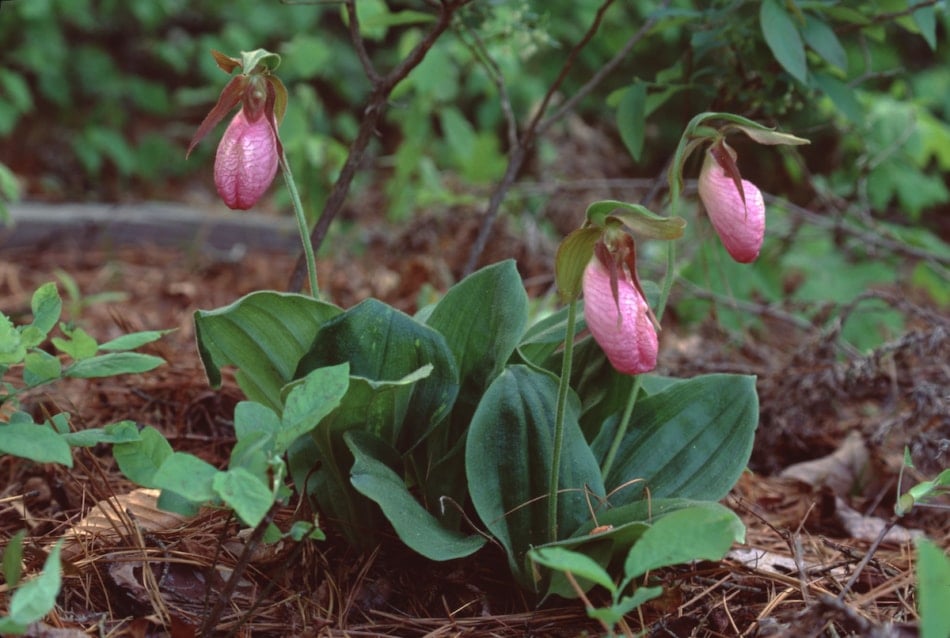
Lady’s slippers are not always pink. Another variety found in the east, with a range stretching as far west as Minnesota, is the showy lady’s slipper (Cypripedium reginae). This is a pink and white bloom, and it is also Minnesota’s state flower.
The Cypripedium parviflorum is a yellow variety that grows wild in the eastern half of North America along with western portions of the U.S. and Canada that take in the Rocky Mountains and Yukon regions.
- Pink: Cypripedium acaule, common in eastern woodlands and New England.
- Pink and white (showy): Cypripedium reginae, ranging as far west as Minnesota.
- Yellow: Cypripedium parviflorum, eastern North America and west into the Rockies and Yukon.
Legends and Lore
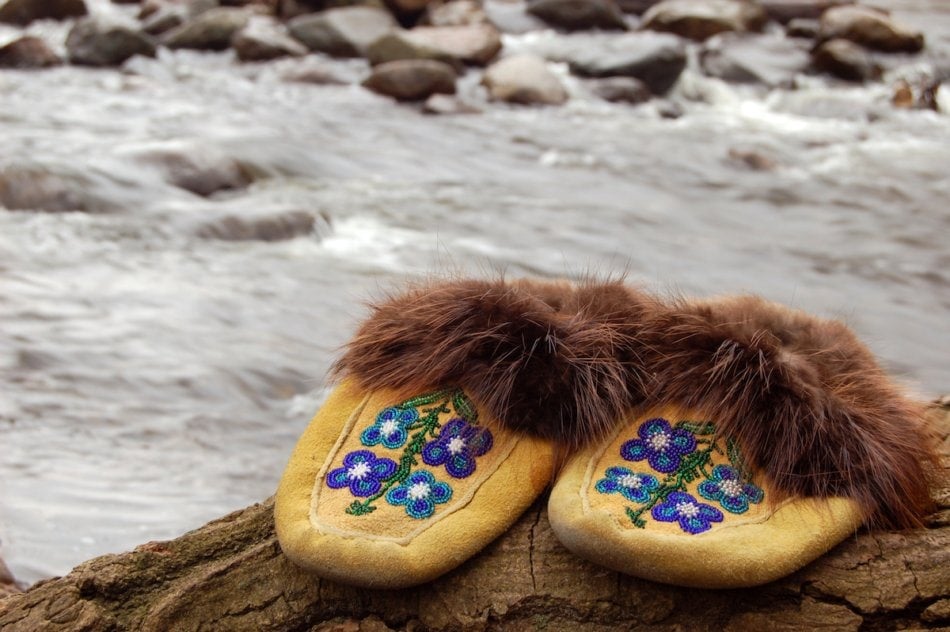
These flowers carry an interesting tale. While it is a common bit of folklore among Native Americans in the east, it also turns up in western folklore. Some attribute this story to the Ojibwe people, who lived in areas around the U.S. Great Lakes and Canada.
According to the legend, one winter had been a particularly hard one, with many people falling ill. They were in desperate need of medicine, but most of the men who would normally make the journey were too sick to go. So a woman snuck out of the village one night to get help for her people.
The woman reached the next village, got the medicine, and started her trip home, but the snow and ice made for a difficult journey. She kept going, yet as she drew closer to home the way grew harder, and eventually she found herself unable to walk. People from the village rescued her and carried the medicine back, saving not only her life but the lives of those who had fallen ill. And, as the legend goes, tiny slipper-like flowers grew in the places where her moccasins left prints in the snow, a reminder of her bravery and courage.
It is a fitting origin for a flower shaped like a moccasin, and it is part of why so many people still treat the lady’s slipper with a measure of respect when they meet one in the woods.
Want more flower lore? Read the stories behind these flowers.
Are Lady’s Slippers Endangered?
The pink lady’s slippers that grow wild in New England are listed as endangered, threatened, or given “special concern” status, so picking or digging them up is discouraged. The reasons are simple: the plant cannot rejuvenate itself once picked, it takes many years to grow from seed to maturity, and it has a low rate of survival when transplanted. Because of all that, great care is taken to protect them.
Regulations on picking or transplanting lady’s slippers vary from state to state, so the safest course is to leave them alone if you find them in the wild. Take a photograph, mark the spot in memory, and let the next hiker enjoy the same surprise.
Growing Lady’s Slippers In The Garden
Because picking or digging up native lady’s slippers is discouraged, we recommend obtaining a plant from a specialized grower. Reputable nurseries propagate them from seed or division, which means you can enjoy the flower at home without taking one from the woods.
Depending on the species, most lady’s slipper orchids do well in hardiness zones 3 through 8. They are a hardy rhizome that prefers cool ground and plenty of shade. Give them a spot with dappled light that mimics a forest setting and they will be far happier. They like well-aerated, well-drained soil, nothing soggy that might rot the roots.
When planting, take care not to bury them too deep. In fact, rather than “planting” these orchids, many growers simply stretch the bare roots out over the surface of the soil and cover them with a light layer of mulch or shredded bark. If you do choose to plant them, keep the base of the plant about 1/4 to 1/2 inch below the soil line, and no more.
While lady’s slippers can be a little tricky to grow, the results are worth it. For anyone who is into woodland or wildflower gardening, or a mixture of both, these are a must have.
Where and When to Find Lady’s Slippers in the Wild
Lady’s slippers favor cool, shaded, moist woodlands, often near pines, hemlocks, or hardwoods where the soil stays acidic and the leaf litter holds moisture. Bloom time runs roughly from late spring into early summer, May into June across much of the range, a little later the farther north you go. The chart below is a general guide; conditions in your own woods always have the final say.
Wherever you find them, the rule is the same: look closely, take a picture, and leave the plant in the ground for the years of slow growth still ahead of it. For more woodland and wildflower reading, browse our folklore stories.

Lady’s Slippers: Frequently Asked Questions
Why are they called lady’s slippers?
The pouch-shaped bloom looks like a tiny slipper or moccasin. The genus name Cypripedium comes from the Greek cypris, tied to a myth about Aphrodite, and pedilon, meaning “sandal.” That is why you will also hear them called slipper orchids or moccasin flowers.
What colors do lady’s slippers come in?
Mainly three. The pink lady’s slipper (Cypripedium acaule), the pink and white showy lady’s slipper (Cypripedium reginae), and the yellow lady’s slipper (Cypripedium parviflorum). All are native wild orchids of North American woodlands.
Are lady’s slippers endangered or protected?
Many are. Pink lady’s slippers in New England are listed as endangered, threatened, or of special concern, and rules vary from state to state. They cannot rejuvenate once picked, take many years to mature from seed, and rarely survive transplanting, so the best practice is to leave wild plants where they grow.
Can I dig up a wild lady’s slipper for my garden?
No. Digging up wild plants is discouraged and is illegal in many places. Instead, buy a nursery-propagated plant from a specialized grower so you can enjoy the orchid at home without harming a protected wild population.
How do you grow lady’s slippers in the garden?
Most do well in hardiness zones 3 through 8 in cool, shady ground with well-drained soil. Many growers lay the bare rhizome roots on the soil surface and cover them with light mulch rather than burying them. If you plant them, set the base only 1/4 to 1/2 inch below the soil line.
Which states claim a lady’s slipper as their flower?
The pink lady’s slipper is the state wildflower of New Hampshire and the provincial flower of Prince Edward Island, Canada. The showy lady’s slipper is the state flower of Minnesota.
When do lady’s slippers bloom?
Most bloom from late spring into early summer, generally May into June across much of their range, and a little later the farther north you go. Look for them in cool, shaded, moist woodlands.


Amber Kanuckel
Amber Kanuckel is a freelance writer from rural Ohio who loves all things outdoors. She specializes in home, garden, environmental, and green living topics.
- Amber Kanuckel

- Amber Kanuckel
- Amber Kanuckel
- Amber Kanuckel