Grow Eggplant: When to Plant, Feed, and Harvest
Quick Reference: Growing Eggplant
- Start indoors: 6 weeks before your last spring frost, then harden off before transplanting.
- Warm-season crop: eggplant loves heat, so wait until the soil is warm, around 60 to 70 degrees, before setting plants out.
- Spacing: 24 to 36 inches apart in full sun, in well-drained soil rich with compost.
- Water and feed: 1 to 1 1/2 inches of water per week, plus a balanced 10-10-10 fertilizer every two weeks.
- Harvest: usually 60 to 80 days after transplanting, when the skin is glossy and springs back from a fingertip press.
If you love grilling, then plant some eggplant this 2026 garden season. Eggplant steaks are great on the grill, and this is a vegetable that you can easily grow in containers if you do not have a lot of space. Eggplant is a warm-season crop and a relative of the tomato, so it asks for the same things tomatoes do: heat, sun, and steady water. Get the timing right and a couple of plants will keep a kitchen in glossy purple fruit all summer long.
When to Plant Eggplant
Eggplant is a warm-season vegetable with no tolerance for cold, so timing is everything. Start eggplants indoors 6 weeks before your last spring frost date. About two weeks before transplanting, take the seedlings outside daily and place them in a sheltered location to harden them off, easing them into wind and direct sun so the move outdoors does not set them back.
Do not rush the seedlings into cold ground. Eggplant wants warmth, and the University of Minnesota Extension notes that it grows best when daytime temperatures hold between 70 and 85 degrees, with the soil warmed to roughly 60 to 70 degrees before transplanting. You can read their full guide to growing eggplant to confirm the window for your own ground. When the soil is warm and the danger of frost has passed, space your plants 24 to 36 inches apart.
| Region | Average last frost | Set out eggplant |
|---|---|---|
| Deep South and Gulf Coast | Late February into March | March |
| Mid-South and Southern Plains | Mid to late March | Late March into April |
| Mid-Atlantic and Ohio Valley | Mid to late April | Mid May |
| Midwest and Great Lakes | Early to mid May | Late May into early June |
| Northeast and New England | Mid to late May | Early to mid June |
| Mountain West and Pacific Northwest | Mid May into early June | Early to mid June |
- Eggplant is grown for its above-ground fruit, so favor the light, or waxing, of the Moon for transplanting.
- The Gardening by the Moon Calendar lists this month’s Best Days to plant in your area.

How To Plant Eggplant
Start: Start eggplants indoors 6 weeks before the last frost date. Take them outside daily and place them in a sheltered location for a couple of weeks to harden them off before transplanting in the garden. When you are ready to plant, space them 24 to 36 inches apart. Our Vegetable Seed Starting Chart can help you count back from your frost date.
Water: Keep soil evenly moist but not too wet. About 1 to 1 1/2 inches of rain per week is ideal, and a layer of mulch helps hold that moisture through the heat of summer.
Soil: Soil should drain well, and it is a good idea to mix in plenty of compost to keep the soil soft and nutrient-rich. Eggplant roots resent sitting in soggy ground, so a raised bed or amended plot pays off.
Light: Full sun. Eggplant needs all the warmth and light it can get, so pick your brightest spot.
Fertilize: Eggplants are heavy feeders, so use a balanced 10-10-10 liquid fertilizer every two weeks to keep them producing. This is a relative to tomato plants, so if you have tomato fertilizer, this works well, too.
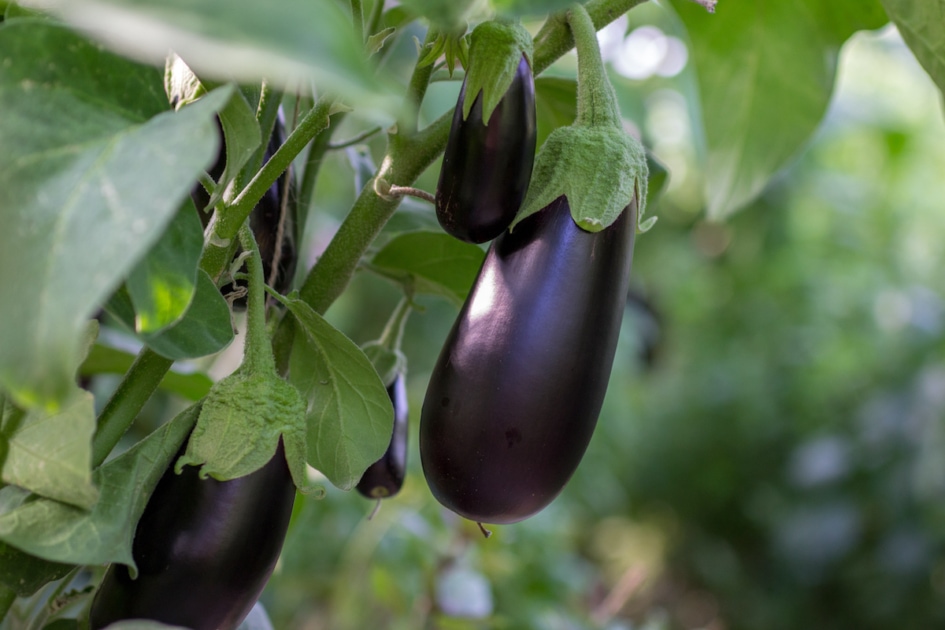
Harvest: Eggplant harvesting is all about the timing. Too soon, and they will not be fully developed, but if you harvest too late, they will turn bitter. Most varieties are ready 60 to 80 days after transplanting. To know when the time is right, look for glossy skins. If the eggplant is shiny, and if you can press it gently with a fingertip without leaving a dent, then it is ready. Snip it away from the plant with pruning shears.
Notes: Many eggplant varieties bear very large fruits, so it is best to stake these plants to keep them from toppling over.
Common Eggplant Pests and Problems
Eggplant has one pest that shows up almost everywhere it is grown: the flea beetle. These tiny dark beetles chew small round holes in the leaves, peppering them like buckshot, and a heavy infestation can stunt or kill young transplants. Healthy, well-fed plants usually shrug off the damage, but it is worth watching the youngest seedlings closely. A floating row cover laid over the plants until they are established keeps the beetles off, and good fall cleanup removes the spots where they overwinter.
Because eggplant is a tomato relative, it can also pick up the same soil-borne troubles, so rotate it to a fresh spot each year rather than planting it where tomatoes, peppers, or potatoes grew last season.
Companion Plants for Eggplant
Eggplant gets along with beans, which feed the soil with nitrogen, and with leafy greens like spinach and lettuce that finish before the eggplant fills out. Marigolds and nasturtiums planted nearby help draw pests away from the fruit. Keep eggplant away from its close cousins, since tomatoes, peppers, and potatoes compete for the same nutrients and share the same diseases. For a fuller pairing chart, see our companion planting guide.
Helpful Eggplant Growing Links
Farmer’s Almanac Gardening By the Moon Calendar
Companion Planting: 10 Veggies That Should Grow Together
Eggplant Recipes & Tips
Once the harvest comes in, the kitchen is where eggplant earns its keep. Slice it thick for the grill, or pick the firmest, glossiest fruit at the market when your own crop runs short.
Roasted Eggplant On the Grill!
Selecting the Perfect Eggplant

Growing Eggplant: Frequently Asked Questions
When should I plant eggplant?
Start eggplants indoors 6 weeks before your last spring frost, harden them off, and transplant only after the soil has warmed to roughly 60 to 70 degrees and frost has passed. Eggplant is a warm-season crop with no cold tolerance, so soil warmth, not the calendar, is the real trigger.
How far apart do you space eggplant?
Space eggplant transplants 24 to 36 inches apart in full sun. Give the plants well-drained soil mixed with plenty of compost, and stake the larger varieties so the heavy fruit does not topple them.
How do I know when eggplant is ready to harvest?
Look for glossy skin, usually 60 to 80 days after transplanting. If the fruit is shiny and springs back when you press it gently with a fingertip without leaving a dent, it is ready. Harvested too soon it is underdeveloped, too late it turns bitter. Snip the fruit free with pruning shears.
How often should I water and feed eggplant?
Keep the soil evenly moist with about 1 to 1 1/2 inches of water per week. Eggplants are heavy feeders, so apply a balanced 10-10-10 liquid fertilizer every two weeks. Tomato fertilizer works well too, since eggplant is a close relative of the tomato.
What is eating holes in my eggplant leaves?
Small round holes peppered across the leaves are the work of flea beetles, the most common eggplant pest. Healthy plants usually outgrow the damage, but a floating row cover over young transplants keeps the beetles off until the plants are established.
Can you grow eggplant in containers?
Yes. Eggplant is one of the easier vegetables to grow in containers when garden space is short. Use a large pot with good drainage, full sun, rich potting mix, and the same steady water and feeding schedule you would give a garden plant.


This article was published by the Staff at FarmersAlmanac.com. Any questions? Contact us at [email protected].
- Farmers' Almanac Staff

- Farmers' Almanac Staff

- Farmers' Almanac Staff

- Farmers' Almanac Staff