

Poppy Flower: Meaning, Symbolism, and How to Grow It
Have you ever wondered if the poppy seeds on the bagel you’re eating come from the same poppy flower that produces opium? They actually do, but they have been scrubbed of the milky substance which forms illegal narcotics and therefore are perfectly safe to eat. Don’t be alarmed: The poppy flowers growing in your backyard are a different species! There are 120 varieties of poppies, only one of which you cannot grow in the US. Learn all about poppy flower history, nutrition, folklore, and tips for growing. Read on.
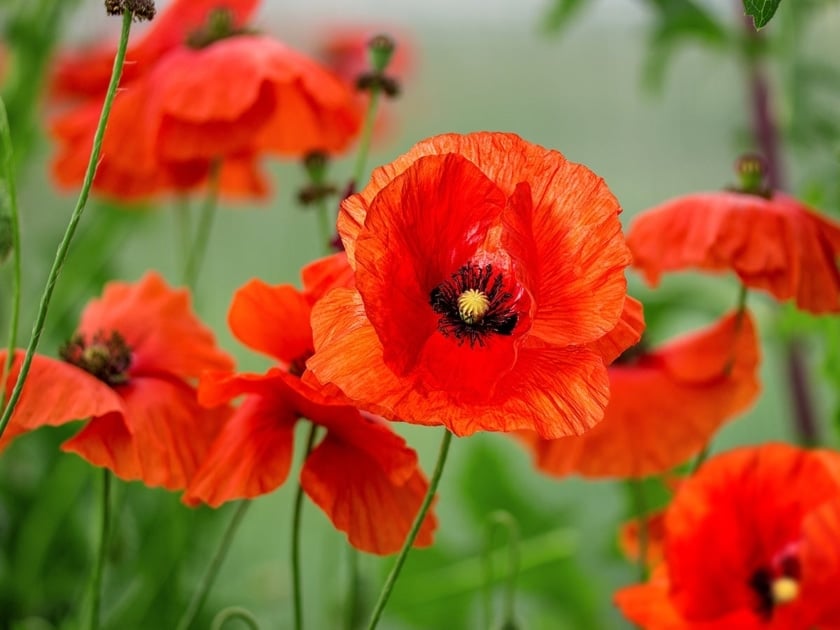
Poppy Flower: Quick Reference
- What it symbolizes: Remembrance, eternal sleep, and resurrection, all in one bloom
- Where it comes from: Cultivated since 2700 BC in the Mediterranean Basin
- Day of remembrance: Worn on Memorial Day (May 30) in the United States and Remembrance Day (November 11) in the United Kingdom and Canada
- Grows best in: Full sun and well-drained soil, hardy across USDA Zones 3 to 9 depending on the variety
- How to plant: Surface-sow the tiny seeds in cool weather and do not press them deep
- One caution: Do not grow or harvest breadseed (opium) poppies; choose an ornamental species instead
The poppy flower has been planted, painted, and pinned to lapels for more than 4,700 years. Its papery blooms have graced flowerbeds and battlefields alike, and yes, the same plant family tied to the opium trade also gives us the poppy seeds on your morning bagel, scrubbed clean of any milky residue and perfectly safe to eat. With more than one hundred varieties in nearly every color, the poppy flower is equal parts garden showpiece, ancient symbol, and kitchen staple. Here is what it means, where its folklore comes from, and how to grow it yourself.
Poppy Flower History
The recorded history of the poppy flower dates back to 2700 BC, when it was grown and cultivated in the Mediterranean Basin for its medicinal and recreational use, primarily as a mild sedative. The plant is now found all over the world, and its pain-relieving properties remain the base source from which morphine and codeine are extracted, as the Encyclopaedia Britannica notes in its account of the genus.
That long medical history is exactly why the flower carries such mixed feelings. The everlasting-sleep scene in The Wizard of Oz leans on it, and the bloom can still get a bad rap for its hand in the opium trade. Yet the vast majority of garden poppies are simply beautiful, drought-tough flowers with no place in that story at all.

How to Identify a Poppy: What It Looks Like
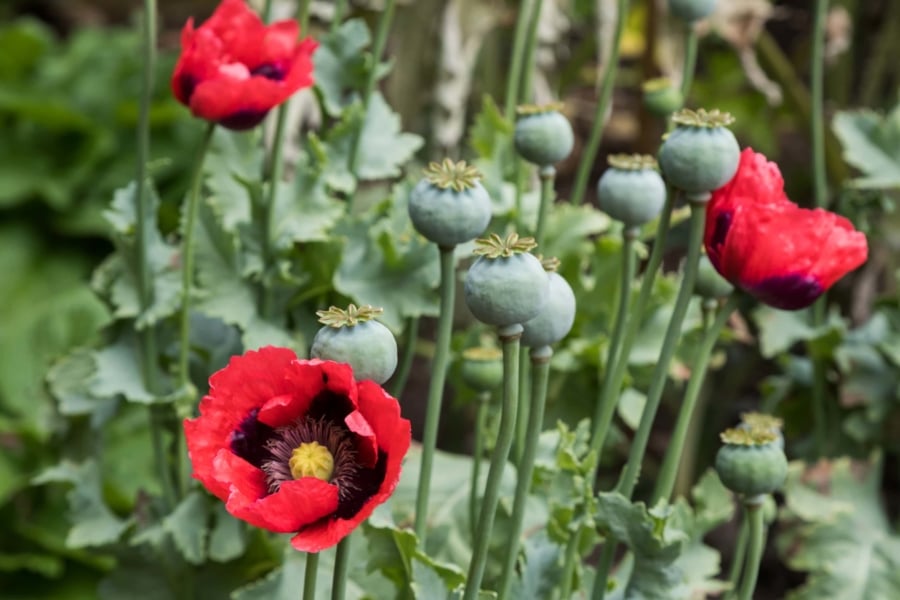
Poppies are easier to identify than most wildflowers once you know the four things to look at: petal count, the stem hairs, the sap, and the seed pod.
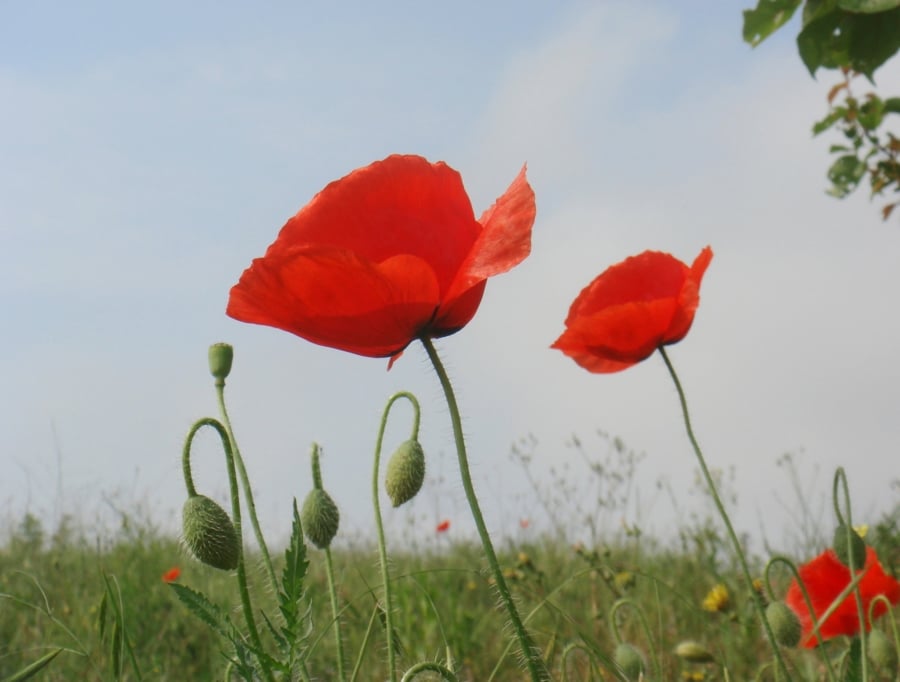
- Petals. The common red field poppy carries four petals, usually with a black blotch at the base, overlapping slightly like crumpled tissue paper. The California poppy also has four, silkier and unmarked. Doubled ornamental cultivars are the exception and can carry many more.
- Size. Field poppy blooms run 2 to 4 inches (5 to 10 cm) across on plants up to about 28 inches (70 cm) tall. California poppies are a little smaller, 2 to 3 inches.
- Stem. Coarse hairs stand out from the field poppy’s stem at right angles, almost bristly. Run a thumb up it and you will feel them.
- Sap. Break a leaf or stem and a white to yellowish milky latex bleeds out. That latex is mildly poisonous to grazing animals, which is part of why poppies persist in pasture edges.
- Seed pod. After the petals drop, a smooth egg-shaped capsule is left, topped with a flat crown-like stigma. It is hairless, and less than twice as tall as it is wide.
One detail surprises people: a single poppy flower lasts about one day. A field that looks unchanged for weeks is replacing its blooms constantly, and one well-grown plant can throw up to 400 flowers across a warm season. That is why cut poppies are best taken in bud, which we cover further down.
| Feature | Field poppy (Papaver rhoeas) | California poppy (Eschscholzia californica) |
|---|---|---|
| Petals | 4, red, usually black-blotched | 4, silky, orange to yellow |
| Flower width | 2 to 4 inches | 2 to 3 inches |
| Height | Up to 28 inches | Typically 12 to 18 inches |
| Foliage | Coarse, hairy, toothed | Fine, blue-green, feathery |
| Native range | North Africa, temperate Eurasia | Western United States and Mexico |
Why Are Poppies Called Poppies?
The word arrives in English early and barely changes. Late Old English had popig or popæg, which came through West Germanic from the Latin papaver, the Roman name for the plant. Middle English turned popi into the modern spelling, and the Latin survives in the botanical name every gardener still uses: Papaver rhoeas for the red field poppy, Papaver somniferum for the opium poppy, where somniferum means “sleep-bringing.”
The family name follows the same root. Papaveraceae covers roughly 800 species, which is why the California poppy sits in the poppy family without being a Papaver at all. Its name, Eschscholzia californica, honours the naturalist Johann von Eschscholtz rather than describing the plant.
Poppy Flower Mythology
Poppies played a significant role in ancient mythology and medicine. They have been found in Egyptian tombs dating back thousands of years and are believed to have been linked to the Egyptian veneration of gods, appearing in their jewelry and furniture.
The ancient Greeks regarded poppies as a source of fertility, health, and strength. Greek athletes consumed a mixture of poppy seeds, honey, and wine to improve performance. In Greek mythology, the poppy flower is associated with Morpheus, the god of sleep and dreams. The drug morphine, derived from poppies, is named after him.
The Greek gods are said to have given Demeter, goddess of agriculture and harvest, poppies to help her sleep. She was grieving because her daughter, Persephone, had been abducted by Hades, god of the underworld, and poppies sprang up from Demeter’s footsteps. The flower also turned up at the cave of Hypnos, the god of sleep. Nyx, the goddess of night, and her brother Hypnos are both tied to the poppy as well.
Predating Greek mythology, the Assyrians called the poppy the “daughter of the fields” for its bond with agriculture and its knack for nourishing the soil and grains. To them it was a symbol of life, fertility, and death all at once.
What Does the Poppy Flower Symbolize?
The poppy stands for remembrance, sleep, and consolation. Those three run through almost every tradition that has taken the flower up. Remembrance is the one most people know, from the red poppies worn each November and each Memorial Day. Sleep and peace are much older, going back to the Greeks and Romans, who linked the poppy to Hypnos and Somnus, the gods of sleep. Consolation is the gentler thread: a flower left for grief rather than a flower of grief itself.
Colour shifts the message, which is why a white poppy and a red poppy are not saying the same thing. The table below sets out the common readings. If you are looking for the spiritual reading rather than the historical one, the poppy is usually taken as a sign of rest after struggle, of letting something go, and of remembering someone without being held under by it.
What the Poppy Flower Means by Color
In the old tradition known as floriography, or the language of flowers, color changes the message a poppy sends. The meanings below come from long-standing remembrance customs and folk symbolism, not from a single rulebook, so treat them as the story behind the bloom rather than a fixed code.
| Colour | Traditional meaning | Where the meaning comes from |
|---|---|---|
| Red | Remembrance, sacrifice, consolation | The field poppies of the Western Front, fixed in memory by the 1915 poem “In Flanders Fields” |
| White | Peace, and remembrance without glorifying war | Adopted in Britain in 1933 by the Co-operative Women’s Guild |
| Purple | Remembrance of animals lost in war | A modern addition, worn alongside the red poppy |
| Yellow and orange | Optimism, warmth, success | Chiefly the California poppy, tied to sunshine and open country |
| Pink | Gentleness, imagination, quiet affection | Ornamental garden varieties rather than any war tradition |
| Blue | Rarity, the unreachable, wonder | The Himalayan blue poppy, difficult to grow and rarely seen |
| Black or deep maroon | Mystery, farewell | Ornamental cultivars, no fixed folk tradition |
Poppy Flower Memorial Day Symbolism
Beyond eternal sleep, the poppy has come to stand for remembrance and hope. Today, poppies carry a message of peace with an underlying sentiment of a soldier’s sacrifice, since they tend to grow on war-torn fields. Following the Napoleonic Wars in the early 19th century, and again after World War I, red poppies began appearing across the battlefields. They were often the first vegetation to regrow on the ruined ground, which was rich in lime from the rubble and gave the seeds ideal conditions. War veteran John McCrae’s famous poem, “In Flanders Fields,” mentions the poppies. You can read the poem and hear it in the video below.
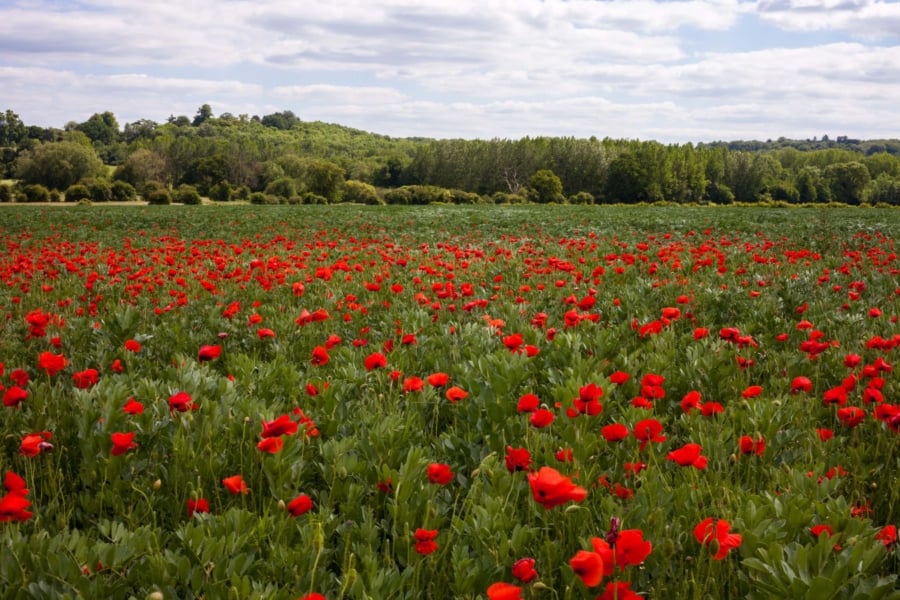
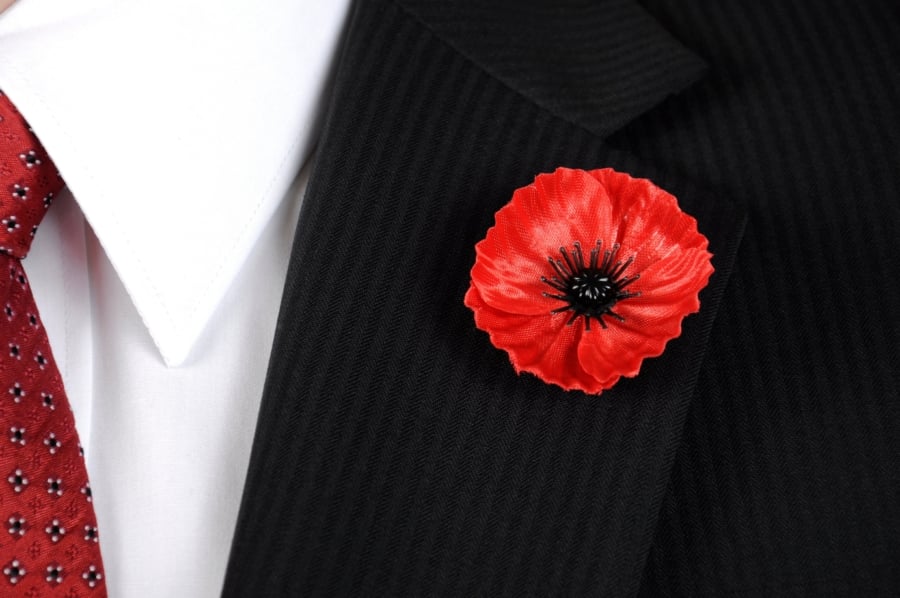
Today, people wear the red poppy every Remembrance and Armistice Day (November 11) in the United Kingdom and Canada, and on Memorial Day (May 30) in the United States, to honor the fallen. The species behind this custom is known as the “red corn” or “common” poppy. If you want to mark the day in your own garden, the Best Days Calendar can help you time a planting or a cutting around the occasion.
When to Plant Poppies: 60-Second Sowing Calendar
- USDA Zones 3–6 (cold): sow seed outdoors in early spring, as soon as the soil can be worked. A second sowing in late summer will give you fall bloom.
- USDA Zones 7–8 (temperate): sow in fall (September–November) for the strongest spring display, or in very early spring for a later bloom.
- USDA Zones 9–10 (mild, incl. California, Deep South): sow in late fall or winter (October–January). Poppies need cool soil to germinate.
- Direct sow only: poppies dislike transplanting. Scatter seed on cleared soil, press in lightly, do not bury.
- Best Days signal: pair your sowing week with the Almanac’s Best Days planting calendar for above-ground flowers.
Growing Tips: How to Grow the Poppy Flower
The poppy flower is an annual, or a short-lived perennial, but its prolific self-seeding gives it the staying power of a wildflower. The crepe-like blooms look fragile, yet they shrug off drought and grow happily in poor soil. For most gardeners, that makes the poppy one of the easiest flowers to keep coming back year after year.
Growing poppies is an easy task for any amateur gardener. You can start them indoors or sow them directly into garden or planter soil. Starting poppies indoors calls for cool temperatures and light to germinate. Sow the seeds in moist seed-starting soil, press them gently onto the surface, and mist lightly to keep the soil damp.
Once sprouted, thin to one seedling per cell. When the plants have a few leaves, harden them off and carefully dig and replant them one foot apart to prevent overcrowding, taking care with the fragile roots. To avoid losing the tiny seeds while planting, mix them with sand and use a large-holed salt shaker to sprinkle a thin layer over your planting area. You can also use nature’s built-in shaker by saving the pods and shaking the seeds straight into the garden.
Poppy flowers love full sun and well-drained soil, and they need little water once settled in. Too much water produces tall, spindly growth. Deadheading spent blooms, by snipping off the faded flowers, encourages a fresh round of color. For help timing your sowing to the season and the Moon, our Gardening by the Moon calendar lists the best days for above-ground flowers like the poppy.
California Poppy: State Flower, Superbloom, and How to Grow It
The California poppy (Eschscholzia californica) sits in its own category. Native to the Pacific coast, it is drought-tolerant, self-sowing, and produces the golden-orange carpets that make California’s “superblooms” world-famous. Here is what sets it apart from the European poppies covered elsewhere on this page.
Key facts
- Scientific name: Eschscholzia californica. Named for German-Baltic naturalist Johann Friedrich von Eschscholtz.
- State flower: designated California’s official state flower in 1903.
- Native range: California and the Pacific slope, from southern Washington to Baja. Naturalized across the Southwest.
- Bloom color: golden orange in wild populations; cultivars now include cream, red, pink, and bicolors.
- Bloom window: February through May in most of California; longer in coastal micro-climates.
- Special behavior: flowers close at night, on overcast days, and in high wind. Petals fold up around the developing seed capsule.
How to grow California poppy
- Where: USDA Zones 6–10. Prefers full sun, well-drained sandy or gravelly soil. Struggles in heavy clay and wet lowlands.
- When to sow: broadcast seed in late fall or very early spring on cleared ground. Do not bury; press lightly and let the winter rains do the rest.
- Water: minimal once established. Overwatering causes root rot and weak flowering.
- Fertilizer: none needed. Rich soil produces leggy plants with fewer blooms.
- Self-sows: readily. Let the last flush go to seed and you will have volunteers next year.
Where to see a superbloom
- Antelope Valley California Poppy Reserve (Lancaster, CA): the classic destination. Best late March through mid-April in a wet-winter year.
- Carrizo Plain National Monument (San Luis Obispo County): quieter, wilder, and often more spectacular than Antelope Valley.
- Walker Canyon (Lake Elsinore): famous 2019 superbloom site; access limited during bloom years due to crowds.
- Point Buchon Trail and Montaña de Oro State Park (Central Coast): coastal poppy meadows with ocean backdrop.
Legal note: despite the popular myth, it is not illegal to pick a California poppy on private land. However, all plants are protected in state parks and reserves. Bring a camera, leave the flowers.
Where Poppies Grow Best Across the US and Canada
Poppies are forgiving, but the type you plant should match your climate. Most popular kinds do well across a wide band of the United States and southern Canada when sown at the right time. Use the table as a starting point, then lean on your local frost dates for the exact week.
Because poppies resent having their roots disturbed, direct sowing usually beats transplanting. A light scattering of seed over cool, bare soil, pressed in but not buried, is all most varieties ask for. Pair them with low, spreading neighbors using our companion planting guide so the bare ground around young poppies stays shaded and weed-free.
When to Cut Poppies for Bouquets
Poppies lend a beautiful hand in flower arrangements and should be cut at the cracked bud stage, just as the bud begins to split open and a sliver of color shows through the green sepals. Once cut, the flowers keep opening and can be enjoyed for 5 to 7 days in a vase. The large, dried pods are an ornamental favorite of florists and a common touch in home decor.
Harvesting Poppy Seeds
Important note: do not grow or harvest breadseed poppy flowers. We recommend choosing any other species. After the petals have died and dropped off, the pods will dry right on the stalk.
Seeds are ready to harvest when the pod is fully dried and hardened and the seeds begin to rattle around inside. Harvesting too early can keep the seeds from germinating, but wait too long and the pods split and scatter their seed to replant the following season on their own. Clip the dried pods off the stalks and store them in an airtight container until next year. When you are ready to plant, snip the ends off and shake the seeds out like a pepper shaker over well-prepared soil in a sunny spot.
Poppy Seed Nutrition and Health Benefits
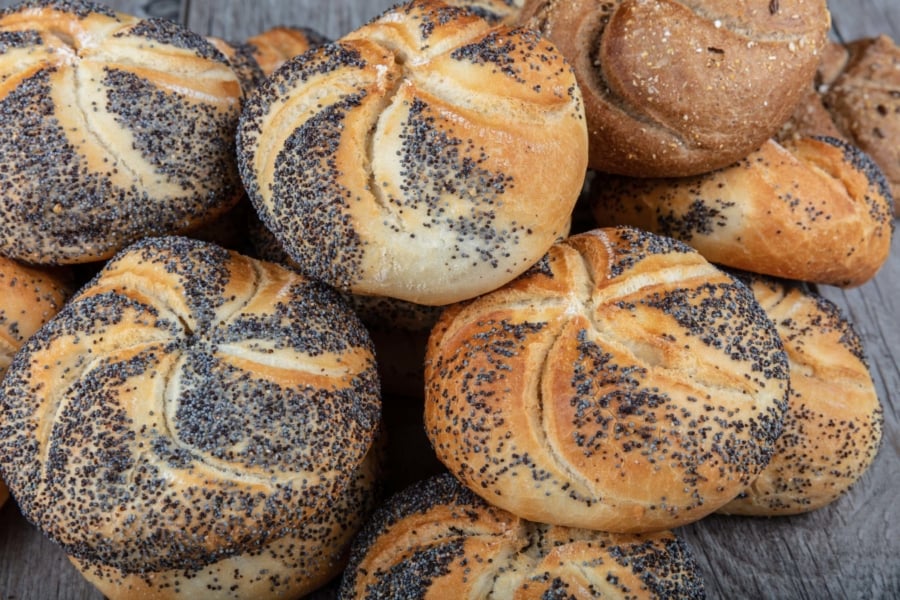
The small, round, bluish-black poppy seed is rich in fiber, healthy fats, and micronutrients, particularly manganese. The seeds have long been used to aid digestion and to ease asthma, insomnia, headaches, and coughs. They add a gentle crunch and subtle flavor to many dishes, sprinkled on salads and roasted vegetables, topped on bagels, baked into breads and muffins, stirred into salad dressings, and famously paired with lemon. They can also be pressed into an oil that is often used on the skin.

Poppy Flower FAQ
What does the poppy flower symbolize?
The poppy flower carries several meanings at once. In Greek myth it stood for sleep and dreams through its tie to Morpheus, and for fertility and harvest through Demeter. Since the Napoleonic Wars and World War I, the red poppy has also become the world’s flower of remembrance for fallen soldiers. Color shifts the message: red for sacrifice, white for peace, and purple for the animals lost in war.
Why do people wear poppies on Memorial Day and Remembrance Day?
After World War I, red poppies were the first plants to bloom across the churned, lime-rich battlefields of Europe. John McCrae’s poem “In Flanders Fields” sealed the image, and the flower became a symbol of the soldiers buried there. People now wear it on Memorial Day (May 30) in the United States and on Remembrance and Armistice Day (November 11) in the United Kingdom and Canada.
Are poppy flowers illegal to grow?
Most ornamental poppies are perfectly legal and widely sold for gardens. The exception is the breadseed or opium poppy, which we recommend you do not grow or harvest. Stick to common, Oriental, or California poppies and you get all the beauty without any of the trouble.
Are the poppy seeds on bagels safe to eat?
Yes. The bluish-black poppy seeds used on bagels, breads, and muffins come from the poppy plant but are cleaned of the milky substance that the opium trade relies on. They are safe to eat and bring fiber, healthy fats, and manganese to the table.
When should you plant poppies?
Sow poppy seeds in cool weather, in early spring once the soil can be worked, or in fall where winters are mild. Scatter the seeds on the surface and press them in lightly, since they need light to germinate and dislike being buried. Check our Gardening by the Moon calendar for the best sowing days in your region.
Do poppies come back every year?
It depends on the type. Oriental poppies are true perennials that return for years. Common and California poppies are annuals, but they self-seed so freely that they often reappear each spring as if they were perennial. Leaving a few pods to dry and scatter helps the patch renew itself.
What is the best time to cut poppies for a vase?
Cut poppies at the cracked bud stage, just as the bud splits and a sliver of color peeks through the sepals. The blooms keep opening in water and last about 5 to 7 days. Save the dried seed pods afterward, since florists prize them for arrangements and home decor.
Why are poppies called poppies?
The word comes from late Old English popig or popaeg, which came through West Germanic from the Latin papaver, the Roman name for the plant. The Latin survives in the botanical names: Papaver rhoeas is the red field poppy, and Papaver somniferum is the opium poppy, where somniferum means sleep-bringing.
How many petals does a poppy have?
Four. The common red field poppy has four petals, usually with a black blotch at the base, and the California poppy also has four. Doubled ornamental cultivars are bred to carry many more, but four is the wild form.
What does a poppy flower look like?
A cup of four thin, slightly crumpled petals, 2 to 4 inches across, on a stem covered in coarse hairs that stand out at right angles. Break the stem and a milky white to yellowish sap bleeds out. Once the petals drop, a smooth egg-shaped seed capsule is left behind with a flat crown on top.
How long does a single poppy flower last?
About one day. A poppy field looks steady for weeks because the plants keep replacing their blooms, and one plant can produce up to 400 flowers over a warm season. For a vase, cut poppies in bud rather than in full flower.
What is the spiritual meaning of the poppy?
Rest after struggle, and remembering without being held under by it. The older Greek and Roman association was with sleep, through the gods Hypnos and Somnus, and the modern remembrance meaning grew out of the poppies that came up on the battlefields of the First World War.
Join the Discussion
What is one thing you loved learning about the poppy flower?
Share it with your community in the comments below.
Poppy Variety Guide: Choosing the Right Poppy for Your Garden
Not all poppies grow the same way. Choosing the wrong variety for your climate or planting window is the most common reason poppies fail. Some are perennials; some vanish at the first true heat. Some need light to germinate; one variety needs darkness. Here is a side-by-side comparison of the six types most commonly grown in North American gardens, so you can match the poppy to your conditions before you plant.
| Variety | Type | Best Zones | When to Plant | Height | Key Notes |
|---|---|---|---|---|---|
| Oriental Poppy (Papaver orientale) | Perennial | Zones 3–7 | Early spring or early fall | 24–36 in. | Goes dormant in summer — plant near late-season fillers like coneflower or ornamental grass to cover the gap. Returns reliably for years. |
| Shirley / Field Poppy (Papaver rhoeas) | Annual | All zones | Fall sow (mild climates) or early spring (cold climates) | 18–24 in. | Seeds are tiny and need light to germinate — scatter on the surface, press in, do not bury. Self-seeds freely; let a few pods ripen and one planting sustains itself for years. |
| Breadseed Poppy (Papaver somniferum) | Annual | All zones | Early spring or fall; needs cold to germinate well | 24–48 in. | The best poppy for dried arrangements. Seed heads turn silver-gray and hold their shape for years. Deer-resistant. Sow directly; dislikes transplanting. |
| Iceland Poppy (Papaver nudicaule) | Short-lived perennial; grown as annual | Zones 2–10 (cool season only) | Fall in mild climates; late winter indoors elsewhere. Start 85–120 days before desired bloom. | 12–18 in. | The most cold-tolerant and the most delicate stemmed. Hates heat — blooms fade fast as summer arrives. Start in peat pots; transplanting breaks the taproot. Surface sow; needs light and 60–70°F to germinate. |
| California Poppy (Eschscholzia californica) | Annual (short-lived perennial in zones 8–10) | All zones; thrives in 6–10 | Early spring direct sow after frost risk passes | 12–18 in. | Drought-tolerant once established. Self-sows prolifically in the West. Does not transplant — taproot snaps easily. The fastest-maturing variety at 55–60 days. |
| Himalayan Blue Poppy (Meconopsis betonicifolia) | Short-lived perennial | Zones 5–7 (cool, moist summers required) | Early spring after cold stratification (6–8 weeks at 35–40°F) | 24–48 in. | The most demanding poppy by far. Needs cool summers, high humidity, and acidic soil. Fails in heat or drought. Worth the effort for the famously impossible blue — a color rare in the plant world. |
The One Rule All Poppies Share
Every poppy on this list resents transplanting. The taproot is fragile and breaks easily when disturbed, which is why poppy seedlings started in cell trays often wilt and collapse even under ideal conditions after transplanting. Sow directly where the plant will grow. The exception is Iceland poppy started indoors — use peat or coir pots and transplant the whole pot without disturbing the roots.
One more distinction worth knowing: most poppy seeds need light to germinate. Press seed gently into the soil surface and do not cover it — even a thin layer of soil can block germination. The exception is the Shirley/corn poppy (Papaver rhoeas), which actually germinates better with a light covering of soil or vermiculite, no more than one-eighth of an inch deep.
Cutting and Drying Poppy Seed Heads for Arrangements
Breadseed and oriental poppies produce some of the most striking dried seed heads available to home gardeners. Cut stems just as the seed head shifts from bright green to gray-green — before the pores at the top open and release seed. Hang upside down in a dry, ventilated space for two to three weeks. The papery globes hold their shape for years in dried wreaths and arrangements.
To save seed for next season, wait until the pod is fully dry and the holes are open. Hold a paper bag under the head and shake. Most poppy seed stays viable for two to three years stored in a cool, dry place — though fresher seed always germinates more reliably. See our Gardening by the Moon Calendar for the best days to plant in any month.


Natalie LaVolpe
Natalie LaVolpe is a freelance writer and former special education teacher. She is dedicated to healthy living through body and mind. She currently resides on Long Island, New York, with her husband, children, and dog.
- Natalie LaVolpe

- Natalie LaVolpe
- Natalie LaVolpe
- Natalie LaVolpe



Great article. TY
as a very small child, when we moved into one of our homes on clarendon road in Brooklyn N.Y.., it was Memorial Day weekend. i still remember the tub with legs in front of our home after the bathroom was renovated. it had rained there were crepe poppies, not plastic like the modern ones. The dye from the crepe flowers was “bleeding” red into the water..i was fascinated. My late grandmother told me they were worn to honour “all those who died in our wars”..as the red dye flowed like blood through the water…it has stayed with me all these years…
I remember growing up; my dad would always purchase a poppy from the VFW Soldiers. I remember that being a sign of remembrance and honor. My father was also a Veteran. I purchase a Poppy every Memorial Day; to carry on his tradition of remembrance and honor.
Love the fact about how to harvest poppy seeds for next year, I love harvesting my own seeds
We’re glad to hear this story was helpful for you, Tammy!