Flower Moon 2026: May Full Moon Date, Blue Moon, and Mother’s Day
Quick Reference
- Flower Moon 2026: Friday, May 1, 2026
- Peak illumination: 1:23 p.m. Eastern Time (17:23 UTC), with the Moon in Scorpio
- Rare Blue Moon bonus: Sunday, May 31, 2026 at 4:45 a.m. Eastern Time (08:45 UTC), in Sagittarius
- Rule of thumb: the Flower Moon is the first full Moon of May; a second full Moon in the same calendar month is a Blue Moon
- Best viewing: Thursday night, April 30, into Friday night, May 1, and again the night of Saturday, May 30, into Sunday, May 31
- Bonus sky show: Eta Aquariids meteor shower peaks before dawn on May 5 and May 6, 2026
- Mother’s Day 2026: Sunday, May 10, lit by a waxing gibbous Moon climbing back toward full
- Other names: Milk Moon, Corn Planting Moon, Hare Moon, Mother’s Moon, Frog Moon, Budding Moon, Bright Moon, Planting Moon, and more
May 2026 hands sky watchers a rare double feature. The headline event is not just the Flower Moon, the first full Moon of May. It is the Blue Moon that closes the month, the second full Moon to fall inside the same calendar page, the kind that only turns up once every two to three years. The Flower Moon peaks Friday, May 1, 2026 at 1:23 p.m. Eastern Time, with the Moon in Scorpio. The Blue Moon follows Sunday, May 31, 2026 at 4:45 a.m. Eastern Time, in Sagittarius. Two full Moons in a single month is the literal meaning of the saying, “once in a Blue Moon,” and 2026 is one of those years.
Below the spectacle, the rest of the Flower Moon story is right on schedule. Wildflowers blanket meadows and roadsides across most of North America, songbirds nest, bees work the early blooms, the Eta Aquariids meteor shower peaks under a waning Moon mid-month, and gardeners hit the busiest planting window of the year. Mother’s Day lands on Sunday, May 10, 2026, inside a quiet waxing Moon that often becomes part of the holiday backdrop. The May Moon has earned more names than almost any other month for a reason, and most years it wears one or two of them comfortably. In 2026, it wears them all.
When Is the Flower Moon 2026?
Full Moon May 2026 (first): Friday, May 1, 2026
Peak Illumination: 1:23 p.m. Eastern Time (17:23 UTC), in Scorpio
Full Moon May 2026 (second, Blue Moon): Sunday, May 31, 2026
Peak Illumination: 4:45 a.m. Eastern Time (08:45 UTC), in Sagittarius
The Moon reaches full phase at the same instant everywhere on Earth, so the local clock simply shifts by time zone. For the May 1 Flower Moon, that puts peak at 12:23 p.m. Central, 11:23 a.m. Mountain, and 10:23 a.m. Pacific. Because peak falls in daylight for North America, the Flower Moon looks full to the naked eye on both Thursday night, April 30, and Friday night, May 1. The May 31 Blue Moon peaks before sunrise on the East Coast, so the Moon shows up fullest the night of Saturday, May 30, into the early hours of Sunday morning. Peak times are computed from U.S. Naval Observatory lunar phase tables.
For exact local moonrise and moonset for your zip code, the U.S. Naval Observatory keeps a free sun and Moon data calculator. Pair it with our Moon Phases Calendar to plan a porch sit, a stargazing night with the kids, or a quiet drive to a dark-sky spot.
Why It Is Called the Flower Moon
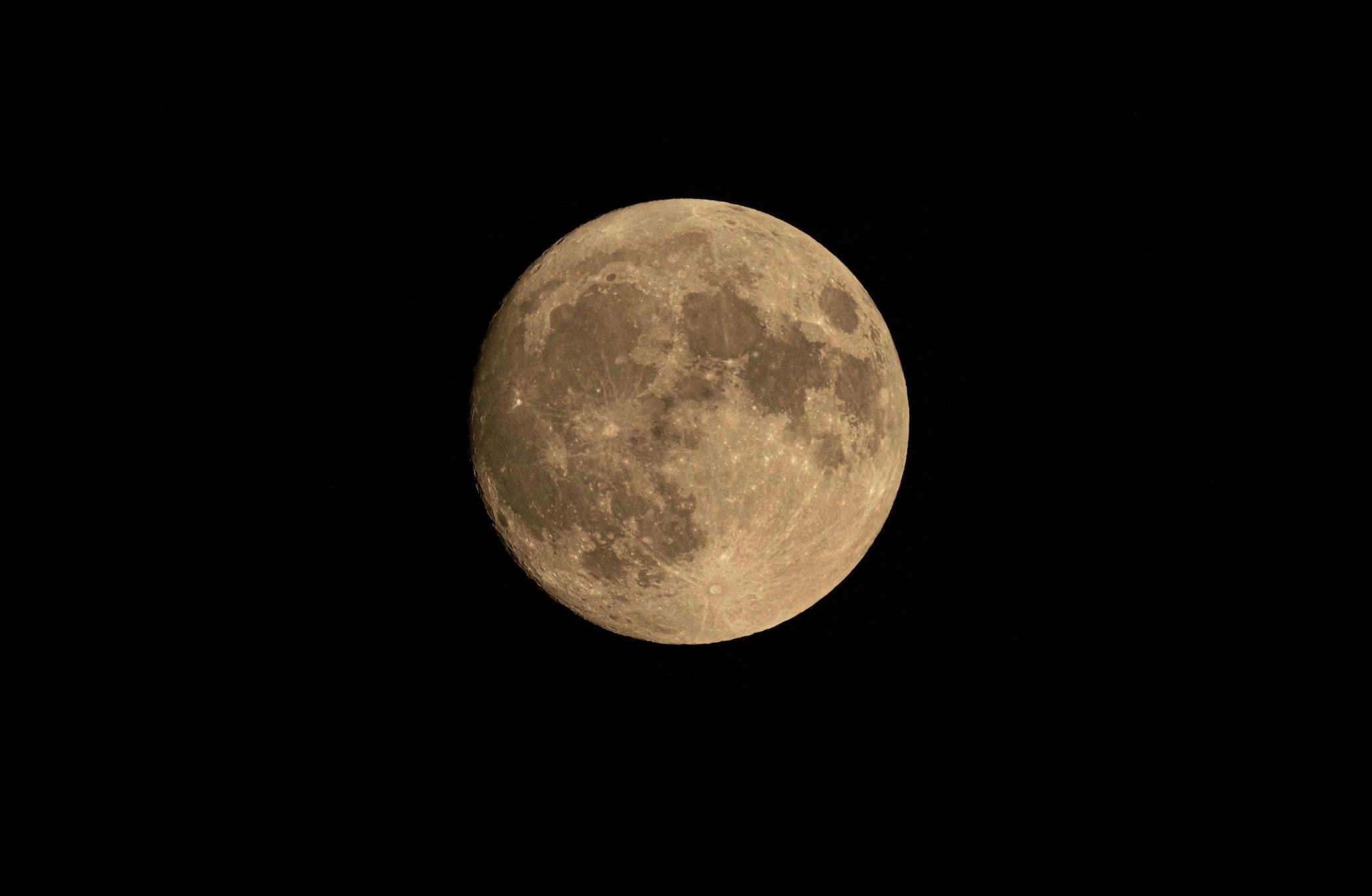
The Flower Moon name is one of the easiest in the calendar to explain. May is when the first big wave of wildflowers opens across most of North America, lupines and columbines on the hillsides, wild iris in damp ditches, trillium under the trees, daisies and wild phlox along the roadside. The Algonquin nations of the Northeast watched the same Moon every spring and named it for the carpet of color rising beneath it. Settlers picked the name up, and the term has stayed in steady use ever since.
According to NASA, the popular American names for the monthly full Moons trace back to a mix of Algonquin tradition and colonial almanac writers, with each name pegged to a seasonal sign you could read with your own eyes. For May, that sign is flowers. The Moon itself does not change color. The ground does.
European farming traditions add a second set of names. The “Milk Moon” reflects the lush late-spring grass that pushed cow milk yields to their peak, the moment when dairy herds traditionally went back out to fresh pasture in England and across western Europe. The “Hare Moon” recalls the spring breeding season and the long folk link between hares and the Moon. The “Bright Moon” simply notes how high and clear the May full Moon often hangs in the sky. The “Mother’s Moon” is the modern American addition, tied to the U.S. Mother’s Day holiday that lands the same week.
The Rare 2026 Blue Moon: Sunday, May 31
Most calendar months hold one full Moon. May 2026 holds two, the Flower Moon on Friday, May 1, and a Blue Moon on Sunday, May 31. The phrase “Blue Moon” does not mean the Moon turns blue. By the most common modern definition, popularized by a 1946 Sky & Telescope article, a Blue Moon is simply the second full Moon to fall inside a single calendar month. The pattern repeats roughly once every two to three years, hence the saying, “once in a Blue Moon.”
The May 31, 2026 Blue Moon peaks at 4:45 a.m. Eastern Time (08:45 UTC), with the Moon in Sagittarius. Because that peak falls before sunrise on the East Coast, the Moon looks fullest the night of Saturday, May 30, climbing the southeastern sky after dinner and arcing high through the small hours. Step out an hour after sunset on May 30, look low in the southeast, and you will catch it rising as the spring sky shifts toward summer constellations. By the morning of May 31 the Moon hangs in the southwest, dropping toward setting through the dawn twilight. According to timeanddate.com, the May 31 Blue Moon is also a “micromoon,” a full Moon near apogee, the Moon’s farthest point from Earth, so the disc looks roughly 7 percent smaller than an average full Moon. To the unaided eye the size difference is hard to notice; in a side-by-side photo with a supermoon, the gap stands out.
The same Moon is sometimes called the “Sagittarius Full Moon” by lunar-planning readers, for the zodiac sign it sits in. Curious about how the May Moons map onto the zodiac for planning purposes? Our May full Moon horoscope reads the month’s lunar timing as a planning tool, not a fortune-teller’s script.
Other May Full Moon Names
Late spring looks different from one corner of the continent to the next, so Indigenous nations watched the same Moon and named it for whatever was waking up around them. Some pointed to flowers. Some pointed to frogs. Some pointed to leaves and planted fields.
The Algonquin of the Northeast use “Flower Moon,” the name that crossed over into the colonial almanac tradition. The Cree of the boreal forests use “Frog Moon” (Athīkīpīsim), for the chorus that fills the marshes once the ponds open up. The Anishinaabe of the Great Lakes use “Budding Moon” (zaagibagaa-giizis), marking the new green on the maple and birch. The Mohawk call it the “Time of Big Leaf,” for the canopy filling in overhead. The Cherokee of the Southeast use “Planting Moon” (Anisguti), tied to the start of the field-corn season. Many Native American nations of the Great Plains and Midwest used a simple, practical name, “Corn Planting Moon,” the cue to put field corn in the ground.
European tradition adds the Anglo-Saxon “Hare Moon,” the dairy-country “Milk Moon,” the Celtic “Bright Moon,” and the neo-Pagan “Fairy Moon” or “Awakening Moon” for the sense that the natural world is fully open for business. Whatever name a household uses, the May full Moon is a chance to mark the change of seasons and the deep green of late spring.
Indigenous and Folk Names by Nation
| Nation or tradition | Region | Name for May’s Full Moon |
|---|---|---|
| Algonquin | Northeast and eastern Canada | Flower Moon |
| Cree | Boreal forest, Canada | Frog Moon (Athīkīpīsim) |
| Anishinaabe | Upper Midwest and Canada | Budding Moon (zaagibagaa-giizis) |
| Mohawk | Northeast | Time of Big Leaf |
| Cherokee | Southeast | Planting Moon (Anisguti) |
| Various Native American | Plains and Midwest | Corn Planting Moon |
| Anglo-Saxon / English | British Isles | Hare Moon |
| European dairy tradition | Western Europe | Milk Moon |
| Celtic | British Isles | Bright Moon |
| Modern American | United States | Mother’s Moon |
| Neo-Pagan | Various | Fairy Moon, Awakening Moon |
May 2026 Sky Highlights: Eta Aquariids and More
The Flower Moon is not the only sky event in May 2026. The Eta Aquariids meteor shower peaks in the predawn hours of Tuesday, May 5, and Wednesday, May 6, 2026. The Eta Aquariids are dust left behind by Halley’s Comet, and the broad maximum of the shower runs from May 4 through May 7 in most years. Under a dark sky, observers in the Southern Hemisphere can see roughly 40 to 50 meteors per hour at peak. Northern Hemisphere viewers see fewer, often 10 to 20 per hour, with the radiant low on the eastern horizon before dawn.
The 2026 timing is helpful and slightly inconvenient at the same time. The Flower Moon peaks May 1, four to five days before the Eta Aquariids maximum, so the Moon is in the waning gibbous phase during peak meteor nights, sitting above the horizon for much of the night and washing out the faintest streaks. The best window for Northern Hemisphere viewers is the hour before astronomical twilight on May 5 or May 6, when the radiant has climbed above the eastern horizon and the Moon has dropped lower in the west. According to timeanddate.com, Eta Aquariid meteors are fast (about 41 miles per second) and often leave persistent trains, so the few that punch through moonlight are worth waiting for.
- Eta Aquariids peak nights: Tuesday, May 5, and Wednesday, May 6, 2026, in the hour before dawn local time.
- Where to look: Low in the eastern sky, toward the constellation Aquarius. No optics needed.
- Other May sights: Venus is the bright “morning star” before sunrise; Jupiter and Mars sit in the evening sky after sunset.
- Spring constellations setting, summer ones rising: Leo and Bootes are heading west by late May; Scorpius and Sagittarius (where the Blue Moon sits May 31) climb the southeastern sky after dark.
Flower Moon Folklore and Spring Signs
Older almanac readers will tell you the Flower Moon was always the Moon to watch for two practical signs. The first is the start of cattle going out to fresh pasture, which is why dairy traditions named it the “Milk Moon.” The second is the timing of the last spring frost, which old hands judged by the lilacs. When the lilacs bloomed by the Flower Moon, the saying went, the soil was safe for tender plants. When they held back, you waited.
- “When the May Moon shines on lilac, the frost is past.” A common dooryard rule across the Northeast and Great Lakes.
- “Flower Moon ring, slow week of rain.” A halo around the May Moon, caused by high cirrus cloud, often comes a day or two ahead of a wet front.
- “A cold Flower Moon, a late corn crop.” Plains and Midwest farmers read a chilly first night of May as a sign to hold a week before planting field corn.
- “Plant beans when the Hare Moon is fat.” A waxing Moon between the Flower Moon and the Blue Moon was the traditional window for setting in pole and bush beans.
Treat lunar weather folklore as part of the season’s flavor, not as a forecast. The full Moon does not change pressure, temperature, or precipitation. It does, however, change the night sky, the tides, and the way a farmyard looks at 10 p.m. in early May. That is enough to earn its place in the planting calendar. The same Flower Moon that lights a warm meadow in Virginia can light a fresh snow in Calgary, and the reader who lives in either place knows which one to trust.
Flower Moon and Mother’s Day 2026
Mother’s Day in the United States and Canada falls on the second Sunday in May. In 2026, that puts Mother’s Day on Sunday, May 10, nine days after the Flower Moon. The Moon will be in its waning gibbous phase, roughly two-thirds illuminated, rising late in the evening and sitting high overhead through the small hours. For families who like to fold the sky into the holiday, the Moon makes a quiet backdrop for a porch dinner, a walk, or a late drive home.
The “Mother’s Moon” nickname for the May full Moon is the modern American addition to the older list of names. It is not Indigenous, and it is not European; it is a 20th-century coinage that caught on because the timing was right. In years where the Flower Moon and Mother’s Day fall in the same week, the connection feels especially natural. In 2026 the two events sit nine days apart, so the Moon is not full on Mother’s Day itself, but it is still close enough to bright that you can read by it if you sit out long enough.
- Sunday, May 10, 2026 (Mother’s Day): Waning gibbous Moon rising around 11:30 p.m. local time, high overhead by 2 a.m.
- Simple plan: An evening walk after dinner, the Moon climbing the eastern sky around bedtime, the porch lights off.
- Gift idea: A bound copy of the 2026 Farmers’ Almanac, with the full year of Moon dates and Best Days for the gardener in the family.
Gardening by the Flower Moon and Best Days
The Cherokee call the May full Moon the “Planting Moon” for a reason. May falls squarely inside the field-corn and warm-season vegetable window across most of the country. Long tradition says the waxing Moon (new to full) favors above-ground crops, and the waning Moon (full to new) favors root crops. After the May 1 Flower Moon, the two weeks of waning Moon are a strong window for sowing carrots, beets, onions, and radishes outside, where the calendar and the weather allow. The waxing Moon between the new Moon on May 16 and the Blue Moon on May 31 then opens a window for tomatoes, peppers, beans, squash, and other above-ground crops.
A Practical Planting Rhythm for May 2026
- Full Moon Friday, May 1 (Flower Moon): Mark the day. Walk the beds. Pull weeds while the soil is soft.
- Waning Moon, May 2 to May 15: Sow root crops outdoors, carrots, beets, onions, garlic, radishes, parsnips, and turnips. Transplant strawberry plants and asparagus crowns.
- New Moon, Saturday, May 16: A rest day in traditional Moon gardening; spend it composting, mulching, and watering.
- Waxing Moon, May 17 to May 30: Sow above-ground crops, tomatoes, peppers, beans, squash, cucumbers, melons, and sweet corn (where last-frost dates allow). Transplant flowering annuals and herbs.
- Full Moon (Blue Moon), Sunday, May 31: Cycle closes. Walk the beds again. Note what came up and what did not. Make a list for June.
Last-frost dates vary widely across North America in May. The Mountain West and Canadian Prairies often hold one more cold snap into late May, and high-altitude valleys can frost into June. Check your local last-frost date before you put tender plants in the ground. Our Gardening by the Moon Calendar lays out Best Days for sowing, transplanting, and harvesting by zip code, and the Best Days Calendar covers the same logic for harvesting, preserving, and other farmstead chores. Both stack lunar timing on top of your regional frost window without juggling four tools.
How to See the Flower Moon in 2026
The Flower Moon is easy. No telescope, no binoculars, no app required. The full Moon rises in the east near sunset, sits high in the southern sky around midnight, and sets in the west near sunrise. A clear sky and a view of the horizon are all you need. The Moon looks largest near the horizon, an optical illusion that has fooled humans for centuries, so step outside about 20 minutes before sunset on April 30 or May 1 for the most dramatic view. Then plan a second night out for the Blue Moon on May 30 into May 31.
Best Viewing by Region
| Region | What to expect |
|---|---|
| Northeast and Great Lakes | Warm evenings, leafing trees, the first lilacs in bloom. Look for the Moon rising over a hedgerow of new green. |
| Southeast and Gulf | Warm, humid nights. Watch for a soft halo on muggy evenings and pop-up thunderstorms early in the week. |
| Mountain West and Plains | Dry air and open horizons give some of the country’s best Moon viewing. Wide views, low light pollution, dark skies for the Eta Aquariids. |
| Pacific Northwest | Spring cloud cover can interfere. Aim for a clear window the night before or after May 1, and again around May 30. |
| Canadian Prairies and Maritimes | Cool evenings, late-arriving spring growth. The Moon rises high and stays bright for hours; bundle up after dinner. |
| British Columbia and Yukon | Long twilight, late moonrise. Look for the Moon hugging the southern horizon rather than climbing straight overhead. |
Practical Tips
- Step outside about 20 minutes before sunset on Thursday, April 30, or Friday, May 1, to catch moonrise low in the east.
- Let your eyes adjust for 5 to 10 minutes. The contrast between the bright Moon and the soft green of late-spring foliage is striking.
- For photography, a phone in night mode works for the wide scene. A DSLR at 1/125 second, f/8, ISO 200 holds detail on the disc.
- The Moon looks largest near the horizon. Catch it then for the most dramatic photo.
- Look for blooming lupines, wild iris, columbines, and daisies along sunny roadsides and meadow edges the same week; the carpet of late-spring color is the reason the Moon got its name.
- For the Blue Moon on May 31, step out the night of Saturday, May 30, after dinner. The Moon will look full to the naked eye even though peak technically falls before sunrise the next morning.
- For the Eta Aquariids, set an alarm for 4 a.m. on May 5 or May 6 and look low in the east. Give yourself 30 to 45 minutes outside; meteors arrive in bursts, not on schedule.
- Check local moonrise and moonset for your zip code in our Moon Phases Calendar before heading out.
If you keep a garden or a porch journal, May is the month to walk it nightly. The Flower Moon is the cue to mark what is blooming, when the first hummingbirds turn up, and how the soil looks after the last spring rain. By the Blue Moon on May 31, you will have a clean four-week record of how the season is running in your zip code, the kind of note that pays back the next year. For more on the season around the May Moons, see our deep-dives on the May birth-month symbols, the May birthstone, emerald, and the summer solstice that closes the month of June.

Flower Moon 2026 FAQ
When is the Flower Moon in 2026?
The Flower Moon 2026 peaks on Friday, May 1, 2026, at 1:23 p.m. Eastern Time (17:23 UTC), with the Moon in Scorpio. Because peak falls in daylight for North America, the Moon looks full to the naked eye on both Thursday night, April 30, and Friday night, May 1. Either night gives a strong view.
Are there really two full Moons in May 2026?
Yes. May 2026 holds the Flower Moon on Friday, May 1, and a Blue Moon on Sunday, May 31, at 4:45 a.m. Eastern Time (08:45 UTC), in Sagittarius. The second full Moon in a single calendar month is the modern definition of a Blue Moon, popularized by a 1946 Sky and Telescope article. It happens roughly once every two to three years.
Why is the May full Moon called the Flower Moon?
The May full Moon takes its name from the burst of wildflowers that opens across North America in late spring: lupines, columbines, wild iris, trillium, daisies, and wild phlox. The Algonquin nations of the Northeast used the name first, and it carried into colonial American almanacs. The Moon itself does not change color. The ground does.
Will the Blue Moon on May 31, 2026 actually look blue?
No. The Moon will look the same pale gold or silver as any other full Moon. “Blue Moon” simply means the second full Moon in a single calendar month under the modern Sky and Telescope definition. The Moon can take on an actual bluish tint in rare cases, when smoke or volcanic ash sits in the upper atmosphere, but those events are unrelated to the calendar usage of the term.
What are other names for the May full Moon?
Plenty. Indigenous names include the Cree “Frog Moon” (Athīkīpīsim), the Anishinaabe “Budding Moon” (zaagibagaa-giizis), the Mohawk “Time of Big Leaf,” the Cherokee “Planting Moon” (Anisguti), and the broader “Corn Planting Moon” used by many Plains nations. European tradition adds “Milk Moon,” “Hare Moon,” “Bright Moon,” and the modern American “Mother’s Moon,” tied to the U.S. Mother’s Day holiday that falls in the same week.
When is the Eta Aquariids meteor shower peak in 2026?
The Eta Aquariids peak in the predawn hours of Tuesday, May 5, and Wednesday, May 6, 2026. The Moon will be in its waning gibbous phase, so faint meteors will be washed out, but the brightest streaks still punch through. Look low in the east toward the constellation Aquarius in the hour before astronomical twilight.
When is Mother’s Day 2026 and how does it line up with the Flower Moon?
Mother’s Day in the U.S. and Canada falls on the second Sunday in May, which is Sunday, May 10, 2026. The Flower Moon peaks May 1, so by Mother’s Day the Moon is in a waning gibbous phase, roughly two-thirds illuminated, rising late in the evening and sitting high overhead through the small hours. It makes a quiet backdrop for a porch dinner or a walk.
Is the Flower Moon a good time to plant?
Yes, for many crops. The Cherokee call the May full Moon the “Planting Moon” for good reason. The two weeks after a full Moon (the waning phase) are traditionally favored for root crops like carrots, beets, and onions. The two weeks of waxing Moon between May 17 and May 31 favor above-ground crops like tomatoes, peppers, and beans. Check your local last-frost date before you put tender plants in the ground.
Do I need a telescope to see the Flower Moon?
No. The full Moon is easily visible to the naked eye. Step outside near moonrise, about 20 minutes before local sunset, on Thursday, April 30, or Friday, May 1, and look east. A clear sky and a low horizon are all you need.
Join the Discussion
What is your favorite name for May’s full Moon?
Will you be watching for the Blue Moon on May 31?
If you set an alarm for the Eta Aquariids, tell us where you watched from in the comments.
Related Articles
- Full Moon Names And Times
- Moon Phases Calendar
- April Full Pink Moon Explainer
- May Full Moon Horoscope
- When Is Mother’s Day?
- May Birthstone: Emerald
- May Birth-Month Symbols and Fun Facts
- First Day of Summer: Summer Solstice
- Subscribe To The Farmhouse, Our Members-only Community!

- Josh Morley

- Josh Morley

- Josh Morley
- Josh Morley