December Birth Month: Symbols, Birthstones, Flowers, and Fun Facts
Quick Reference: December at a Glance
- Month number: 12th month, 31 days
- Birthstones: turquoise (traditional), tanzanite, and blue zircon (one of only three triple-stone months)
- Birth flowers: narcissus (paperwhite) and holly
- Zodiac: Sagittarius (Nov 22 – Dec 21), Capricorn (Dec 22 – Jan 19)
- Birth tree (Celtic): elder (Nov 25 – Dec 22), birch (Dec 24 – Jan 20)
- Full moon: Cold Moon (Thursday, December 24, 2026 at 12:43 a.m. EST)
- Winter solstice: December 21, 2026 (shortest day in the Northern Hemisphere)
- Color theme: sky blue, deep violet, and silver
- Anglo-Saxon name: Ærra Geōla, “before Yule”
- Major holidays: Hanukkah, Christmas, Kwanzaa, New Year’s Eve, St. Nicholas Day, St. Lucia Day
More December from the Almanac: December Birthstones (Turquoise, Tanzanite, Zircon) | December Full Cold Moon | The Winter Solstice
December is the twelfth month of the year, the month of the shortest days, the longest nights, and a calendar packed with holidays from nearly every tradition. If you or someone you love was born in December, the month carries a long list of folk emblems: three birthstones, two birth flowers, two zodiac signs, a Celtic tree, and a full moon named for the deep cold that arrives with it. Below is the Farmers’ Almanac field guide to the December birth month, with the folklore, dates, and practical notes that go with each.

December Birth Month Symbols
December’s symbols cluster around light in the dark: blue stones the color of a clear winter sky, evergreen and white-bloomed flowers that hold on through frost, a full moon that lights the snow, and a solstice that turns the year. Sagittarius brings the fire of the hunter’s arrow, Capricorn the steady patience of the mountain goat. The Anglo-Saxons called the month Ærra Geōla (“before Yule”), and most of December’s old traditions still trace back to the long night of the solstice.
December Birthstones: Turquoise, Tanzanite, and Zircon
December is one of only three months on the modern American birthstone list to claim three official stones (June and August are the others). The American Gem Trade Association and Jewelers of America recognize turquoise, tanzanite, and blue zircon as the December trio. All three lean blue, and each one comes with a different story.
- Turquoise: the traditional December stone. A blue-green hydrated copper aluminum phosphate, used in jewelry and ritual for more than 7,000 years. Mohs 5 to 6.
- Tanzanite: the modern primary stone. A violet-blue variety of zoisite, mined commercially in only one place on Earth (the Mererani Hills of Tanzania). Mohs 6.5 to 7.
- Blue zircon: the third option. A natural mineral (zirconium silicate), and according to crystals from the Jack Hills of Western Australia, the oldest mineral ever found on Earth at roughly 4.4 billion years old. Mohs 6 to 7.5. Not the same as synthetic cubic zirconia.
Turquoise is the traditional 11th-wedding-anniversary stone. The Apache believed a turquoise stone could be found at the end of a rainbow. Tibetan parents still give it to their children for protection against falls. Tanzanite, by contrast, was unknown to the wider world until 1967 and was named by Tiffany & Co. in 1968. The American Gem Society added zircon to the December list in 1952, and tanzanite was added in 2002, the first new birthstone in 90 years.
For the full deep-dive on geology, care, treatments, and folklore for all three stones, see our December Birthstones (Turquoise, Tanzanite, and Blue Zircon) guide. The full birthstone calendar is here: All Birthstones by Month.
December Fun Facts:
- Tanzanite is the only birthstone on the modern list that comes from a single deposit. According to Tiffany & Co., it is roughly 1,000 times rarer than diamond, and geologists expect the Mererani deposit to be effectively mined out within a generation.
- Most blue zircon on the market is heat-treated from brown stock mined in Cambodia. Untreated stones in any blue shade are rare and command a premium.
- The Sleeping Beauty turquoise mine in Globe, Arizona, supplied much of the clean robin’s-egg-blue turquoise on the American market until it closed in 2012. Genuine Sleeping Beauty turquoise is now a collector item.
December Birth Flower: Narcissus (Paperwhite) and Holly
December gets two birth flowers, and both stand out for the same reason: they keep showing color when nearly everything else has gone dormant. The primary December flower is the narcissus, specifically the white-blooming paperwhite variety that is famously forced indoors during the holiday season. The secondary December flower is holly, the spiny evergreen whose red berries have decorated doorways and hearths for at least two thousand years.
The paperwhite (Narcissus papyraceus) is part of the daffodil family but blooms in winter and produces clusters of small, intensely fragrant white flowers on a single stem. Gardeners force paperwhite bulbs in shallow dishes of pebbles and water four to six weeks before they want blooms, which makes them a reliable Christmas-week flower across most of North America. According to Encyclopædia Britannica, the genus name traces to the Greek myth of Narcissus, the young hunter who fell in love with his own reflection. In Victorian floriography the narcissus carried meanings of rebirth, new beginnings, and self-renewal, which is fitting for a flower that arrives at the turning point of the year.
A second December flower: holly. Where the paperwhite reads as new growth, holly reads as endurance. Romans exchanged holly boughs during Saturnalia in mid-December. Early Christian writers picked up the symbolism (the spiny leaves for the crown of thorns, the red berries for drops of blood), and by the medieval period holly had become inseparable from English Christmas. Druid tradition held that holly sheltered the earth’s spirits through the dark half of the year. If you cut holly for the house, the old folklore says you should leave at least one berried branch on the tree.
December Fun Facts:
- All parts of the narcissus (including the bulb and the sap) are toxic to humans and pets if ingested. The fragrance is fine; keep curious children and cats off the actual plant.
- Only female holly trees produce the famous red berries, and only when a male holly grows nearby. If your holly never berries, that is usually the reason.
- The custom of bringing evergreen branches indoors at the solstice predates Christianity by centuries and shows up across Roman, Norse, Celtic, and Germanic traditions.

December Zodiac Signs: Sagittarius and Capricorn
December is split between two zodiac signs. Sagittarius runs from November 22 through December 21, then Capricorn takes over from December 22 through January 19. The cutoff falls almost exactly on the winter solstice, which is appropriate: Sagittarius rules the last of autumn’s fire, and Capricorn opens the dark, earthbound months of winter.
A note before the lore: the personality sketches below come from centuries of folk writing and modern popular astrology, and we offer them in that spirit.
Sagittarius (November 22 – December 21)
Sagittarius is the ninth sign of the zodiac, symbolized by the archer (often depicted as a centaur drawing a bow). The element is fire; the ruling planet in traditional astrology is Jupiter, the largest planet and a long-standing symbol of expansion and good fortune. Folk astrology gives Sagittarians a reputation for restlessness, optimism, and a deep appetite for travel, learning, and big ideas.
Sagittarians are written up as the wanderers of the zodiac, comfortable with new places and new people, allergic to routine. They are usually direct (sometimes blunt), philosophically curious, and quick to start a project. They are less quick to finish one. See more about the sign on our Zodiac Zone: Meet Sagittarius page.
Capricorn (December 22 – January 19)
Capricorn is the tenth sign of the zodiac, symbolized by the sea-goat (a goat with a fish’s tail in the older imagery). The element is earth; the ruling planet is Saturn, the long-standing symbol of structure, discipline, and time. Folk astrology gives Capricorns a reputation for patience, ambition, and a long view that other signs do not always share.
Where Sagittarius starts twelve things, Capricorn finishes the one that matters. The sign shows up in folk writing as steady, dependable, sometimes reserved, and quietly funny once you have earned the trust. Capricorns tend to plan in years, not weeks, which is a useful trait for the month that opens the long northern winter. See Zodiac Zone: Meet Capricorn for more.
December Fun Facts:
- The Sagittarius/Capricorn cutoff (the “winter solstice border”) is one of the few sign changes in the year that lines up almost perfectly with an astronomical event.
- Capricorn is a cardinal sign, meaning it opens a season. The four cardinal signs (Aries, Cancer, Libra, Capricorn) each begin at a solstice or equinox.
December Birth Tree (Celtic Calendar)
The Celtic tree calendar is a modern reconstruction (mostly the work of poet Robert Graves in The White Goddess, 1948), and different sources draw the dates slightly differently. The most widely cited version assigns elder to the period from about November 25 through December 22 and then birch from December 24 through January 20, with the solstice itself sometimes singled out as a transition day under the yew.
- Elder (Nov 25 – Dec 22): traditionally a tree of endings, transitions, and protection. The wood was used for protective amulets; the flowers and berries have a long history in folk medicine.
- Birch (Dec 24 – Jan 20): traditionally a tree of new beginnings, renewal, and the return of light. The white bark and the way birch is often the first tree to recolonize cleared ground both feed the symbolism.
The shift from elder to birch falls almost exactly on the solstice, which is more poetic than coincidental: the calendar was built to read the year that way.
December Full Moon: The Cold Moon
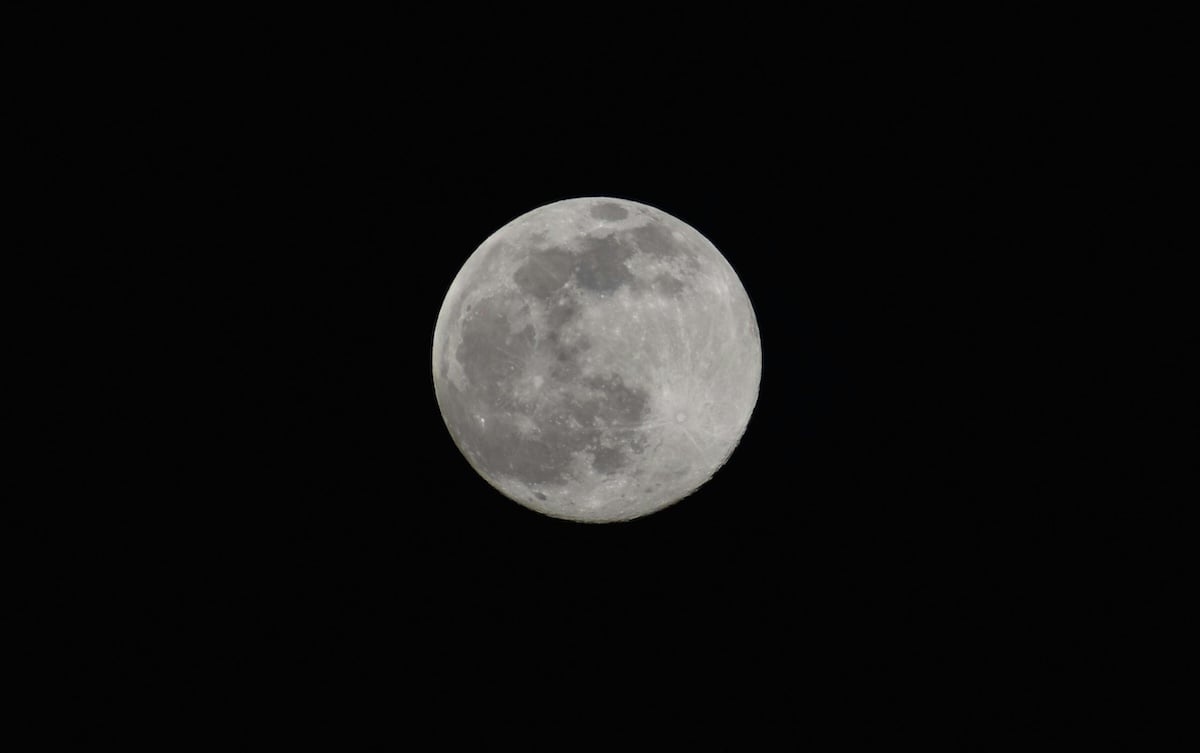
December’s full moon is the Full Cold Moon, and the name explains itself. By December the long cold of winter has arrived in the Northern Hemisphere, the nights are at their longest, and the full moon sits high in the sky for many hours. In 2026, the Cold Moon falls on Thursday, December 24, 2026 at 12:43 a.m. EST, according to the U.S. Naval Observatory. The moon will look full for the night of December 23 and the night of December 24.
The “Cold Moon” name is widely attributed to the Mohawk. Other traditional names for the December full moon include the Long Night Moon (because it rises around sunset and stays up most of the long winter night) and the Moon Before Yule (an Old English name still used in some farmer’s almanacs). The Anglo-Saxons sometimes called the December full moon the Oak Moon.
Because the sun is at its lowest point in the sky in December, the full moon (which sits opposite the sun) rides its highest arc of the entire year. Long nights plus high arc equals the brightest, longest-lasting full moon of the calendar. Read more on our December Full Cold Moon guide.

The Winter Solstice
The astronomical pivot of December is the winter solstice, the moment in late December when the Northern Hemisphere is tilted the farthest from the sun. In 2026 the solstice falls on Monday, December 21, marking the shortest day of the year and the official start of astronomical winter. From that day forward, the days slowly lengthen, even though the coldest weeks of winter are still ahead.
Almost every major December holiday traces some thread back to the solstice. Yule, the old Germanic and Norse midwinter festival, was kept around the long night with evergreen boughs, the Yule log, and feasting. Roman Saturnalia ran December 17 through 23, with gift-giving, role reversals between masters and enslaved people, and the lighting of candles against the dark. The early Christian church chose December 25 as the date for Christmas in part because the solstice already carried weight in the surrounding cultures. For the full astronomical and cultural picture, see our Winter Solstice: First Day of Winter guide.
If you live north of about the 49th parallel, December also brings the latest sunrises of the year and the earliest sunsets, with daylight running well under nine hours at the latitude of Seattle, Minneapolis, or Maine’s North Woods. The pattern flips below the equator, where December opens summer.
The History of December: What Does “December” Mean?
The name December comes from the Latin decem, meaning “ten.” In the earliest Roman calendar the year began in March, which made December the tenth month. Around 700 BCE, the Roman ruler Numa Pompilius reworked the calendar to follow lunar cycles, adding January and February to the front. December has been the twelfth month ever since but kept its older, now-misleading name.
The Anglo-Saxon name for December was Ærra Geōla, “before Yule.” January was Æfterra Geōla, “after Yule.” The two names framed the midwinter festival as the still point of the year. Yule itself ran roughly twelve days, ancestor to the twelve days of Christmas, and centered on the solstice. Norse tradition added the Yule log, kept burning for the length of the celebration, and the Wild Hunt (a ghostly procession across the winter sky that some folklorists trace to the much later figure of Father Christmas).
December Fun Facts:
- December is the only month of the year that contains all three of the longest night, the latest sunrise (at most latitudes), and the earliest sunset of the calendar.
- The word “Yule” comes from the Old Norse jól, which referred to a midwinter feast pre-dating Christianity. The English “jolly” is from the same root.
- In Old English, December was sometimes also called Wintermonath (“winter month”) and Heligh-monath (“holy month”) after Christianization.

December Holidays
December is the most holiday-packed month on the calendar, with major observances from Christian, Jewish, African American, Roman, secular, and indigenous traditions all stacked into the four weeks around the solstice. Here is a quick guide to the largest.
- St. Nicholas Day (Dec 6): the feast day of the 4th-century bishop of Myra whose generosity became the seed of the modern Santa Claus. In much of Europe, especially Germany, the Netherlands, and Belgium, children put out shoes on the night of December 5 and find small gifts the next morning.
- St. Lucia Day (Dec 13): a Scandinavian celebration of light in the darkest part of the year, with white-robed processions, candles worn as a crown, and saffron buns called lussekatter.
- Winter Solstice (Dec 21, 2026): astronomical first day of winter and the shortest day of the year.
- Hanukkah (Dec 4 – Dec 12, 2026): the eight-day Jewish Festival of Lights, commemorating the rededication of the Second Temple in Jerusalem and the miracle of the oil. See our When is Hanukkah? guide for the lighting schedule.
- Christmas (Dec 25): the Christian celebration of the birth of Jesus, now also one of the most widely observed secular winter holidays in the world.
- Boxing Day (Dec 26): a public holiday across the U.K., Canada, Australia, New Zealand, and much of the Commonwealth, traditionally a day for giving to those who worked through Christmas Day.
- Kwanzaa (Dec 26 – Jan 1): a seven-day African American cultural celebration created in 1966 by Maulana Karenga, with each day dedicated to one of seven principles (the Nguzo Saba) such as unity, self-determination, and faith. See our What and When is Kwanzaa? guide.
- New Year’s Eve (Dec 31): the night the Gregorian year closes, observed nearly worldwide with fireworks, midnight bells, and the singing of “Auld Lang Syne.”
December Weather and Folklore
December’s weather lore is the lore of a working farm closing the year out and looking ahead. Most of these sayings come from generations who wrote their forecasts in proverbs and read the coming winter off the early days of December. They are folk patterns, not science, but pair well with our long-range weather forecast.
- Thunder in December presages fine weather.
- If December is mild and warm, the year will be cold.
- A green December fills the graveyard. (The old fear was that an unseasonably mild start to winter would be paid for later.)
- If it rains much during the twelve days after Christmas Day, it will be a wet year.
- A clear, bright sun on Christmas Day foretells a peaceful year, free from any kind of strife.
- When the days begin to lengthen, the cold begins to strengthen. (A simple way of saying that the coldest weeks come after the solstice, not before.)
- If snow falls on dry leaves, much snow will follow.
December Birth Month Fun Facts
- December has the shortest days of the year in the Northern Hemisphere and the longest in the Southern Hemisphere. At the Arctic Circle, the sun does not rise at all on the solstice.
- December is one of only three months on the modern American birthstone list to have three official stones (the others are June and August).
- The full Cold Moon rides higher in the sky than any other full moon of the year, because December’s sun rides lowest and the full moon sits opposite the sun.
- December’s zodiac border between Sagittarius and Capricorn falls almost exactly on the winter solstice, one of the rare astrology/astronomy alignments on the calendar.
- The Anglo-Saxon name for December (Ærra Geōla, “before Yule”) is the source of the modern word “Yule.”
- Holly is one of the few European trees that keeps green leaves and bright berries through the dead of winter, which is why it has been a midwinter symbol since pre-Christian Rome.
- The paperwhite narcissus is one of the very few flowers that can be forced into bloom on a kitchen windowsill in December without any specialized equipment.
- December 25 has been observed as Christmas since the 4th century, but the date was deliberately chosen to overlap with the solstice festivals already in place across the Roman Empire.
- The Geminid meteor shower peaks on the night of December 13 – 14 each year. The Geminids regularly produce 100+ meteors per hour at peak and are one of the most reliable showers of the year. See our meteor shower calendar.
- December got its name from the Latin decem (“ten”) because it was the tenth month in the original Roman calendar, before January and February were added to the front of the year.
Famous December Birthdays
A small sample of well-known December birthdays, with the usual caveat that any month-long list is going to leave a hundred good names out. December has produced poets and scientists, presidents and pop stars, and a long roster of Sagittarian writers in particular.
- Sagittarius (born in early-to-mid December): Walt Disney (Dec 5), Emily Dickinson (Dec 10), Frank Sinatra (Dec 12), Taylor Swift (Dec 13), Jane Austen (Dec 16), Steven Spielberg (Dec 18), Brad Pitt (Dec 18), Keith Richards (Dec 18).
- Capricorn (born in late December): Sir Isaac Newton (Dec 25), Humphrey Bogart (Dec 25), Mao Zedong (Dec 26), Marlene Dietrich (Dec 27), Louis Pasteur (Dec 27), Woodrow Wilson (Dec 28), Mary Tyler Moore (Dec 29), Rudyard Kipling (Dec 30).
Celebrating December
However you celebrate the month, a few small practices line up nicely with December’s symbols. Force a bowl of paperwhites in early December so they bloom by Christmas. Hang a sprig of holly somewhere visible to mark the turning of the year, and leave at least one berried branch on the tree per the old folk rule. Step outside on the night of the solstice (Dec 21 in 2026) and notice that it really is the shortest day. Watch the Cold Moon rise on December 23 or 24, when it sits as high in the night sky as any full moon of the year. And on the night the year closes, light a candle for the next.

December Birth Month FAQ
What are the December birthstones?
December has three: turquoise (traditional), tanzanite (added in 2002), and blue zircon (added in 1952). All three are recognized by the American Gem Trade Association and Jewelers of America. Any of the three is correct for a December birthday.
What is the December birth flower?
The primary December birth flower is the narcissus (specifically the white paperwhite variety, Narcissus papyraceus), which symbolizes rebirth and new beginnings. The secondary December flower is holly, the evergreen with the famous red berries that has been a midwinter symbol since Roman Saturnalia.
What are the December zodiac signs?
Sagittarius runs from November 22 through December 21, then Capricorn takes over from December 22 through January 19. The cutoff falls almost exactly on the winter solstice. The exact day can shift by one depending on the year.
What is the December birth tree?
In the Celtic tree calendar (a 20th-century reconstruction), December is shared by elder (about Nov 25 to Dec 22, associated with endings and protection) and birch (about Dec 24 to Jan 20, associated with new beginnings and the return of light). The shift falls on the solstice.
When is the December full Cold Moon in 2026?
The Cold Moon falls on Thursday, December 24, 2026 at 12:43 a.m. Eastern Time, per the U.S. Naval Observatory. The moon will appear full for the nights of December 23 and December 24. Other traditional names include the Long Night Moon and the Moon Before Yule.
When is the winter solstice in 2026?
The winter solstice falls on Monday, December 21, 2026, the shortest day of the year in the Northern Hemisphere and the astronomical start of winter.
Why is December the twelfth month if its name means “ten”?
In the original Roman calendar, the year began in March, which made December (from Latin decem, ten) the tenth month. Around 700 BCE, Numa Pompilius added January and February to the front of the year. December became the twelfth month but kept the older, now-misleading name.
What was December called in Old English?
The Anglo-Saxon name was Ærra Geōla, meaning “before Yule.” January was Æfterra Geōla, “after Yule.” The two names framed the twelve-day midwinter festival of Yule as the still point of the calendar.
Join The Discussion
Is your birthday in December?
Which of December’s three birthstones speaks to you, and why?
How about some interesting December fun facts, symbols, or folklore not mentioned above?
Share with your community here in the comments below!

Josh Morley grew up in Liverpool, where checking the sky before you leave the house is less a habit than a survival skill. He has spent his working life with data, and he came to the Farmers' Almanac by way of the thing the two have in common: the weather is the largest dataset any of us live inside, and most of us read it every day without noticing.
- Josh Morley

- Josh Morley
- Josh Morley
- Josh Morley