Monarch Butterfly Migration 2026: When and Where to See One of Nature’s Greatest Journeys
When does the monarch butterfly migration happen? Discover when monarchs migrate in 2026, how far they fly, where they go, and how to see and help them.

Every fall, one of the most extraordinary migrations on Earth unfolds almost unnoticed above our gardens, fields, highways, and backyards.
A butterfly weighing less than a paperclip sets off on a journey that can stretch thousands of miles across North America.
The traveler is the monarch butterfly (Danaus plexippus), and if you live in the United States or southern Canada, there is a good chance the great monarch butterfly migration will pass somewhere near you this fall.
Even more remarkable? The monarchs making the journey have never been to their destination before.
When Does the Monarch Butterfly Migration Begin?
The fall monarch migration begins first across the northern reaches of the butterfly’s range.
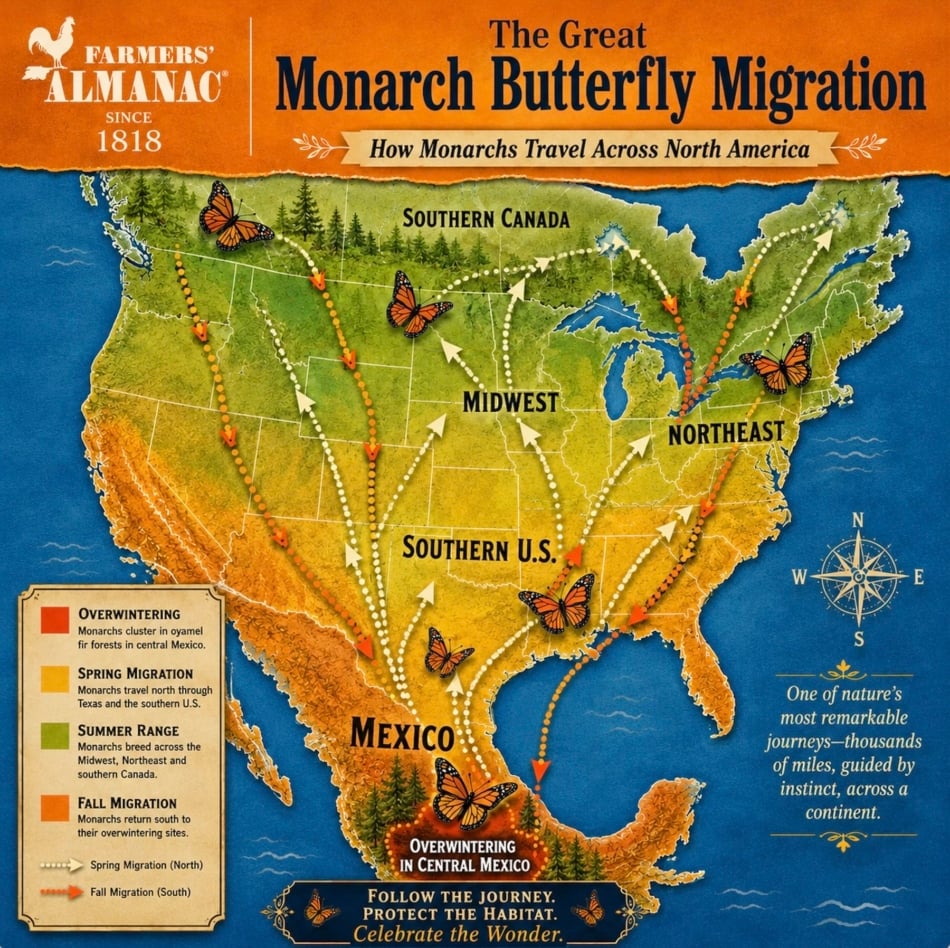
Monarchs may begin heading south from southern Canada and the northern United States during August, with the great wave of migration gradually moving south through September and October.
By late October and November, many eastern monarchs are arriving at their winter home in the mountains of central Mexico.
According to Monarch Watch, the approximate peak migration progresses southward like this:
- Northern U.S. and southern Canada: Late August through early September
- Upper Midwest and northern Northeast: Early to mid-September
- Central U.S. and Mid-Atlantic: Mid- to late September
- Southern Plains and upper South: Late September into early October
- Deep South: October
- Central Mexico: Late October into November
Weather can move those dates forward or backward. Cold fronts accompanied by favorable northerly winds can produce spectacular waves of migrating monarchs.
That means September is one of the best months of the year to watch the skies, fields, and flower gardens for monarchs across a large part of the country.
And monarch migration isn’t the only hint that the seasons are changing. Here are Farmers’ Almanac’s 10 Early Signs of Fall in Nature.
How Far Do Monarch Butterflies Migrate?
Some eastern monarchs travel more than 2,000 miles, while individuals beginning farther north may cover close to 3,000 miles before reaching their winter habitat in Mexico. The U.S. Fish and Wildlife Service says migrating monarchs commonly travel roughly 70 to 75 miles in a day, although conditions can sometimes carry individual butterflies much farther.
Think about the scale of that journey.
A monarch with a wingspan of roughly four inches can fly from Canada, cross much of the United States, enter Mexico, and eventually reach a small mountainous region it has never seen before.
There are no parents leading the way.
No learned migration route.
The instructions are somehow built into the butterfly.
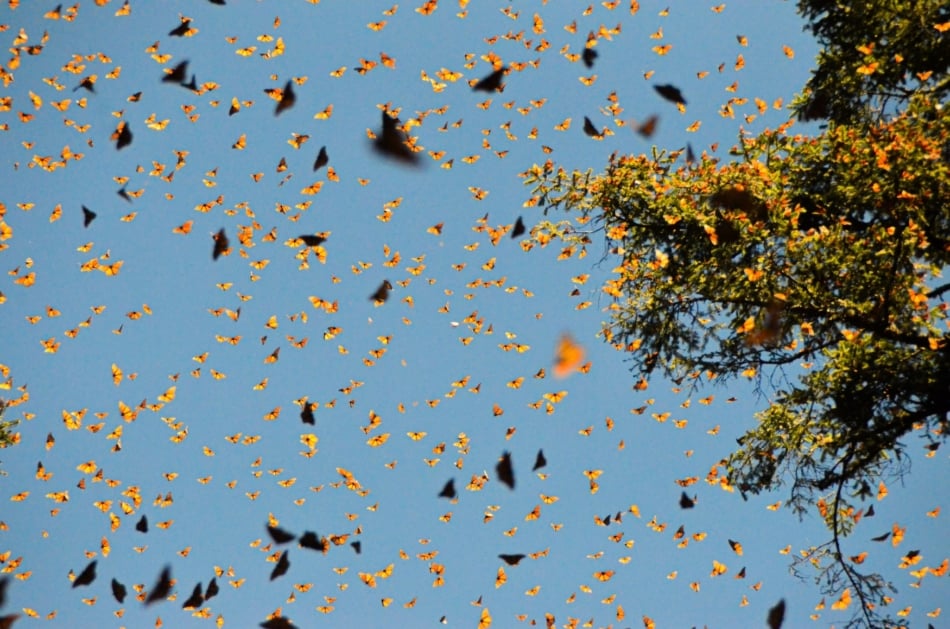
The Amazing Monarch “Super Generation”
Here is where the story becomes even stranger.
Most monarch butterflies born during spring and summer live only about two to six weeks as adults.
But the monarchs born in late summer are different.
Sometimes called the “super generation,” these butterflies delay reproduction and devote their energy to migration and survival. Instead of living for just a few weeks, the migrating generation can survive for many months.
They fly south, spend the winter in Mexico, and eventually begin the northward journey the following spring.
Their children, grandchildren, and great-grandchildren continue moving north through the spring and summer.
Then another super generation appears the following fall and somehow flies back toward the same Mexican forests its ancestors left months earlier.
Want more? See our guide to Monarch Butterfly Facts and How to Help Them Thrive.
How Do Monarch Butterflies Know Where to Go?
Scientists have discovered some remarkable clues.
Migrating monarchs use a time-compensated sun compass, combining the position of the Sun with an internal biological clock to maintain the correct direction throughout the day.
Research also suggests monarchs can use Earth’s magnetic field as a backup navigational system when sunlight is unavailable.
Their antennae appear to play an important role in this navigation system.
But one of the great mysteries remains: How does a butterfly that has never made the trip know where Mexico is?
The journey is largely instinctive—one of the most remarkable examples of inherited navigation known in the animal world.
Where Do All the Monarchs Go?
Most monarchs east of the Rocky Mountains eventually converge in a remarkably small area of the mountains of central Mexico, particularly in Michoacán and the State of Mexico.
There, at elevations of roughly 8,000 to nearly 12,000 feet, millions of butterflies cluster together in forests dominated by oyamel fir trees.
The cool, moist mountain climate allows the butterflies to conserve energy without freezing.
Western monarchs have historically followed a different migration pattern, with many overwintering in groves along the California coast and northern Baja California.
In Mexico, monarch arrival around late October and early November has also become culturally associated with Día de los Muertos—the Day of the Dead. In some traditions, the returning butterflies are seen as representing the souls of ancestors returning home.
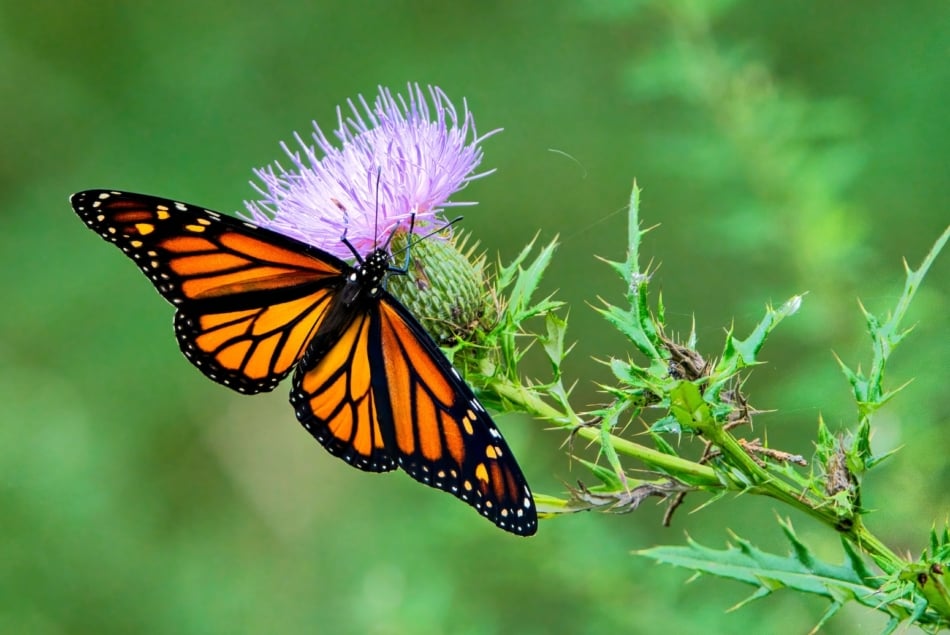
Look for Monarch “Rest Stops”
Migrating monarchs don’t simply fly nonstop to Mexico.
They need fuel.
Along the way, butterflies frequently stop in areas rich in nectar-producing flowers. Under the right conditions, dozens, hundreds, or even thousands of monarchs may gather in an area to feed or rest.
Late-blooming flowers can be especially important.
Good fall nectar sources include:
- Goldenrod
- New England asters
- Joe-Pye weed
- Blazing star
- Coneflowers
- Zinnias
- Cosmos
- Sunflowers
So before cleaning up the late-summer garden, consider leaving those flowers standing a little longer.
Our guide to growing a pollinator-friendly wildflower garden has more ideas.
And don’t be too quick to remove goldenrod—it’s an especially useful late-season nectar plant. Learn why you shouldn’t blame goldenrod for your fall allergies.
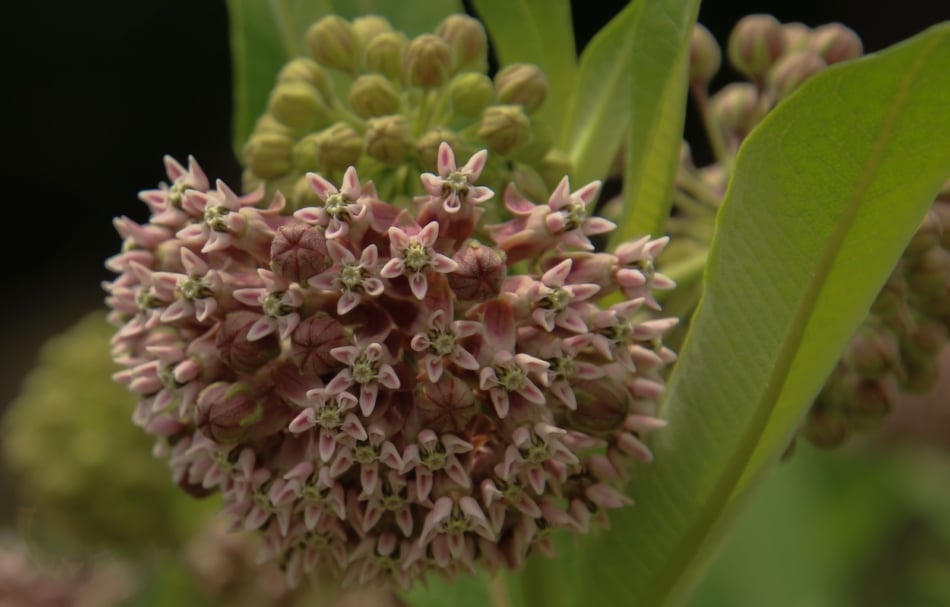
Milkweed or Flowers: Which Do Migrating Monarchs Need?
Both—but for different reasons.
Milkweed is essential for monarch reproduction. It is the only group of plants monarch caterpillars can eat, and female monarchs lay their eggs on milkweed.
Adult migrating monarchs, however, need nectar-rich flowers to fuel their journey.
So the ideal monarch garden includes native milkweed for future generations along with flowering plants that provide nectar from spring all the way through the first frost of fall.
Are Monarch Butterflies Endangered?
Monarch numbers have declined substantially over recent decades because of threats including habitat loss, declining milkweed availability, pesticide exposure, drought, extreme weather, and changes to overwintering habitat. The U.S. Fish and Wildlife Service continues conservation work aimed at protecting monarch habitat throughout their enormous range.
There has also been encouraging recent news.
The latest survey of eastern monarchs overwintering in Mexico found that the butterflies occupied 7.24 acres of forest during the 2025–2026 winter, compared with 4.42 acres the previous year—a 64% increase. Researchers caution, however, that monarch populations can fluctuate dramatically from year to year, so one strong winter does not erase their longer-term challenges.
How You Can Help the Monarch Migration
You don’t need a huge meadow or farm to help.
Even a backyard garden can become a tiny refueling station along one of the world’s great migration routes.
Plant native milkweed, keep nectar-producing flowers blooming into fall, reduce unnecessary pesticide and herbicide use, and leave patches of native wildflowers wherever practical.
You can also participate in citizen-science programs such as Monarch Watch’s tagging program, which helps researchers learn where monarchs originate, which routes they follow, and how successfully they reach Mexico.
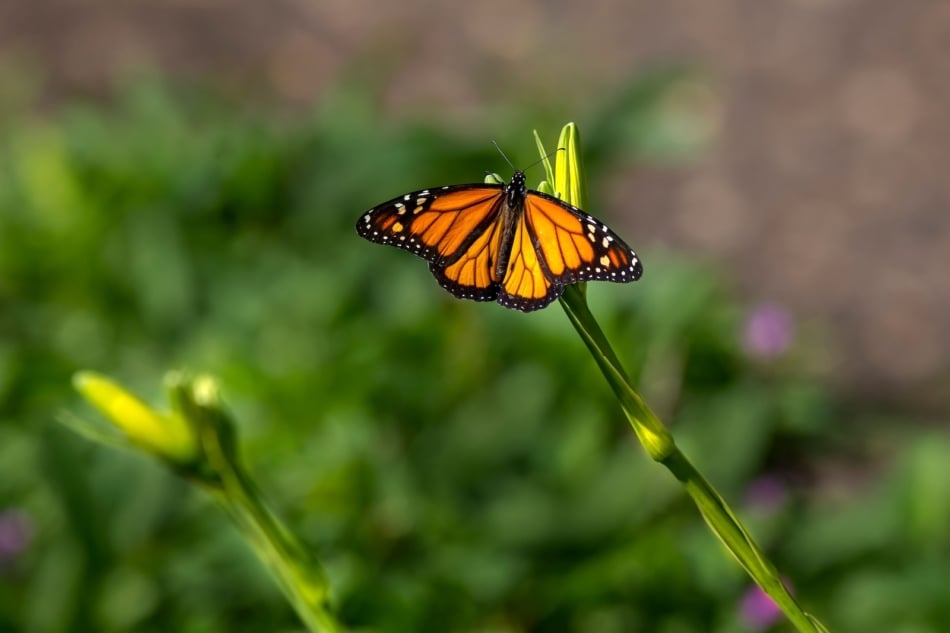
Keep Your Eyes on the Flowers This Fall
For most of us, the monarch migration won’t look like a stampede.
It might begin with a single orange butterfly passing over your yard.
Then another.
Perhaps several feeding together on goldenrod or asters.
But each one may be somewhere along a journey stretching from Canada to the mountains of Mexico—a journey accomplished by a creature that weighs only a fraction of an ounce.
So during the coming weeks, take an extra look at your garden, roadside wildflowers, parks, fields, and shorelines.
The great monarch migration may be passing right in front of you.


- Farmers' Almanac Staff

- Farmers' Almanac Staff
- Farmers' Almanac Staff
- Farmers' Almanac Staff