Millions of Birds Are Flying Overhead at Night Right Now—Here’s How to Witness the Great Fall Migration
Millions of birds are migrating south right now—and many are flying high overhead while we sleep. Here’s why fall migration happens at night, how birds navigate in the dark, and how you can help them along the way.

The great fall bird migration of 2026 is underway across North America. But there’s a reason you may not see much of it: Some of the biggest movements happen high above us while we’re sleeping.
Step outside after dark tonight and the sky may look quiet.
It isn’t.
High above your house, neighborhood, farm, or city, birds may be streaming south through the darkness—warblers, thrushes, sparrows, vireos, and other travelers making one of the most remarkable seasonal journeys in nature.
And on a particularly busy migration night, the numbers can be staggering.
BirdCast, a project involving the Cornell Lab of Ornithology and other research institutions, reports that hundreds of millions of birds can be aloft across North America on a single night during migration. Many begin taking flight just 30 to 45 minutes after sunset and may continue flying until shortly before dawn.
Fall migration is already underway by late August, and the movement will continue in waves throughout September, October, and into November.
For generations, the movement of birds has been one of nature’s unmistakable signs that the seasons are changing. If you’ve noticed birds gathering, disappearing, or suddenly appearing in your yard, it may be another of the early signs of fall happening all around us.
But there’s something especially fascinating about fall migration:
Most of it happens while we sleep.
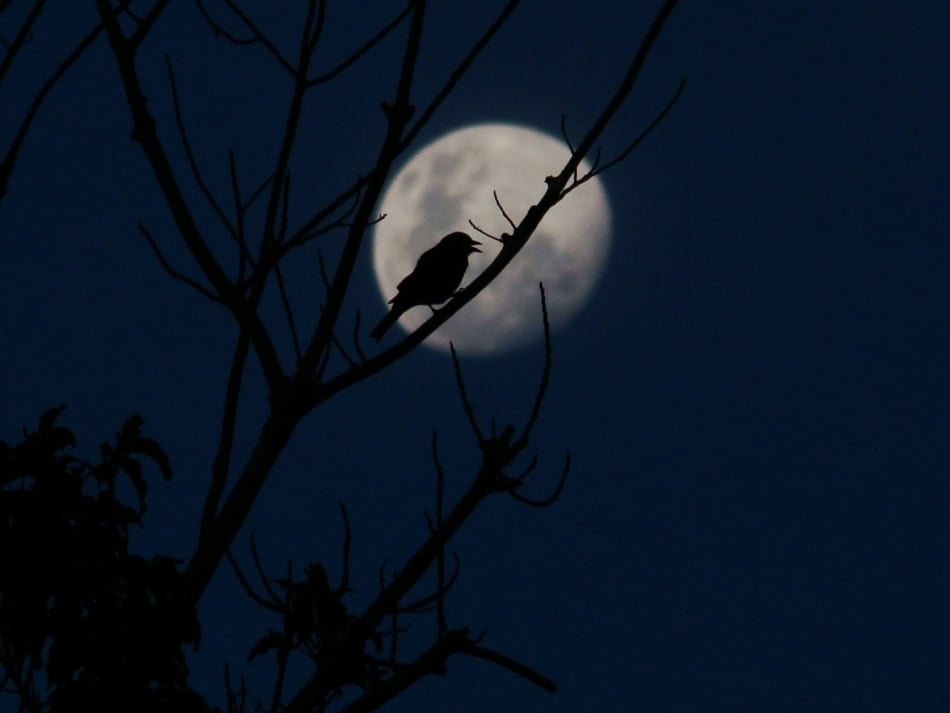
Most Migrating Birds Fly at Night
When people imagine bird migration, they often picture a V-shaped flock of geese crossing a blue autumn sky.
That certainly happens.
But many of North America’s migratory songbirds travel under an entirely different set of conditions.
They fly at night.
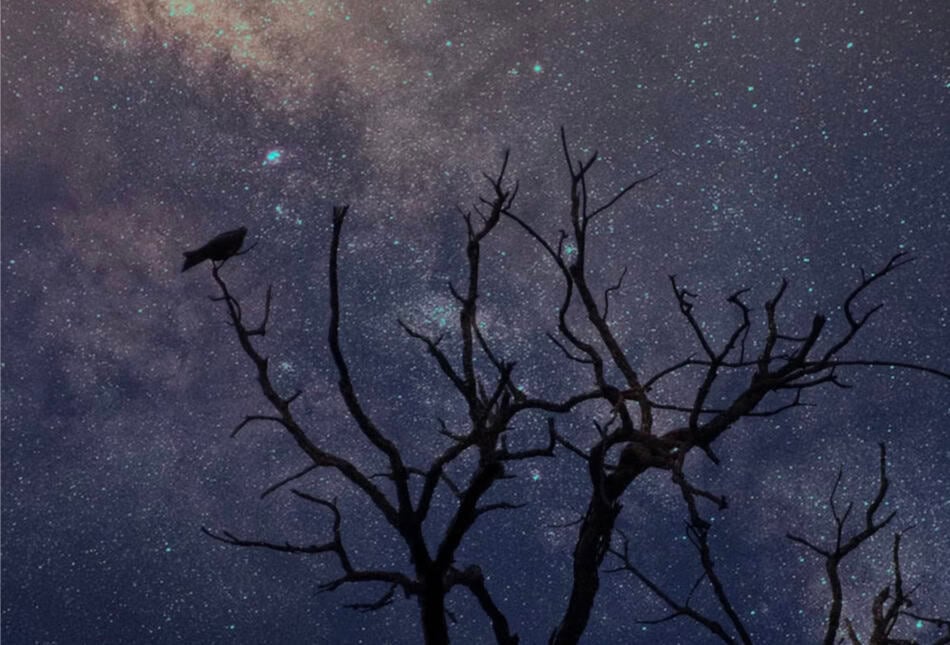
Cornell Lab researchers estimate that roughly 80% of North American migratory birds make at least part of their migratory journeys after dark.
That includes many familiar backyard birds.
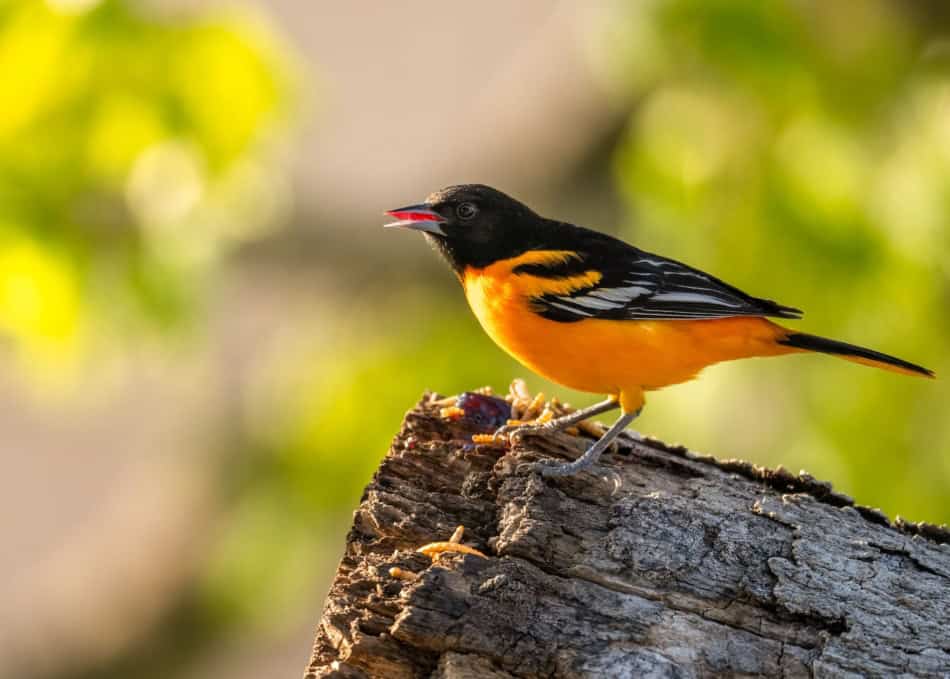
Warblers, thrushes, sparrows, vireos, tanagers, and orioles can take to the air after sunset and travel for hours through the darkness.
It’s one reason a patch of woods that seemed nearly empty yesterday can suddenly be filled with unfamiliar birds the next morning.
They arrived overnight.
Why Do Birds Migrate at Night?
Flying after dark offers birds several advantages.
For one, nighttime air is generally cooler. Long-distance flight produces a tremendous amount of heat, particularly for small birds continuously flapping their wings.
There are also fewer daytime predators in the air.
Night travel allows many species to spend daylight hours doing something equally important: eating.
Migration requires enormous amounts of energy. Birds can land around dawn, spend the day resting and replenishing their fat reserves, and then continue their journey after sunset when conditions are favorable.
Weather matters, too.
During fall migration, birds moving south often wait for weather systems that produce favorable winds from the north or northwest. A passing cold front can sometimes act like a green light for migration, encouraging large numbers of birds to depart on the same night.
So if a crisp northerly breeze follows a late-summer cold front, there may be far more happening above you that night than you realize.
Keep an eye on the Farmers’ Almanac 2026 Fall Weather Forecast as these autumn weather patterns begin moving across the country.
How Do Birds Know Where They’re Going in the Dark?
This may be the most extraordinary part of the story.
A tiny songbird weighing less than an ounce can travel hundreds or even thousands of miles and find its way to wintering habitat it may have never visited before.
There is no single navigation system.
Migrating birds appear to combine several.
Scientists have found evidence that birds can use:
- The stars
- Earth’s magnetic field
- The position of the setting Sun
- Polarized light
- Coastlines, rivers, mountain ranges, and other landmarks
- Wind patterns
- And, in some species, even smell
Experiments with indigo buntings have shown that the birds can orient themselves using patterns of stars around the North Star. Other birds can use Earth’s magnetic field as a kind of natural compass.
Think about that the next time you hear a tiny bird calling from a backyard tree.
It may possess a navigation system humans are only beginning to fully understand.
Which Birds Are Migrating Right Now?
Exactly which birds you’ll see depends on where you live.
Migration advances across the continent in waves rather than beginning everywhere on one particular date.
During late August and September, birdwatchers in many parts of the United States can begin seeing southbound migrants such as:
- Warblers
- Vireos
- Thrushes
- Flycatchers
- Swallows
- Orioles
- Tanagers
- Shorebirds
- Sparrows
Later in autumn, increasing numbers of juncos, white-throated sparrows, waterfowl, and other cold-weather visitors begin arriving farther south.
Not every migrant flies at night.
Hawks, eagles, vultures, and other soaring birds generally migrate during daylight because they can take advantage of columns of rising warm air, known as thermals.
Hummingbirds also generally migrate during the day and travel largely alone.
If you still have hummingbirds visiting your yard, don’t rush to remove their food source. See our guide explaining why you should keep your hummingbird feeder up during fall migration.
How To Know If Birds Migrated Over Your House Last Night
You no longer have to guess.
Modern weather radar has revealed something extraordinary: Radar used to track rain and thunderstorms can also detect enormous concentrations of migrating birds.
The BirdCast Migration Dashboard uses weather radar and forecasting models to show when and where birds are migrating across the United States.
Its fall migration data season runs from August 1 through November 15.
Check the forecast in the evening.
If heavy migration is predicted over your area, set your alarm a little earlier the next morning.
Then head outside with binoculars.
A neighborhood park, woodland edge, shoreline, hedgerow, backyard, or even a group of trees surrounded by development can become a temporary rest stop for birds that were hundreds of miles away only a day or two earlier.
Listen to the Night Sky
There’s another way to experience migration without seeing a single bird.
Listen.
Many migrating songbirds make short, high-pitched sounds known as nocturnal flight calls while traveling through the darkness.
On a quiet migration night, particularly away from traffic and other noise, you may occasionally hear faint seep, zeet, or chip sounds coming from somewhere overhead.
Those calls can help birds maintain contact while moving through the night sky.
For an old-fashioned approach, try watching the face of a bright Moon through binoculars or a small telescope. Bird researchers once counted migrating birds by watching their silhouettes cross the Moon—long before modern radar made continental-scale tracking possible.
One Simple Thing You Can Do Tonight: Turn Off Unnecessary Lights
Nighttime migration has a downside.
Artificial light can interfere with the natural cues birds use to navigate.
Bright floodlights, illuminated buildings, decorative lighting, and the glow over cities can attract or disorient migrating birds. Birds may circle illuminated areas, waste precious energy, or be drawn into developed areas where glass and buildings create additional collision risks.
That’s why Audubon and other bird-conservation organizations encourage people to participate in Lights Out programs during migration.
Audubon’s fall 2026 campaign is already underway. Its North Carolina program, for example, is asking people to turn off unnecessary exterior decorative lighting from 11 p.m. to 6 a.m. through November 30. Local migration dates and recommendations can vary.
You don’t have to make your home completely dark.
A few simple changes can help:
- Turn off outdoor lights you aren’t using.
- Shut off decorative landscape and architectural lighting overnight.
- Use motion sensors instead of leaving lights on continuously.
- Aim necessary outdoor lighting downward.
- Close blinds or curtains in brightly illuminated rooms.
- Make large windows more visible to birds with appropriate exterior patterns, screens, or treatments.
The benefits extend beyond birds: you’ll use less electricity and get a better view of the stars.
Help Migrating Birds Refuel During the Day
After flying through the night, migrating birds need food, water, and shelter.
A bird-friendly yard can become a miniature rest area on a journey stretching thousands of miles.
Native plants are especially valuable because they support the insects, fruits, berries, seeds, and cover birds naturally depend upon.
You can also provide clean water and appropriately maintained feeders.
And there’s no need to stop feeding birds simply because migration has begun. Learn more about why a fall bird feeder can help birds during this demanding season.
Birds Have Marked the Changing Seasons for Generations
Long before radar, satellites, weather apps, or migration forecasts, people watched birds.
Farmers noticed when swallows gathered.
Sailors watched seabirds.
Families listened for geese overhead.
Those observations became part of a vast tradition of seasonal and weather folklore—some fanciful, some surprisingly rooted in real animal behavior. You can explore more of those traditions in our collection of bird weather lore and old-fashioned signs from nature.
Today science allows us to see the phenomenon in extraordinary detail.
Radar can reveal birds passing overhead.
Tracking devices can follow individual journeys across continents.
Researchers can even forecast nights when migration is likely to be especially heavy.
Yet the spectacle itself is ancient.
Look Up Tonight
Sometime after sunset tonight, step outside.
Let your eyes adjust to the darkness.
Listen.
The sky may look empty.
But thousands of feet overhead, tiny birds could be following stars, sensing Earth’s magnetic field, riding favorable winds, and continuing a journey their ancestors have made for countless generations.
By morning, some will be hundreds of miles farther south.
Others may be resting in the trees just beyond your window.
Have you noticed new birds arriving—or familiar summer birds disappearing—from your yard? Tell us what you’re seeing and where you live in the comments.


- Farmers' Almanac Staff

- Farmers' Almanac Staff
- Farmers' Almanac Staff
- Farmers' Almanac Staff