What Temperature Makes Leaves Change Color? It’s Not Just the Cold
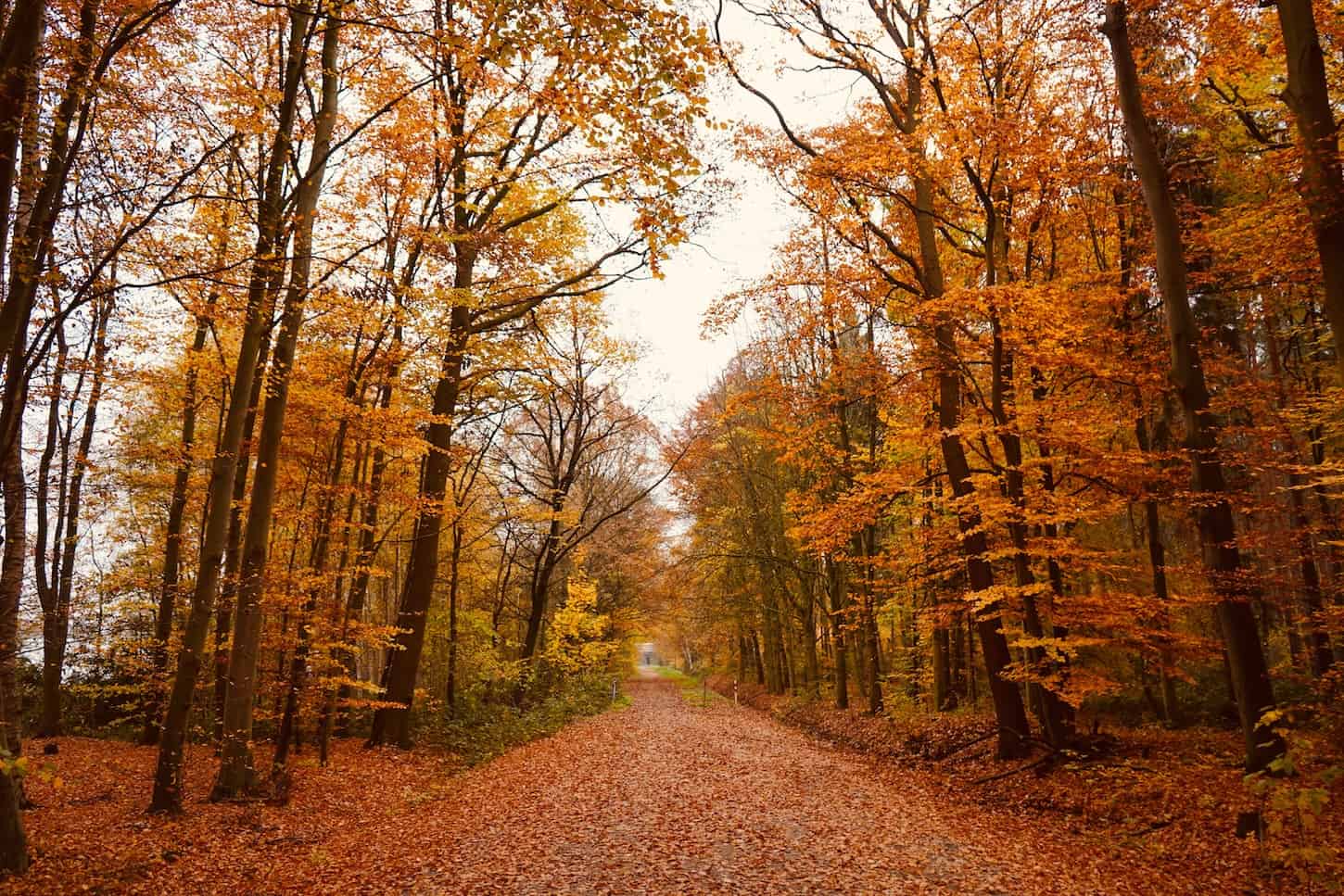
Every fall, millions of trees seem to change almost overnight.
Green hillsides turn yellow. Maples blaze red and orange. Oaks deepen into bronze and burgundy.
And when that first cool night arrives, it’s tempting to give the cold all the credit.
But what temperature actually makes leaves change color?
The surprising answer is that there is no single temperature that flips the switch.
Cool weather helps create brilliant autumn colors, but one of the biggest signals comes from something you probably don’t notice nearly as much:
The nights are getting longer.
And if you’re wondering when the color will actually reach its peak where you live, see our 2026 Fall Foliage Peak Map.
What Temperature Makes Leaves Change Color?
There isn’t one exact temperature at which leaves begin changing color.
Instead, fall color is produced by a combination of:
- Shorter days
- Longer nights
- Cooler temperatures
- Sunlight
- Moisture
- Tree species
- Weather conditions during the growing season
For some of the brightest red and purple fall colors, cool nights below about 45°F—but still above freezing—can be especially favorable.
But cold temperatures aren’t what actually start the entire process.
Shortening daylight is one of the primary signals telling deciduous trees that winter is coming.
The Real Trigger: Longer Nights
Trees can essentially tell that autumn is approaching because the amount of daylight changes.
As summer moves toward fall, days become shorter and nights become longer.
That change helps trigger a process called leaf senescence, when the tree begins shutting down its leaves and preparing for winter.
During spring and summer, leaves continuously produce chlorophyll—the green pigment that plays a central role in photosynthesis.
As nights lengthen and temperatures cool, chlorophyll production slows.
Eventually, the green begins to fade.
And that’s when fall’s hidden colors appear.
Iowa State University Extension explains the science behind fall color, noting that increasingly long nights signal plants to prepare for winter and chlorophyll production begins to decline.
The changing daylight becomes especially noticeable around the autumnal equinox and other major September seasonal events.
So although a chilly September night may seem to suddenly “turn” the leaves, the tree has already been responding to changing daylight for weeks.
Why Leaves Turn Yellow and Orange
Here’s something fascinating:
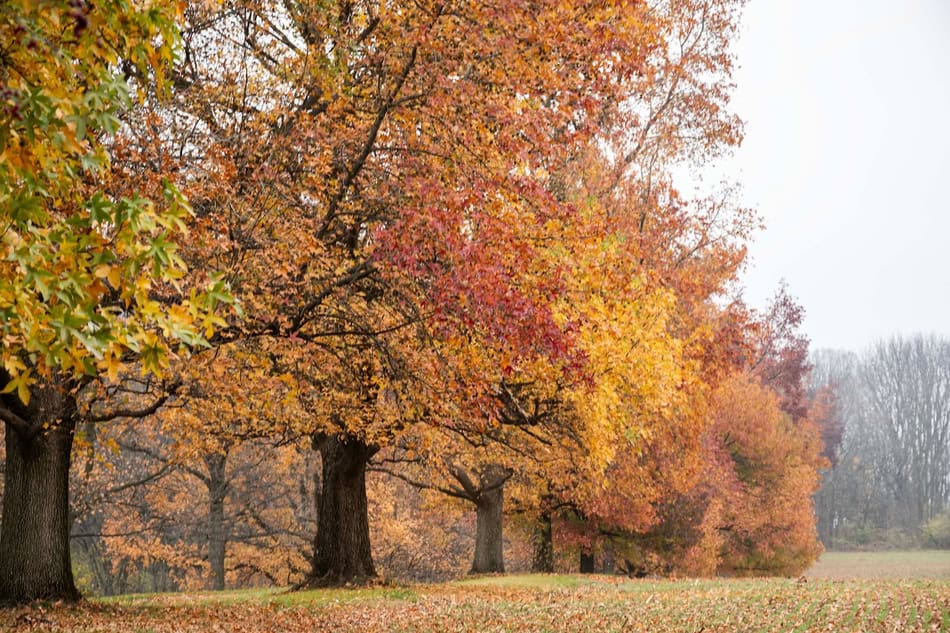
Much of the yellow and orange color you see in autumn leaves was already there all summer.
You just couldn’t see it.
Leaves contain pigments called carotenoids, which create yellow and orange colors.
During summer, those pigments are overwhelmed by the much stronger green color of chlorophyll.
Once the chlorophyll begins breaking down in autumn, the green disappears and those hidden yellows and oranges finally become visible.
The process is described in detail by University of Illinois Extension, which explains how carotenoids remain in leaves during the growing season but become visible as chlorophyll fades.
Think of it as removing a green curtain.
The autumn colors were waiting behind it.
This is why trees such as birches, aspens, hickories and some maples produce such spectacular yellow and golden foliage.
For another look at the pigments behind autumn’s display, see our Farmers’ Almanac guide to why leaves change color.
Red Leaves Are Different
Red and purple leaves have a slightly different story.
Many of those colors come from pigments called anthocyanins.
Unlike the yellow and orange carotenoids that are already present in leaves during summer, much of the anthocyanin responsible for brilliant autumn reds is produced in the leaf during late summer and fall.
And weather matters enormously.
Bright sunlight allows leaves to continue producing sugars during the day.
Then, when nights become cool, those sugars can become trapped in the leaves.
Some trees use those sugars to produce anthocyanins—which creates spectacular shades of:
- Scarlet
- Crimson
- Burgundy
- Purple
- Deep orange
That’s one reason sugar maples can sometimes look almost fluorescent red during a spectacular foliage year.
The Ideal Temperature for Brilliant Fall Color
If you wanted to design the perfect autumn foliage weather pattern, it might look something like this:
Warm, sunny days followed by clear, cool nights with temperatures below roughly 45°F—but above freezing.
Why?
During sunny days, leaves continue making sugars.
During cool nights, movement of those sugars out of the leaves slows.
That can encourage anthocyanin production.
The result?
Brighter reds and purples.
That’s also why the best foliage years depend on much more than one chilly night. Our 2026 Fall Foliage Forecast looks at rainfall, drought, summer stress and early-fall weather to assess this year’s prospects around the country.
You can also read our deeper explanation of what makes fall foliage especially bright in some years.
Can It Get Too Cold for Good Fall Color?
Yes.
This is where the old idea that frost “paints” the leaves becomes misleading.
Cool nights can help create beautiful color.
A hard freeze can do the opposite.
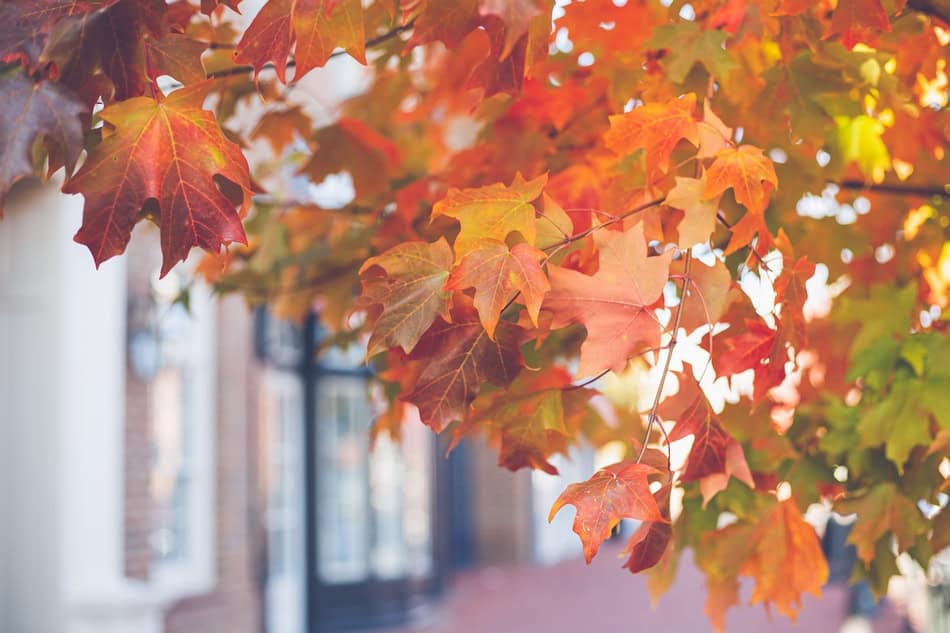
If freezing temperatures arrive too early, they can damage leaf tissue and interfere with the processes responsible for producing brilliant colors.
So when it comes to autumn color:
Cool is good.
Freezing isn’t necessarily better.
The perfect fall night is cold enough to slow things down—but not cold enough to damage the leaves.
Wondering when freezing temperatures typically arrive where you live? Check the Farmers’ Almanac 2026 First Frost Dates guide or look up your city’s average first frost date.
Why Some Years Have Better Fall Color Than Others
You’ve probably noticed this.
One autumn seems spectacular.
Every hillside looks like it’s on fire.
Then the next year arrives and the same trees seem to turn dull yellow or brown before dropping their leaves.
That’s because the weather leading up to fall matters too.
The best foliage generally develops when trees have had reasonably favorable growing conditions, followed by:
Sunny fall days + cool nights + adequate moisture.
There are plenty of ways Mother Nature can spoil the show.
Drought Can Make Leaves Change Early
Extended drought can stress trees.
When trees are severely stressed, they may begin shutting down leaves early to conserve resources.
Instead of slowly developing brilliant fall colors, leaves may:
- Curl
- Turn brown
- Drop early
- Produce muted color
That’s one reason a very dry summer can sometimes lead to a shorter or less impressive foliage season.
Healthy trees generally have a better opportunity to produce vibrant foliage than severely stressed trees.
Drought conditions are one of the factors we considered in our 2026 Fall Foliage Outlook.
Too Much Warm Weather Can Delay the Show
An unusually warm September or October can also affect fall color.
Remember: trees are responding to both day length and temperature.
Shortening days continue pushing trees toward dormancy, but consistently warm nights can slow some of the chemical changes associated with the brightest autumn colors.
That means a stretch of unusually warm fall weather can influence both the timing and intensity of the display—especially the brilliant reds and purples.
For a broader look at the temperatures and weather patterns expected this season, see our 2026 Fall Weather Forecast.
Rain Can Help—and Hurt
Trees need moisture throughout the growing season.
So adequate rainfall can help keep trees healthy heading into autumn.
But once peak foliage arrives, several days of heavy rain and wind aren’t exactly what leaf-peepers want.
As a leaf approaches the end of its life, a special layer of cells forms at the base of the leaf stem.
Wind and heavy rain can knock colorful leaves down before the show reaches its full potential.
Once those leaves start piling up, you may also wonder what to do with them. Before grabbing the rake, read Should You Leave Fallen Leaves on Your Lawn?.
And if you’re trying to figure out when the trees will finally be bare, see our state-by-state guide to the final major leaf cleanup of fall.
Why One Side of a Tree Can Be Redder Than the Other
Here’s a fun thing to look for this fall.
Find a maple tree with one side exposed to bright sunshine and another side shaded by buildings or other trees.
You may notice the sunny side is more intensely red.
That’s not necessarily your imagination.
More sunlight can mean more sugar production inside the leaf.
More sugar can mean more anthocyanin production.
In other words, a single tree can experience several different miniature environments.
Why Do Different Trees Turn Different Colors?
Weather doesn’t determine everything.
Genetics matter too.
Different tree species contain different pigments and have different abilities to produce anthocyanins.
That’s why certain trees tend to produce characteristic fall colors.
Red and Scarlet
Often seen in:
- Red maple
- Sugar maple
- Black gum
- Dogwood
- Sumac
- Some oaks
Yellow and Gold
Often seen in:
- Birch
- Aspen
- Hickory
- Ginkgo
- Honeylocust
Orange
Often seen in:
- Sugar maple
- Some oaks
- Sassafras
Bronze and Brown
Common among:
- Many oak species
- Beech
Of course, weather and individual genetics mean the exact color can vary from tree to tree—and even from year to year.
Does Elevation Affect Fall Color?
Absolutely.
If you’ve ever traveled through mountains during foliage season, you’ve probably noticed that autumn seems to move downhill.
Higher elevations generally experience cooler temperatures sooner than valleys below.
That can cause trees at higher elevations to begin changing earlier.
The result can be beautiful bands of color moving gradually down mountainsides over several weeks.
Latitude matters too.
Northern areas generally experience autumn conditions earlier than areas farther south.
That’s why foliage season typically progresses broadly from:
North to south
and
Higher elevations to lower elevations.
You can see that progression clearly on our 2026 U.S. Fall Foliage Peak Map, which follows peak color from northern and high-elevation areas in late September through parts of the South in November.
Why Do Leaves Eventually Fall Off?
Changing color is only one part of the tree’s preparation for winter.
As autumn progresses, the tree begins forming a special layer of cells where the leaf stem meets the branch.
This is called the abscission layer.
Eventually, the connection becomes weak enough that wind—or simply gravity—causes the leaf to fall.
The tree then seals the spot where the leaf had been attached.
Dropping leaves helps deciduous trees conserve resources during winter when freezing temperatures and limited water would make maintaining a full canopy difficult.
The University of Illinois Extension’s fall-color guide explains how this abscission layer gradually separates the leaf from the tree as senescence progresses.
So What Temperature Makes Leaves Change Color?
Here’s the simplest answer:
There isn’t one magic temperature.
Shortening daylight helps initiate the process.
But cool autumn weather influences how quickly leaves change and how brilliant those colors become.
For especially vivid foliage, one of the best combinations is:
Warm, sunny days
Cool nights below about 45°F
Temperatures that remain above freezing
Adequate moisture during the growing season
Relatively calm weather during peak foliage
That’s the recipe for those spectacular autumns people remember.
Does Frost Make Leaves Change Color?
Not exactly.
Frost has been credited with painting fall leaves for generations, but the real process begins long before the first frost.
Shortening daylight, cooler temperatures and changes inside the tree cause chlorophyll to disappear and other pigments to become visible.
A light frost may occur during foliage season without causing major damage.
But a hard freeze that arrives too early can damage leaves and bring the color show to an abrupt end.
If you’re tracking when that first cold snap may arrive, our First Frost Dates for 2026 can help.
When Will the Leaves Start Changing Near You?
Watch three things:
The calendar.
As September progresses, nights become longer.
The thermometer.
Once nighttime temperatures regularly become cooler—especially when they fall into the 40s—conditions can become increasingly favorable for vivid autumn color.
The weather.
Sunny days followed by cool—but not freezing—nights can help create especially vivid reds and purples.
Then look toward the trees.
The first changes may be subtle: a red branch near the top of a maple, a yellow edge on a birch leaf, or a patch of orange on an otherwise green hillside.
Soon, entire forests begin changing.
Want to know when your area should reach its best color? Check the Farmers’ Almanac 2026 Fall Foliage Peak Map and our 2026 Fall Foliage Forecast.
Although cold weather deserves some of the credit, autumn’s great transformation is really the result of light, temperature, moisture, chemistry and the remarkable internal clock of the trees themselves.
Frequently Asked Questions
What temperature makes leaves change color?
There is no single temperature that causes leaves to change. Shortening days help trigger the process, while cool nights—particularly temperatures below about 45°F but above freezing—can encourage brilliant fall colors.
Do leaves change because it gets cold?
Partly. Cooler temperatures influence fall color, but shorter daylight is also an important signal telling trees to prepare for winter.
Does frost make leaves turn colors?
Frost isn’t required for leaves to change color. In fact, an early hard freeze can damage leaves and shorten or dull the fall-color display.
What weather creates the best fall foliage?
Warm, sunny days followed by cool, relatively dry nights generally create excellent conditions for bright fall colors, particularly reds and purples.
Why are fall leaves brighter some years?
Fall color depends on several factors, including sunlight, nighttime temperatures, rainfall, drought, tree health and weather during the growing season.
Why do some trees turn red while others turn yellow?
Different tree species contain and produce different pigments. Yellow and orange colors generally come from carotenoids already present in the leaf, while many reds and purples result from anthocyanins produced during late summer and fall.
When will fall colors peak near me?
Peak foliage generally progresses from northern areas and higher elevations toward southern regions and lower elevations as autumn advances. See the Farmers’ Almanac 2026 Fall Foliage Peak Map for regional timing.


- Farmers' Almanac Staff

- Farmers' Almanac Staff

- Farmers' Almanac Staff
- Farmers' Almanac Staff