
7 Leaf-Raking Hacks That Make Fall Cleanup Easier

Spend less time wrestling with leaves—and put more of them to work in your yard—with these simple fall cleanup tips.
The trees put on a beautiful show every autumn. Then the show lands on your lawn.
If your usual routine involves raking one enormous pile, stuffing bags, and watching the next gust undo your work, it may be time for a different approach. A few small changes can make fall leaf cleanup more manageable—and you may not need to haul away nearly as many leaves as you think.
These seven leaf-raking hacks start before you make your first pile.
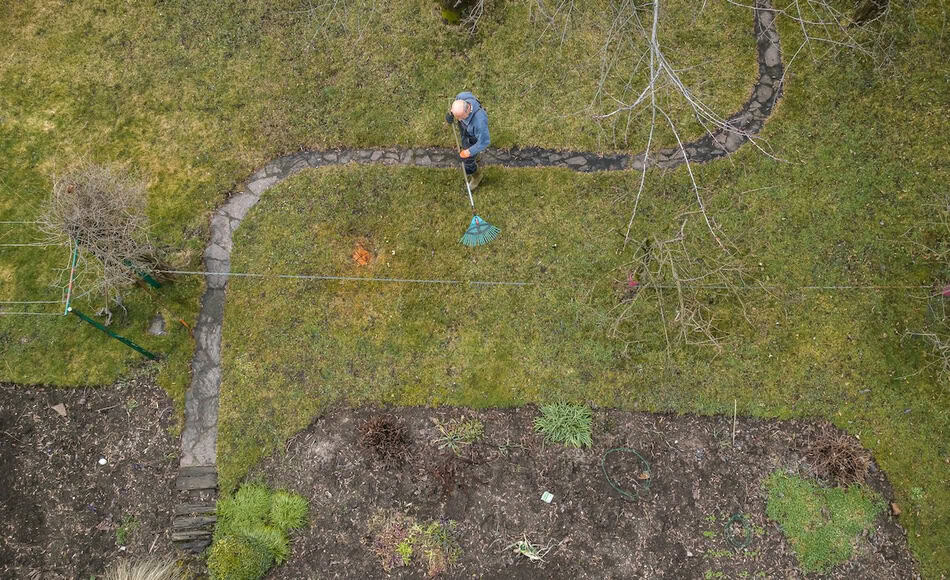
1. Choose Your Cleanup Window Around the Weather
A free Saturday isn’t always the best time to rake. Wet leaves stick together, cling to rake tines, and make heavier loads to move.
When possible, wait until rainwater or morning dew has dried. Choose a calm day, or take advantage of a light breeze by raking in the direction the leaves are already moving.
If strong winds are forecast and the lawn has only a scattering of leaves, consider postponing the big cleanup until the wind settles. Keep slippery steps and walkways clear in the meantime.
Try this: Check the forecast before setting aside an afternoon. A dry, relatively calm window can save you from repeatedly collecting the same leaves.
2. Rake Onto a Tarp Instead of Making a Giant Pile
An old tarp can be one of the most useful tools in your fall cleanup kit.
Spread it beside the area you’re working on, rake leaves directly onto it, then gather the corners and drag a manageable load to your compost area or collection spot. You’ll avoid repeatedly bending down to scoop up armfuls.
Work in sections and reposition the tarp as you go. Several smaller loads are easier to control than one sprawling pile that scatters while you’re trying to move it.
Try this: Put the tarp near the leaves before you start. Decide where each load is going so you don’t have to move it twice.
If you use municipal leaf collection, check local requirements before placing anything at the curb.
3. Let Your Lawn Mower Handle a Light Layer
One of the easiest raking hacks is knowing when you can skip the rake.
A light covering of dry leaves can often be chopped into small pieces with a mulching mower and left among the grass blades. The University of Minnesota Extension’s guide to fall leaf mulching recommends working regularly while leaves are dry; a second pass can help produce finer pieces.
The goal is scattered fragments that settle into the lawn, rather than a blanket covering the grass. If a heavy layer remains, collect the excess.
Try this: Mulch small amounts as they fall instead of waiting for a deep accumulation. Pick up sticks first and follow your mower’s operating instructions.
For more on when to mulch and when to remove leaves, read Should I Leave Fallen Leaves on My Lawn?.
4. Give Some Leaves a Nearby Winter Home
Before carrying every leaf to the curb, look for places where some can stay.
Leaves beneath trees, around shrubs, and in suitable garden areas can provide shelter for overwintering insects. The Xerces Society’s Leave the Leaves guide explains how fallen leaves and other plant material help protect these small creatures through winter.
You can gently move leaves off the lawn into a nearby habitat area without turning the entire yard into one large leaf pile. Keep paths clear and avoid burying small plants beneath heavy heaps.
Try this: Designate a quiet corner beneath trees or shrubs where whole leaves can remain undisturbed. Leaves saved for wildlife habitat are best left unshredded.
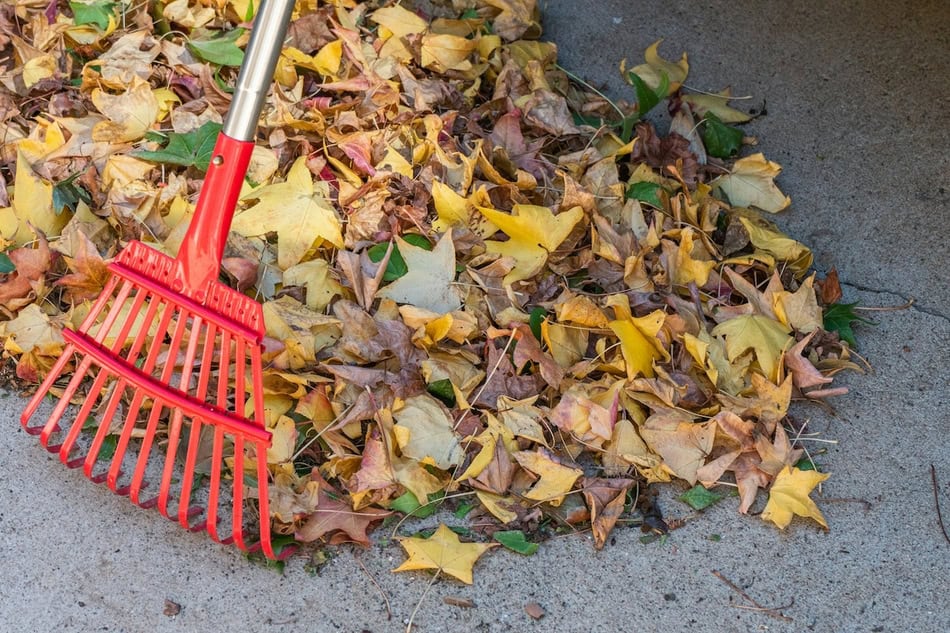
5. Match the Rake to the Space
A narrow rake makes an open lawn feel much bigger. A wide rake can be awkward between plants.
For broad lawn areas, use a lightweight leaf rake with a wide fan of flexible tines. In tight spaces, switch to a narrower rake or collect leaves gently by hand.
You’re gathering loose leaves, so use light strokes rather than digging into the soil. Move your feet as you work instead of repeatedly reaching for distant leaves.
Try this: Bring the pile toward you in short passes, then step back and repeat. Switch your leading hand periodically and take breaks before you become tired.

6. Clean Up in Rounds Instead of Waiting for Every Leaf
Waiting until the trees are completely bare sounds efficient—until a spell of rain turns the accumulated leaves into a heavy mat.
A more manageable approach is to remove or mulch leaves when they begin forming a dense covering, then schedule a larger cleanup once most have fallen.
Thick layers of whole leaves can shade and smother turf. A few scattered leaves don’t require the same attention. Our guide to when to rake your final leaves explains why local weather and the trees in your yard matter more than a single calendar date.
Try this: Make each round purposeful: clear the paths, address heavy patches on the lawn, and leave scattered leaves for the next pass.
7. Decide What “Finished” Looks Like Before You Start
Chasing every last leaf can turn a useful chore into an endless one.
Set a practical stopping point. Walkways should be clear, grass shouldn’t be buried under a mat, and any leaves you’ve gathered should be somewhere they can stay.
Work through those priorities before spending time on a stray leaf in a planting bed. A yard can be ready for winter without looking swept clean.
Try this: Finish one small section at a time. Before starting another, move or secure the leaves you’ve already collected so a breeze doesn’t undo your progress.
Fall cleanup becomes easier when you give each leaf a destination: small fragments on the lawn, whole leaves in a habitat area, or excess material in an appropriate collection or composting spot.
What’s your best leaf-raking trick? Share it in the comments—we’d love to hear what works in your yard.


- Farmers' Almanac Staff

- Farmers' Almanac Staff
- Farmers' Almanac Staff
- Farmers' Almanac Staff