
Why Farmers Made Corn Dollies From the Last Sheaf

When the last sheaf of grain came in, some harvesters saved a few stalks and wove them into a small figure. It might be kept in the farmhouse through winter, then returned to the fields when planting began. The custom turned the final bundle of a hard season’s work into something a household could hold onto.
“Corn” here means grain such as wheat, barley, oats, or rye, not maize. The name corn dolly also covers many kinds of straw work. The Museum of English Rural Life describes examples shaped as figures, crosses, love tokens, and stars in its collection of corn dollies and straw craft.
What did a corn dolly mean?
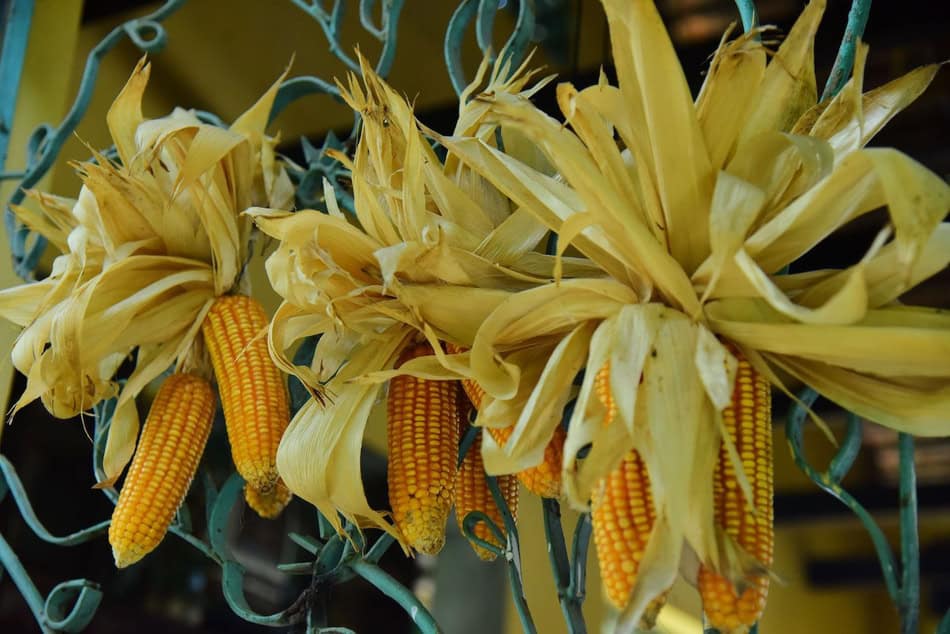
In some harvest traditions, people believed the spirit of the crop took refuge in the last sheaf as the rest of the grain was cut. Weaving those stalks into a figure gave the spirit a place to stay until spring. The Museum of Cambridge’s account of a 1949 corn dolly describes the figure being kept indoors over winter and later ploughed into the first furrow in hopes of a good crop.
That is one explanation found in harvest folklore, not a single meaning shared by every farmer or every region. The corn dolly meaning could depend on the local custom and the object itself. Some were made from the last sheaf; others were decorative pieces of straw work. The name does not point to one universal design or belief.
From harvest charm to straw craft
A corn dolly’s shape could be simple or elaborate. Some were woven into loops or crosses; others became birds, bells, or human-like figures. Their forms reflect both the maker’s skill and the variety of straw-working traditions. The Museum of English Rural Life notes that “corn dolly” is a broad label, and its collection includes straw work from around the world. Its online collection offers a close look at the designs.
Mechanized harvesting changed the craft. According to Ryedale Folk Museum, machine-harvested grain was no longer suited to making traditional dollies, and the craft later found a new life as decorative straw work. Today, corn dollies keep the harvest custom visible even where the original beliefs have faded.
The figure also belongs to a wider calendar of seasonal observances. Farmers and communities marked the end of harvest in different ways, while the autumn equinox offered another point in the year to take stock of changing light and the season’s work. Farmers’ Almanac explores those customs in its guide to fall equinox traditions.
If you see a corn dolly at a harvest festival or in a museum display, look at how the stalks turn and overlap. The pattern is the record of someone’s hands at work, and a reminder that the last sheaf once carried more than grain: in some places, it carried a story about bringing the harvest safely through winter.

- Maggie Konrad

- Maggie Konrad
- Maggie Konrad
- Maggie Konrad