Why We Carve Pumpkins on Halloween: The Strange History of Jack-o’-Lanterns

Before pumpkins became the face of Halloween, people carved frightening faces into turnips to ward off wandering spirits. The story behind this centuries-old tradition is stranger than you might imagine.
Every October, millions of Americans scoop out pumpkins, carve crooked smiles into their orange shells, and place glowing jack-o’-lanterns on their front porches.
It’s one of Halloween’s most beloved traditions. But have you ever wondered why we do it?
The answer begins not in an American pumpkin patch, but in the dark countryside of Ireland, where people once carved terrifying faces into root vegetables and placed them outside their homes to frighten away unwelcome spirits.
And at the center of it all is a mysterious character named Stingy Jack, a trickster who, according to an old Irish legend, managed to outsmart the Devil but ended up paying a terrible price.
Here’s how a spooky Irish folk tale became one of America’s favorite Halloween traditions.
The First Jack-o’-Lanterns Weren’t Pumpkins
Believe it or not, the original jack-o’-lanterns were often made from turnips, not pumpkins.
In Ireland and parts of Britain, people hollowed out turnips and other root vegetables, carved frightening faces into them, and placed lights inside.
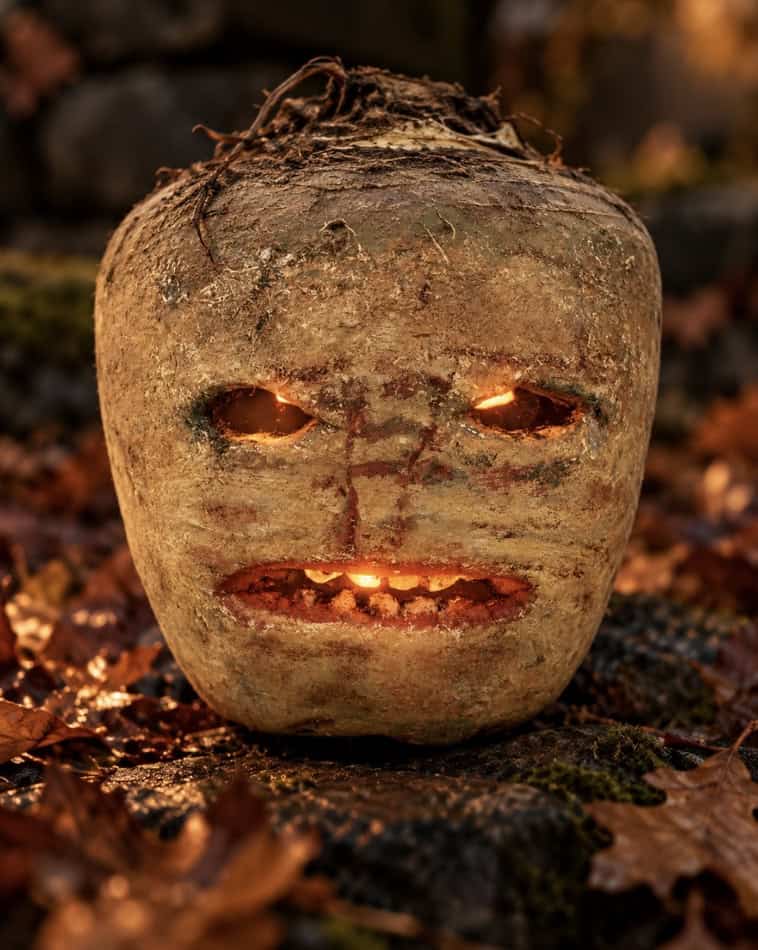
The finished lanterns could look surprisingly sinister. Unlike the round, cheerful pumpkins we see today, carved turnips had an unsettling, almost human appearance.
These eerie creations became associated with Halloween and the old customs surrounding Samhain, a Celtic seasonal festival marking the end of the harvest and the approach of winter.
In traditional folklore, this was a time when the boundary between the living and the dead was believed to grow thin.
A frightening face glowing in the darkness was more than a decoration. According to popular tradition, it might help keep unwanted spirits away.
But why were these strange vegetable lanterns called jack-o’-lanterns?
For that, we need to meet Stingy Jack.
The Legend of Stingy Jack: The Man Who Tricked the Devil
Long ago, according to Irish folklore, there lived a clever but miserly man known as Stingy Jack.
Jack was famous for his dishonesty, his fondness for mischief, and his ability to talk his way out of almost any situation.
One evening, the story goes, Jack encountered the Devil.
Rather than surrendering his soul, Jack devised a trick.
In one popular version of the legend, Jack convinced the Devil to transform himself into a coin so the two could pay for a drink.
But instead of spending the coin, Jack slipped it into his pocket beside a silver cross, preventing the Devil from returning to his original form.
Jack eventually agreed to release him, but only after extracting a promise that the Devil would leave him alone for a certain number of years.
When the Devil returned, Jack tricked him again, this time convincing him to climb a tree for a piece of fruit. Jack then carved a cross into the tree trunk, trapping the Devil among the branches.
Once again, Jack bargained for his freedom.
The Devil promised not to claim Jack’s soul.
It seemed Jack had won.
But the clever trickster hadn’t considered what would happen after his death.
A Lantern for a Lost Soul
When Stingy Jack finally died, the legend says he was refused entry into heaven because of the life he had led.
But he couldn’t enter hell, either.
The Devil had promised not to take his soul.
With nowhere to go, Jack was condemned to wander the earth in darkness.
According to the story, the Devil gave him a single burning coal to light his endless journey.
Jack hollowed out a turnip, placed the glowing ember inside, and carried it through the darkness.
He became known as Jack of the Lantern, or simply Jack-o’-Lantern.
People sometimes connected mysterious flickering lights seen over bogs and marshes with wandering spirits like Jack.
These strange lights were also called will-o’-the-wisps.
The legend helped give the carved lanterns their enduring association with wandering souls, supernatural encounters, and Halloween night.
Of course, Stingy Jack is a character of folklore, not a documented historical person. Different versions of his story have circulated over the centuries.
For more mysterious tales of lights in the darkness, explore the Farmers’ Almanac article Ghost Lights: A Weather Folklore.
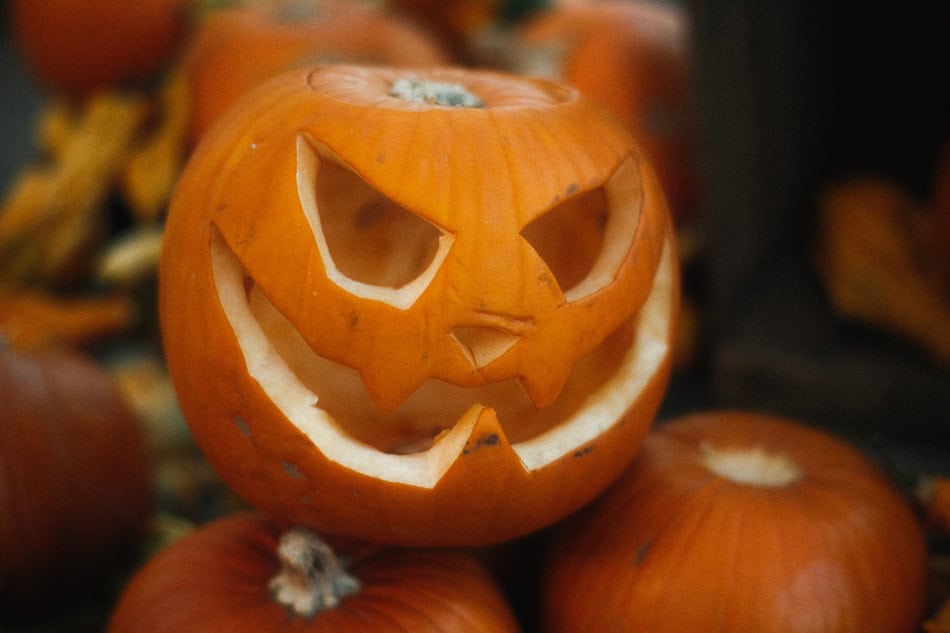
Why Americans Started Carving Pumpkins Instead of Turnips
If jack-o’-lanterns began with carved turnips, how did pumpkins become the symbol of Halloween?
The answer involves immigration, agriculture, and a little practical ingenuity.
During the 19th century, large numbers of Irish immigrants arrived in the United States, bringing familiar customs and folklore with them.
Among those traditions was the practice of creating lanterns from hollowed-out vegetables.
But in America, they discovered something that worked even better.
Pumpkins.
Native to the Americas and cultivated by Indigenous peoples for thousands of years, pumpkins were already an established part of North American agriculture.
They offered several advantages over turnips:
- They were much larger, allowing for bigger and more elaborate faces.
- Their flesh was generally easier to hollow out and carve.
- Their broad interiors could accommodate a candle or other light.
- Their bright orange color made them especially striking as autumn decorations.
Over time, pumpkins largely replaced turnips in the American Halloween tradition.
By the late 19th and early 20th centuries, glowing jack-o’-lanterns were becoming a familiar sight during Halloween celebrations.
What began as a frightening folk custom gradually evolved into a festive family activity.
Today, jack-o’-lanterns are almost impossible to separate from Halloween itself.
Want to learn more about America’s favorite autumn squash? Read Everything Pumpkin: Fun Facts and Lore.
Were Jack-o’-Lanterns Originally Meant to Scare Away Evil Spirits?
In many traditional accounts, yes.
The original carved lanterns were associated with supernatural beliefs and the frightening uncertainty of the dark autumn season.
People believed that unusual spirits or wandering souls might be encountered during Halloween.
Placing grotesque faces outside homes was one way people attempted to frighten those unwelcome visitors away.
In some versions of the tradition, lanterns also served a practical purpose: lighting pathways or helping people travel through the darkness.
The precise origins of vegetable carving are difficult to establish, and historians cannot trace every modern Halloween custom directly to ancient Celtic practices.
What is clear is that carved lanterns became an important part of Irish and British Halloween folklore before the pumpkin version became popular in America.
The next time you see a glowing pumpkin grinning from a porch, consider that its distant ancestors may have been intended to look far more frightening.
What Did the Original Turnip Jack-o’-Lanterns Look Like?
If you’ve never seen a carved Halloween turnip, the results might surprise you.
Where pumpkin jack-o’-lanterns often feature broad smiles and exaggerated expressions, turnip lanterns can look like small, shriveled human heads.
Their irregular shapes, pale flesh, and deep-set carved features produce a genuinely eerie effect.
Some surviving historical examples and reproductions look more like props from a horror movie than cheerful autumn decorations.
Ireland’s National Museum has preserved an example of an early 20th-century turnip lantern, offering a fascinating glimpse into what Halloween decorations once looked like.
The Smithsonian explores these historical examples in When People Carved Turnips Instead of Pumpkins for Halloween.
It’s a reminder that our modern Halloween decorations have a much darker visual history.
When Should You Carve Your Halloween Pumpkin?
Now that you know the history, you might be inspired to carve your own jack-o’-lantern.
But don’t reach for the carving knife too early.
While an uncarved pumpkin can stay attractive for weeks under favorable conditions, a carved pumpkin begins deteriorating much more quickly.
For Halloween 2026, which falls on Saturday, October 31, a good general rule is to wait until October 28–30 before carving.
In especially warm or humid weather, carving on October 30 or Halloween itself may give you better results.
To help your pumpkin last:
- Choose a firm pumpkin without soft spots or visible damage.
- Keep it in a cool, shaded location before carving.
- Remove the seeds and stringy pulp thoroughly.
- Use a battery-operated LED light instead of an open flame.
- Keep your finished jack-o’-lantern away from direct afternoon sunlight and excessive moisture.
For more helpful tips, see our guides to When You Should Buy Pumpkins for Halloween and How to Keep a Jack-o’-Lantern Fresh.
5 Surprising Facts About Jack-o’-Lanterns
1. The first jack-o’-lanterns weren’t orange. Traditional Irish lanterns were often made from pale turnips and other root vegetables.
2. The name is connected to a wandering light. The term jack-o’-lantern was also historically associated with mysterious flickering lights seen outdoors, sometimes called will-o’-the-wisps.
3. Pumpkins are native to the Americas. The Irish tradition of carving lanterns changed significantly when immigrants encountered these larger, easier-to-carve fruits.
4. The original faces were supposed to be frightening. Carved lanterns were associated with beliefs about spirits and supernatural protection, not simply festive decoration.
5. The tale of Stingy Jack has several versions. The details differ, but the central story remains the same: a trickster condemned to wander through the darkness with only a makeshift lantern.
A Halloween Tradition That Crossed an Ocean
The next time you carve a pumpkin, you’re participating in a tradition that connects old-world folklore with American harvest culture.
What started with eerie lanterns carved from turnips became a cherished October ritual enjoyed by generations of families.
And while today’s jack-o’-lanterns may wear friendly smiles, their origins are rooted in stories of wandering souls, mysterious lights, and one clever Irishman who discovered that even outsmarting the Devil could have consequences.
So when you light your pumpkin this Halloween, remember Stingy Jack.
After all, according to the old legend, he’s still out there somewhere, wandering through the darkness with his little lantern.
Happy Halloween from the Farmers’ Almanac!
For more seasonal legends and forgotten customs, discover Halloween Superstitions and Symbols.
Frequently Asked Questions
Why do we carve pumpkins on Halloween?
The modern tradition developed from Irish and British customs of carving lanterns from turnips and other root vegetables. Irish immigrants brought these customs to America, where pumpkins became a convenient substitute.
What is the meaning of a jack-o’-lantern?
A jack-o’-lantern is a hollowed-out vegetable, most commonly a pumpkin, carved with a face and illuminated from within. Its name is associated with old folklore about wandering lights and the Irish legend of Stingy Jack.
Who invented pumpkin carving?
There is no single known inventor. Carving Halloween lanterns developed through folk traditions, while the familiar pumpkin version became popular in North America as older customs adapted to locally available produce.
Were jack-o’-lanterns originally carved from turnips?
Yes. Turnips were among the most common vegetables used to make traditional Halloween lanterns in Ireland. Potatoes and other root vegetables were sometimes used as well.
When is Halloween in 2026?
Halloween falls on Saturday, October 31, 2026.
Historical Sources and Further Reading
- Smithsonian Magazine — When People Carved Turnips Instead of Pumpkins for Halloween
- HISTORY — How Jack O’Lanterns Originated in Irish Myth
- Smithsonian Magazine — Halloween Owes Its Tricks and Treats to the Ancient Celtic New Year’s Eve

- Tim Konrad

- Tim Konrad
- Tim Konrad
- Tim Konrad