The Red and Green Star: How to See Antares Twinkle Both Colors
Is it possible that a star could appear red or green in color?
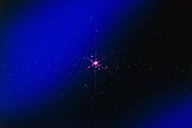
Quick Reference: The Red and Green Twinkling Star
- The star: Antares, a red supergiant in the constellation Scorpius.
- When to see it: June through September evenings, low in the southern sky.
- Why it twinkles colors: atmospheric turbulence splits the light into a flickering rainbow.
- Distance: about 555 light years from Earth.
- Brightness: 1st magnitude, one of the 20 brightest stars in the sky.
If you have ever stood outside on a summer evening and seen a bright star low in the south flicker between red and green, you have been watching Antares, the heart of the Scorpion constellation. It is one of the brightest red supergiant stars in the sky, and the color-flicker is an atmospheric trick worth understanding.
What You Are Actually Seeing
Antares is a red supergiant about 700 times the diameter of the sun. Its actual color is a deep ruddy orange-red, similar to Betelgeuse in Orion. The green flicker is not from the star itself but from Earth’s atmosphere bending the starlight into its spectrum as it passes through layers of moving air at different temperatures.
Twinkling (the technical term is scintillation) is strongest when a star is low on the horizon, because the light passes through much more atmosphere. Antares sits relatively low in the southern sky as seen from most of North America, so it twinkles harder than stars overhead. The reds and greens in the spectrum reach your eye at slightly different angles, and you see them in rapid alternation.
How to Find It
From late June through early September, look due south after dark. Antares is the brightest star in that part of the sky and sits in the chest of Scorpius, the J-shaped constellation that hangs near the horizon. The closer to the horizon Antares sits, the more dramatic the color twinkle.
Binoculars enhance the color shift; a telescope locks the star into steadier white because the larger aperture averages out atmospheric flicker. The naked eye gives the best show.

Frequently Asked Questions
Why is Antares called the heart of the scorpion?
Antares sits in the chest of the constellation Scorpius and is by far the brightest star in the figure. The Greek name means “rival of Mars” because of its reddish color, similar to the planet.
Is the green color real?
No. The star itself is red. The green you see is an atmospheric prism effect from light passing through Earth’s air. Stars in space have no green color.
Is Antares visible from the southern hemisphere too?
Yes, much higher in the sky. From the southern hemisphere Antares passes near the zenith and twinkles much less, which means the color show is less dramatic.
Will Antares go supernova?
Yes, but on a timeline of hundreds of thousands of years. When it does, it will briefly outshine the full moon.


Sandi Duncan is the Editor of the Farmers' Almanac. Click here to read Sandi's full biography.
- Sandi Duncan

- Sandi Duncan
- Sandi Duncan

- Sandi Duncan