

10 Surprising Banana Facts: Botany, History, Cavendish Crisis, and the Cultural Trivia You Did Not Know
Did you know bananas are actually an herb? Learn other interesting facts about America's favorite fruit!
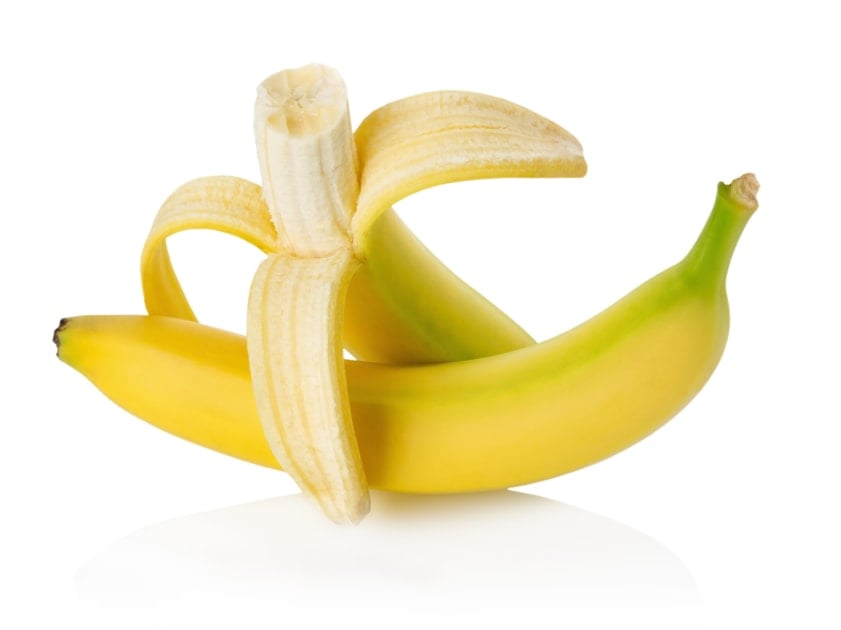
Quick Reference: Bananas
- Botanically a berry. Bananas are technically berries; the banana ‘tree’ is technically a giant herb.
- Top producer: India (29 percent of world production). Ecuador #1 in exports.
- The Cavendish crisis. 99 percent of exported bananas are one cultivar (Cavendish). A fungus (Tropical Race 4) threatens the global supply.
- Wild bananas have huge seeds. Modern cultivars are sterile clones, propagated only by cuttings.
- Tool: the Almanac’s banana peel fertilizer tea guide.
On this page
Related Almanac guides
Sources cited in this guide
Bananas are the most-consumed fruit in the US and one of the most economically important crops on Earth. They are also botanically a berry, grown on a giant herb, and globally produced from a single sterile clone that is currently fighting a continent-spanning fungus. This guide is 10 surprising banana facts from USDA, Smithsonian, and FAO research that change how you think about the most ordinary fruit in your kitchen.
The Cavendish Banana Crisis (the Most Important Banana Story of Our Time)
Per FAO and Smithsonian banana history.
- 99 percent of exported bananas are Cavendish. One cultivar dominates the global export trade.
- Why one cultivar: Cavendish replaced the previous dominant export banana (Gros Michel) after Panama disease wiped out global Gros Michel production in the 1950s.
- The new threat: Tropical Race 4 (TR4) is a Panama disease fungal strain that infects Cavendish. First confirmed Asia 1990s; now spreading globally.
- What is at stake. The Cavendish monoculture means no genetic diversity to fall back on. If TR4 reaches Latin America in full force, the global supermarket banana is gone within 10 to 15 years.
- The response. Researchers are working on TR4-resistant cultivars and on diversifying export plantings. Genetic engineering and traditional crossbreeding both contribute.
Bananas Are Botanically Berries (Trees Are Not Trees)
Per Smithsonian botany resources.
- The banana fruit. Botanically a berry. Single ovary, fleshy throughout, multiple seeds in wild forms.
- The banana ‘tree.’ Not a tree. Banana plants are giant herbs. The ‘trunk’ is a tightly packed cluster of leaf stems, not woody.
- Wild bananas. Contain large hard seeds making them difficult to eat. Modern cultivars are seedless sterile clones.
- Reproduction. Modern bananas are propagated by cuttings (offshoots from the parent plant), not seeds. This is why they all have identical genetics, which is the heart of the Cavendish crisis.
10 Banana Trivia Facts (Detail)
Below is the original Almanac collection of 10 banana trivia facts.
Banana Trivia
- Three medium bananas weigh approximately one pound.
- Roughly 96% of American households purchase bananas at least once per month.
- A cluster of bananas, called a “hand,” consists of 10 to 20 individual bananas, also known as fingers. In fact, the word banana comes from banan, the Arabic word for “finger.”
- There is no such thing as a banana “tree.” Bananas are actually massive herbs related to palms, lilies, and orchids. Bananas are the largest plants on earth without a woody stem. The “trunk” is comprised of sheaths of overlapping leaves, wrapped tightly around each other. They reach their full height of up to 30 feet during their first year of growth.
- A single banana leaf can grow up to 12 feet in length. In Southeast Asia, Central America and much of Africa, food is wrapped in banana leaves for storage and cooking, much like aluminum foil in the West. The leaves lend a subtle flavor to dishes cooked in them, and their hardiness allows them to be used time and again.
- Bananas are grown and harvested year-round. They grow from a bulb, not a seed. A perennial crop, each bulb sprouts new shoots every year.
- In India, flowers from the banana tree are considered sacred. During religious ceremonies, such as weddings, banana flowers are fastened to a headband for good luck. In Thailand, banana flowers are eaten as a delicacy.
- Bananas were first introduced to the Western world when Alexander the Great discovered them during his conquest of India in 327 B.C.
- Bananas were first brought to the United States in 1876, for the Philadelphia Centennial Exhibition. The exotic fruits were wrapped in foil and sold for 10¢ apiece (roughly $1.70 in today’s dollars).
- There are more than 400 varieties of banana in existence.
See how bananas are good for your health!


Bananas FAQ
Is a banana a fruit or a berry?
Both. Botanically a banana is a berry (single ovary, fleshy throughout, multiple seeds in wild forms). Culinarily it is a fruit. The same is true of grapes, tomatoes, and avocados, all botanical berries.
Why are all bananas the same?
Modern export bananas (Cavendish cultivar) are genetic clones propagated by cuttings, not seeds. Every Cavendish banana on Earth is functionally identical genetically. This is convenient for shipping and ripening uniformity but catastrophic for disease resistance.
What is the Cavendish crisis?
Tropical Race 4 (TR4) is a fungal disease infecting and killing Cavendish banana plants worldwide. Because all export Cavendish bananas are genetic clones, none have resistance. If TR4 reaches Latin America in full force, the global supermarket banana could disappear within 10 to 15 years.
Where does most of the world’s banana supply come from?
India is the world’s #1 producer at about 29 percent of global production, mostly for domestic consumption. Ecuador is the largest exporter (most US bananas come from Ecuador). The Philippines, China, and Costa Rica round out the top 5.
Are bananas good for you?
Yes. Per USDA FoodData Central, a medium banana has about 105 calories, 27 grams of carbohydrates, 3 grams of fiber, 422 mg potassium, and significant vitamin B6 and vitamin C. The potassium content is the most-cited nutritional benefit, supporting heart and muscle function.


Jaime McLeod
Jaime McLeod is a longtime journalist who has written for a wide variety of newspapers, magazines, and websites, including MTV.com. She enjoys the outdoors, growing and eating organic food, and is interested in all aspects of natural wellness.
- Jaime McLeod

- Jaime McLeod
- Jaime McLeod
- Jaime McLeod





According to Wikkipedia, “The word banana is thought to be of West African origin, possibly from the Wolof word banaana, and passed into English via Spanish or Portuguese
The arabic word for fingers is actually: banan . You were close with banana.
Interesting facts about bananas…I have two varieties that I grow in pots…they’ve never produced flowers or fruit.but I suspect they probably would need more greenhouse like conditions to do so….however, if you have adequate light they make beautiful house plants.. I live in Michigan so they are indoors in the winter and I put them outside in the summer….
That is just awesome info. I didn’t know any of that. I would love to grow bananas but my HOA won’t allow it. 🙁
WOW, I did not know that bananas come from a bulb and are perennials. Boy, you learn something new every day. Thanks