Can You Freeze Eggs? Yes, and Here Are the Important Tips for Eggs, Milk, Cheese, Butter, and Bread
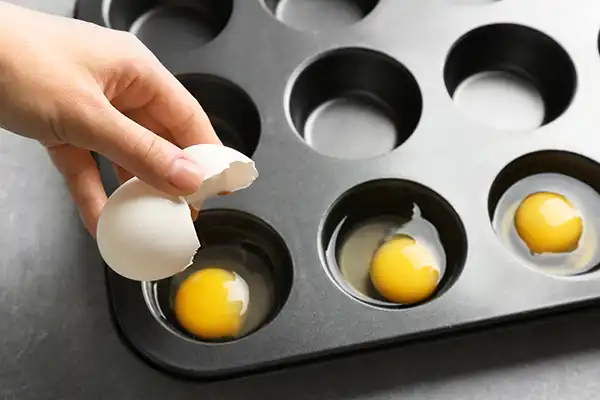
Most grocery staples can be frozen for months if you do it right. Eggs surprise people; yes, they freeze (with a small trick). Milk, butter, cheese, and bread all freeze well with the right method. Here is the breakdown by ingredient.
Quick Reference
- Eggs: never freeze whole in the shell (they crack). Crack into a bowl, beat lightly, add a pinch of salt OR sugar, then freeze in 2-tablespoon portions.
- Milk: freezes well in original container with 1 inch of headspace. Shake hard after thawing.
- Cheese: hard and semi-hard cheeses freeze for cooking; freezing changes texture and they will crumble.
- Butter: wraps and freezes perfectly. Can stay frozen up to a year.
- Bread: slice before freezing for easy single-slice toast.
- Don’t freeze: hard-boiled eggs (whites turn rubbery), soft cheeses, mayonnaise, fresh greens.
How to Freeze Eggs Properly
Whole eggs in the shell crack when frozen because the contents expand. The fix is to crack them open first.
Whole beaten eggs:
- Crack eggs into a bowl. Beat lightly until yolks and whites combine.
- For every 4 eggs, add ¼ teaspoon salt (savory use) OR ½ teaspoon sugar (baking use). This prevents the yolks from going gummy in the freezer.
- Pour into ice cube trays (2-3 tablespoons = 1 egg) or freezer-safe containers in batches.
- Freeze. Once solid, transfer cubes to a labeled freezer bag.
- Thaw in the fridge overnight before using.
- Keeps 1 year frozen.
Egg whites: freeze in ice cube trays without any addition. Thaw before whipping; whip back to peaks if needed.
Egg yolks: same trick: add a pinch of salt or sugar per cup of yolks before freezing.
How to Freeze Milk
Milk freezes well and saves space-and-money on a sale. Whole milk, skim, 2%, oat, almond, and soy all work.
- Pour out about 1 inch from a full container to allow for expansion (milk expands as it freezes).
- Replace the cap. Freeze.
- Thaw in the fridge for 24 hours.
- Shake vigorously after thawing. The fat will separate during freezing and need re-incorporating.
- Use within 5-7 days of thawing.
- Keeps 6 months frozen.
How About Freezing Cheese?
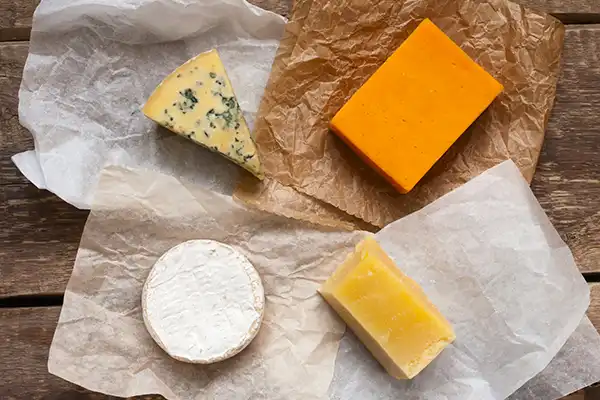
Hard and semi-hard cheeses (cheddar, mozzarella, gouda, Swiss, parmesan) freeze well for cooking purposes, but the texture changes. Frozen-then-thawed cheese is crumbly, which is fine for melting in casseroles or shredding for tacos, but not great for slicing or eating fresh.
- Cut cheese into 4-ounce or 8-ounce portions.
- Wrap each portion tightly in plastic wrap, then again in foil or in a zip-top freezer bag.
- Label and date.
- Freeze up to 6 months.
- Thaw in the fridge overnight before using.
Soft cheeses (brie, camembert, ricotta, cottage cheese, cream cheese) do not freeze well. The high water content destroys the texture.
How to Freeze Butter
Butter is the easiest of the lot. It freezes perfectly with no quality loss.
- Wrap each butter stick (or block) in its original wrapper, then double-wrap in plastic or foil.
- Place in a freezer bag.
- Freeze up to 1 year (salted butter keeps even longer).
- Thaw in the fridge overnight or at room temperature for 1 hour.
Freezing Bread
Sliced bread is the gold standard for freezing. You can pull single slices for toast without thawing the whole loaf.
- Slice the loaf before freezing if not already sliced.
- Wrap the whole loaf tightly in plastic wrap, then place in a freezer bag.
- Freeze up to 3 months.
- To use: pull single slices directly from the freezer and toast (toaster handles them frozen) or thaw the whole loaf at room temperature for 1-2 hours.

What NOT to Freeze
- Hard-boiled eggs. Whites turn rubbery; cooked yolks stay fine.
- Soft cheeses. Brie, ricotta, cream cheese, cottage cheese.
- Mayonnaise. Emulsion breaks; separates into watery and oily layers.
- Fresh leafy greens. Cell walls burst; lettuce and spinach turn to mush.
- Sour cream and yogurt. Texture turns grainy.
- Whole apples, citrus, melons. Cell walls collapse; they turn to applesauce on thaw.
- Fried foods. Reheat poorly; the crust softens regardless.
Join the Discussion
What is your favorite freezer trick? Tell us in the comments below. We collect freezer-rescue stories whenever they cross our desk.

Frequently Asked Questions
Can you freeze raw eggs in the shell?
No. The contents expand and crack the shell. Crack eggs into a bowl, beat lightly, add a pinch of salt or sugar, then freeze in portion-sized containers.
How long does frozen milk last?
Up to 6 months in a tightly-capped container with 1 inch of headspace for expansion. Thaw in the fridge over 24 hours and shake hard before using to re-emulsify the fat.
Can you freeze butter?
Yes, butter freezes beautifully for up to a year. Double-wrap and bag for best results.
What cheeses can you freeze?
Hard and semi-hard cheeses (cheddar, mozzarella, gouda, Swiss, parmesan) for cooking purposes. Soft cheeses (brie, ricotta, cream cheese) do not freeze well.
Does frozen bread go stale?
Properly wrapped, frozen bread keeps fresh-tasting for 3 months. Slice before freezing for easy single-slice toast straight from the freezer.


Peter Geiger
Peter Geiger is the Editor Emeritus of the Farmers' Almanac. Read his full biography.

Melissa Mayntz
Melissa Mayntz is a writer who specializes in birds and birding, though her work spans a wide range—from folklore to healthy living. Her first book, Migration: Exploring the Remarkable Journeys of Birds was published in 2020. Mayntz also writes for National Wildlife Magazine and The Spruce. Find her at MelissaMayntz.com.

This article was published by the Staff at FarmersAlmanac.com. Any questions? Contact us at [email protected].
-
Farmers' Almanac Staff

-
Farmers' Almanac Staff

-
Farmers' Almanac Staff

-
Farmers' Almanac Staff