

The Birds Of The Twelve Days Of Christmas: Every Species Explained
Partridges, geese, hens, and more... Here is a closer look at the many wild birds given as gifts in the popular Christmas carol.
Quick Reference: Birds Of The Twelve Days Of Christmas
- Partridge in a pear tree: Red-legged partridge (Alectoris rufa), native to western Europe.
- Two turtle doves: European turtle-dove (Streptopelia turtur), now listed as vulnerable.
- Three French hens: Any of about 40 French domestic chicken breeds; possibly Faverolles or Houdan.
- Four calling (or “colly”) birds: Eurasian blackbird (Turdus merula), a black-plumed thrush with a musical song.
- Six geese a-laying: Most likely the graylag goose (Anser anser); each domestic goose lays up to 20 eggs a year.
- Seven swans a-swimming: Mute swan (Cygnus olor), a year-round resident in the song’s home region.
- Eleven pipers piping: A birder’s read points to sandpipers or the endangered piping plover (Charadrius melodus).
- When to sing it: The Twelve Days of Christmas run from December 25 to January 5, ending on Twelfth Night before Epiphany on January 6.
Every version of “The Twelve Days of Christmas” you have ever heard, from a slow church choir to the a cappella turn on the school stage, shares one strange feature: birds. Partridges, doves, hens, calling birds, geese, swans, and (arguably) pipers all show up in a single 12-verse song. That is more feathered cameos than any other Christmas carol in the English-language canon. So why did the songwriter reach for birds instead of gemstones or spices? And which actual species did the lyrics have in mind? The answer lies in what was on a country table in 1780s England, which birds were common in the countryside then, and how those birds have fared since.
About the “Twelve Days of Christmas”
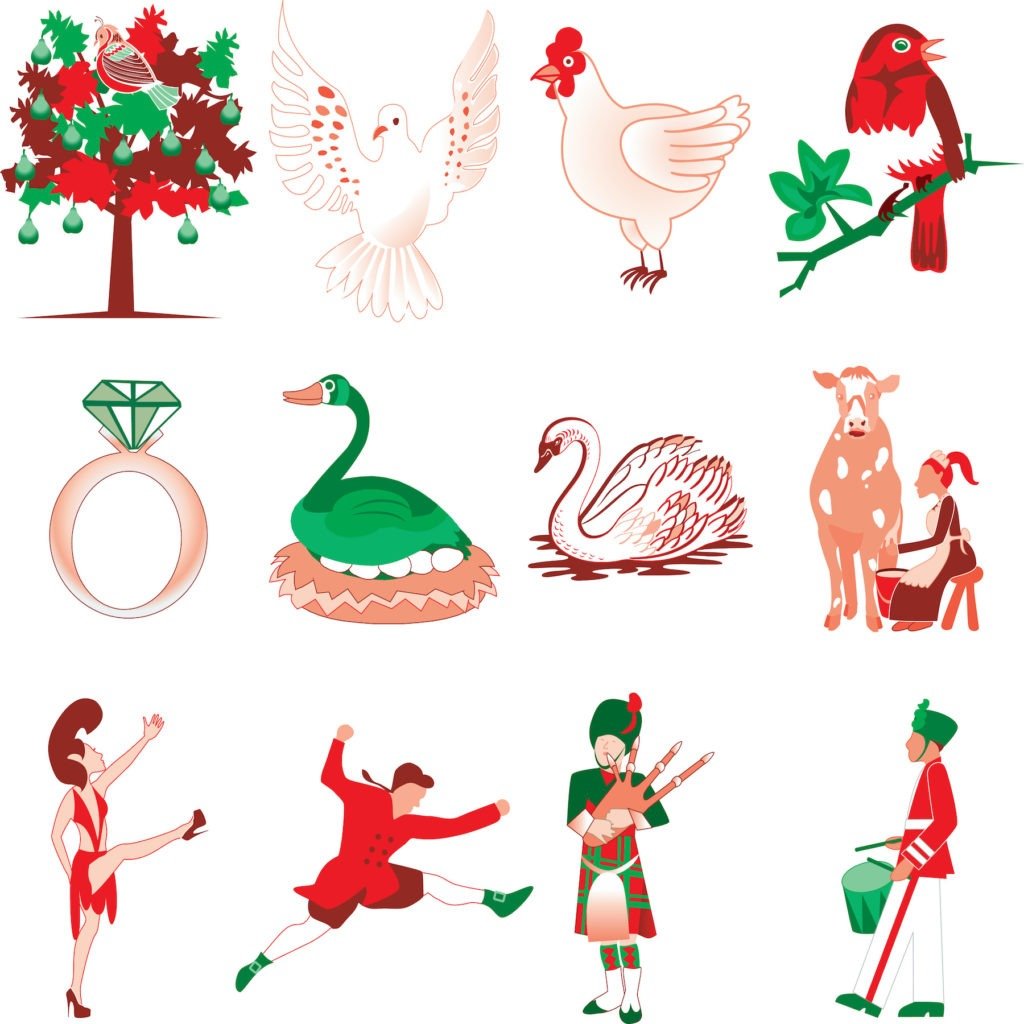
“The Twelve Days of Christmas” was first published in England in 1780, in a small children’s book called Mirth Without Mischief, though it was almost certainly sung or chanted as a memory-and-forfeit game long before then. Folklorists at the Folklore Society trace the melody’s likely origins to French or Scottish traditions. The tune we now sing was set to music in 1909 by English composer Frederic Austin, whose arrangement gave “five gold rings” its distinctive drawn-out flourish. Over the decades different cultures have made small tweaks to the lyrics and tempo, but the twelve-gift structure and the running list of birds have stayed put.

The Purpose of the Gifts
At its heart, “The Twelve Days of Christmas” is a courtship song. The gifts “my true love gave to me” arrive one per day across the 12 days of Christmastide, one present for every day leading up to Twelfth Night. To signal both love and prosperity, the early gifts are food and provisions, the kind that keep a household well-fed through the coldest run of the winter.
Later in the song the gifts shift into entertainment (dancing ladies, leaping lords, piping pipers, drumming drummers), keeping in tune with the festive nature of the season and the country dance tradition that shaped how villages actually celebrated Christmastide.
All the Birds in the Song
A Partridge (In A Pear Tree)
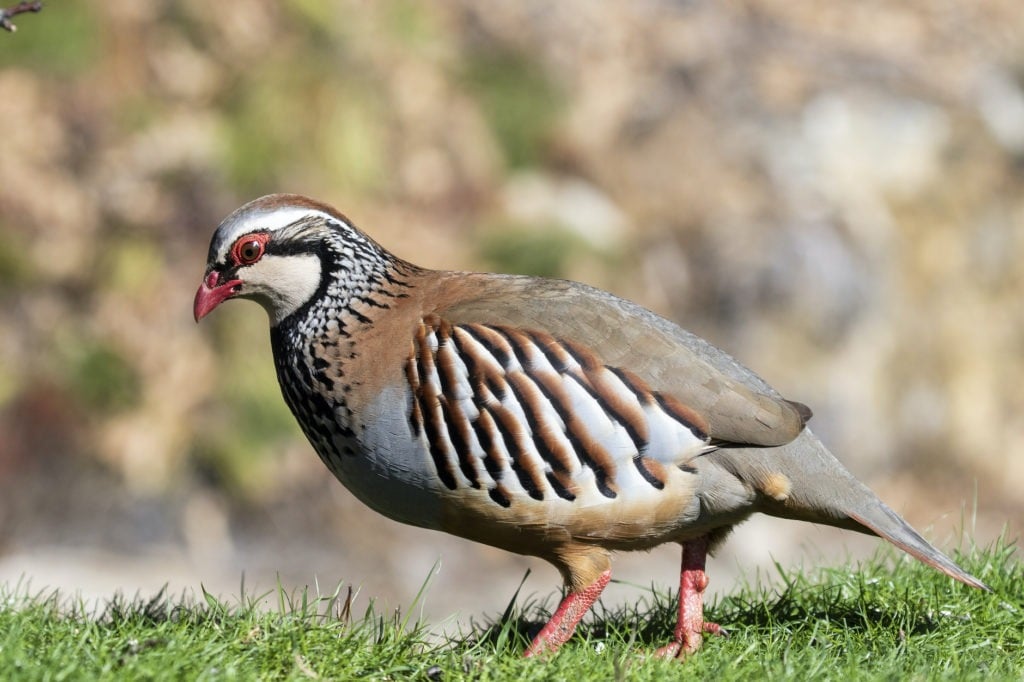
The most recognizable line of the carol is the first gift: the “partridge in a pear tree.” There are 45 partridge species worldwide, plus many quail, ptarmigan, and pheasants that get lumped in under the common name. The bird most likely to have inspired the first lyric of the song is the red-legged partridge (Alectoris rufa), native to western Europe and a year-round resident of the countryside, including through the Christmas season.
The accompanying pear tree is another gift of food. Many partridges perch and roost in trees but rarely eat the fruit, since they mostly forage grain and seed. Pears, on the other hand, are commonly harvested in early fall and can be stored well into winter if kept cool and dry. Together, the bird and the tree are a genuinely generous winter gift: a meal, a food store, and the promise of more to come.
Two Turtle Doves
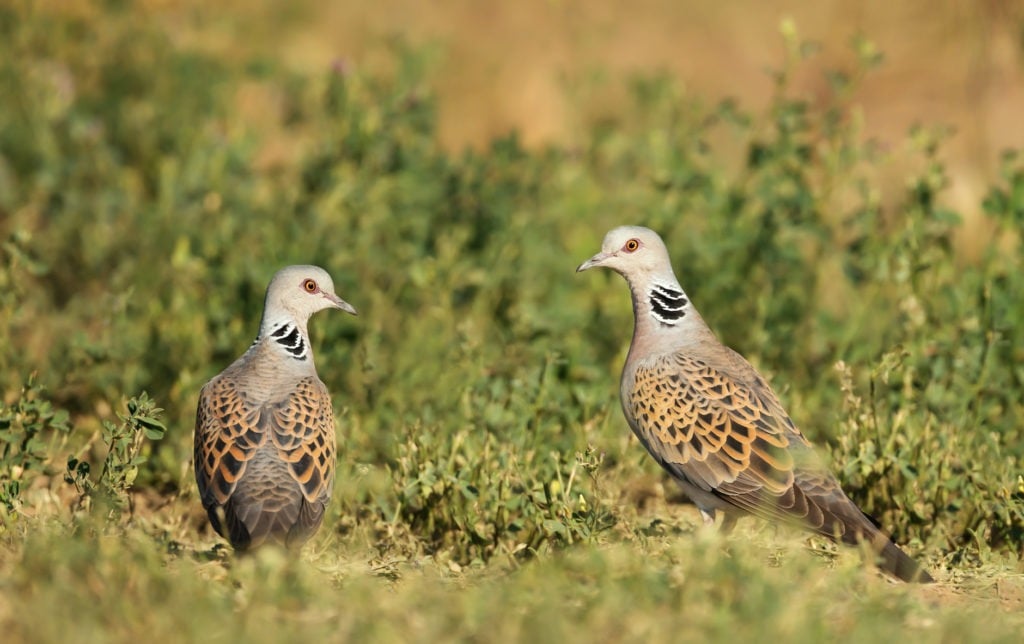
Two turtle doves land as the second day’s holiday gift. “Dove” as a common name can refer to more than 350 pigeons and doves in the Columbidae family, but the song almost certainly points to the European turtle-dove (Streptopelia turtur).
At the time the song was written, European turtle-doves were abundant across western Europe. Today, the picture is different. The species is classified as vulnerable by the International Union for Conservation of Nature, with populations down more than 78 percent in Europe since 1980, largely due to habitat loss and unsustainable hunting on migration routes. A breeding pair remains a considerate gift in the world of the song, since doves can breed year-round if fed well, and a single pair can raise several broods.
Three French Hens
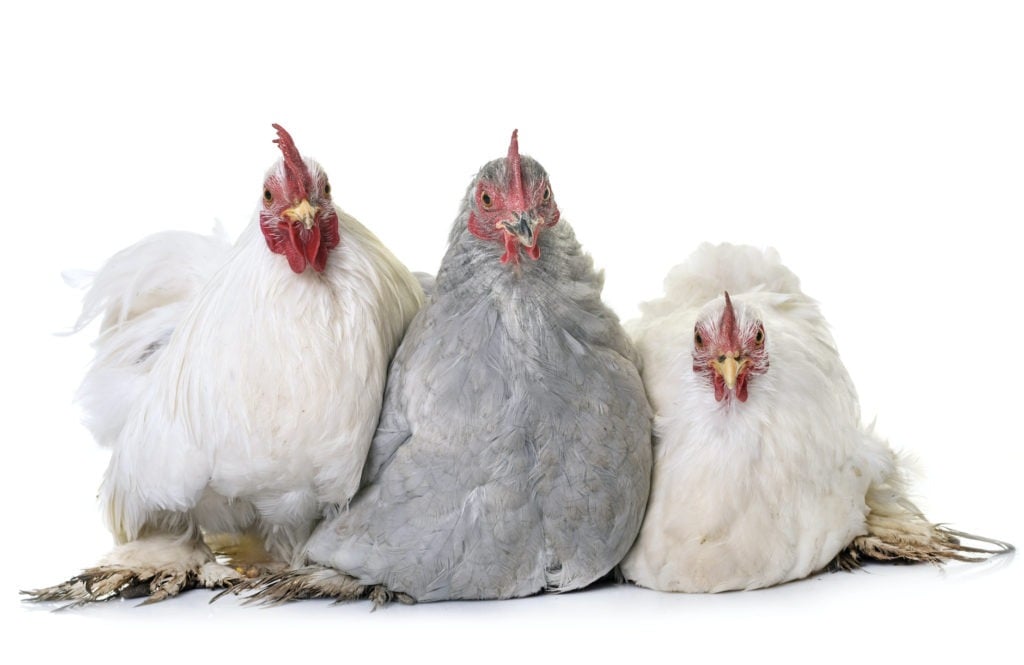
“Hens” generally refers to female domestic poultry. That these particular hens are French is likely a nod to the song’s probable French roots, and a jab at English taste for French breeds during the period. Roughly 40 chicken breeds originated in France and could easily have been imported to English farmyards. The song does not give more clues, but Faverolles and Houdan (both French breeds prized for meat and eggs) are the two most-cited candidates.
Any productive hen is a generous gift. Depending on breed, three hens could lay up to 900 eggs a year between them. A household that could not eat every egg could sell or hatch them, adding more birds for meat or further egg production. In an 18th-century English winter, a hen was a food factory on legs.
Four Calling Birds
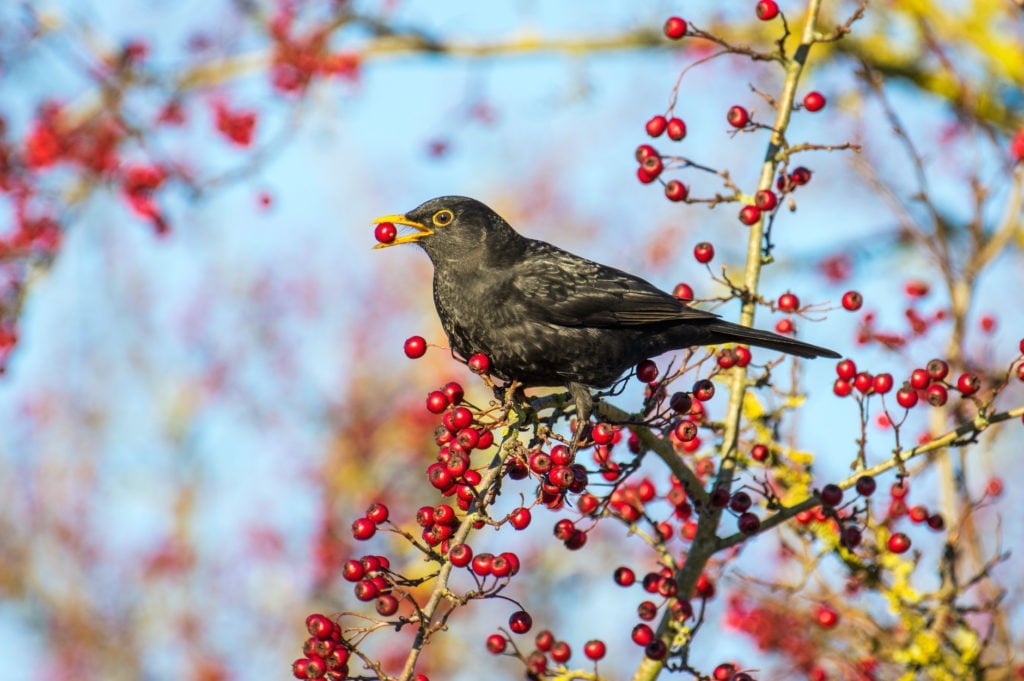
The fourth day of Christmas still relates directly to birds with “four calling birds.” Some older lyric sheets use the phrase “colly birds” instead. “Calling” simply implies a variety of songbirds, but “colly” is an Old English word for black or coal. Both readings converge on the same species, the Eurasian blackbird (Turdus merula), a black thrush with a rich, flute-like song (take a listen here). The Eurasian blackbird is one of the most common garden birds in the British Isles, so it would have been an easy gift for a country giver to procure, and a genuinely melodious one to receive.
Six Geese A-Laying
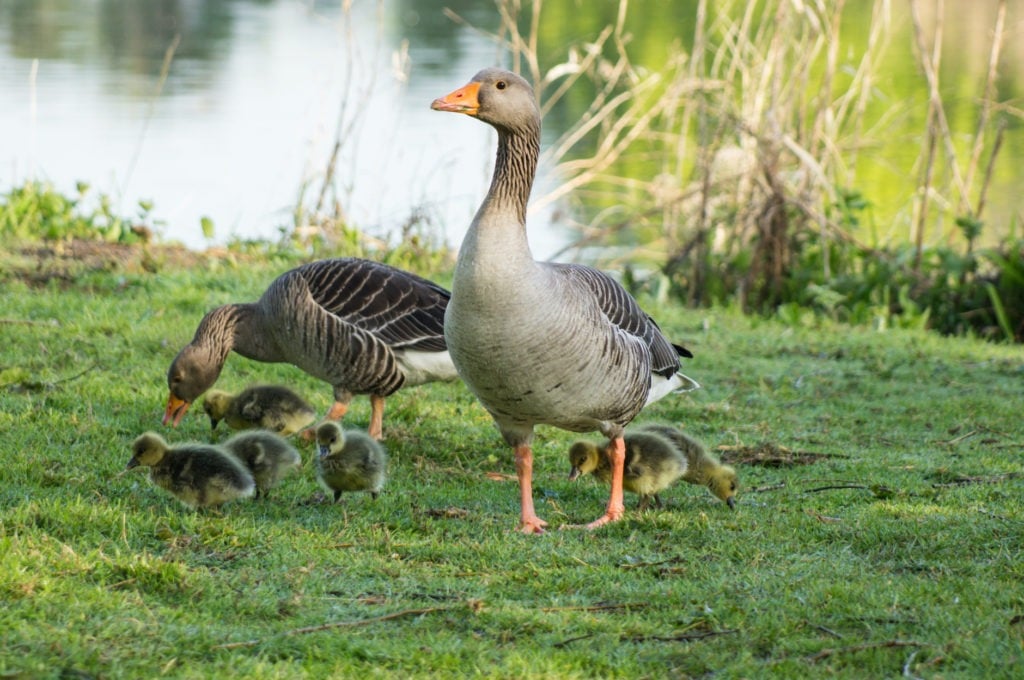
The gift of “six geese a-laying” is another food-and-fiber offering. There are 30 species of wild geese in the world, and the most likely bird behind this lyric is the graylag goose (Anser anser), the ancestor of nearly every European domestic goose breed. On top of the wild birds, more than 125 domestic goose breeds have been developed for eggs, meat, and down. A domestic goose is not as prolific as a hen, but each one still lays up to 20 eggs a year. The gift may also refer to the meat of the birds, or to the down of the resulting flock. Goose down is prized for its insulation, which makes “six geese a-laying” a triple-purpose winter gift: eggs, roast, and warmth.
Seven Swans A-Swimming

Seven is an interesting choice for this gift, since there are exactly seven species of wild swan in the world. The best candidate is the mute swan (Cygnus olor), widespread across the region of the song’s origin and a year-round resident, even in winter. In medieval and Tudor England, swans were “royal birds,” and possessing them required a Crown-granted swan mark. That makes a gift of seven swans an unmistakable signal of wealth and status, and less a food gift than a gesture of luxury and romance. Swans have symbolized elegance and lifelong pairing across cultures for centuries, which fits the courtship spine of the carol.
While no other lyrical lines directly name birds, birders often find ways to read them in. Five golden rings? Consider bird banding (also called ringing in the United Kingdom), or golden birds like the golden eagle (Aquila chrysaetos), the golden-crowned kinglet (Regulus satrapa), or even the ring-necked duck (Aythya collaris).
Could “11 Pipers Piping” Be About Birds?
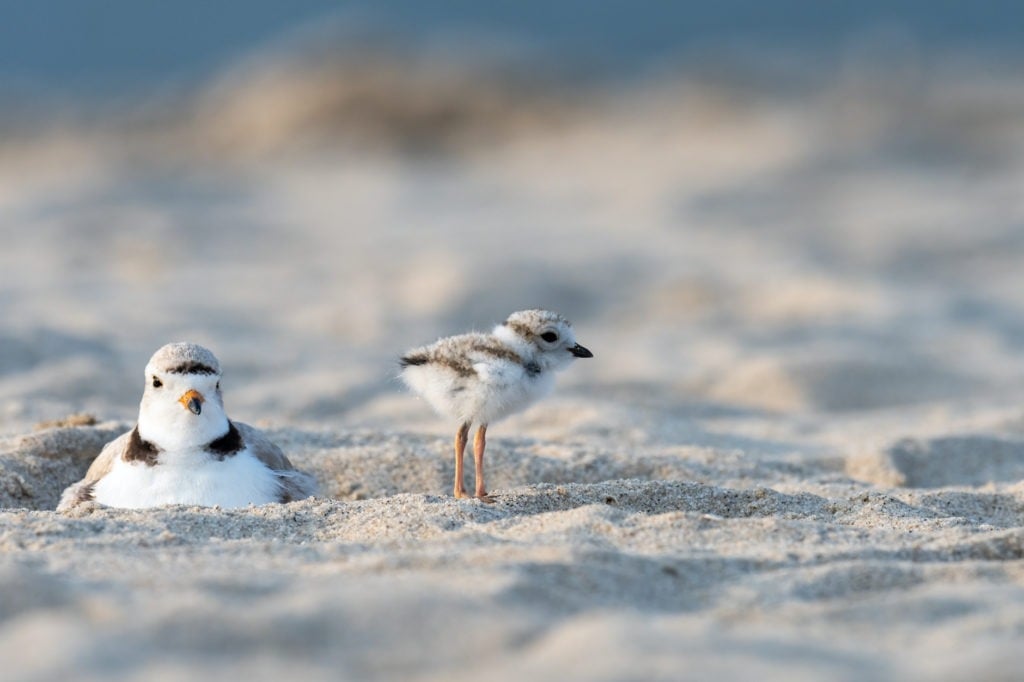
Any birder who hears “eleven pipers piping” will jump to the shorebirds: pipers, peeps, and plovers. More than 25 sandpiper species roam the globe, and many can be found on sandy shores even in winter. A stronger contender is the piping plover (Charadrius melodus), a small North American shorebird whose gentle whistled call sounds like a wooden pipe. The species is federally listed as threatened and (in the Great Lakes population) endangered under the U.S. Endangered Species Act. Reading pipers as plovers turns a stock verse into a small conservation story.
North American Cousins Of The Twelve Days Birds
Most of the birds in the carol are European species. If you are singing it in a farmhouse in Maine, Ontario, or Oregon, here are the North American cousins you actually see out the window in December.
| Gift | Original bird (British and European tradition) | North American counterpart | Family or relationship |
|---|---|---|---|
| A partridge in a pear tree | Grey Partridge (Perdix perdix), also called English Partridge; a ground-dwelling farmland bird native to Europe and western Asia | Ruffed Grouse (Bonasa umbellus); also Chukar Partridge (Alectoris chukar, introduced from Asia in the 1930s and now established in the western US and Great Plains) | All are gallinaceous birds (order Galliformes, family Phasianidae). The Grey Partridge was introduced to North America but never widely established; the Ruffed Grouse fills a similar woodland-floor ecological role. (Cornell Lab of Ornithology) |
| Two turtle doves | European Turtle Dove (Streptopelia turtur); a migratory dove of Europe, the Middle East, and western Asia; now Red Listed in the UK due to dramatic population decline | Mourning Dove (Zenaida macroura); the most abundant and widely distributed dove in North America, with an estimated 350 million individuals; also White-winged Dove (Zenaida asiatica) in the Southwest | Same family (Columbidae). The Mourning Dove is the closest ecological equivalent, sharing the open-farmland and woodland-edge habitat of the European Turtle Dove. (Audubon Society; Cornell Lab) |
| Three French hens | Domestic chicken (Gallus gallus domesticus); ‘French hens’ likely refers to prized French breeds such as the Faverolles or Crevecoeur kept for eggs and meat | Wild Turkey (Meleagris gallopavo); the quintessential North American gallinaceous bird; domesticated breeds are widely kept across the continent as both farm birds and heritage breeds | Both Wild Turkey and domestic chicken are Phasianidae (pheasant family). The Wild Turkey was domesticated in Mexico before Columbus and is the ancestor of commercial Thanksgiving birds. (Cornell Lab) |
| Four calling birds (original: ‘four colly birds’) | European Blackbird (Turdus merula); ‘colly’ means coal-black in Old English; the original lyric used ‘colly’ (black as coal), which shifted to ‘calling’ in popular use by the 18th century | American Robin (Turdus migratorius); same genus Turdus; the American Robin is the closest North American relative of the European Blackbird; both are thrushes (family Turdidae) with similar ground-foraging habits and musical songs | Same genus (Turdus) and family (Turdidae). The genus name Turdus migratorius literally means ‘migratory thrush.’ The family relationship is direct, not merely ecological. (Cornell Lab; Audubon Society) |
| Five golden rings | Ring-necked Pheasant (Phasianus colchicus); some ornithologists and folklorists argue the ‘five golden rings’ originally referred to five goldspink (European Goldfinch) or five ring-necked pheasants (the ‘rings’ being the bold neck ring of the cock bird), not jewelry | Ring-necked Pheasant is also established across North America (introduced from Asia and Europe in the 1880s) and is now the state bird of South Dakota; native alternative: Greater Prairie-Chicken (Tympanuchus cupido), a spectacular native gallinaceous bird of the Great Plains | The Ring-necked Pheasant (Phasianidae) is now naturalized across the northern Great Plains, the Pacific Northwest, and much of the Midwest. The folk-etymology interpretation of ‘rings’ as ring-necked birds is noted by Audubon Society and BBC Nature. |
| Six geese a-laying | Greylag Goose (Anser anser), the ancestor of most domestic goose breeds, or a barnyard goose; historically kept for eggs, feathers, and meat across Europe | Canada Goose (Branta canadensis); the most familiar and widespread wild goose in North America; Snow Goose (Anser caerulescens) and Greater White-fronted Goose (Anser albifrons) are also common across the continent on migration | Same family Anatidae. The Canada Goose was once a declining species but now numbers over 7 million in North America, making it among the most recognizable wild birds on the continent. (Cornell Lab) |
| Seven swans a-swimming | Mute Swan (Cygnus olor); native to Europe and Asia; now also introduced to North America (feral population in the Great Lakes and Atlantic coast); the classic ‘fairy-tale’ swan | Trumpeter Swan (Cygnus buccinator); North America’s largest native waterfowl and longest-lived North American bird; once nearly extinct (fewer than 70 known birds in 1935), now numbering over 63,000 following recovery programs; also Tundra Swan (Cygnus columbianus), common on migration | Same genus (Cygnus) and family (Anatidae). The Trumpeter Swan’s wingspan reaches 8 feet; adults can weigh 30 pounds. USFWS recovery programs brought the species back from the edge of extinction in the 20th century. (USFWS Trumpeter Swan Survey; Cornell Lab) |
The Cornell Lab of Ornithology’s Audubon Christmas Bird Count, running every December 14 to January 5 (the very stretch of the Twelve Days), is a natural way to trade the carol’s list for the birds actually in your local sky. It is now the longest-running citizen-science survey in the world, and any birder-in-training can join.
The more you know about the birds in “The Twelve Days of Christmas,” the richer the song becomes, and the more you see how much daily life in an 18th-century English winter turned on what was flying, laying, and singing outside the kitchen door.

FAQ: The Twelve Days Of Christmas Birds
When exactly are the Twelve Days of Christmas?
In the Western Christian tradition, the Twelve Days of Christmas run from Christmas Day, December 25, through the evening of January 5, which is Twelfth Night. January 6 is Epiphany. That 12-day stretch is Christmastide.
How many birds are in “The Twelve Days of Christmas”?
Counted straight across, the song mentions birds in the first seven verses, plus (arguably) the eleven pipers piping. The gift list totals 184 birds cumulatively if you add each day’s stack, which is why the song has become an unofficial theme for birding.
Why did the songwriter choose so many birds?
Birds were the everyday grocery store of 18th-century English country life. Partridges, doves, hens, blackbirds, geese, and swans all sat on the country table or the estate pond. The song is a courtship gift list, so it reaches for what was both practical (eggs, meat, feathers) and impressive (a swan, a rare partridge) at once.
Is “calling birds” or “colly birds” the correct lyric?
Both are correct, historically. “Colly” (Old English for black or coal) appears in the earliest printed versions from 1780. “Calling” became the standard American reading after Frederic Austin’s 1909 arrangement, and both readings point to the Eurasian blackbird.
Are any of the carol’s birds endangered today?
The European turtle-dove is vulnerable, with populations down more than 78 percent in Europe since 1980. The piping plover is federally listed as threatened in the United States, and its Great Lakes population is endangered. Blackbirds, mute swans, graylag geese, and red-legged partridges are all still common.
What is a good way to celebrate the birds of Christmas in North America?
Join the Audubon Christmas Bird Count, which runs every year from December 14 through January 5. It is the world’s longest-running citizen-science survey. Beginners are welcome, and most local Audubon chapters pair new counters with experienced birders.
Was “The Twelve Days of Christmas” ever really a secret Christian catechism?
The claim that each gift codes a Christian doctrine (for Catholics under English penal law) circulates widely, but folklorists and historians treat it as folklore about the song rather than history. The earliest printed version is a children’s memory game with no religious framing. Fun to know, safe not to repeat as fact.
Related
See Which 5 Songs Made Our Worst Christmas Song List
Got this song or another stuck in your head? Here’s how to get them out.


Melissa Mayntz
Melissa Mayntz is a writer who specializes in birds and birding, though her work spans a wide range—from folklore to healthy living. Her first book, Migration: Exploring the Remarkable Journeys of Birds was published in 2020. Mayntz also writes for National Wildlife Magazine and The Spruce. Find her at MelissaMayntz.com.
- Melissa Mayntz

- Melissa Mayntz
- Melissa Mayntz
- Melissa Mayntz




Every Day is a Reference to another Bird.
EVERY DAY.
Drummers Drumming were not Drummers beating on a Drum, but Birds making mating noises, specific breeds.
And could the 5 golden rings refer to the gold rings around pheasants’ necks? That’s what I heard recently, but can’t verify it.
Actually, in England it was very popular among the upper classes to eat swans, skinning them carefully to keep the whole “hide” intact then covering the roasted bird with its skin to make it look alive at the table. They did the same with peacocks as well. It was a huge status symbol that not only could you serve such a beautiful bird, but you also had kitchen staff that was so skilled they could make such a theatrical presentation. So swans plural would have been a kingly gift for the table!
Thank you, Kristina, for adding some substantive historical accuracy .
Reminds me of the song that the swan sings as it’s being eaten in Orff’s “Carmina Burana.”
Why someone would eat a beautiful swan an a beautiful peacock ? ? them bird’s are too beautiful to eat I couldn’t see my self ever doing that to some beautiful bird’s I just couldn’t!!!!!!!!!!!!
When this was written, it was ok to eat birds. Why isn’t this still ok? PEOPLE EAT BIRDS for sustenance. Everything we eat is “pretty”, especially plants, because God made it so.