

How to Get Rid of Groundhogs Naturally: 8 Methods That Work
Good news! There are many ways to safely deter these pesky marmots using common items around your home and garden. No toxic chemicals!

Quick Reference: How to Get Rid of Groundhogs Naturally
- Best season to act: early spring, right after groundhogs leave hibernation and before they breed.
- Top eight natural repellents: Epsom salts, castor oil, human hair clippings, blood meal, used kitty litter, cayenne and garlic, essential oils, and motion-detector sprinklers.
- Burrow signature: a hole 10 to 12 inches wide with a mound of dirt at the entrance, often near a shed, foundation, or deck.
- Trapping note: late winter to early spring is the best window, but relocating a groundhog is illegal in some states. Check your state wildlife agency first.
- Almanac tagline: Plan Your Day. Grow Your Life.
You walk out to the vegetable garden in late May, and half the bean row is gone. A neat 10-inch hole sits at the edge of the lawn. The culprit is almost always a groundhog, and the good news is you can move it along without poison, traps, or a trip to the hardware store. Here are eight natural ways to get rid of groundhogs that home gardeners have used for generations, plus the prevention work that keeps the next one from moving in.
About Groundhogs
Groundhogs are also called woodchucks, “whistle pigs,” and marmots. They are rodents, and according to Penn State Extension, an adult can weigh 5 to 10 pounds and dig a den with multiple chambers, hallways, and exits. That digging is what makes them a nuisance for gardeners: extensive tunnels can weaken soil, undermine foundations, barns, and farm equipment, and cause injuries to livestock that step into a hidden burrow.
Groundhogs are herbivores. They will work through a row of lettuce, beans, or peas in a single afternoon, so a hard summer’s worth of garden work can be decimated quickly. They certainly make a nuisance of themselves, and short of owning a good farm dog or live-trapping and releasing (where state law allows), the kindest fix is a natural deterrent that asks them to relocate on their own.
If you do not own a dog, or you are not comfortable trapping and releasing*, or you simply do not have the means to, the list below covers eight effective, natural remedies you can put together this weekend. None of them will harm the environment, family pets, or the groundhogs themselves.
A Few Key Things to Know
First, prevention is the cheapest control you have. Identify and remove what is drawing the groundhog in. Apple trees with windfall fruit, sweet melon rinds in an open compost pile, and stacked woodpiles are the three usual suspects in a backyard. Harvest your garden often, pick up fallen fruit, switch to a covered compost bin (especially if you compost melons, a groundhog favorite), and break down any woodpiles you do not need.
Before you start tackling the problem, confirm that a groundhog is really what you are up against. Good indicators that a groundhog is present:
- A hole 10 to 12 inches wide in the ground, or under a shed, foundation, or deck, with mounds of dirt around it.
- Teeth or claw marks on bark, fencing, or garden structures.
- Damaged plants with good-sized bites taken out of them, often along a row rather than at random.
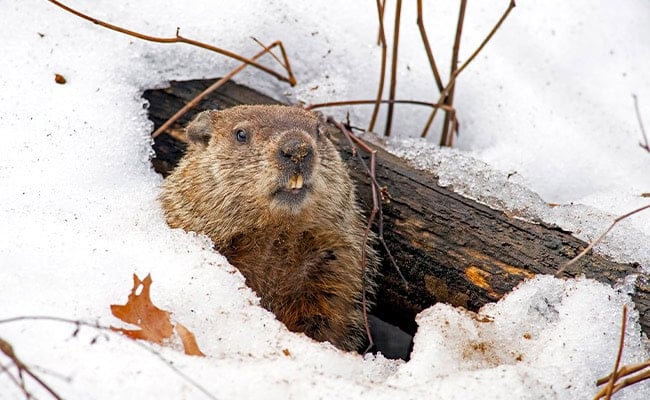
Knowing groundhog habits is the other half of the job. The exact week they emerge from their post-winter dens depends on where you live. Despite the Groundhog Day folklore, most groundhogs are still hibernating on February 2 and are not popping up to see their shadows. Once they do emerge, they are active during the day, and spring is mating season, so they will be very active around the garden for several weeks.
Groundhog Emergence by US Region
Groundhogs range from the southern Appalachians up through New England, across the Midwest, and into the southern Canadian prairies. Emergence timing is regional, and a control plan that starts a few weeks before they leave the den is far more effective than one that starts after the lettuce is already gone.
Mating runs roughly four to six weeks after emergence, so if you can deter the first scout before the breeding pair settles in, you save yourself a much larger problem in June.

8 Natural Ways to Get Rid of Groundhogs
1) Epsom Salts
Groundhogs hate the taste of Epsom salts. Sprinkle them around the perimeter of your garden and near burrow entrances and exits. You can also set a tin pie plate filled with the salts near vulnerable plants. Replace the salts after a heavy rain. Stay consistent for two to three weeks and the groundhogs will move along.
If you are nervous about putting salt near your garden, do not be. Epsom salt is magnesium sulfate, not table salt, and a light dusting can actually feed your plants a touch of magnesium.
2) Castor Oil
Groundhogs hate the smell of castor oil. To make your own homemade groundhog repellent, mix one half cup of castor oil with two cups of water and spray it in and around the burrow holes. Only apply it when you know they are out foraging, otherwise they will simply stay burrowed underground. You will have to keep a quiet vigil for a day or two to learn when they head out for food.

3) Human Hair Clippings
Clippings from your local barber or hairdresser work surprisingly well because groundhogs do not like the scent of humans. Sprinkle the clippings around the spots the groundhog frequents. To keep them from blowing away, tuck the clippings into a fine mesh bag and tie the bag to a stake near the burrow.
4) Blood Meal Fertilizer
Blood meal is a good organic fertilizer for your plants and a strong repellent for pesty groundhogs (and squirrels, while you are at it). Sprinkle it around the perimeter of the garden, with extra at entry points and on the rows that have already been hit. The strong odor is the deterrent, and the nitrogen is a feed for your soil. Consider it a quiet win-win.
5) Soiled Kitty Litter
Used kitty litter poured around one of the den entrances (but not the other) is also effective because it smells like a predator. Leaving one exit scent-free is important: it gives the groundhog a clear way to leave rather than barricading it inside, which would only make the problem worse.
6) Offensive Scents
There are certain smells groundhogs absolutely detest. Plant or scatter these near the burrow and around the garden edge and you may be able to send them packing:
- Cayenne pepper. Our Farmers’ Almanac readers swear by this one. Pour cayenne pepper close to the groundhog’s holes, in a small pile. Buy a bulk container, because rain and wind will mean reapplying. It is actually the smell and the heat they do not like. You can also spray tender plants with a mixture of 2 teaspoons cayenne to one quart of water to keep them from nibbling.
- Garlic. Crush some garlic cloves and spread the paste around the areas of the garden you want the groundhog to avoid. Their sensitive noses cannot handle the pungent smell.
- Lavender and culinary herbs. Try planting lavender along the garden border. It smells lovely to us, and groundhogs find it offensive. They also dislike basil, chives, lemon balm, mint, sage, thyme, rosemary, and oregano. A herb border doubles as kitchen supply and groundhog deterrent. Our companion planting guide has more pairings that protect the garden without spraying.
7) Essential Oils
Essential oils like clove, lemongrass, rosemary, lavender, and thyme can move a groundhog along. Mix 5 to 10 drops of one or two of these oils in a spray bottle filled with water (or apple cider vinegar, which they also find repulsive), and apply around the garden every few days, more often after rain.
8) Motion-Detector Devices
You may also place a motion-detector device on your property. Some emit a loud noise as a groundhog approaches, which startles it away. Others spray a quick burst of water, which is an equally effective deterrent. A practical note: avoid setting them up where you and your family normally walk. They work particularly well around a property perimeter or just outside a vegetable garden.
Layer Your Deterrents for a Stubborn Groundhog
One method on its own is sometimes enough. For a groundhog that has already settled in, plan on stacking three. A common Almanac-reader combination:
- Burrow: castor oil spray on the active entrance plus used kitty litter on one of the side exits, leaving the back exit scent-free as an escape route.
- Garden perimeter: a strip of blood meal or Epsom salts every 3 to 4 feet, refreshed after rain.
- Tender plants: a light cayenne spray on the leaves, paired with a herb border of lavender, sage, and thyme.
Keep the program up for two to three weeks, especially in early spring before the groundhog has bred. The Humane Society of the United States notes the same general principle for nuisance wildlife: make the spot uncomfortable enough and the animal leaves on its own, no trap required.
More About Groundhogs
Fun fact: Groundhogs are the largest member of the squirrel family. A full-grown adult can stretch close to two feet long including the tail, which is why a 10-inch burrow opening is not unusual.
Wonder why groundhogs are known as “whistle pigs?” Listen to the sound they make in this short video clip. You may have thought you were hearing a bird:
*A note on trapping: If you do choose to set a groundhog trap, late winter to early spring is the best window. The groundhogs have not yet produced that year’s offspring and food is still scarce, which makes your trap bait more enticing. Always check with your state wildlife agency before relocating an animal from your property. There may be laws in your area that prohibit it. Relocating groundhogs is illegal in some states, in part because of fears of spreading rabies. Ask your state agency what a safe relocation distance is for where you live.

Frequently Asked Questions About How to Get Rid of Groundhogs Naturally
What is the fastest natural way to get rid of groundhogs?
Castor oil sprayed in and around the burrow when the groundhog is out foraging is the fastest single method, because it makes the den itself uninhabitable. Pair it with used kitty litter at a side exit and most groundhogs leave within a week. Keep the program up for two to three weeks so they do not return.
What smells do groundhogs hate the most?
Castor oil, garlic, cayenne pepper, used kitty litter, blood meal, human hair clippings, and the essential oils of clove, lemongrass, rosemary, lavender, and thyme are the smells groundhogs avoid. Planting a border of lavender, basil, sage, mint, or oregano can keep them out of the garden without any spraying.
Will Epsom salt really keep groundhogs away?
Yes. Groundhogs dislike the taste of Epsom salt, so a sprinkle around the garden perimeter and near burrow entrances acts as a deterrent. Epsom salt is magnesium sulfate, not table salt, so a light dusting is safe for your soil and can even feed your plants a touch of magnesium. Reapply after a heavy rain.
When is the best time of year to use natural groundhog repellents?
Late winter to early spring, right around the time groundhogs leave hibernation. Most groundhogs are still hibernating on February 2, despite the folklore, and they emerge anywhere from late February in the mid-Atlantic to mid-April in the upper Midwest and southern Canada. Start your deterrents two to three weeks before your regional emergence window.
Is it legal to trap and relocate a groundhog?
It depends on your state. Relocating groundhogs is illegal in some states, partly out of concern about spreading rabies. Always call your state wildlife agency before live-trapping. They will tell you whether relocation is allowed and what a safe distance is. Where it is allowed, late winter to early spring is the best trapping window, before that year’s offspring are born.
Will these natural methods harm pets, kids, or the groundhog?
No. Every method on this list is non-toxic to people, pets, and the groundhog itself. Cayenne pepper can irritate a dog’s nose if they sniff it directly, so apply it close to the burrow rather than on the dog’s regular walking path. Motion-detector sprinklers and noisemakers should be aimed away from areas the family normally walks.
How do I keep groundhogs from coming back next year?
Prevention. Cover your compost, pick up windfall fruit, break down woodpiles you are not using, and plant a herb border of lavender, mint, sage, or thyme around the vegetable garden. Refresh a light cayenne or Epsom salt perimeter every spring as the groundhogs emerge. Plan your garden by our Gardening by the Moon Calendar so the most tempting crops are not at peak when they are most active.
However you choose to handle a groundhog visit, the Almanac’s old rule applies: plan ahead, work with the season, and trust the reader to decide what works for their yard. Pick two of the eight methods above, start the week before your regional emergence window, and check in after a heavy rain. You will know inside three weeks whether the groundhog has moved along.


This article was published by the Staff at FarmersAlmanac.com. Any questions? Contact us at [email protected].
- Farmers' Almanac Staff

- Farmers' Almanac Staff

- Farmers' Almanac Staff

- Farmers' Almanac Staff





There are two of these. I spent so long in the yard today, I weeded most of the garden. we HAD tomatoes. We currently have Thyme, rosemary, basil, jalapeños, and daffodils for deer deterrent. One of the entrances is under my porch, one is under the sidewalk.
The Epsom salt may have been effective under the porch. It’s sheltered enough where I don’t have to replace it either.
Any more advice?
.22
essence of fox or coyote-
A groundhog burrowed in my boulder wall. I buried the groundhog, filled the hole after using a smoke bomb/The Giant Destroyer purchased from Ace Hardware.
I have been using soiled cat little for years in our pastures. I simply fill the holes with the used cat litter and the groundhogs desert the holes. t also fills the holes, making them safer. We have two cats so this is a great way to discard of used litter without filling the landfill. If people don’t have a cat, I’m sure their neighbors will be happy to help out!
My dog died a little over 2yrs ago and now I have all these critters. Squirrels, Possums, Skunks & several Groundhogs, in the inner city of Cleveland OH. I put out a trap to catch one of my bothersome groundhogs whose set up shop under my deck and I caught a skunk instead. Since trap was placed over the entry hole, the ground hog simply make another entry hole right next to the cage. I still have the empty cage set-up along bricks and rocks all around the perimeter of my deck. I also pour Ammonia in the hole that’s under the deck and I use the human hair. The rocks & bricks seem to work the best so far. Going to try the Epson Salt. Also, we’re so overrun with Groundhogs that we have numerous sightings daily and a lot of ‘Road Kill’ on several streets in the area.
Sorry to hear about your dog, Phil. Let us know how the salt works or if you discover anything else that does the trick for the darn groundhogs. Best wishes from all of us at FA.
Put a quarter of a fresh cabbage in the Have-A-Heart trap. Works like a charm!
Fingers crossed that I have finally eliminated the groundhogs who set up camp under my beautiful vacant barn. It’s been a long battle! Used haveahart traps, apple, cantaloupe, and once an avocado ( which trapped a monster). Neighbor comes, shoots the critter, who is dumped in the pasture where it feeds eagles. And then I set the traps again.
I have a one-way door set up now at the main entrance and twigs and stones and hot peppers at the smaller exit and the past 3 days there’s been no activity.
But now — how do I deal with the burrow, the tunnel system under my beautiful vacant barn? I’ve called 3 wildlife removal specialists and none are very helpful. I want stone pushed in and some sort of expanding cement or foam that would need to be pushed deep into the tunnel. Preferably someone who has done it before!
The metal spike things won’t work here – only 15” and our groundhogs would snap them or bend them.
My plan when I get the hole filled in, is to use a neighbors horse manure to smell it up good around the barn on the outside bc groundhogs only came once our horses died. No noise overhead and no smelly poop or pee.
Who do I call???
Thanks!
One groundhog has turned into 6 . Lord help me. They are living under my shed and at this point I don’t know what to do. I watch them through the window ..doing who knows what in my yard. If I make a noise they all run back under my shed. I dont know where their tunnels are.
I have used havehart cage traps successfully with apple slices for bait. I would get two traps. Do not get the one that says “easy set”. Our apple slices way back in the trap and other slices on the ground around the trap.
I tried most all of these ideas to keep groundhogs away. Only one i think possibly helped was moth balls. The moth balls vanish over time so have to keep buying a new box every two three weeks. This year going to really test it out put tomato plant in pot near where i see them put moth balls all around plant see if they stay away.
I have not seen any comments about moth balls. You can get them in little mesh bags which you can throw under the decks or sheds. I realize they smell not so nice but the alternative is not so nice either. They will even keep mice out of things you may have in storage
I have thrown a bunch of mothballs into the hole, some loose and even a bag of them. Next day they are outside the hole. I have trapped a couple living in that hole over the last few weeks. There is still at least one residing under there who isn’t falling for my havahart traps, baited with apples. I will try cantaloupe tomorrow. More pungent.