

Animal Weather Folklore: 8 Animals That Predict the Weather
Folklore says these animals are the ones to observe closely!
Quick Reference
- Most famous predictor: the groundhog. February 2 is the date everyone knows.
- Most reliable lore: swallows flying low and cows lying down (both tied to falling air pressure ahead of rain).
- Most ancient: wolf-howl forecasting, recorded in European agricultural lore back to the medieval period.
- How to use it: as a backup signal alongside the seven-day forecast and the long-range forecast, not a replacement.
The groundhog gets the headlines every February, but it is far from the only animal that has been used to forecast the weather. Farmers, sailors, and homesteaders watched dozens of species and built rules out of what they saw, then passed the rules down in couplets and rhymes. Most of the lore has at least a partial scientific basis, because animals can detect changes in air pressure, humidity, and temperature long before humans can. Here are eight animals on the lore record, the rules they generated, and what modern observation has confirmed.
1. Wolves
Wolves always howl more before a storm.
Recorded across European, Native American, and Russian folk traditions. The likely physical basis is the drop in barometric pressure that precedes most storms. Pressure changes affect inner-ear and joint sensation in many mammals, which is the same reason older humans report aching joints before bad weather. Wolves vocalize more when restless, and a low-pressure system passing through a territory tends to keep the pack on edge. Modern wildlife biologists have noted increased howling activity in tracked packs ahead of major weather changes, though the correlation is not strong enough to be a forecast tool.
2. Cows
When a cow endeavors to scratch its ear, it means a shower is very near.
Cow-based weather lore is the most-cited animal forecast set in the English-language tradition. The classic rule is the lying-down rule: cows lie down before rain. The mechanism most researchers point to is sensitivity to changes in barometric pressure and humidity, both of which signal incoming precipitation. Cows are also more likely to bunch together with their tails to the wind ahead of bad weather. The ear-scratch couplet captures a more specific behavior: cows tend to flick their ears at low-pressure-driven insect activity, and biting flies become more active in the still air ahead of rain.
Modern dairy research has confirmed measurable changes in cow behavior up to two hours before rain, including increased lying time and reduced movement. The lore is sound at the household level. See our piece on old-time weather signs that still hold true.
3. Birds
Birds carry more weather lore than any other animal group, mainly because farmers, sailors, and travelers spent so much time looking at the sky.
Wild geese, wild geese, going out to sea, all fine weather it will be.
Wild geese, wild geese, going to the hill, the weather it will spill.
Geese flying with the prevailing fair-weather wind (often east toward the sea on the Atlantic coast) signal stable conditions. Geese flying against the prevailing wind, often inland and uphill, signal an approaching storm pushing them off their preferred path.
If the robin sings in the bush, then the weather will be coarse;
if the robin sings on the barn, then the weather will be warm.
Robins seek shelter in low brush ahead of rough weather and sing from exposed perches when the air is stable. Both behaviors are documented in modern bird-banding studies.
If the rooster crows on going to bed, you may rise with a watery head.
Out-of-routine crowing has been noted ahead of pressure drops in poultry-research studies, though the correlation is weaker than the cow lore.
When the swallow’s nest is high, the summer is very dry;
when the swallow buildeth low, you can safely reap and sow.
The swallow rule has the cleanest scientific backing of any bird lore. Swallows feed on flying insects. When humidity rises ahead of rain, insects fly lower, and swallows follow them down. The “swallows flying low means rain coming” version of the rule shows up in nearly every European farming tradition. The nest-height variant captures the longer-term version: a wet summer means low-flying insects all season, so swallows nest low.
For more, see our full piece on bird weather lore.
4. Elk
Deer and elk come down from the mountains at least two days before a storm.
Elk lore is strongest in the Rocky Mountain hunting and ranching tradition. Hunters and forest rangers have noted herd movement to lower elevations ahead of major snowstorms, sometimes by 48 to 72 hours. The mechanism is partly barometric (pressure drops detected by inner-ear sensitivity) and partly precedent (older animals in the herd remember storm patterns and lead the move). Modern GPS-collar studies of Rocky Mountain elk herds have documented elevation-shift behavior ahead of significant winter weather events.
5. Deer
When deer are in gray coat in October, expect a severe winter.
White-tailed deer transition from a reddish summer coat to a thicker gray winter coat each fall. The lore says an early gray coat means a hard winter ahead. The biological basis is plausible: deer pelage timing is partly driven by photoperiod (length of daylight) and partly by ambient temperature. An earlier transition could indicate a cooler-than-normal early autumn, which can correlate with a cooler winter to follow. The correlation is weak in the data, but it is non-zero, which is why the lore has stuck.
6. Donkeys
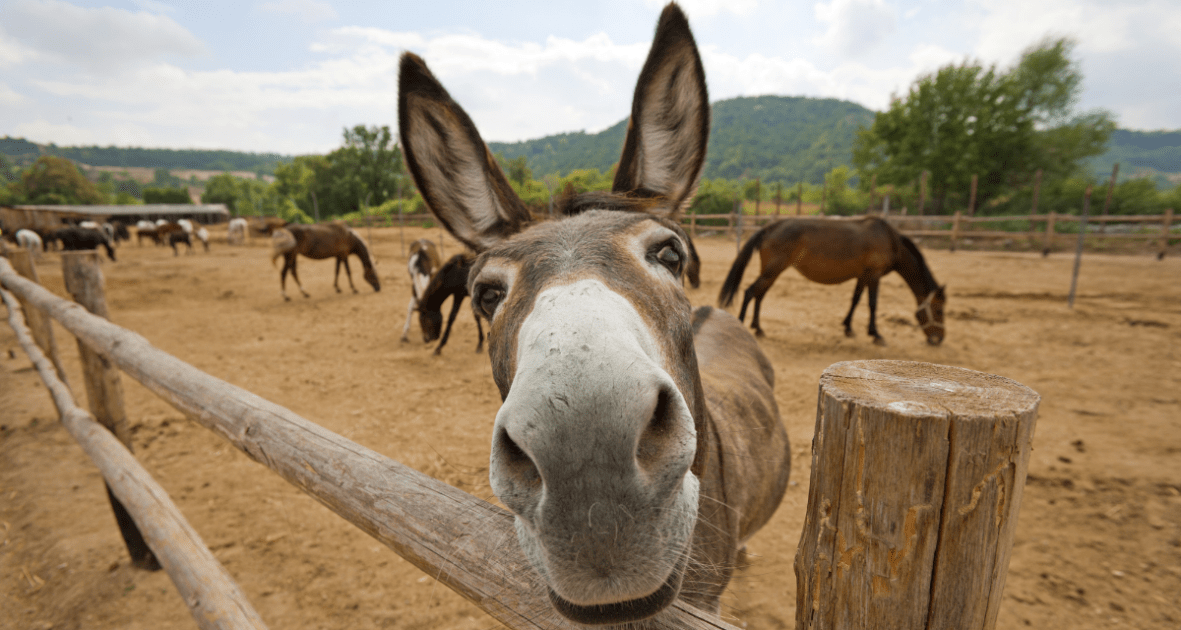
When the donkey blows his horn,
’tis time to house your hay and corn.
The “horn” in this couplet is the donkey’s bray. Donkey braying lore is mostly an English and Mediterranean farm tradition. The mechanism is similar to the wolf-howl version: pressure-driven restlessness in the herd. Out-of-routine braying ahead of rain is recorded in farm journals across multiple centuries. Modern equine research has confirmed that donkeys and horses both show measurable behavioral changes in the hours before storms, mainly increased vocalization and reduced grazing.
7. Squirrels
When a squirrel eats nuts in a tree,
weather is as warm as warm can be.
The reverse of the rule is more commonly cited: squirrels burying nuts deep in fall predicts a hard winter. Squirrel cache depth is part of a broader set of fall animal behaviors used to predict winter severity, alongside the woolly-bear caterpillar’s stripes and the persimmon-seed shape. The science here is mixed. Caching depth is most strongly correlated with seed availability and ground temperature at the time of caching, not with future weather. But squirrels do respond to fall temperature trends, and a colder-than-average October will produce earlier and deeper caching, so the lore captures a real correlation, not a magical one.
8. Cats
When the cat lies in the sun in February,
she will creep behind the stove in March.
If a cat sits with its back to the fire,
frost and hard weather can be expected.
Cat lore is mostly a household tradition, drawn from centuries of indoor-outdoor cat owners watching their animals respond to subtle changes in temperature, pressure, and humidity. Cats are notoriously sensitive to atmospheric changes; the back-to-the-fire rule and the sun-bath-then-stove rule both reflect the same underlying behavior, which is heat-seeking ahead of falling temperatures. Modern veterinary research has confirmed that cats show measurable behavioral changes 12 to 24 hours before significant weather shifts, mainly seeking warm spots and reduced outdoor activity.
For more, see our full piece on cat weather lore.
Why Animals Sense Weather Before We Do
The common thread across all of this lore is sensitivity to atmospheric variables that humans either cannot detect or do not pay attention to. The three main signals are:
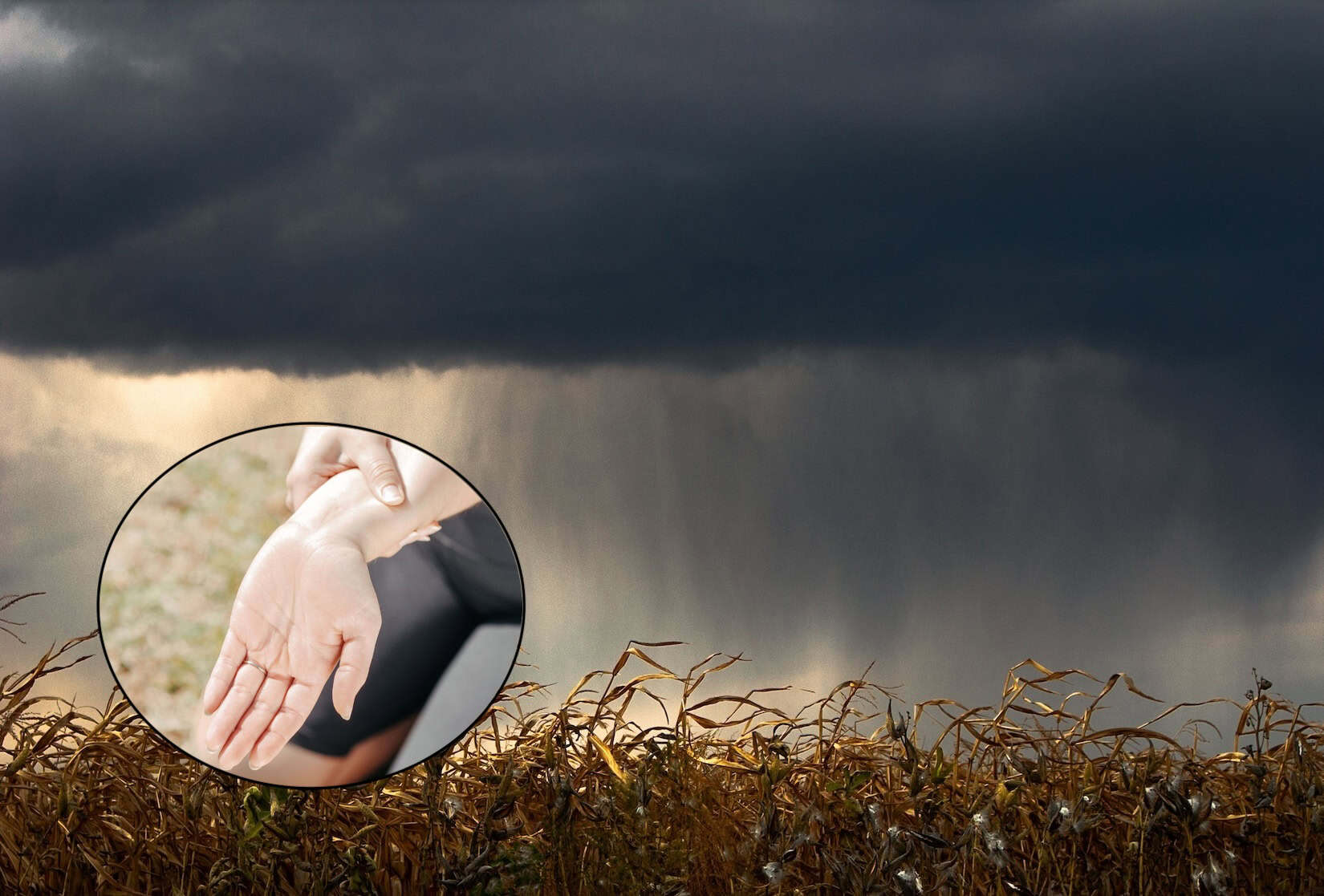
- Barometric pressure changes: a falling barometer means a low-pressure system is approaching, often with rain or snow within 24 hours. Many animals detect pressure changes through inner-ear and joint sensitivity.
- Humidity: rising humidity makes the air feel heavier and changes the behavior of insects, which in turn drives behavior in birds and mammals that prey on them.
- Temperature trends: animals respond to multi-day temperature direction (rising or falling) as a cue for behavior, not just the current temperature.
The folklore is most useful as a backup signal alongside the seven-day forecast. If your dog is restless, the cows are lying down, the swallows are flying low, and the seven-day forecast says rain is coming, all four signals together are stronger than any one alone. The Farmers’ Almanac long-range forecast covers the broader patterns months ahead, which the animals cannot see. The animals fill in the days the forecast cannot reach.
More Animal-Weather Lore Worth Knowing
- Woolly bear caterpillar: thick black bands predict a hard winter.
- Persimmon seed: fork, spoon, or knife shape predicts winter severity.
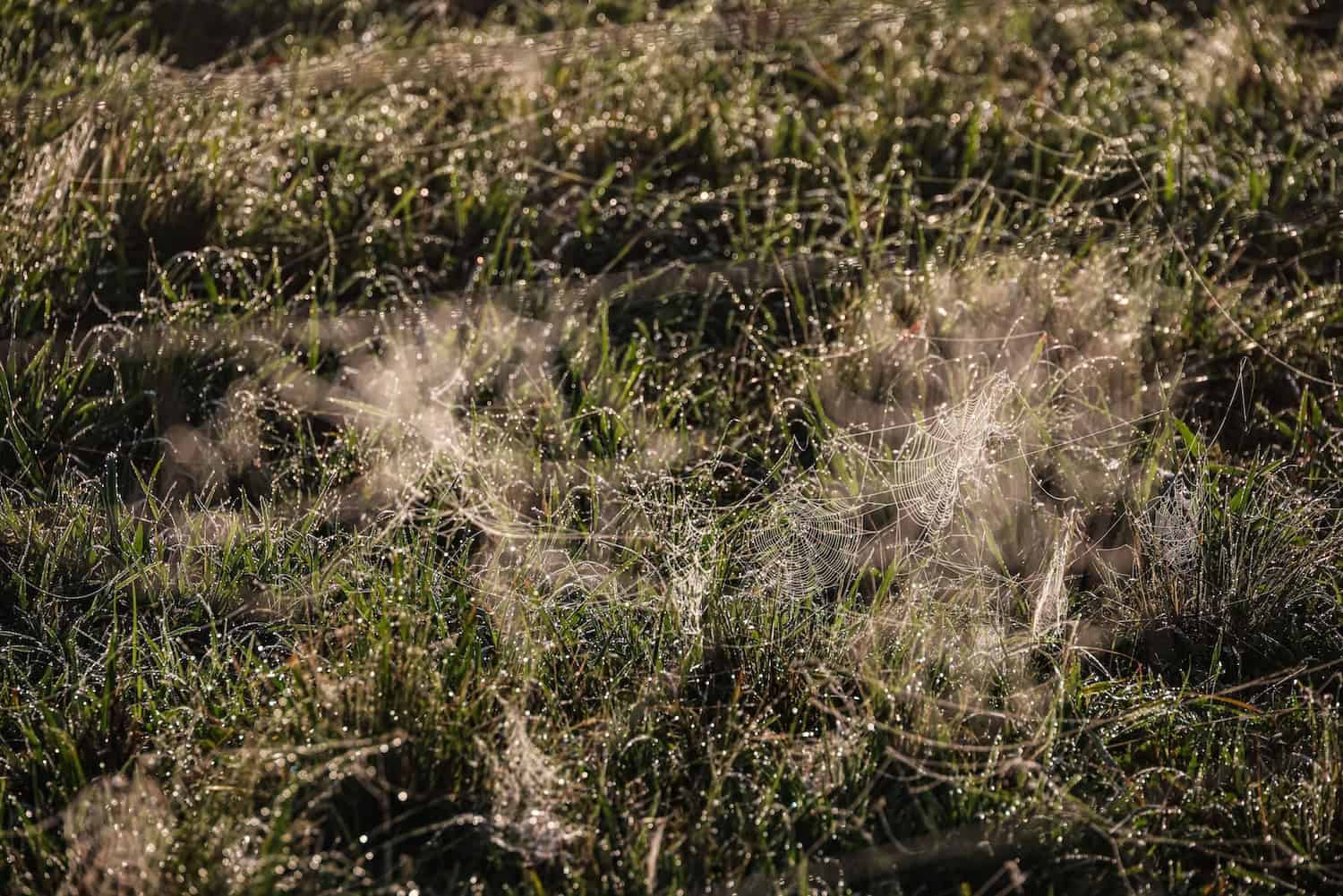
- Spiders: thicker webs ahead of cold weather.
- Frogs: louder croaking before rain.
- Bees: returning to the hive in numbers ahead of a storm.
Watch the animals. Read the signs. The forecast is in the field.
Frequently Asked Questions
Can animals really predict the weather?
Many animals can detect changes in barometric pressure, humidity, and temperature before humans notice them. That gives them an early-warning advantage of a few hours to a few days for incoming storms. The lore is not always reliable as a single forecast tool, but the better-documented rules (cows lying down, swallows flying low, elk descending) line up with measurable atmospheric changes.
Which animal-weather lore is most reliable?
Swallows flying low and cows lying down. Both have direct biological links to falling air pressure and rising humidity ahead of rain, and both have been confirmed in modern field research.
How do animals detect changes in air pressure?
Through specialized inner-ear structures that are more sensitive than the human equivalent. Many mammals also feel pressure changes in joints and connective tissue, which is why older humans report aching joints before storms. Birds detect pressure changes well enough that some species adjust migration timing in response.
Is the groundhog forecast accurate?
The recorded accuracy of Punxsutawney Phil’s predictions runs around 35 to 40 percent, which is below random chance for a binary forecast. The Farmers’ Almanac long-range forecast publishes a separate winter outlook each year that draws on a math-based formula and historical patterns, with self-reported accuracy of around 80 percent.
Why do cows lie down before rain?
Cows respond to a combination of falling barometric pressure and rising humidity. Lying down conserves body heat against cooler temperatures and reduces grazing in conditions where insects (especially biting flies) become more active. Modern dairy research has documented increased lying time up to two hours before measurable rainfall.
What does it mean when birds fly low?
Insects fly lower when the air becomes humid ahead of rain, because moisture-laden wings make sustained high flight harder. Insect-eating birds (swallows, swifts, martins) follow their food downward and feed close to the ground or the water surface. Low-flying swallows are one of the most reliable old-school rain forecasts.
Should I use animal lore instead of the forecast?
No. Use it alongside. Animal signs work best as a backup: a confirming or contradicting layer on top of the seven-day forecast and the long-range outlook. When several signs line up with the forecast, the prediction is more reliable than any one source alone.


This article was published by the Staff at FarmersAlmanac.com. Any questions? Contact us at [email protected].
- Farmers' Almanac Staff

- Farmers' Almanac Staff

- Farmers' Almanac Staff

- Farmers' Almanac Staff

Tell me more
I live in the Shenandoah Valley of Virginia. I have noticed the deer on our property that their coats have turned grey in the last few weeks, thus a hard winter for us!
I have heard that with the ladybugs they never have been wrong about the weather and it is 6 months in advance as well. Love those ladies#!!
If you rub their back they bring you good luck to also when a certain part of my body hurts there’s a storm coming
I always heard that when you heard your first locus near the end of summer it was six more weeks until frost.
Love those weather predictors. Some actually make sense.
?
When a squirrel builds it’s winter nest look where it is placed in the tree. If it is up high in the tree, that means we will have a lot of snow for winter. If it is lower in the tree, that means less snow. If it is placed in the outer, thinner branches, that means it will not be very windy that winter. If it is placed in a crotch of a branch that means a windy winter. If it is built against a trunk, look for a bad winter. Also if you don’t see many nests in a good squrrel area, winter is not yet set in. When you see a lot of nests all of a sudden, then winter is finally set in. And the opposite is true for spring. When suddenly all the nests are disappearing, spring is finally here.
When butchering a chicken from your area in the fall, look at the grizzly part on the breast bone. If it is long, that means you will have a long winter. If it is short, you will have a short winter. If it is narrow, it will be a cold winter. If it is wide, that means it will be a mild winter.
If you see a fly in your home in winter, that means warm weather is either here or will be.
If it is raining and chickens won’t go outside in it. That means the rain will soon stop. But if the chickens go outside in the rain, that means that it will rain all day.
WHEN PECAN TREES START TO BUD, WINTER IS OVER. OTHER TREES CAN BE FOOLED; BUT, NOT THE PECAN TREE
I’ve heard old people say if the husk on corn is thick it will be hard winter ❄️. Also if it’s raining ☔️ and the dew is risen that’s a sign the rain will end.
Here in MS you can bet it will rain soon after your hear the rain frogs croak! We have gone through many dry spells in the summer and early fall and they were silent. Once your hear them, at any time of the day, we usually get rain within 24 hours.
It is my humble opinion, but I firmly believe that animals know more than we do when it comes to predicting weather, especially when it come to the winter forecast, I’m on my way to 92 years of living on this blessed Earth, and some things never change. for which I’m very grateful. <3