

The Great Blizzard of 1888: How the White Hurricane Reshaped America
The Blizzard of ’88, also known as “the Great White Hurricane,” gripped the Atlantic seaboard from the Chesapeake Bay northward to Canada’s Maritime Provinces, and is considered one of the worst snowstorm in U.S. history. We take a look back.
Quick Reference
- Storm name: The Great Blizzard of 1888, also called The Big One and The Great White Hurricane.
- Dates: Four full days starting March 11, 1888.
- Reach: Atlantic seaboard from Chesapeake Bay northward to Canada’s Maritime Provinces.
- Snowfall: Up to 50 inches in parts of the Northeast, with drifts 50 feet high.
- Wind: Sustained over 45 mph, gusts reported as high as 80 mph.
- Toll: More than 400 dead, half in New York alone. A quarter were sailors.
- Property loss: Over $25 million in 1888 dollars from fire damage alone (over $26 billion in today’s terms per the original Almanac estimate).
- Lasting legacy: Boston’s subway opened in 1897; New York’s followed in 1904. The blizzard is part of why both exist.
In 1888, President Grover Cleveland was defeated by challenger Benjamin Harrison, the wax drinking straw, the time card clock, and the ballpoint pen were patented, golf came to America for the first time, George Eastman produced the first Kodak camera, National Geographic magazine published its first issue, the Washington Monument opened to the public, and the eastern half of North America endured what has been called the worst blizzard in United States history.

The Big One
For four full days, beginning on March 11, the Great Blizzard of ’88, also known as “the Great White Hurricane,” gripped the Atlantic seaboard from the Chesapeake Bay northward to Canada’s Maritime Provinces. Just two months earlier the infamous Schoolhouse Blizzard had claimed the lives of more than 200 people, most of them children, in the Midwest. As tragic as that storm was, it was minor in comparison to the one that would soon hit.
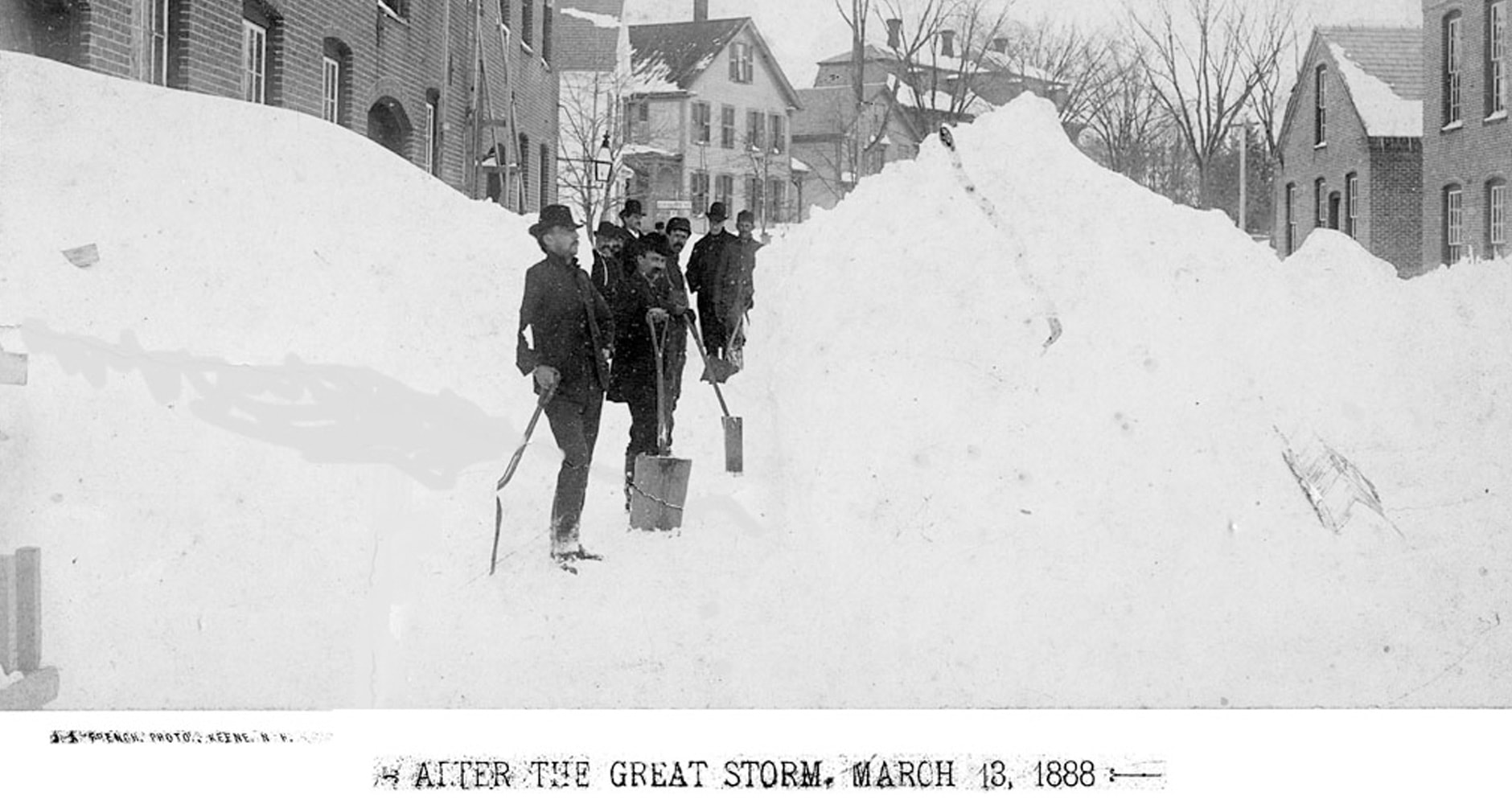
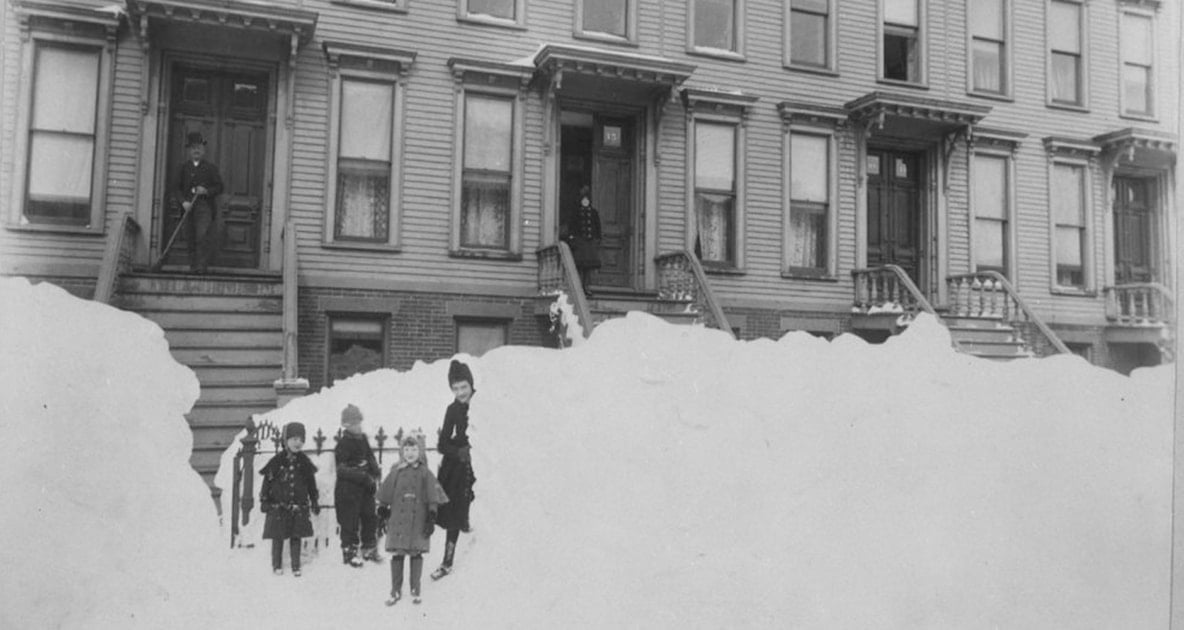
The Blizzard of ’88 dumped as much as 50 inches of snow on parts of the Northeastern United States. The unprecedented amount of snow was accompanied by temperatures in the single digits, which were unusual for March, and punishing winds in excess of 45 miles per hour. Some reports even claimed there were gusts up to 80 miles per hour. By the time the storm was over, it left behind snowdrifts 50 feet high and claimed more than 400 lives, half of them from New York alone.
Railroads stopped running, ships were grounded, and many of those unlucky enough to be on the water when the storm hit wrecked. A full quarter of the people who lost their lives during the storm were sailors. Telegraph and electrical wires, which were a fairly recent addition to New York and a few other large cities, were downed, creating a hazardous situation. This situation was worsened by the fact that fire stations were unable to respond due to impassable roads. Unchecked fires were responsible for more than $25 million in property damage related to the storm, or more than $26 billion in today’s dollars. Later, as the snow from the storm began to melt, severe flooding occurred, causing even more damage.
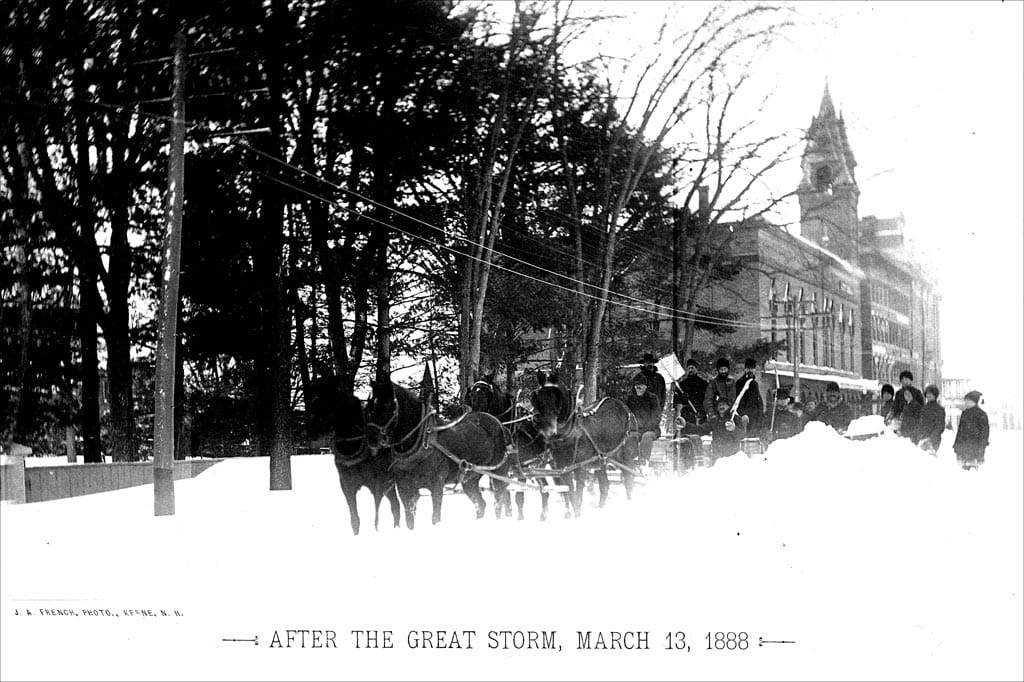
Most people found themselves confined to their homes for the duration of the brutal storm and its aftermath. In many places, it took as long as eight days after the snow ended to make roads passable. The storm was, in part, responsible for the creation of Boston’s subway system, the nation’s first, which opened nine years later, in 1897. New York City would soon follow suit, opening its subway system in 1904.
How the Storm Unfolded, Day by Day
- March 11, 1888. Sunday turns from mild rain to driving sleet across the Mid-Atlantic. Temperatures crash overnight from the 40s into the single digits.
- March 12. The storm intensifies through Monday. New York City, Brooklyn, Boston, Hartford, and Albany are blanketed. Telegraph wires snap under wet snow and ice. Trains stall on every line south of New England.
- March 13. Drifts climb past the second-story windows of brownstones in lower Manhattan. Stranded commuters die in the street within blocks of home. Sailors freeze to ships icebound in the East River.
- March 14. The wind finally backs off. Drifts in central Connecticut measure 50 feet. The full count of the dead is still hours away from being known.
- March 15 onward. Eight days of digging. Fires burn unattended. Melt floods follow.
Why the Blizzard of 1888 Hit So Hard
- No long-range forecast. The United States Weather Bureau had only existed in modern form since 1870. There was no warning system that could reach a sailor or a commuter in time.
- Above-ground infrastructure. Telegraph and electrical wires were strung on poles. The first big wet snow on those poles brought the network down across cities, which knocked out fire response.
- March surprise. Single-digit temperatures in mid-March were rare and not what New Yorkers had stocked their pantries for.
- Coastal trapping. The low pressure stalled off the New England coast, keeping the wind on the same fetch for four days. The fetch is what built the 50-foot drifts.
What the Storm Changed Forever
- The first US subway. Boston’s Tremont Street subway opened in September 1897, with the Blizzard of ’88 named in the planning records as a driving cause.
- The New York subway. Followed in 1904, with the same memory in mind.
- Buried utilities. Cities along the Northeast Corridor began moving telegraph and electrical wires underground in the 1890s, both to prevent fire and to keep them up under load.
- Modern weather services. The blizzard pushed federal and state authorities to fund the first real warning network, which the National Weather Service eventually grew out of.
How It Compares to Later Blizzards
| Storm | Year | Reach | Toll | Notes |
|---|---|---|---|---|
| Great Blizzard of ’88 | 1888 | Chesapeake to Maritimes | 400+ dead | 50-foot drifts, 80 mph gusts |
| Schoolhouse Blizzard | 1888 | Northern Plains | 200+ dead | Hit during the school day |
| Storm of the Century | 1993 | Cuba to Canada | 318 dead | Reached deep into the South |
| Blizzard of ’78 | 1978 | Northeast US | ~100 dead | Snowstrapped tens of thousands |
| Snowmageddon | 2010 | Mid-Atlantic | ~41 dead | Broke modern Mid-Atlantic snow records |
For more on each, see our historic blizzard archive, our Blizzard of ’78 retrospective, and the National Weather Service archive for additional context on the storm record.

Frequently Asked Questions
When did the Blizzard of 1888 happen?
The storm began Sunday, March 11, 1888 and lasted four full days. It hit the Atlantic seaboard from the Chesapeake Bay northward into Canada’s Maritime Provinces, with the worst impact along the New York to Boston corridor.
How much snow fell in the Blizzard of ’88?
As much as 50 inches in parts of the Northeast, with drifts up to 50 feet high. Wind in excess of 45 miles per hour and reported gusts up to 80 miles per hour piled snow against buildings and across rail lines.
How many people died?
More than 400 people, half from New York alone. A full quarter of the dead were sailors caught on ships when the storm hit.
Why is the storm called The Great White Hurricane?
The wind speeds and the duration matched what people then called a hurricane in seasons with no formal naming system. With four days of sustained 45 mph winds and reported 80 mph gusts, plus the wreckage of ships and infrastructure, the nickname stuck.
How did the Blizzard of 1888 lead to subways?
Above-ground railroads, telegraph wires, and streets were paralyzed for days. Boston broke ground on the Tremont Street subway, the country’s first, in 1895, citing the blizzard. New York followed in 1904 with the IRT.
How does it compare to modern blizzards?
In sheer reach and snowfall, the Blizzard of ’88 still ranks at the top. The 1993 Storm of the Century covered more ground but was less concentrated. The 1978 New England blizzard had higher modern fatalities per capita in stranded vehicles, but never topped the 50-foot drifts of 1888.
Was there any warning?
No useful warning. The United States Weather Bureau had been founded in 1870 but had no real-time public reach in 1888. The blizzard helped push the case for funding the network that eventually became the National Weather Service.
Main image: Blizzard of March 1888, Brooklyn, New York – Wikimedia Commons


Jaime McLeod
Jaime McLeod is a longtime journalist who has written for a wide variety of newspapers, magazines, and websites, including MTV.com. She enjoys the outdoors, growing and eating organic food, and is interested in all aspects of natural wellness.
- Jaime McLeod

- Jaime McLeod
- Jaime McLeod
- Jaime McLeod




Thank you for all the wonderful stories. I’m glad I live in Arizona now. I’m a wimp.
Interesting article! Love reading about historic weather events.
I live in massachusetts and honestly do not recall having any storms october 31st 2011. I remember getting some snow that day but hardly even a half a foot lol that was not a snow storm at all. Just a flurry. And by the way…. I live on the end closest to connecticut. They barely got anything as from what I seen/heard too. Last year we had a lot of snow but nothing compared to the ’78 blizzard or ’88.
The difference everyone is mentioning isn’t the inches of snow as much as it was the deaths: over 400! Yes, we’ve had more snow and blowing winds, but nowhere near the loss of lives with the ’88 storm.
Did anyone remember the “Blizzard”/Nor’Easter of 1978? The whole northeast was stranded. People were stranded at work places, some ventured out and vehicles just could not go anywhere. Snow coming down at inches an hour, wind blowing at full force. Being a Nor’easter, coastal heavy wet snow, described as a cement wall if plows just could not budge it. All forces had to send for extra equipment which came out from Buffalo, They were so amazed at the fact they could not move , they explained it as trying to move cement. And folks, that’s what you call a Blizzard!
That’s just considered a dusting around here…..During the Great Blizzard of 1966, a three-day Nor’easter blended with lake effect squalls to leave my home town of Fulton, N.Y. buried under nearly 200 inches – 16 feet – of snow.
Check it out here/http://www.usatoday.com/weather/storms/2007-02-06-ny-snow_x.htm
We had the blizzard 0f 1977 in Western New York. Shut down everything from Erie, Pa to past Buffalo. Nothing could move with all the snow from lake effect snows and very high winds. It took the National Guard to dig us out. Houses along the lake were buried over the roofs in snow drifts.
I am surprised that you did not mention the October 31st storm from just this past 2011. It was named Storm Alfred. Connecticut and Massachusetts had over 14 – 16 inches of snow and snapped trees in half. Connecticut looked like a war zone. Many people were without power for two weeks.
What a great story my great great grandparents actually died in this storm and left my great grandfather orphaned.