

May Birthstone: Emerald, History, Lore, and How to Care for It
Quick Reference
- May birthstone: Emerald, a green variety of the mineral beryl.
- Meaning: Fertility, rebirth, wisdom, and eternal love.
- Hardness: 7.5 to 8 on the Mohs scale.
- Color source: Trace chromium and vanadium inside the crystal.
- Main sources today: Colombia, Zambia, Brazil, and Afghanistan.
- Zodiac tie-in: Taurus (primary) and Gemini (secondary).
- Anniversaries: 20th and 35th wedding anniversaries.
If your birthday falls between May 1 and May 31, your birthstone is the emerald, a stone the Greeks named for the color of new grass. Emerald has been pulled from the earth, set in crowns, and tucked into tombs for more than 3,500 years, and it still carries the same meanings it did when the Egyptians first mined it: fertility, rebirth, wisdom, and love that lasts. This guide walks you through where emeralds come from, why they look the way they do, the lore your grandmother might have known, and how to care for a stone if one ends up in your family.
What Is the May Birthstone?
The traditional May birthstone is emerald, the deep green variety of a mineral called beryl. The name comes from the Greek smaragdos, by way of the Old French esmeraude, meaning simply “green gem.” Beryl itself is colorless in its purest form. Add trace chromium and vanadium during the long crystal-growing process and the stone turns the lush, almost wet green that has signaled spring to almost every culture that has ever held one.
Emerald is one of the four classic precious gemstones, alongside diamond, ruby, and sapphire. It sits at 7.5 to 8 on the Mohs scale, hard enough for daily jewelry but softer and more brittle than its three companions because of the inclusions that almost every emerald carries. Jewelers call those internal fissures the stone’s jardin, French for “garden,” and a healthy jardin is part of how you tell a real emerald from glass.
The History and Lore of Emerald
Emerald’s recorded history begins in the hills above the Red Sea. Egyptian miners were chipping green crystals out of the rock at Wadi Sikait and the nearby site of Sikait around 1500 BCE, long before Cleopatra made her famous emerald mines a household name. Cleopatra prized the stones so deeply that she had her own portrait carved into them and gave them to visiting dignitaries as a kind of soft diplomacy. Excavations at those Egyptian sites are still turning up rough crystals and miners’ tools today.
Ancient Egyptians held that emeralds were a gift from Thoth, the god of wisdom and writing, who was worshipped as far back as 6000 BCE. Like Thoth, emeralds stood for knowledge and clear communication. Pharaohs wore them in ceremonies, and they were sewn into protection amulets for the living and the dead. A necklace set with emerald was found inside the tomb of King Tutankhamen.
Thousands of years later, legend has it that the Hebrew god bestowed a gift of four stones on King Solomon that gave him power over every other king on earth. One of those stones is believed to have been an emerald. The Greek goddess of love, Aphrodite, was associated with the green stone, and the Roman Venus inherited the same connection when Rome adopted her. On the other side of the world, the Incas and the Aztecs treated emerald as sacred, with Inca priests in what is now Colombia reserving the very best crystals for temple offerings.
India’s Mughal emperors of the 17th century had their own love affair with emerald. Rajas and shahs commissioned engravers to cut prayers from the Quran into the surface of large stones, and a few of those carved emeralds still survive in museum collections today. Hindu mythology connects emerald to Garuda, the divine bird-mount of Vishnu, whose feathers and stones were said to be green. When Spanish Conquistadors landed in the 1530s and looted Inca and Aztec treasuries, they sent boatloads of Colombian emeralds back across the Atlantic, and many of those stones eventually made their way east to the same Mughal courts.
The Colombian mines the Spanish seized, including Muzo, Chivor, and Cosquez, have been worked for centuries and still produce some of the world’s most prized emeralds.
Geology and Where Emeralds Come From
Emeralds formed nearly three billion years ago in the Earth’s crust, in narrow veins where beryllium-rich fluids met chromium or vanadium from nearby rocks. They are a type of beryl, the same mineral family that gives us March’s birthstone, aquamarine (blue-green), heliodor (yellow), and morganite (pink). Colorless in its pure form, beryl picks up its tint from whatever trace elements happen to be nearby while the crystal grows. Emerald turns green because of chromium, vanadium, and iron.
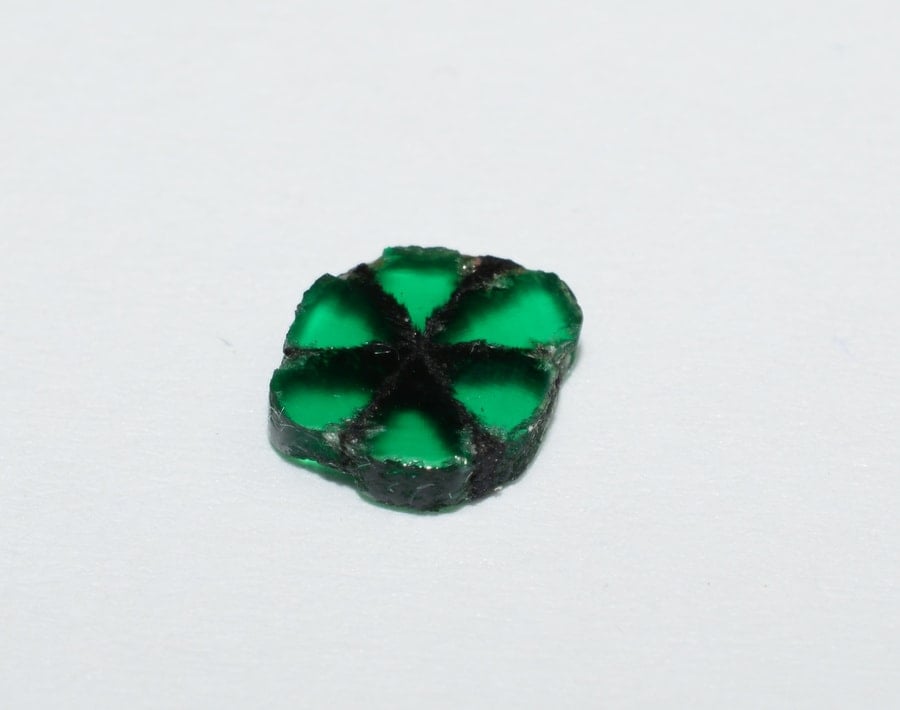
Gem-quality emeralds are rarer than diamonds. Finding one is about 20 times rarer than finding a diamond of the same quality, according to the Gemological Institute of America. The “trapiche” form is rarest of all. Trapiche emeralds are found in just a handful of places, mostly in Colombia, and they show a star-like pattern of dark inclusions radiating from the center of the crystal.
Since their discovery in Egypt, emeralds have been found all around the world. More than half of the stones on the market today come from South America, but emeralds turn up in pockets across several continents:
- Colombia. Considered the source of the world’s finest emeralds. Muzo crystals tend toward a deep, almost grass-green color with a slight warmth.
- Zambia. Africa’s leading producer. Zambian emeralds often look slightly bluer and have fewer inclusions than Colombian stones.
- Brazil. Yields lighter, sometimes yellowish-green crystals from mines in Minas Gerais and Bahia.
- Afghanistan. The Panjshir Valley produces small but very fine crystals prized for their saturation.
- United States. There is a famous cave in North Carolina, Hiddenite, where collectors still pull up gem-quality emeralds with hand tools.

Famous Emeralds
The stone has a long guest list of admirers. Cleopatra, Napoleon III, and John D. Rockefeller all collected emeralds, and the gem keeps showing up in the love stories and treasure rooms of the modern era. John F. Kennedy proposed to Jackie Onassis with one. The million-dollar engagement ring boasted a 2.84-carat emerald paired with a 2.88-carat diamond, set in platinum.
A handful of named emeralds are worth knowing by sight:
- The Hooker Emerald. 75.47 carats, set in a brooch surrounded by 20 diamonds, on display at the Smithsonian (view the Hooker Emerald here).
- The Guinness Emerald Crystal. One of the largest gem-quality emeralds ever found, weighing 1,759 carats and still uncut.
- The Mackay Emerald. A 168-carat Colombian emerald in an Art Deco platinum-and-diamond necklace at the Smithsonian.
- The Patricia Emerald. A 632-carat hexagonal crystal from the Chivor mine in Colombia, named for the mine owner’s daughter.
- The Chalk Emerald. A 37-carat Colombian stone in a ring designed by Harry Winston, also held by the Smithsonian.
- Jacqueline Kennedy’s engagement emerald. The 2.84-carat stone from JFK’s proposal.
- Elizabeth Taylor’s Bulgari emerald necklace. A suite gifted by Richard Burton during the filming of Cleopatra, later sold at Christie’s for more than six million dollars.
The Emerald Cut
If you have ever heard a jeweler talk about an “emerald cut” diamond, this stone is the reason that cut exists. The rectangular step-cut, with its trimmed corners and broad flat top, was designed centuries ago specifically for emeralds. Two practical problems drove the design. Emerald is brittle, so the corners are blunted to keep the stone from chipping during setting. Emerald usually carries that famous jardin of inclusions, so the wide, calm facets are tuned to show off clarity instead of hiding behind sparkle the way a brilliant cut does.
Today the emerald cut is used on diamonds, aquamarines, and other gems, but it still does its best work on the stone it was named for.
Emerald Folklore and Healing Beliefs
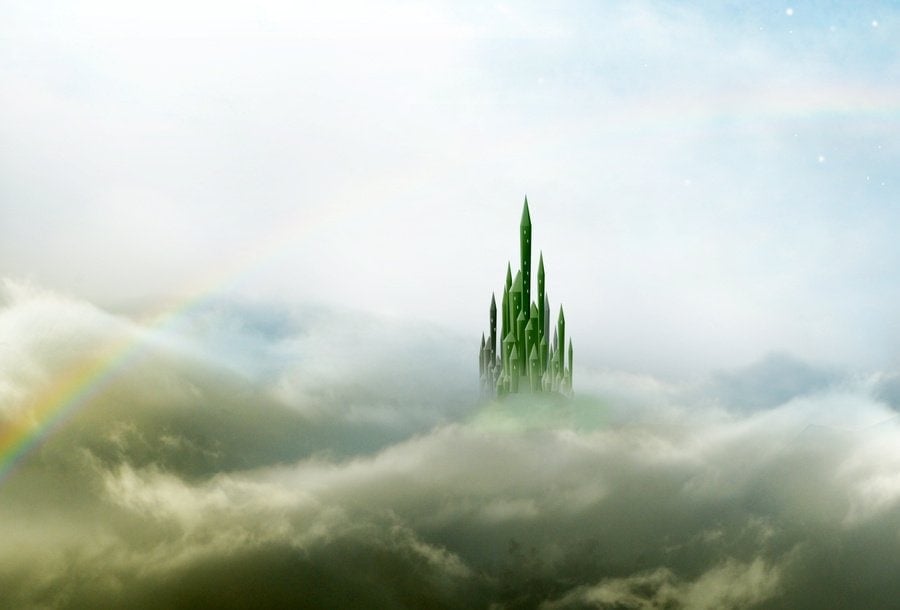
Ancient Indian religious texts, the Vedas, spoke of the emerald as a stone that brought prosperity and a sense of calm, especially to strained eyes when held against them. That same belief shows up in the film The Wizard of Oz. When Dorothy enters the Emerald City she is told to put on emerald spectacles to keep the dazzling lights from overwhelming her eyes.
Ancient cultures also turned to emerald for help with writing and speech. Tradition holds that the best way to wear one is set in gold on the pinky finger, which old jewelry lore associates with communication. (Fun fact: the fourth finger is the one associated with love and April’s diamond. Read “April Birthstone, Diamond.”) Emeralds were also believed to aid mental and spiritual growth, sharpen intuition, and reveal lies, because the green color was said to grow cloudy in the presence of a falsehood.
A measured note: modern science does not back up the eyesight cure, the lie-detector test, or the spiritual claims. We tell the stories here because they are part of why the stone matters culturally, not because we think the gem will improve your vision. Treat the lore the way you would treat any old country remedy: a window into how people once made sense of the world.
Emerald and the Zodiac
Astrologically, emerald is linked first to Taurus, the bull, which runs from April 20 through May 20 and rules most of the May birthday window. Tradition assigns Taurus the colors of the earth and the green shoots of late spring, which lines up neatly with emerald’s color. Gemini, May 21 through June 20, picks up emerald as a secondary stone, with the lore tying the gem’s communication symbolism to Gemini’s reputation as the talker of the zodiac.
How to Care for Emerald Jewelry
Should you be lucky enough to own an emerald, a little care goes a long way toward keeping the stone looking as good as the day it left the bench. Emerald is one of the four gemstones classified as “precious,” sitting in the same class as diamond, ruby, and sapphire. But of those four, emerald is the softest and the most brittle, because of all those inclusions trapped inside as the crystal grew.
Most emeralds on the market today have been oil-treated. A clear cedarwood oil (or sometimes a modern resin) is worked into the natural fissures to fill them and strengthen the stone. The treatment is standard and accepted by the trade, but it has consequences for cleaning:
- Do not use ultrasonic cleaners. The vibrations can drive the oil out of the cracks and dull the stone.
- Do not use steam cleaners or harsh chemical jewelry cleaners for the same reason.
- Do use warm soapy water and a soft brush. Rinse and pat dry with a lint-free cloth.
- Store emerald jewelry in its own pouch. Diamonds and harder stones can scratch the surface.
- Have the oil treatment refreshed by a jeweler every few years if the stone is worn daily.
Choosing an Emerald
Shopping for an emerald is a different exercise from shopping for a diamond. With diamonds, the goal is usually flawless clarity. With emerald, the jardin is part of the personality of the stone, and a totally flawless emerald is almost certainly synthetic. Look for:
- Color first. A rich, evenly distributed green with a touch of blue is the most prized. The Gemological Institute of America rates color above clarity for this gem.
- Clarity within reason. Some inclusions are expected. Avoid stones where the fissures reach the surface in a way that threatens to crack the gem.
- Cut. A well-cut emerald has even color and no obvious “windows” where light passes through without reflecting back.
- Treatments disclosed in writing. Ask whether the stone has been oil-treated, resin-treated, or color-enhanced. A reputable jeweler will tell you on the receipt.
- Origin papers if budget allows. Colombian, Zambian, and Brazilian stones each carry different price expectations, and an independent gem lab report (such as one from the American Gem Trade Association) is worth the small extra cost on bigger purchases.
Emerald Anniversary Significance
Beyond birthdays, emerald is the traditional gemstone gift for the 20th and 35th wedding anniversaries. The 20th-anniversary use is the older tradition, while the 35th was added in the 20th century by American jewelers’ associations. Either way, the symbolism lines up with the stone’s lore: a long-running marriage and a stone that has always stood for fertility, rebirth, and love that does not fade.
Putting It All Together
Whether you were born in May, you are buying a gift for someone who was, or you just like the green of a fresh-cut field, emerald carries more history than almost any stone in the jewelry case. Get familiar with the color, ask about the oil treatment, store it carefully, and the stone will keep its promise. For more on the months that bracket May, see our guides to the April birthstone, diamond, and the June birthstones, pearl, alexandrite, and moonstone, or browse all birthstones by month on our hub page. If you are curious about the May calendar more broadly, our roundup of May birth-month symbols and fun facts covers the flower, the trees, and a few traditions you may not have heard before.

Frequently Asked Questions
What is the May birthstone?
The traditional May birthstone is emerald, the green variety of the mineral beryl. Its color comes from trace chromium and vanadium inside the crystal, and it has been associated with fertility, rebirth, wisdom, and love since at least 1500 BCE.
Why are emeralds so expensive?
Gem-quality emeralds are about 20 times rarer than diamonds of comparable quality, and almost every emerald carries internal inclusions that limit how many flawless stones come out of the ground. Top-grade Colombian crystals from mines like Muzo and Chivor are especially sought after, which keeps the per-carat price high.
Are emeralds really good for your eyes?
The eyesight legend goes back to the Vedas and shows up again in The Wizard of Oz, but modern medicine does not back it up. Looking at green is restful for the eyes after long focus on a screen, which is probably how the folklore got started, but the stone itself has no medical effect.
Can I wear my emerald ring every day?
You can, with care. Emerald is 7.5 to 8 on the Mohs scale, hard enough for daily wear, but it is more brittle than diamond or sapphire. Take it off for gardening, gym sessions, and rough housework, and avoid ultrasonic and steam cleaners. Warm soapy water and a soft brush are all you need at home.
Are lab-grown emeralds real emeralds?
Yes. A lab-grown emerald has the same chemical composition and crystal structure as a mined one. It is also typically cleaner, cheaper, and easier to source ethically. Many reputable jewelers now stock both, and the choice is mostly about budget and personal preference.
Which emerald-producing country has the best stones?
Colombia is widely considered the source of the world’s finest emeralds, especially from the Muzo and Chivor mines, thanks to a deep, slightly warm green color. Zambia is a close second with bluer, cleaner crystals. Brazil and Afghanistan produce excellent stones too, and origin can shift price significantly.
What anniversary is emerald the gift for?
Emerald is the traditional gemstone for the 20th and 35th wedding anniversaries. Both pair the stone’s symbolism of enduring love with milestones that mark a long-running marriage.
Is the emerald cut only for emeralds?
The emerald cut was designed for emeralds, with trimmed corners to protect the brittle stone and broad step facets to show off the color. Today it is used on diamonds, aquamarines, and other gems, but it still flatters emerald best.
Join the Discussion
Is emerald your birthstone? What is one thing you learned from this article that you did not know before? Tell us in the comments below.
Read more about other birthstones by month.


Tamra Albright-Johnson
Tamra Albright-Johnson specializes in the unique histories and folklore around rare stones. She owns and operates a custom jewelry shop with her daughter, Kennie, in Iowa.
- Tamra Albright-Johnson

- Tamra Albright-Johnson
- Tamra Albright-Johnson
- Tamra Albright-Johnson


Emerald is my birthstone and i was just reading about it here, super interesting information. Thank you
Glad you enjoyed the article! Hope you check out some of our other birthstone stories as well.
I am a fan of Farmers Almanac, I generally enjoy the content, as I did today reading about emeralds. However, Wikipedia is not a good source of information, nor is it truthful. I seek links to Wikipedia in “keep exploring” and I would like to see FA link to something more factual and without bias, like the Britannica Encyclopedia.
Hi Christy,
Thank you for being a fan! It’s always nice to hear from our fans. I can assure you that we don’t use wikipedia for any of our sources in our articles. We are not sure where you are seeing that in the keep exploring as that section is supposed to send you to more of our articles. Unfortunately if it’s an ad, ads are a necessary evil for our site to keep it up and running. We do offer a membership that shows less ads and is less than $1 a month if that interests you.