

January Birthstone: Garnet Meaning, Folklore, Varieties, And Care
Quick Reference: January Birthstone
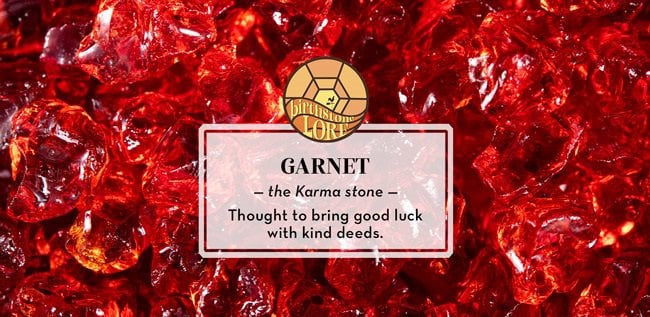
- Birthstone: Garnet (most often deep red; also green, orange, pink, and rare color-change varieties)
- Symbolism: Fidelity, friendship, protection, good karma, healing
- Mohs hardness: 6.5 to 7.5 (durable enough for daily wear)
- Main varieties: Almandine, pyrope, rhodolite, tsavorite, demantoid, spessartine, hessonite
- Zodiac match: Capricorn (Dec 22 to Jan 19), Aquarius (Jan 20 to Feb 18)
- Anniversary stone: Traditional gift for the 2nd wedding anniversary
- Alternates: Obsidian (Capricorn pairing), emerald (Tibetan tradition)
The January birthstone is garnet, a stone worn for protection, friendship, and good karma since long before anyone called it a birthstone. Roman scribes pressed garnet signet rings into sealing wax in the 2nd and 1st centuries BCE, and Egyptian craftsmen set garnets into burial jewelry as far back as 3100 BC. This guide pulls together the lore, the science, the famous pieces, and how to choose and care for a garnet of your own.
What Is the January Birthstone?
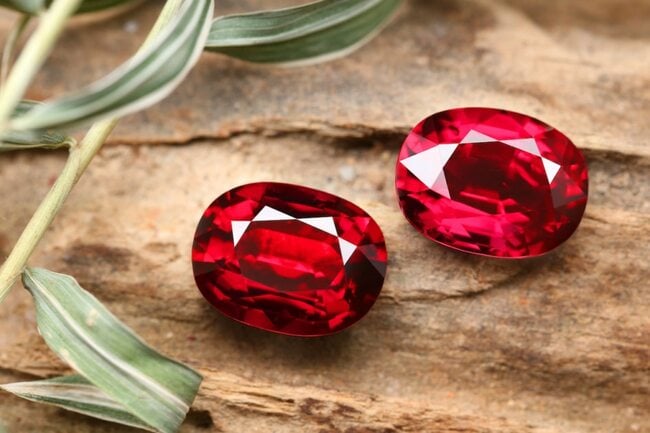
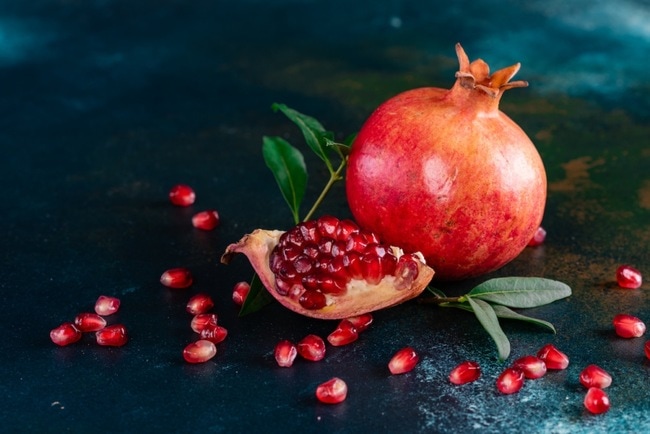
Garnet is the modern and traditional birthstone for January. The name comes from the Latin granatum, meaning pomegranate, after the deep-red seeds the most common garnets resemble. Garnet is not one mineral but a family of related silicate minerals. According to the Gemological Institute of America (GIA), the family includes more than 20 recognized species. For most of history “garnet” meant the red stone that lit up Roman intaglios, Bohemian brooches, and Victorian mourning jewelry. Today the term covers green tsavorite, orange spessartine, pink rhodolite, and rare color-change stones too.
Garnet Varieties
Shop for a January birthstone and you will see a handful of trade names. Here are the seven most common.
- Almandine. The most common garnet. Deep red to brownish red. The workhorse of antique jewelry.
- Pyrope. Fiery blood-red, the source of most “Bohemian garnet.” Named from the Greek pyropos, fire-eyed.
- Rhodolite. Pinkish-purple blend of almandine and pyrope. Bright and very wearable.
- Tsavorite. Vivid grass-green. Discovered in East Africa in the late 1960s, named after Tsavo National Park.
- Demantoid. The rarest green garnet, with fire greater than diamond. Russian Ural stones are the historic standard.
- Spessartine. Orange to reddish-orange. “Mandarin” spessartine from Namibia and Nigeria is the prized variety.
- Hessonite. Warm cinnamon to honey-brown, the “cinnamon stone.” Used in Vedic astrology as a protective gem.

Folklore
Ancient Symbol Of Life
Ancient Egyptians treated garnet as a symbol of life. They set the stone into jewelry honoring Sekhmet, their goddess of war and protectress of healing, and slipped garnet into burial pieces. Egyptian garnet jewelry has been dated as far back as 3100 BC, making it one of the oldest gemstone traditions still observed today.
Connection With Pomegranates And Distant Love
In ancient Greece, garnet was tied to pomegranates and to Persephone, goddess of grain and vegetation. The connection runs through one of the oldest seasonal myths on record.
In the story, Persephone was captured by Hades, god of the underworld, and forced to live with him below the earth. She came in time to love him, and even wed him. An agreement let her spend eight months of the year above ground. (Learn more about the Myth of Persephone and how it relates to the seasons.) To make sure she would return, Hades fed her pomegranate seeds, betting the taste would keep pulling her back.
Greek garnet jewelry from that era often took the shape of pomegranate seeds clustered into rings, pendants, and earrings. The visual echo is also why folklore came to link the stone with lovers and friends separated by distance.
Given To King Solomon By God?
In ancient and medieval texts, the word carbuncle covered any red gemstone, garnet included. Carbuncle was one of the stones that tradition holds was given to King Solomon by God. Some readers of the old accounts believe that red stone was a garnet, although the records do not name a specific mineral and we cannot say for certain.
Noah’s Lantern And Other Old Tales
One Talmudic tradition, recorded in Genesis Rabbah, holds that Noah hung a single great garnet from the ceiling of the ark to light the long voyage. A separate folk story, popular in Renaissance Europe, claimed that Plato had his portrait engraved on a garnet by a Roman gem cutter, and that the lost intaglio was the model for centuries of garnet portrait jewelry. The portrait has never been recovered, so the tale is folklore, not history.
Seal Of Protection
Garnets were used in ancient Rome to seal important documents. Wealthy Romans wore signet rings with garnet intaglios and pressed those rings into hot wax on letters, contracts, and deeds. If the wax seal was broken on arrival, the recipient knew the document had been read. Surviving Roman garnet signet rings have been dated to the 2nd and 1st centuries BCE.
Crusaders And Bohemian Heyday
Medieval European knights carried garnets into the Crusades as protective talismans, and the stone became a fixture of religious and reliquary jewelry through the Middle Ages. Later, pyrope deposits in the hills of Bohemia (today the Czech Republic) made the region the center of the garnet trade. Bohemian garnet jewelry, with dozens of small rose-cut stones packed tight into gold and silver settings, peaked in the 19th century and is still produced today.
Metaphysical Properties
These are folk beliefs handed down through centuries of jewelry tradition. We share them because they are part of why people wear the stone. They are not medical or psychological advice, and modern science does not back the healing claims.
- Known as the “Karma Stone,” wearing this gem while doing kind deeds is believed to bring good fortune to the wearer. Some people believe that the same is true with the reverse. For instance, wearing a garnet stone while doing bad acts brings bad luck.
- Also known as the “Stone of Health,” it is thought to protect warriors in battle and ward-off disease. In ancient times, it was even placed in wounds to aid in healing.
- Ancient Hindu astrologers believed the gem relinquished guilty feelings and negative emotions of all kinds, bringing happiness, health, and wealth to those who wore it.
- Garnet is thought to bring confidence, clarity (along with creativity), and peace to the wearer.
Garnet And The Zodiac
The January birthstone overlaps two zodiac signs: Capricorn (December 22 to January 19) and Aquarius (January 20 to February 18). In traditional gem astrology, garnet is most closely paired with Capricorn, the earth sign associated with discipline, ambition, and the slow work of building something that lasts. For Aquarius readers born after January 19, garnet is often paired with a secondary stone such as amethyst, which carries forward into February. For more on these signs, see our Capricorn zodiac guide.
Famous Garnets
The Pyrope Hair Comb
One of the most famous pieces of garnet jewelry sits in the Smithsonian’s National Gem Collection. The pyrope garnet hair comb is built around a large rose-cut central garnet surrounded by smaller stones, every one of them mined in Bohemia (today the Czech Republic). It was made during the Victorian era (1837 to 1901), the stretch that produced more garnet jewelry than any era before or since.
The Kunz Garnet
The American Museum of Natural History in New York holds one of the largest single garnet crystals ever recorded. It is about the size of a bowling ball and weighs close to 10 pounds. It was uncovered in 1885 by workers digging the sewers in New York City, and the find is named after George F. Kunz, the mineralogist who studied and publicized it.
A Rare Demantoid Garnet
A green demantoid garnet discovered in the 1990s now lives in the Smithsonian Museum. The stone weighs 11.24 carats and was valued at roughly thirty-seven thousand dollars, which gives you a sense of why demantoid keeps its reputation as the most coveted of the green garnets.
Bohemian Garnet Jewelry And The Romanov Brooches
Two more pieces are worth knowing. The Museum of Decorative Arts in Prague holds one of the world’s most complete collections of 19th-century Bohemian garnet jewelry, the densely set rose-cut style that gave the Czech lands their reputation. In imperial Russia, Empress Maria Feodorovna wore a set of garnet brooches that helped popularize demantoid across European courts in the late 1800s.
Facts
How They Are Formed
Unlike most birthstones, garnet is not one mineral but a family of related silicate minerals. There are more than 20 species. Five carry the bulk of the jewelry trade: pyrope, almandine, spessartine, grossular, and andradite. Most garnets at the counter are not a pure species but a natural blend of two or more, which is why color varies so widely across stones in the same family.
Colors Variations
Garnets are found on every inhabited continent and come in nearly every color. The most common are red and violet-red. The family also produces green, yellow, and orange stones. Blue and clear garnets are rare. The rarest of all are color-change stones that shift from blue to purple, or greenish to red, depending on lighting. For the long version of how each color forms, the GIA garnet history and lore page is the clearest source online.
Hardness
Garnet ranks 6.5 to 7.5 on the Mohs scale, durable enough for everyday wear in rings, earrings, and pendants. Fun fact: garnet is not only set into jewelry. Lower-quality stones are crushed into industrial abrasive. Garnet sandpaper, waterjet cutting media, and grit used to clean steel are the same mineral family as the gem on a January birthstone ring. Some grades cut through materials as hard as steel.
How To Care For Garnet Jewelry
- Clean gently. Warm water, mild dish soap, a soft brush, then rinse and pat dry with a lint-free cloth. Skip ultrasonic and steam cleaners for demantoid and fractured stones.
- Store separately. Garnet is soft enough to be scratched by diamonds, sapphires, and rubies. A separate pouch keeps the polish intact.
- Settings matter. Bezel and halo settings protect the girdle. Prong settings show off color but expose corners to chips.
- Avoid temperature shocks. A hot shower followed by cold winter air can stress inclusions in older stones. Take rings off before saunas and hot tubs.
Choosing A Garnet: Color, Clarity, Cut, Carat
Garnets are graded the same way other colored stones are. Use these notes the next time you stand at a jewelry case.
- Color. The most valuable reds are pure, saturated, and free of brown. For green garnets, look for a vivid grass-green. Tilt the stone in different light to see how the color holds.
- Clarity. Most red garnets are eye-clean. Tsavorite and demantoid are nearly always included; “horsetail” inclusions in demantoid signal Russian origin and can raise the price.
- Cut. Faceted ovals, cushions, and rounds are most common. Rose cuts and cabochons echo the antique Bohemian look.
- Carat. Almandine and pyrope are widely available in large sizes at modest prices. Demantoid, tsavorite, and color-change garnets climb quickly past one carat. Buy by eye, not by weight.
Garnet As An Engagement And Anniversary Stone
Garnet is the traditional gift for the 2nd wedding anniversary, which is why so many antique pieces at estate sales were originally engagement or early-marriage gifts. Some couples choose garnet for the engagement ring itself, drawn to red as a warmer alternative to diamond, or to green tsavorite as an affordable cousin to emerald. The folklore frame is fidelity and friendship, which suits a stone worn day after day.
Alternative January Birthstones
Garnet is not the only stone tied to January. The zodiac chart points to Capricorn (December 22 to January 19), and Capricorn brings the option of obsidian. Tibetan tradition adds a third choice, emerald, on top of garnet and obsidian. For a fuller tour of the calendar, see our birthstones-by-month hub.
Obsidian
Obsidian is a naturally occurring volcanic glass that was used for jewelry, knives, arrowheads, and ceremonial blades long before metalworking. It comes in many forms, including snowflake obsidian, mahogany obsidian, and rainbow obsidian, each with its own pattern and folk reading.
In general, obsidian is associated with protection and clarity, a fit with Capricorn’s grounded, practical streak.
Emerald
Emerald is best known as the May birthstone, but Tibetan tradition assigns it to January as well. Emerald is a long-standing symbol of prosperity, wisdom, and intuition. Learn more about emerald.
No matter which stone you choose to honor January, each carries its own lore and its own visual signature. Many readers wear a garnet daily and reserve obsidian or emerald for a specific intention or season.

Frequently Asked Questions
What is the January birthstone?
The January birthstone is garnet, most often a deep red stone in the almandine or pyrope variety. The garnet family also includes green tsavorite and demantoid, orange spessartine, pink rhodolite, and warm-brown hessonite, so a January-born wearer is not limited to red.
What does the garnet birthstone symbolize?
Garnet is traditionally read as a stone of fidelity, friendship, protection, and good karma. Egyptian, Greek, Roman, and medieval European cultures all wore garnet for some version of those ideas, and modern jewelry tradition has kept the meanings largely intact.
Is garnet hard enough for daily wear?
Yes. Garnet ranks 6.5 to 7.5 on the Mohs hardness scale, which puts it just below quartz and well above the threshold for daily rings, earrings, and pendants. Store it separately from diamonds, rubies, and sapphires to avoid scratches.
Does garnet really heal or protect the wearer?
The healing and protective claims are folklore. They are recorded in Egyptian, Hindu, medieval European, and Talmudic sources, and they are part of why garnet has been worn for thousands of years. Modern medicine does not validate them. Wear the stone for what it means to you, not in place of medical care.
What zodiac sign is garnet for?
Garnet is most closely paired with Capricorn (December 22 to January 19), with a secondary pairing for Aquarius (January 20 to February 18). Vedic astrology also uses hessonite garnet as a protective stone tied to specific planetary placements.
What anniversary is garnet for?
Garnet is the traditional gemstone for the 2nd wedding anniversary, and is also given for the 6th and 19th anniversaries in some lists. It is a common choice for January birthdays and for couples who want a warmer alternative to diamond.
How can I tell a real garnet from a fake?
Genuine garnet has good clarity, a single refractive index (it does not show doubled facets), and a specific gravity higher than glass. The safest check is a report from a qualified gemologist or a GIA-certified jeweler, especially for demantoid, tsavorite, and color-change stones where prices rise quickly.
Related Articles
January Flower Lore, Carnations
December Birthstone, Turquoise
January Birth Month Symbols And Fun Facts
Join The Discussion!
Do you own a garnet stone?
What is one interesting fact or bit of folklore you learned from this article?
Let us know in the comments below!


Tamra Albright-Johnson
Tamra Albright-Johnson specializes in the unique histories and folklore around rare stones. She owns and operates a custom jewelry shop with her daughter, Kennie, in Iowa.
- Tamra Albright-Johnson

- Tamra Albright-Johnson
- Tamra Albright-Johnson
- Tamra Albright-Johnson

Cool
Great article