

Quick Reference: Halloween 2026
- Halloween 2026: Saturday, October 31, 2026
- Rule: October 31 every year, no exceptions
- Day of week in 2026: Saturday (the best Halloween weekend in years)
- Origin: The Celtic festival of Samhain, roughly 2,000 years old
- Also called: All Hallows’ Eve, Hallowe’en, Hallows’ Eve
- Federal holiday status: No, but most schools and offices observe the evening
Halloween 2026 falls on Saturday, October 31, the strongest weekend draw the holiday has had in years. October 31 is a fixed date; what changes from year to year is the day of the week, and a Saturday Halloween gives families a full evening for trick-or-treating without a school night to worry about. Below is the full story: the rule, the next five years of dates, the Celtic and Christian roots, the Stingy Jack legend behind the jack-o’-lantern, and a stack of recipes, tricks, and trivia carried over from years of reader-favorite Halloween pages.
When Is Halloween 2026?
Halloween 2026 is Saturday, October 31. The date is fixed; the day of the week is what makes a given year feel different. A Saturday Halloween is the version most parents hope for. Kids can stay out later, costume parties can run into the night, and the day after is Sunday, so nobody is dragging through a Monday morning in a sugar fog.
The next Saturday Halloween after 2026 is 2031, then 2036. Saturday Halloweens come around once every five to six years on average, and 2026 is the next one. If you have ever wanted to throw the kind of Halloween party that runs past 9 p.m., this is the year.
Halloween Dates for the Next Five Years
| Year | Halloween Date | Day of the Week | What It Means for the Night |
|---|---|---|---|
| 2026 | October 31 | Saturday | Full evening, no school the next day |
| 2027 | October 31 | Sunday | Most towns trick-or-treat on Sunday; some shift to Saturday Oct 30 |
| 2028 | October 31 | Tuesday | School night; many parties move to the prior weekend |
| 2029 | October 31 | Wednesday | School night; midweek trick-or-treat |
| 2030 | October 31 | Thursday | School night; close to Friday for parties |
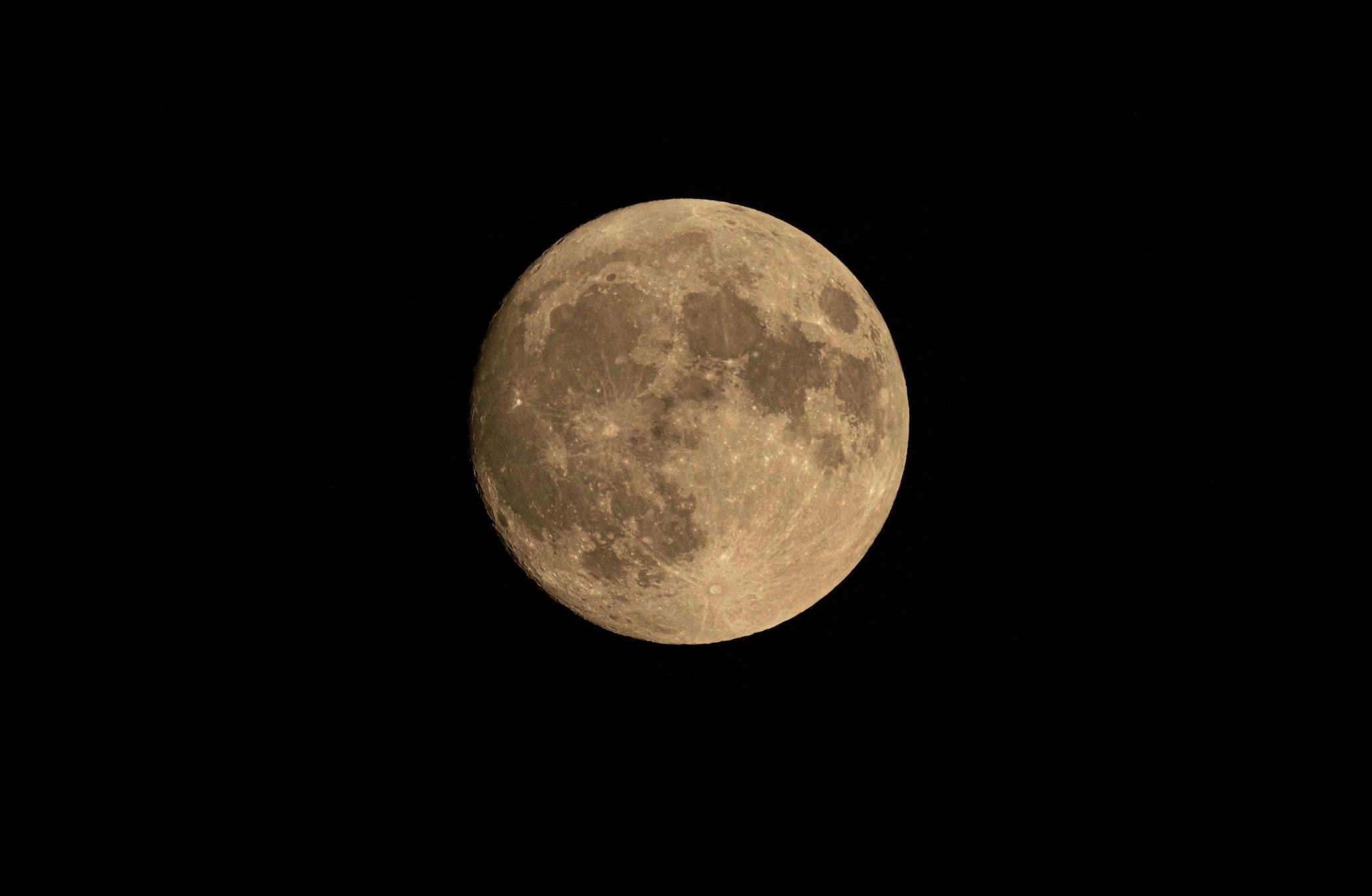
The date never moves. October 31 is October 31. What shifts every year is the calendar weekday, and that weekday is what shapes the whole feel of the holiday: a Saturday night street party, a Sunday afternoon trunk-or-treat, a hurried Tuesday hour between dinner and bedtime. If you are planning a costume party, a wedding, or a town parade years out, those weekdays are the dates to circle. Our full Moon calendar is worth checking too. A full Moon on Halloween is rare; the next one is 2039.
The History of Halloween
Halloween’s history stretches back roughly two thousand years. It began as the ancient Celtic festival of Samhain (a Gaelic word, pronounced saa-wn), celebrated by the Celts who lived in the lands now known as Ireland, the United Kingdom, and northern France.
Samhain was held from October 31 to November 1 to welcome the harvest and usher in “the dark half of the year.” The Celts believed the veil between worlds thinned on this night and the ghosts of the dead returned to the world of the living, capable of wreaking havoc and ruining crops. So villagers dressed in costumes, usually made of animal skins, to drive the spirits away. They set out elaborate banquet tables too, a feast offered to pacify malevolent ghosts. That is where costuming comes from. The first door-to-door visits, though, were still centuries away.
Mumming in the Middle Ages
Roughly five hundred years after the beginnings of Samhain, the first traditions resembling modern trick-or-treating appeared. People were still dressing up, but the costumes shifted from animal skins to ghosts, demons, and other spooky creatures. Instead of laying out a feast for angry spirits, these costumed villagers (the first trick-or-treaters in everything but name) started putting on performances.
The tradition was called mumming. Mummers went door to door singing, dancing, and enacting short plays in exchange for food and drink. Halloween was not the only holiday that brought mummers out. Christmas, Easter, and other feast days picked up the tradition too.
All Souls’ Day
Christianity reached England and Ireland in the Middle Ages, and its traditions began to blend with the older Pagan practices of the Celts. In 1000 A.D. the Catholic church created All Souls’ Day, observed on November 2, to honor the dead. The new holiday absorbed many Samhain customs, including masquerades and bonfires.
All Souls’ Day also took the door-to-door tradition further. Poor villagers walked from house to house among wealthier families, and the wealthy household would hand out soul cakes (small sweet cakes spiced with cinnamon) in return for a promise to pray for the souls of the family’s deceased relatives. The practice was called souling. Over the years it became a tradition for children, who would go door to door asking for treats of money, food, and drink.
Earlier, Pope Gregory III had established All Saints’ Day on November 1 in the eighth century to honor every saint of the church. The evening before was All Hallows’ Eve, the holy evening, and that name eventually shortened to Hallowe’en and then Halloween. The three-day stretch (October 31 to November 2) became known as Allhallowtide.
Trick-or-Treat?
Europeans, most likely the Scottish and Irish, brought the traditions of guising (disguising oneself) and souling to North America in the late 19th century. The wave of Irish immigration that followed the Great Famine of the 1840s carried much of the holiday’s modern shape across the Atlantic. By the time it reached American shores, All Souls’ Day had become All Hallows’ Eve, then simply Halloween.
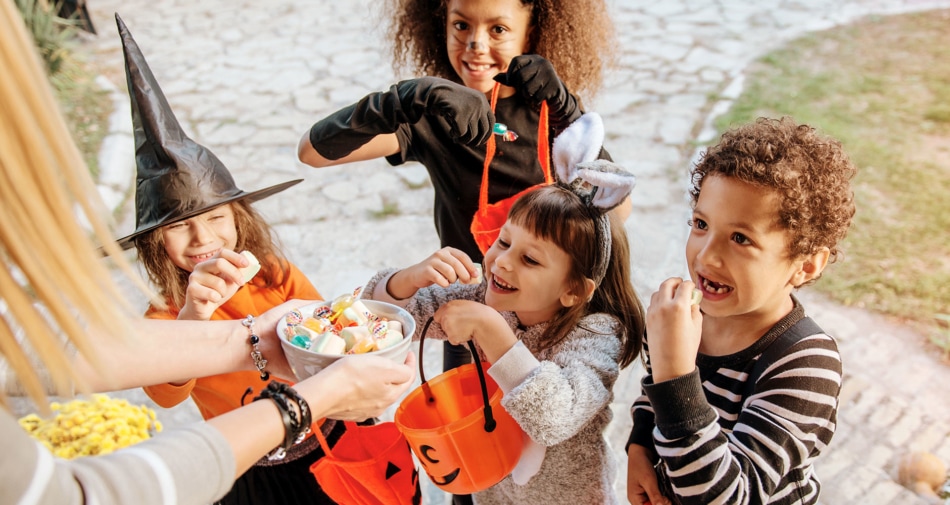
The early American version of souling and guising was a little rough. Youngsters used Halloween to prank people, and those pranks were often destructive enough to cause real property damage. It was around the Great Depression that the practice took its modern shape: candy in exchange for not getting pranked. Kids would ask “trick-or-treat?” at the door, and most homeowners chose the treat. Early treats ranged from homemade popcorn balls and baked goods to peppermints and lemon drops.
From there, trick-or-treating spread across the United States. World War II briefly knocked it down (sugar was rationed) but after the war the tradition came roaring back. According to History.com’s reporting on Halloween, Americans now spend over ten billion dollars a year on the holiday, second only to Christmas.
Why Halloween Is Always on October 31
October 31 is locked in for two reasons. The first is the Celtic harvest cycle: Samhain marked the end of the bright half of the year (the growing season) and the start of the dark half (winter), and the cross-quarter day between the autumn equinox and the winter solstice landed at the end of October. The second is the Catholic calendar: Pope Gregory III’s eighth-century placement of All Saints’ Day on November 1 made October 31 the holy “eve” preceding it. The two traditions overlapped on the same date and the date stuck.
Unlike Thanksgiving, Easter, or Lunar New Year, Halloween’s date does not drift. There is no fourth-Thursday rule, no full-Moon rule, no lunar calendar in play. October 31 every year, no exceptions.
Halloween Traditions
Halloween 2026, falling on a Saturday, will look like the holiday at its full traditional shape: a long evening, a long candy run, a long parade of costumes through the neighborhood. A few traditions almost every household uses to anchor the night:
- Trick-or-treating. Children in costume go door to door asking for candy. Most neighborhoods run the round between roughly 5:30 and 8:30 p.m., with porch lights signaling who is handing out.
- Costumes. Originally animal skins to ward off ghosts, then ghosts and demons to blend in, now anything from witches and vampires to superheroes and pop-culture characters.
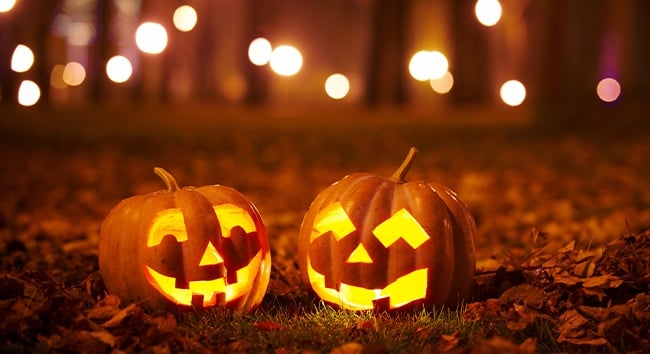
- Jack-o’-lanterns. Carved pumpkins on the front porch, descended from the Irish turnips of the Stingy Jack legend (see below).
- Candy. Snickers and Reese’s peanut butter cups top the list. About 90 million pounds of chocolate candy are sold during Halloween week.
- Halloween parties. Costume parties, hayrides, haunted houses, scary-movie marathons. A Saturday-night Halloween magnifies all of it.
- Bobbing for apples. A medieval English game tied to Samhain. Apples were sacred to the Celts and the game became part of harvest-night fortune-telling.
Where Did Jack-O’-Lanterns Originate?
The jack-o’-lantern comes from an Irish folk tale. According to legend, there was a miserly old drunkard named Stingy Jack who tricked the Devil more than once. When Jack died, neither heaven nor hell would take him: hell would not have him because he had cheated the Devil, heaven would not have him because of the life he had led. He was forced to wander the earth at night, and the Devil tossed him a lump of burning coal from hell to light his way. Jack carved out a turnip, dropped the coal inside, and used it as a lantern. The Irish called the wandering figure Jack of the Lantern, then simply Jack-O’-Lantern.
In Ireland and Scotland, the original lanterns were carved from turnips, potatoes, or beets. Irish immigrants in North America found the native pumpkin bigger, softer-fleshed, and easier to carve. The American pumpkin jack-o’-lantern was born from a turnip tradition that crossed an ocean.
5 Ways to Keep Your Jack-O’-Lantern Fresher Longer
Nothing is more unfestive than a sagging, rotting jack-o’-lantern on the front porch on October 31. A few habits that buy Jack a few more days:
First, try not to carve too early. The pumpkin is a fruit, and once carved, the exposed flesh accelerates the decay. Wait as long as you can, especially if you live in a high-humidity region. Second, scrape the inside thoroughly: clean out the “guts” and seeds and scrape the interior walls until they feel smooth. The cleaner the pumpkin, the slower it decays.
RELATED: Halloween Weather Forecast
After You’ve Cleaned and Carved Your Pumpkin
- Lightly spray the cut interior with a solution of 1 tablespoon peppermint Castile soap in a quart of water. Peppermint is a natural anti-fungal and will slow the decaying process.
- Apply petroleum jelly or olive oil to the cut surfaces to prevent dehydration over time.
- Spraying the cut surfaces with hairspray can also slow down the decaying process. Products designed for anti-humidity work really well.
- Instead of cutting the stem out of the top of the pumpkin, cut the hole on the bottom and remove that piece. Then simply set the clean, carved pumpkin on top of a candle. The method makes lighting the candle easier and lets moisture escape rather than pool at the bottom of the pumpkin, which is what accelerates the rotting.
- Cut a circular hole in the back of the pumpkin instead of the top. Make it large enough to clean out and carve through, then insert a candle or solar light through the back (replace the cut piece with a toothpick if you like). Leaving the top intact slows the dry-out because the stem keeps feeding the fruit a little longer.
Pumpkin Art (No Carving Required)
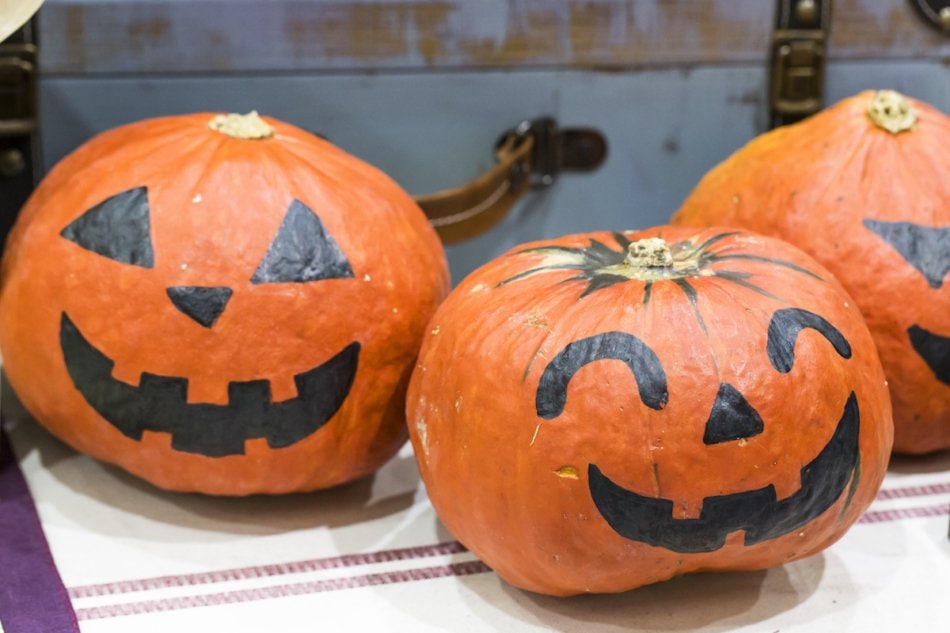
Prefer not to carve? Use permanent markers or paints to draw right on your pumpkins and gourds: a house number, a jack-o’-lantern face, a ghost face, the family pet. Painted pumpkins also last longer than carved ones because the skin is never broken. Here are 27 no-carve designs to try, via MarthaStewart.com. One note: when Halloween is over, only give wildlife portions of the pumpkin that are marker-free.
Halloween Around the World
The American version of Halloween is the loudest version, but the holiday has cousins in other countries.
| Country | Holiday | Tradition |
|---|---|---|
| Ireland | Oíche Shamhna | The homeland of the holiday. Bonfires, costumes, barmbrack fortune-telling cake, apple games. |
| Scotland | Hallowe’en | Guising (the original term for costumed door-to-door) and neep (turnip) lanterns. |
| England | Hallowe’en | Costumes and pumpkins; the bonfires shift to Guy Fawkes Night on November 5. |
| Mexico | Día de los Muertos | November 1 and 2. Home altars for departed relatives with marigolds, sugar skulls, and favorite foods. |
Día de los Muertos is the closest cousin many Americans confuse with Halloween. The dates overlap and the imagery is similar, but the spirit is different. Día de los Muertos is a joyful welcoming home of departed family rather than a night of warding off spirits.
Halloween Legends and Superstitions
Halloween is full of legends and scary stories. A few of the old superstitions are worth knowing whether you believe them or not; they are part of what makes the night feel different from any other October evening.
Blue Light
Watch out for ghosts. The old belief is that if a candle’s flame turns blue on Halloween night, a ghost is near. Modern explanation: blue flame usually means the candle is getting more oxygen, or there is a draft. Either way, it is worth a moment of pause.
No Talking at Dinner
On Halloween night, the lore says that nobody is supposed to speak during dinner. If someone does, it is believed to encourage the spirits to come to that table. Try it once for the silence alone.
Husband Search
According to some tales, if a girl puts a sprig of rosemary and a silver coin under her pillow on Halloween night, she will see her future husband in a dream. Like most folk-divination customs, the rule is meant in the same gentle spirit as a Magic 8 Ball.
Halloween Weather and Folklore
Late October is the turning-point week for North American autumn weather. By Halloween, most of the country is well past peak foliage, the first hard frost has usually landed across the upper Midwest, New England, and the Northern Plains, and the season’s first dusting of snow is possible north of the I-80 line. The old reading is simple: a clear, mild Halloween was taken as a sign of a long, gentle autumn; a cold, raw Halloween meant winter had already settled in. Like most weather lore, the rule holds in some years and not in others. We pair it with the long-range forecast for whatever it is worth. Check the Halloween weather forecast the week before, especially if costumes will need to layer over a coat.
Halloween Trivia for Your 2026 Party
- The two most popular Halloween candies in America are the Snickers candy bar and Reese’s peanut butter cups.
- About 90 million pounds of chocolate candy are sold during Halloween week.
- Approximately 35 million people in the United States go trick-or-treating every year.
- An estimated 3 billion dollars is spent on Halloween costumes annually in North America.
- The most popular costume for adults in recent years has been the witch; for kids, the princess and the superhero trade the top spot year to year.
- Halloween 2026 is the first Saturday Halloween in five years.
Halloween Jokes and Puns
Rather laugh than get scared by Halloween legends? Here are some punny puns from well-known verbalist Richard Lederer to scare you into the spirit for Halloween 2026.
What do ghosts serve for dessert?
I scream.
What do you get when you drop a pumpkin?
Squash.
What’s a ghost’s favorite snack?
A bagel with scream cheese.
Where do baby ghosts go during the day?
Day-scare centers.
Why didn’t the skeleton cross the road?
He didn’t have the guts.
What do you call a chicken that haunts your house?
The poultrygeist.
A waitress once asked Dracula, “How would you like your stake, and would you like scream in your coffin?”
What happens when you fail to pay your exorcist?
You get repossessed.
Why don’t mummies take vacations?
They’re afraid they’ll relax and unwind.
Why did the game warden arrest the ghost?
He didn’t have a haunting license.
What do you call a ghost that sits in the picture window of a haunted house?
A window shade.
One witch told another witch, “I want one of those new computers that have a spell checker.”
Don’t bother inviting the Invisible Man to your Halloween party. He won’t show up. Sometimes he makes excuses, but they’re all transparent.
You don’t have to worry about Daylight Saving Time at Halloween. The holiday is always on Green Witch Mean Time.
What kind of monster do you have to look out for at the laundromat?
A wash’n werewolf.
Plan Your Halloween 2026
Mark Saturday, October 31, 2026. The costume, the candy bowl, the porch lights, and the playlist are yours; the date is the one fixed point on the calendar. A few small habits that make the night easier:
- Pick up the costume two weeks ahead. The good shop sizes go fast in the last week of October.
- Buy candy in the second-to-last week of October. Buy it any earlier and the bowl mysteriously empties before Halloween.
- Carve the pumpkin no sooner than the weekend before Halloween if you want it to look sharp on the night.
- Check the Halloween weather forecast the week before, especially if costumes will need to layer over a coat.
- Set out the porch light by 5:30 p.m. That is the universal signal for “we are handing out candy.”

Frequently Asked Questions
When is Halloween 2026?
Halloween 2026 is Saturday, October 31. The date is the same every year; 2026 is the first Saturday Halloween in several years.
Why is Halloween always on October 31?
The Celtic festival of Samhain was held October 31 to mark the end of harvest. Pope Gregory III then placed All Saints’ Day on November 1 in the eighth century, making October 31 All Hallows’ Eve. The two traditions overlapped on the same date and the date stuck.
What does the word Halloween mean?
Halloween is a contraction of All Hallows’ Eve, the evening before All Saints’ Day (November 1). “Hallow” is an old English word for a saint, so Halloween means the holy evening of the saints.
Where did trick-or-treating come from?
It evolved from Celtic Samhain costuming, medieval mumming (door-to-door performances), and Christian souling (soul cakes for prayers). Irish and Scottish immigrants brought guising and souling to North America in the 19th century, and the modern “trick-or-treat?” took shape around the Great Depression.
Why are jack-o’-lanterns made from pumpkins?
The lantern comes from the Irish legend of Stingy Jack, who wandered the earth with a coal-lit turnip. Irish immigrants in North America found pumpkins easier to carve than turnips, and the pumpkin jack-o’-lantern took over.
Is Halloween a public holiday?
No. Halloween is not a federal or state holiday in the United States, and not a statutory holiday in Canada. Schools, banks, and the post office stay open.
What is the difference between Halloween and Día de los Muertos?
Halloween descends from Celtic Samhain and Christian All Hallows’ Eve. Día de los Muertos is Mexican, celebrated November 1 and 2, and is a joyful welcoming home of departed relatives with altars, marigolds, and sugar skulls.
When is Halloween 2027?
Halloween 2027 is Sunday, October 31. Many towns shift their official trick-or-treat night to Saturday, October 30.
Join the Discussion
Are you dressing up for Halloween 2026? Do you know any other Halloween legends or folklore not mentioned here? Tell us in the comments below, and let us know what you would like added to this page next year.

This just hit my email box. It is NOVEMBER 7, 2022. Why the delay? What is up with that? Where were you all when I needed you?
Love this Halloween edition!