What to Do This Weekend: Take a Mushroom-Spotting Walk

A walk can change when you stop looking down the trail and start noticing what’s growing beside it. After rain, a fallen log may be dotted with tiny caps, a bright cluster may appear at the foot of a tree, or a puffball may be tucked among the leaves.
A mushroom-spotting walk is easy to try close to home. Look in a wooded park, nature preserve, garden, or even a shady corner of a neighborhood green space. You don’t need to know the names of the mushrooms to enjoy finding them.
Please note: A mushroom-spotting walk is for looking, not foraging: never eat wild mushrooms you find outdoors. The National Park Service explains why wild mushrooms can be difficult to identify safely.
Where to look for mushrooms
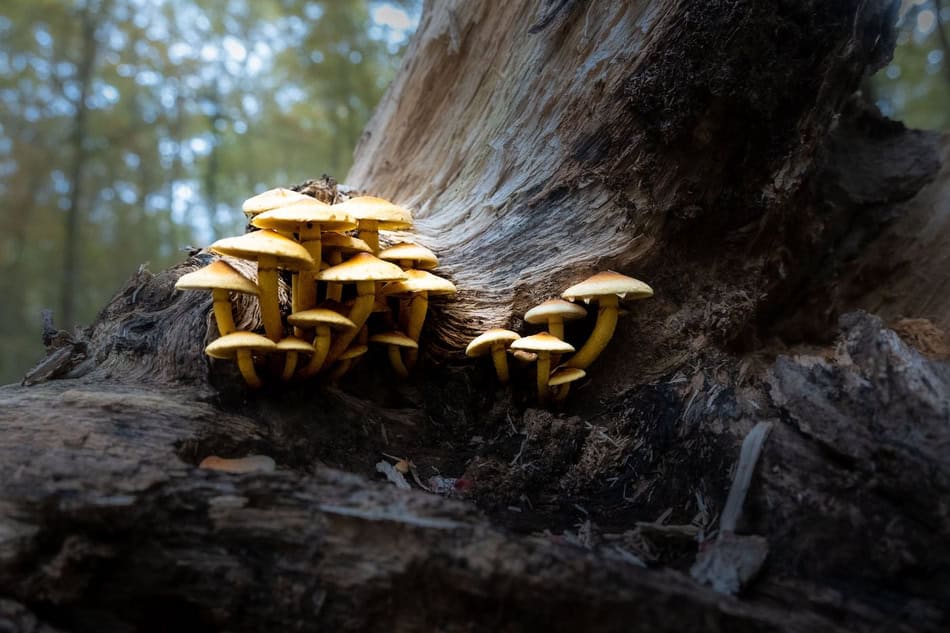
Mushrooms are the visible fruiting bodies of fungi. Much of the organism lives out of sight in soil or wood, where it helps break down dead material and forms relationships with plant roots. nps.gov
Walk slowly and scan a few different spots:
- On fallen logs and stumps
- At the base of living trees
- Among damp leaves or moss
- Along shaded trail edges
- Near streams, ponds, or other wet areas
A steady rain can bring out new mushrooms, but there’s no guaranteed schedule. Temperature, moisture, and the local habitat all play a part. The National Park Service notes that at Point Reyes, mushrooms can appear in many kinds of habitat, and that rain and temperature affect when they fruit. nps.gov
Notice the shapes, colors, and patterns
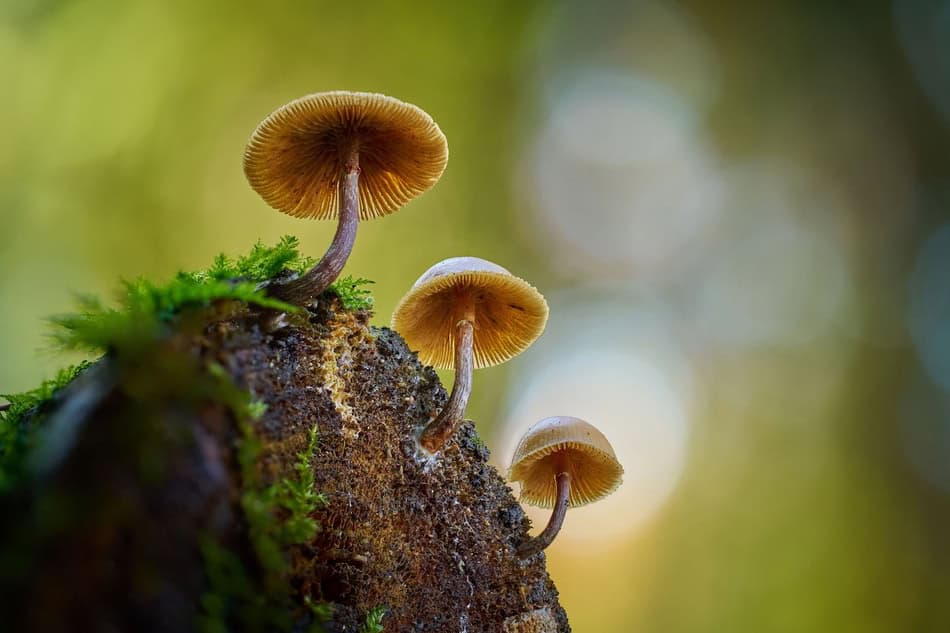
Mushrooms aren’t all little brown umbrellas. Some grow in shelves along a tree trunk; others form clusters, puffballs, or delicate shapes that resemble coral. Look for differences in color, size, and where each one is growing. You might find several kinds on the same short walk.
Try a small family challenge: find one mushroom growing alone, one growing in a group, and one growing on wood. Take a photo of each, then compare them. A picture that includes a leaf or part of the log can help show the mushroom’s size without disturbing it.
If you spot a circle of mushrooms, you’ve found a fairy ring, a pattern that inspired old stories about where fairies danced. The ring forms as a fungus grows outward underground and mushrooms appear around its edge. Read more about the tradition in our guide to Irish superstitions and fairy rings.
Make it a looking walk, not a foraging trip
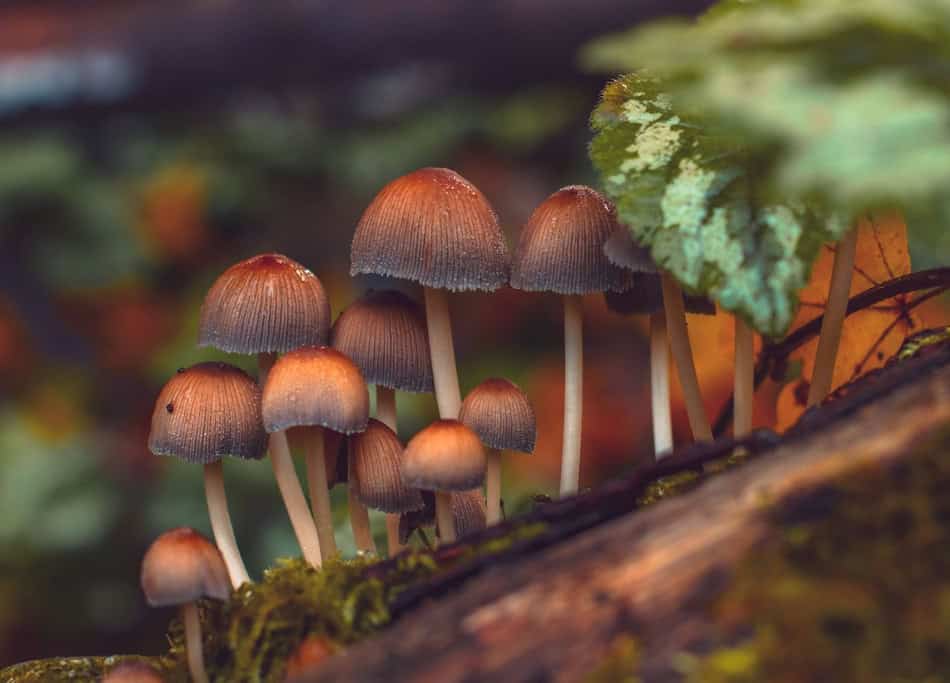
The point is to observe, photograph, and leave the fungi where they are. Some wild mushrooms are poisonous, and identifying them correctly can be difficult even for experienced people. Don’t eat a wild mushroom based on a photo, an app, or a guess. The National Park Service also notes that collecting mushrooms is prohibited in some parks, including Glacier and Acadia, so check the rules for the place you visit. nps.gov
Keep children close and remind them not to taste mushrooms or other wild finds. Staying on the trail helps protect small plants and fungi, and you may see more by taking your time than by wandering off in search of a perfect specimen.
For another look at North America’s wild mushrooms, see our guide to morel mushrooms. A mushroom-spotting walk doesn’t have to end with a name or a checklist completed. Sometimes the best find is simply noticing how much was growing there all along.

- Maggie Konrad

- Maggie Konrad
- Maggie Konrad
- Maggie Konrad