

Morel Mushrooms: A Forager’s Guide to the Spring Honeycomb Cap
Morels are a staple of spring. Learn more about this sought-after fungus and how to avoid their dangerous imposters.
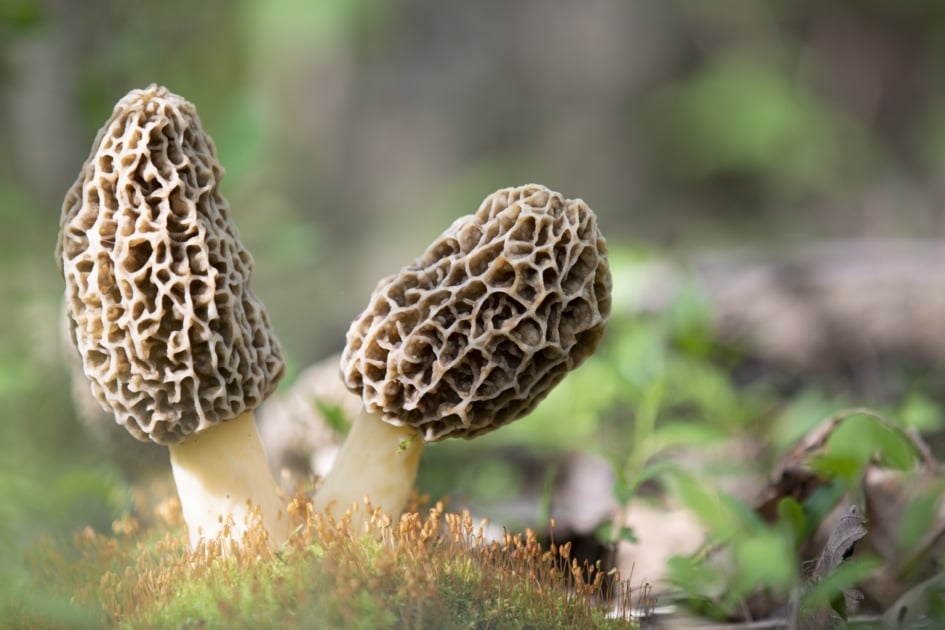
Morel Mushrooms at a Glance
- What they are: wild spring mushrooms, genus Morchella. Three color types: black, gray, yellow.
- Season: mid-April to mid-June across the U.S. and Canada, soil temps around 50°F at 4-inch depth.
- Where to look: moist hardwood ground, around dying elms, ash, tulip poplar, and old burn scars in conifer forests.
- How to tell a true morel from a false one: honeycomb-patterned cap, fully attached to the stem; the inside is hollow top to bottom.
- Carry them right: mesh bag, basket, or flat box. Never a sealed plastic bag, the mushrooms cook themselves and the spores can’t fall.
Morels are a type of wild morel mushroom that grow in spring. They are one of the most sought-after wild foods in North America, and a small but devoted population of pickers spends April and May with their eyes on the ground, hunting them to eat or sell. The scientific name is Morchella, but they go by a dozen colloquial names too, including dryland fish, hickory chickens, merkels (a corruption of “miracles”), and molly moochers.
According to the Encyclopaedia Britannica, what we call a morel is the spore-bearing fruiting body of an underground fungus, and the species you find depends as much on local geology and soil pH as on the time of year. They cannot be commercially farmed at the scale of common button mushrooms, which is why the spring foraging season carries the weight it does, and why a pound of fresh morels at a farmers’ market routinely costs more than a steak.
What Do Morels Look Like?
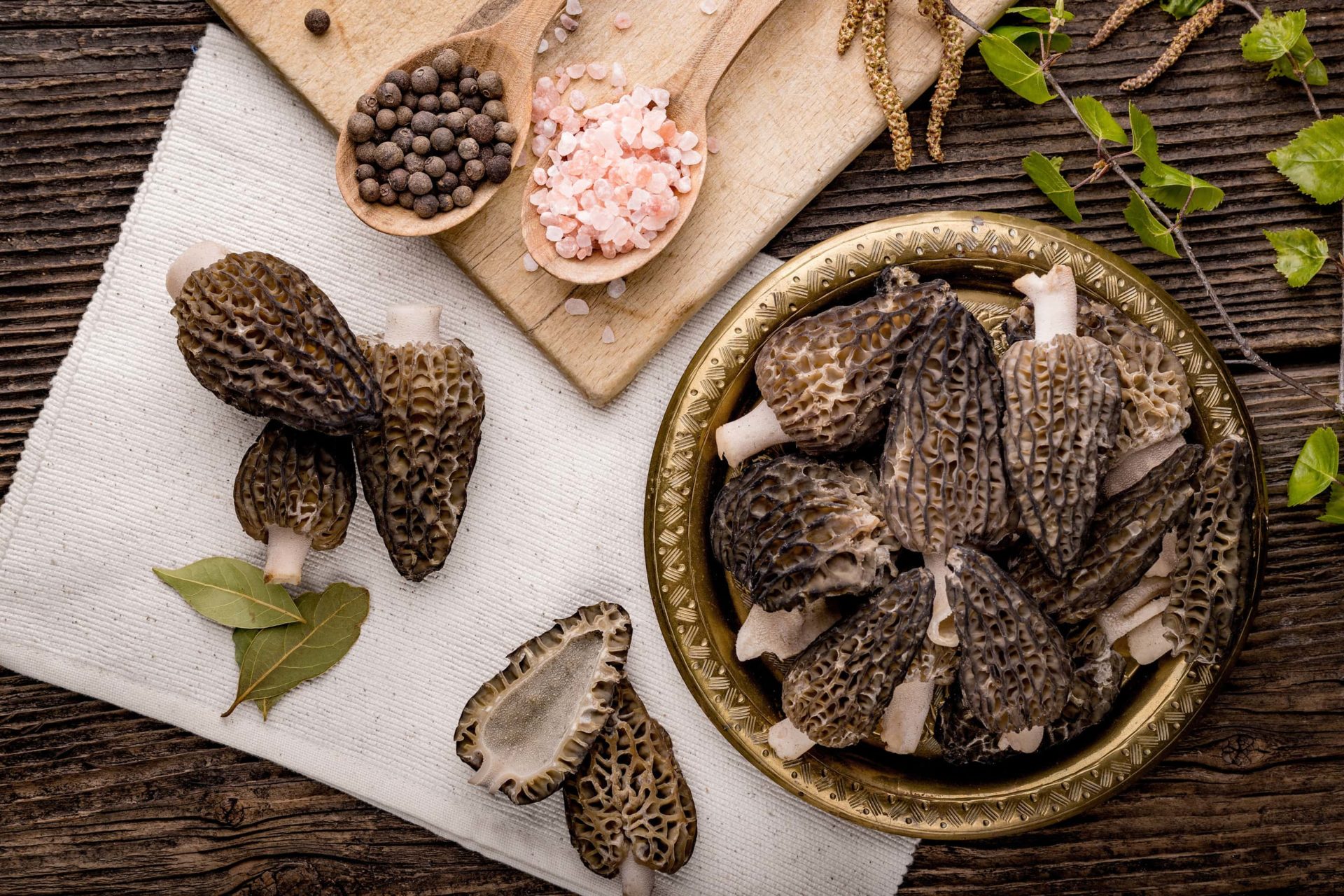
They feature a distinctive net- or honeycomb-patterned cap and come in three color varieties: gray, yellow, and black. They grow in the moist ground throughout the United States and Canada, where they tend to bloom between mid-April and mid-June.
Two field marks separate true morels from the dangerous look-alikes, and you need both to be certain. First: the cap is honeycomb-patterned with deep, regular pits, not wrinkled like a brain. Second: when you slice a true morel from top to bottom, the inside is fully hollow, one continuous cavity from cap to stem base. A false morel is cottony or chambered inside.
Nutrition Profile of Morels
Rich in vitamin D and several B vitamins, including folate, niacin, pantothenic acid, riboflavin, and thiamine, morels also provide potassium, phosphorus, calcium, magnesium, and iron. They are also a respectable source of plant protein for a fungus (about 3 grams per 100 grams cooked) and very low in calories.
Going Morel Hunting? Read This First
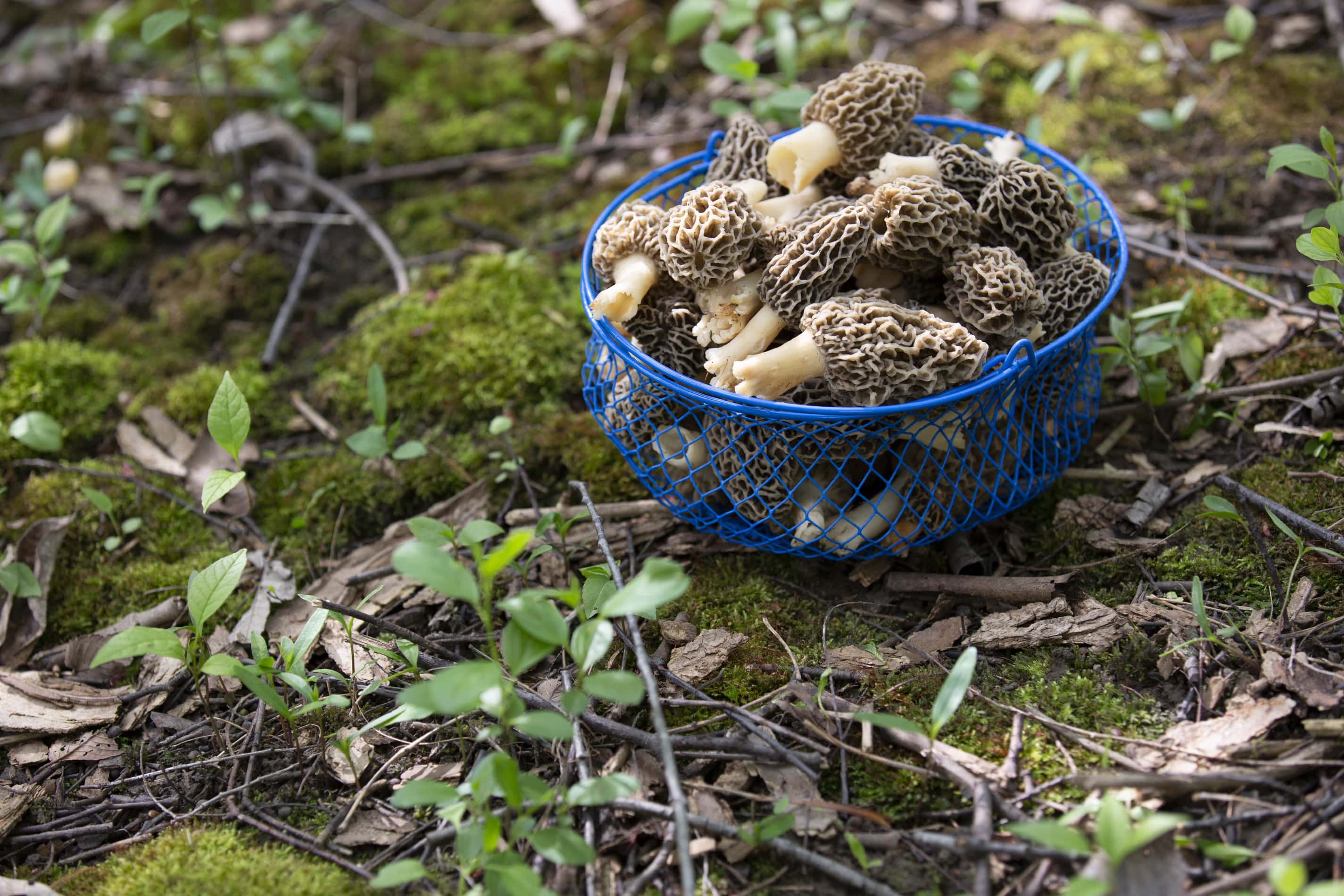
If you plan to pick your own, be sure to take an experienced hunter along with you. As with any type of mushroom, it’s possible to accidentally pick poisonous varieties. Several so-called “false morels” exist (see image below) and can confuse novice pickers. Most false varieties feature a wrinkled, brain-like cap, instead of the characteristic honeycomb pattern of a true morel. It is vital to practice 100% identification. Be sure to bring along a mushroom guide containing large, clear, full-color photos.
Morel Hunting Soil-Temp Map
| Region / Zone | Typical Season | Key Soil-Temp Signal |
|---|---|---|
| Gulf Coast and Deep South (Zone 7-8: Louisiana, Mississippi, Arkansas, Virginia) | Mid-February to late March | Soil reaches 47 F at 4-inch depth after the first sustained warm spell; hunt south-facing slopes first |
| Mid-Atlantic and Ohio Valley (Zone 6: Tennessee, Kentucky, West Virginia, Maryland) | Late March to late April | Soil crosses 50 F typically in early April; elm, ash, and dying apple orchards are the classic spots |
| Midwest Heartland (Zone 5: Illinois, Indiana, Missouri, Iowa, Kansas) | Mid-April to mid-May | Peak at 50-60 F soil; cottonwood leaf size is the traditional field indicator (leaf the size of a squirrel ear) |
| Great Lakes and Upper Midwest (Zone 4-5: Michigan, Wisconsin, Minnesota) | Early May to early June | Soil is slow to warm; hunt after the 10th of May. Black morels emerge first, yellow morels follow |
| Mountain West (Colorado, Idaho, Montana at altitude) | May to July depending on elevation | At 6,000+ feet, morels follow snowmelt by 2-3 weeks; post-burn sites after wildfires can produce extraordinary flushes for 1-2 seasons |
| Pacific Northwest (Oregon, Washington) | March to June (coast to mountains) | Coastal valleys warm earliest; Cascade foothills peak in May. Post-fire burns produce reliable flushes the summer after a wildfire |
The single most reliable predictor is soil temperature at 4 inches: morels fruit reliably between 50 F and 60 F. Air temperature is a secondary signal. Source: Iowa State University Extension, The Great Morel.
“False” Morels, DO NOT EAT:
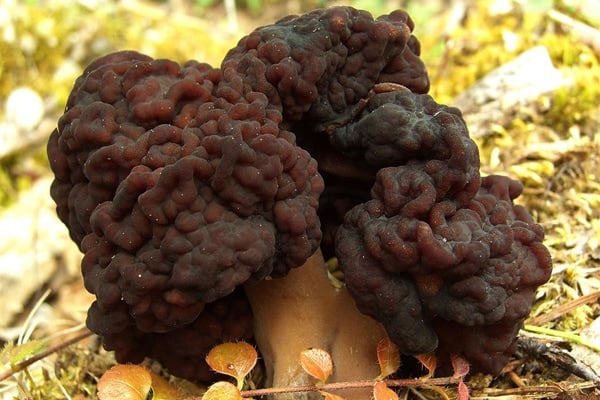
Here’s an additional source to identify “false” morels and lookalikes.
Worth knowing: false morels in the genus Gyromitra contain monomethylhydrazine (the chemical relative of rocket fuel) and have caused serious poisonings, including fatalities, in North America and Europe. Even cooked, they are not safe for sensitive individuals. The National Capital Poison Center records cases every spring.
Important tip: When collecting morels, use a flat box, basket, or mesh bag such as an onion bag. Do not use plastic bags as the morels will begin to spoil before you get them home. The spores need to fall to the ground which produces mushrooms for the next year.
The Five-Point Field Check Before You Eat a Morel
- Cap pattern: deep, honeycomb pits, not wrinkled or brain-like.
- Cap attachment: the bottom of the cap is fused directly to the stem, no skirt or free margin.
- Slice it lengthwise: one continuous hollow chamber from top to bottom. Cottony or chambered inside means false.
- Color: tan, brown, gray, or black, never bright red, orange, or yellow-bright.
- Smell and feel: earthy, mushroomy, slightly nutty. Bitter or chemical aroma is a hard no.
Morel Recipes
Here are a few recipes to help you enjoy these delicious springtime fungi. If it’s not morel season, you can make these with any type of mushroom:
Fried Morels
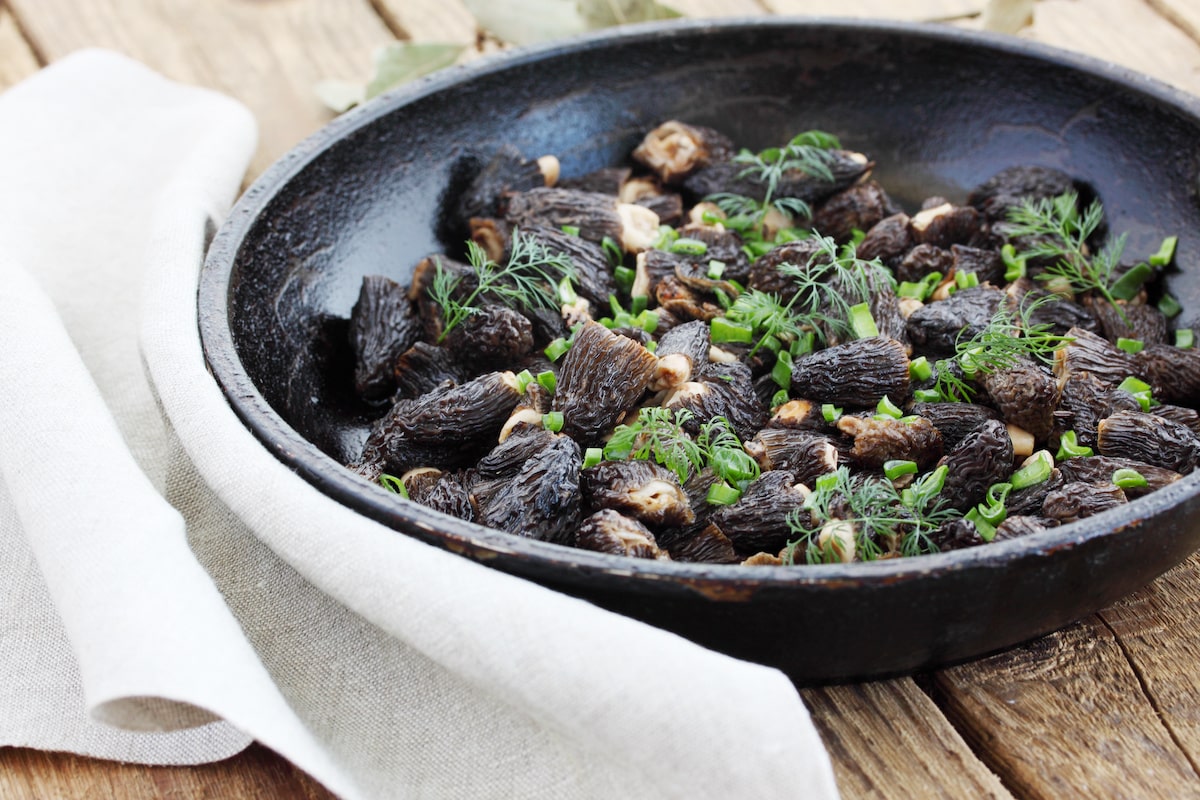
- 1 lb. morel mushrooms
- 1/2 cup olive oil
- 2 eggs
- 3/4 cup milk
- 1 sleeve of saltine crackers
- finely crushed salt and pepper to taste
Carefully clean morels with a damp paper towel and cut them in half, lengthwise.
In a large skillet, heat olive oil over medium heat.
Beat the eggs and milk together, coat the morels in the mixture, and toss them in the cracker crumbs.
Place the morels in the heated oil and cook on both sides until golden brown.
Remove the morels and drain them on a paper towel. Add salt and pepper to taste.
Morels in Wine Sauce
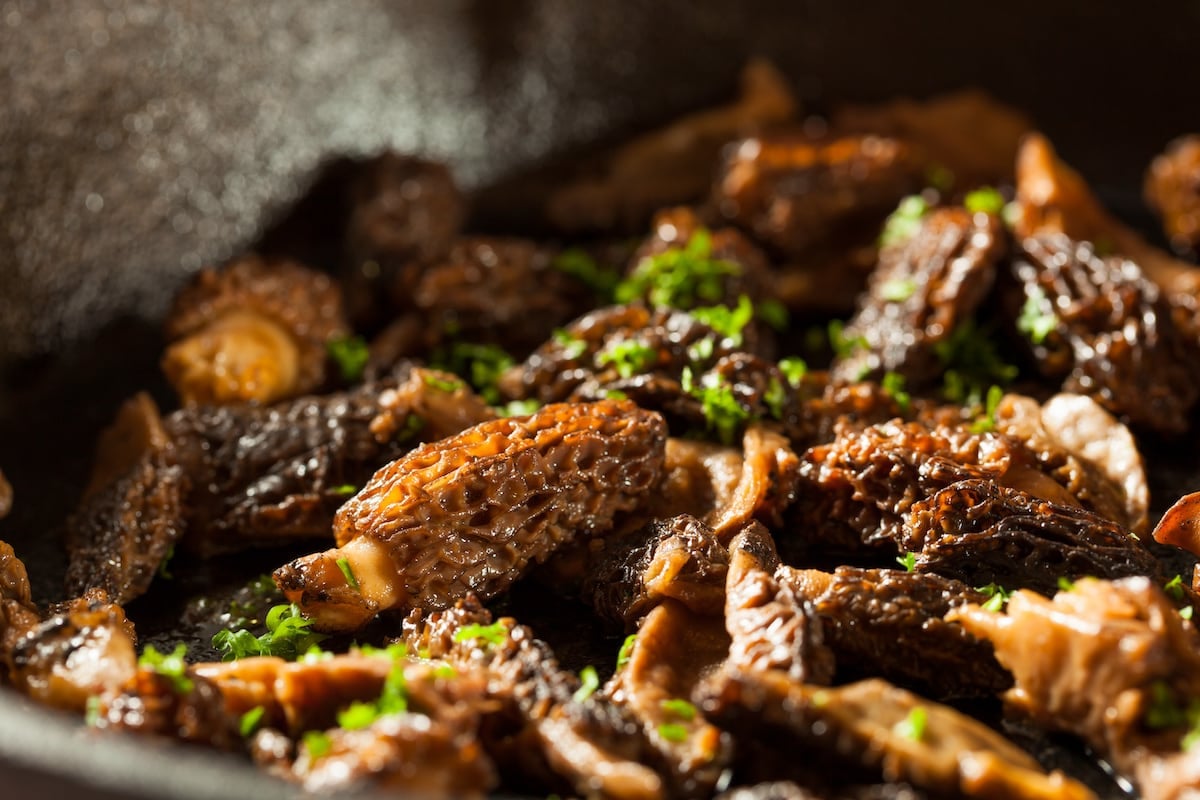
- 1 lb. morel mushrooms
- 3 tablespoons butter
- 2 scallions, chopped
- 1/2 cup white wine
- salt to taste
Carefully clean morels with a damp paper towel and cut them in half, lengthwise.
In a large skillet, melt the butter over medium heat. Add the morels and scallions and cook until the morels are slightly browned.
Use a slotted spoon to remove the morels and scallions. Place them on a plate and set them aside.
Add white wine and salt to the remaining butter and boil the liquid until it thickens into a syrup.
Add the morels and scallions back into the skillet toss the mixture together until coated.
Scrambled Eggs with Morels
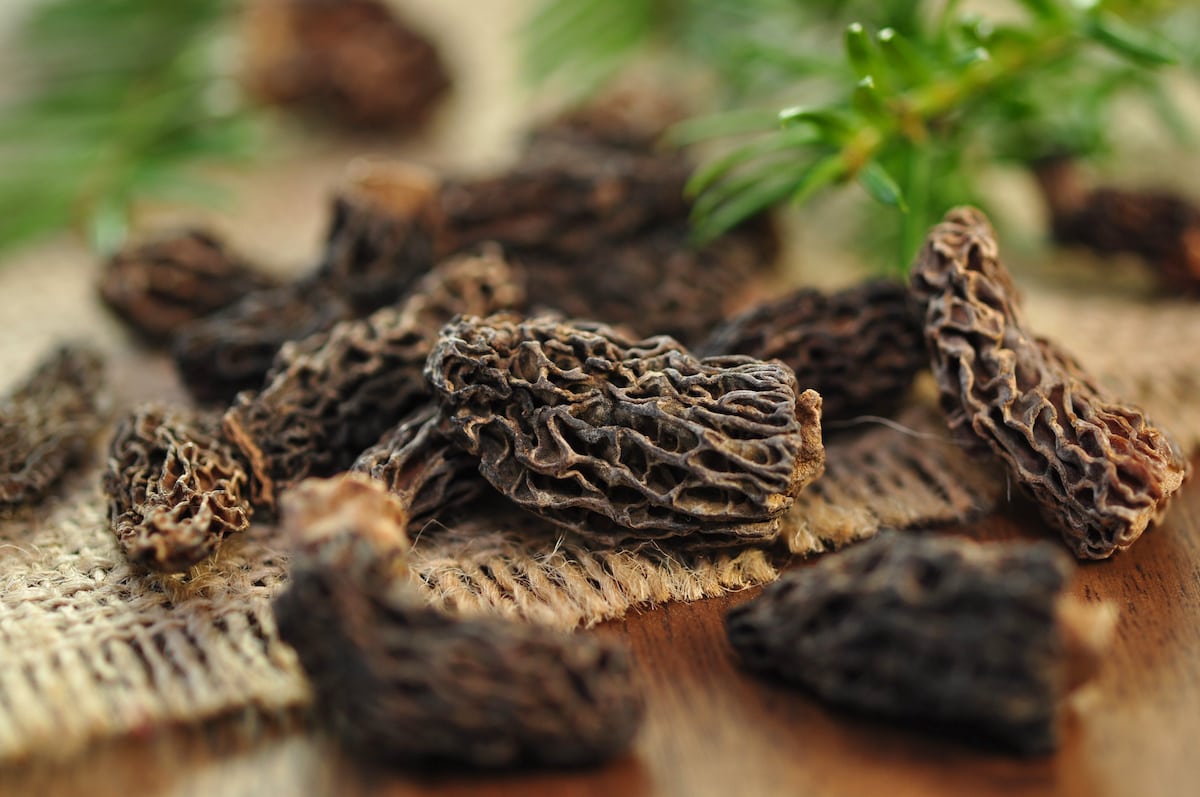
- 1/2 lb. morel mushrooms
- 3 tablespoons butter
- 3 scallions, chopped
- 1/4 cup milk
- 1/2 dozen eggs, beaten
Carefully clean morels with a damp paper towel and cut them in half, lengthwise.
In a large skillet, melt the butter over medium heat.
Add the morels and scallions and cook until the morels are slightly browned.
While the morels are cooking, beat the eggs and the milk together.
Pour the egg mixture over the browned morels and scallions. Scramble together until the eggs are fully cooked.
Morels and Asparagus

- 1/2 lb. fresh morels
- 2 tablespoons butter
- 2 bunches asparagus
- 1 shallot, chopped
- 2 cloves garlic, minced
Carefully clean morels with a damp paper towel and cut them in half, lengthwise.
Cut the asparagus into 1″ pieces.
In a large skillet, melt the butter over medium heat.
Add the morels, shallots, garlic, and asparagus.
Cook until the morels have browned and the asparagus is tender, about 10 minutes.
How to Clean and Store Fresh Morels
- Slice in half lengthwise. Always. This reveals the hollow interior, lets you check for the field marks once more, and gives the ants and slugs hiding inside an exit.
- Soak briefly in cold salt water. A 10-minute dunk in lightly salted water loosens dirt and dislodges insects. Drain on a clean towel.
- Cook them, do not eat raw. Even true morels contain hydrazines that break down only with heat. Saute until well-browned and crisp at the edges.
- Refrigerate dry, in a paper bag. Eat within 3 days at most.
- Freeze or dry the surplus. Saute and freeze, or dry on a screen in a warm room until snap-crisp; stored airtight, dried morels keep a year and rehydrate in 20 minutes of warm water.

Frequently Asked Questions About Morel Mushrooms
When is morel season in North America?
Mid-April to mid-June across most of the U.S. and Canada, with the wave moving north by roughly 100 miles per week as soil temperatures rise. The trigger is soil at about 50-55°F at 4 inches deep, usually 3 to 7 days after a soaking spring rain.
Where do morels grow?
Dying or recently dead American elm, ash, tulip poplar, sycamore, and old apple orchards are the East-of-the-Rockies classics. In the Pacific Northwest, post-wildfire conifer burns produce the biggest flushes 1-2 years after a burn. Anywhere with rich, leaf-mould soil that holds spring moisture is worth a look.
How do you tell a true morel from a false one?
Three field marks: honeycomb pits (not a wrinkled brain-like surface), a cap fully attached to the stem with no free skirt, and a single hollow chamber from cap to base when sliced lengthwise. False morels are cottony or chambered inside.
Can you eat morels raw?
No. Even true morels contain naturally occurring hydrazines that can cause GI upset, and raw consumption is not recommended. Saute or fry them until well-browned. Avoid eating large quantities with alcohol, which has been linked to reactions in some pickers.
Why are morels so expensive?
They cannot be commercially cultivated at scale. Every fresh morel for sale was hand-picked in a short spring window from a wild patch, which is why prices of $25-$60 per pound for fresh, and far more for dried, are normal.
Can morels be farmed?
Sort of, with mixed success. Chinese growers have developed outdoor cultivation of black morels with carbohydrate-spiked soil bags, and some U.S. growers are experimenting, but the supply is dwarfed by wild harvest and yields are unpredictable.
How long do fresh morels keep?
Three days at most, refrigerated in a paper bag (never plastic). Past that, saute and freeze, or dry on a screen for long storage. Dried morels rehydrate in 20 minutes of warm water and the soaking liquid is a useful broth.
For more spring foraging and wild-food reading, see edible flowers, garlic scapes, and our wider garden-to-kitchen coverage.



Jaime McLeod
Jaime McLeod is a longtime journalist who has written for a wide variety of newspapers, magazines, and websites, including MTV.com. She enjoys the outdoors, growing and eating organic food, and is interested in all aspects of natural wellness.
- Jaime McLeod

- Jaime McLeod
- Jaime McLeod
- Jaime McLeod


We pick Morels every year. You can coat them in flour and shrink wrap them to put in your freezer. They are great in any recipe which calls for mushrooms. They are great when making your own mushroom soup or fried on a pan on the stove after dipping in egg/milk and dredged in flour.
I’m thinking I found a motel I. My perennial garden! I live in Upstate NY (near Syracuse) zone 5b
I posted it to the group, in hopes of help in identification.
Any idea I’d this is truly an edible morel?
Just a friendly note to all those hunting this spring. This is for your safety. You don’t have to see a house to be trespassing. Stopping on the side of the road to walk thru the woods is trespassing. Someone owns that property. Just like hunting for anything else, please ask the property owner for permission to be on the property. You can be accidentally mistaken for an animal and seriously injured or worse. Hunt for morels in parks and other areas open to the public.
I live in Appy Mtns of E. TN and we use a cornmeal and flour mix (2 pts cornmeal to 1 pt floud) salt and pepper, fry gently in an iron skillet with melted unsalted butter, and good eats! The flour keeps the cornmeal from popping. They cook very quickly so don’t leave unattended. We call them simply “land fish”.
my email is [email protected] contact me if you are interested in morels
i have a few tons of morel mushrooms and i am in China. Can I sold abroad
Hi. I am 30 years old and live in Turkey. Turkey in Konya too.Every year we are hunting them. This is name “lamb belly”
To Arkansas , all over the river valley
Do they grow in Colorado? Where and when?
we called them dry land fish, my grandmother would roll them in season flour and fry them , i remember they were so good,,