Mushrooms Growing Around a Tree? Where They’re Growing Matters More Than You Think

After a few cool, wet fall days, mushrooms can seem to appear overnight. One morning the lawn is clear. The next, there’s a cluster beneath the maple, a neat arc near the oak, or a shelf-like growth sticking out from the base of a trunk.
The first reaction is often the same: Is my tree rotting?
Sometimes the answer is no. Mushrooms in the grass can simply be the visible part of fungi breaking down buried wood, old roots, leaves, or other organic matter. But mushrooms growing directly from a living tree, its root flare, or exposed roots deserve a closer look.
That distinction matters more than the fact that mushrooms are there at all.
Start by Looking at Exactly Where the Mushrooms Are Growing
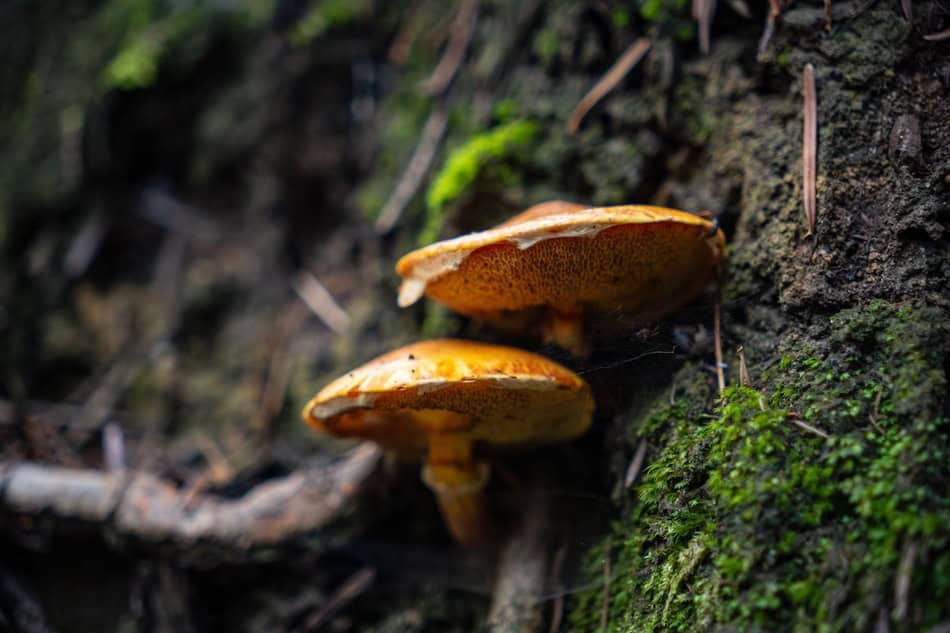
Fall is prime mushroom weather. Cooler temperatures and wet soil can bring fungal fruiting bodies to the surface after the fungus itself has been living quietly underground for months or even years.
If mushrooms are scattered through the lawn beneath a tree, they may have little to do with the health of the tree itself. University of Maryland Extension explains that many lawn fungi simply feed on decaying organic material. Old roots from a tree removed years ago, buried wood, mulch, thatch, and other plant debris can all produce mushrooms even when there is no sick tree nearby.
Some fungi are actually part of a healthy soil ecosystem. Others form mutually beneficial relationships with living tree roots.
That is why “mushrooms near a tree” is not, by itself, a diagnosis.
The picture changes when the fungal growth appears to be coming directly out of the tree.
If mushrooms or woody shelf-like growths are attached to the trunk, growing from the swollen area where the trunk meets the roots, or emerging directly from large exposed roots, University of Maryland Extension recommends having the tree evaluated. Those growths can be the fruiting structures of fungi that are decaying wood inside the tree.
The easiest first check is simple: get close enough to see what the mushroom is actually attached to.
Mushrooms in the Grass Aren’t the Same as Mushrooms in the Trunk
Imagine two mature oaks.
Under the first, a scattering of small mushrooms appears in damp grass several feet from the trunk after a rainy week. Digging below them might reveal decomposing roots, old wood chips, or simply organic matter in the soil.
Under the second tree, thick shelves are growing directly from the base of the trunk.
Those two scenes can mean very different things.
Fungi are nature’s recyclers. Breaking down dead wood is part of their job. A fungus digesting the buried remains of an old root does not necessarily mean the living tree above it is in trouble.
But when fungal fruiting bodies are attached to living wood, the concern is that decay may be occurring inside that wood. Penn State Extension lists mushrooms and conks on trunks, branches, and roots among the visible indicators arborists use when looking for tree decay.
One frustrating part is that the tree can still look surprisingly healthy from a distance. Leaves may be green and the canopy may still be full even while decay is developing internally.
So don’t use the condition of the leaves alone to decide whether a mushroom at the base of a large tree matters.
What Is a Conk?
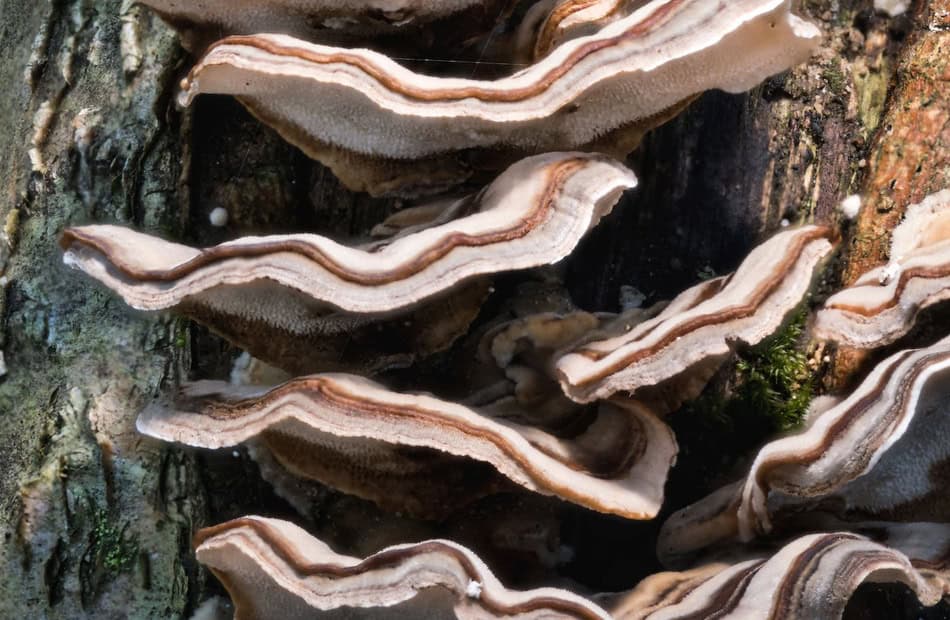
Not every fungal growth looks like the classic umbrella-shaped mushroom.
Conks are tougher, often shelf-shaped or bracket-like structures that grow from trunks, branches, or roots. Some are soft when young and become hard or woody with age. Others appear as thick semicircular shelves.
They can be easy to overlook because they sometimes look almost like part of the bark.
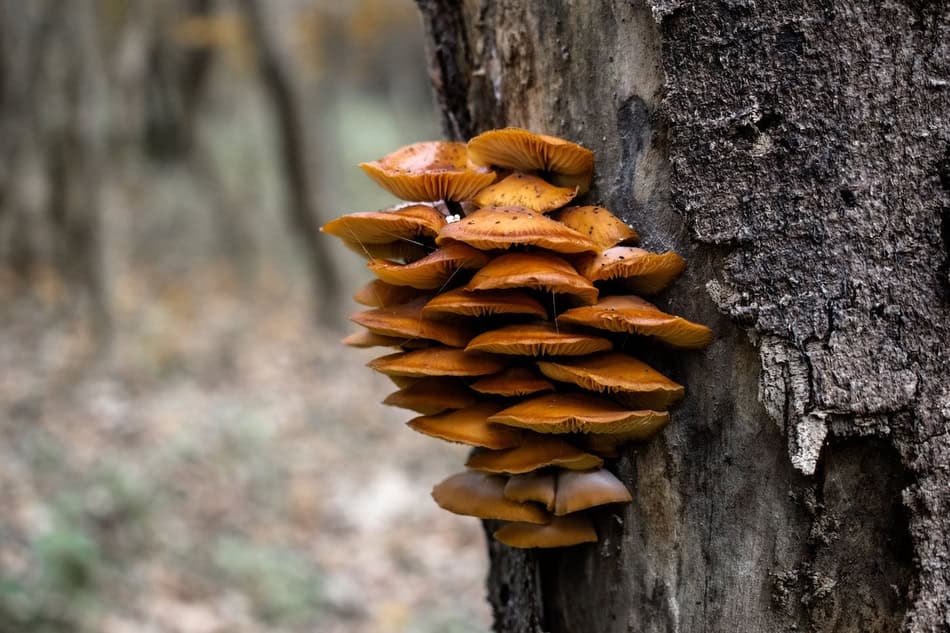
Certain wood-decay fungi, including species of Ganoderma and Armillaria, can produce conspicuous fruiting bodies on trees. Armillaria, for example, may produce clusters of honey-colored mushrooms near the base of an affected tree in fall. That does not mean you should try to identify a dangerous tree by mushroom color alone. Fungal identification can be difficult, and different species have very different implications.
The useful clue for a homeowner is location. A persistent conk or mushroom growing out of the trunk, root flare, or a major root is worth showing to a qualified arborist.
Picking the Mushrooms Won’t Fix the Tree
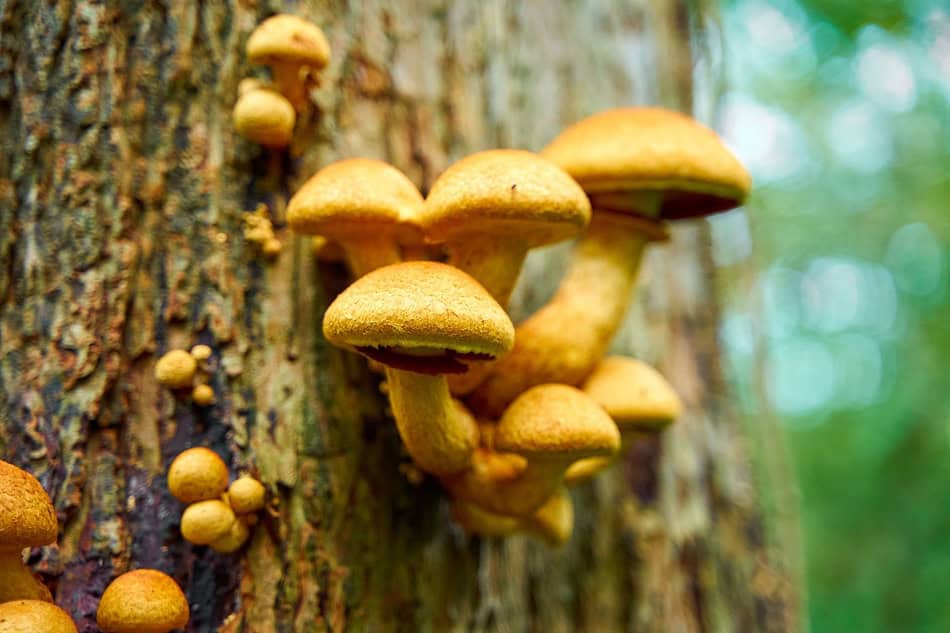
If the sight bothers you, you can remove a mushroom. Just don’t mistake that for treating the fungus.
The mushroom is only the reproductive structure. Most of the fungus is hidden in the soil or wood as a network of microscopic threads. University of Maryland Extension compares mushrooms to the short-lived fruiting structures of a much larger organism. Pulling them is a little like picking flowers from a perennial plant. The main organism remains.
That is also why spraying a lawn fungicide usually isn’t a useful solution for ordinary mushrooms. If the fungus is feeding on buried organic matter, the mushrooms generally disappear when conditions dry out or once that food source has decomposed.
If wet weather or excessive irrigation is keeping your lawn soggy for long periods, improving drainage or watering less may reduce mushroom growth. Farmers’ Almanac has more on recognizing signs that a lawn or garden is getting too much water.
When It’s Worth Calling an Arborist
One mushroom in the lawn does not warrant an emergency tree removal.
But there are combinations of signs that deserve more attention: fungal growth attached to the trunk or major roots, soft or crumbling wood, cavities, loose bark, large dead branches, a thinning canopy, a new lean, or a tree that has suffered recent root damage or construction disturbance.
Location matters here too. A questionable tree standing deep in the woods presents a different risk from one leaning over a bedroom, driveway, playground, or sidewalk.
A trained arborist can look beyond the mushroom and evaluate the condition of the wood, roots, trunk, canopy, and surrounding site. If you need one, the International Society of Arboriculture maintains a directory of credentialed arborists.
And resist the urge to start cutting large branches because the tree suddenly looks suspicious. Pruning does not cure internal decay and can create additional wounds if it is done unnecessarily. Farmers’ Almanac’s fall pruning guide explains why autumn is not automatically the right time to make major cuts.
Keep Kids and Pets Away From Mystery Mushrooms
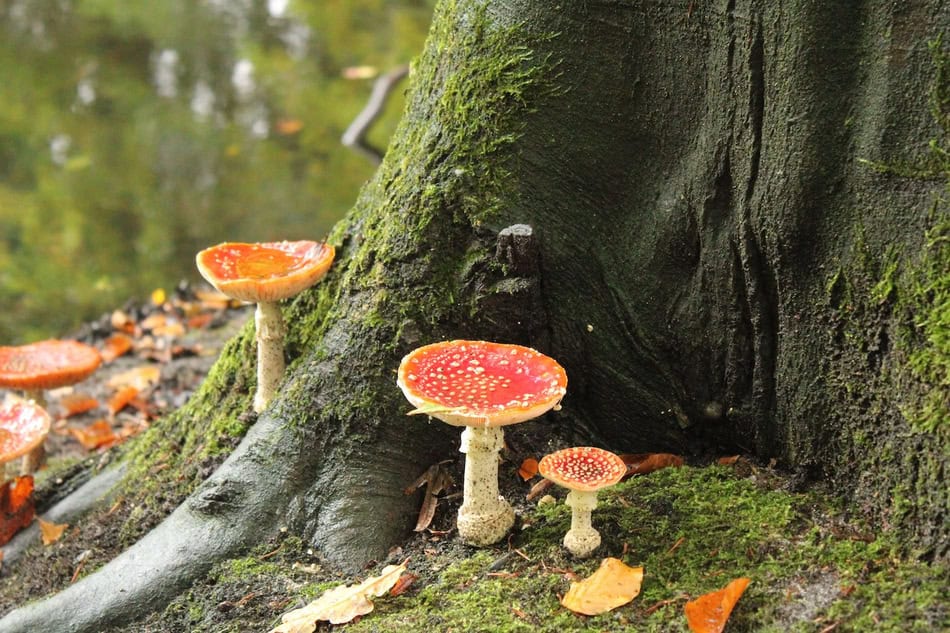
Even mushrooms that are harmless to the lawn or tree should not be treated as edible.
Wild mushroom identification can be difficult, and some toxic species can grow in ordinary yards. If young children or pets are likely to eat them, University of Maryland Extension recommends plucking and disposing of the mushrooms as they appear.
That won’t eliminate the fungus underground, but it removes the part a curious dog or toddler might put in their mouth.
Never assume a backyard mushroom is safe to eat because it resembles something sold at the grocery store.
The Fall Check That Takes About 30 Seconds
If mushrooms suddenly appear around a tree this fall, don’t panic and don’t ignore them either.
Walk over and look at where they begin.
Mushrooms scattered through wet lawn or mulch may simply be fungi doing what fungi do, breaking down organic matter beneath the surface. Mushrooms or conks growing directly from the trunk, the root flare, or large exposed roots are different. Those are worth having evaluated, particularly on a mature tree close to a house or other place where failure could cause damage.
The mushroom itself may only last a few days.
What it is growing from is the part that tells the more important story.

- Maggie Konrad

- Maggie Konrad
- Maggie Konrad
- Maggie Konrad