

Sundials: How the World’s First Clocks Worked (and How to Build One)
It’s hard to imagine, but this simple device once served entire civilizations as the means to tell time. Learn more!
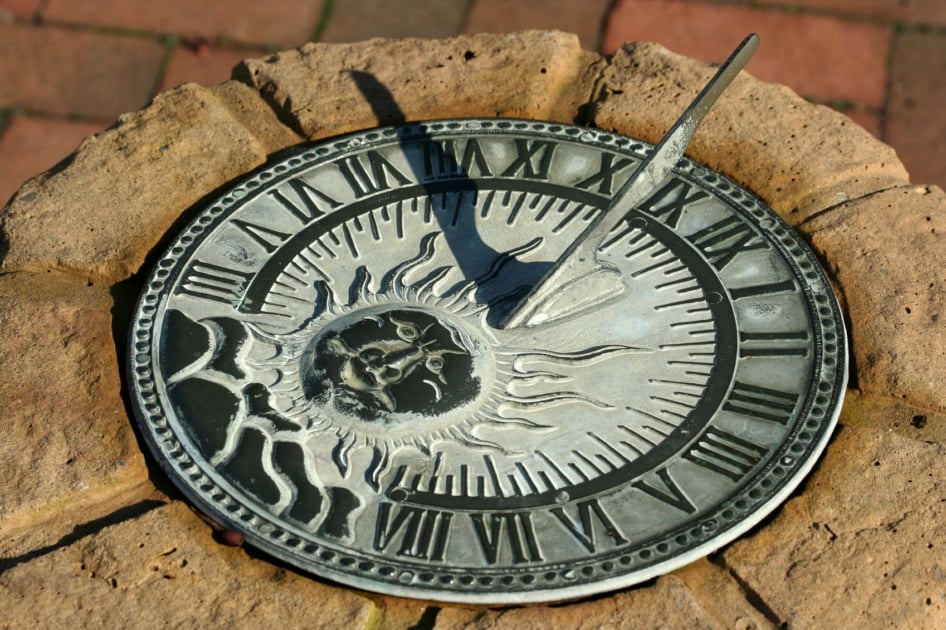
Quick Reference: Sundials
- What they are: time-measuring devices that use the position of the sun’s shadow to indicate the hour.
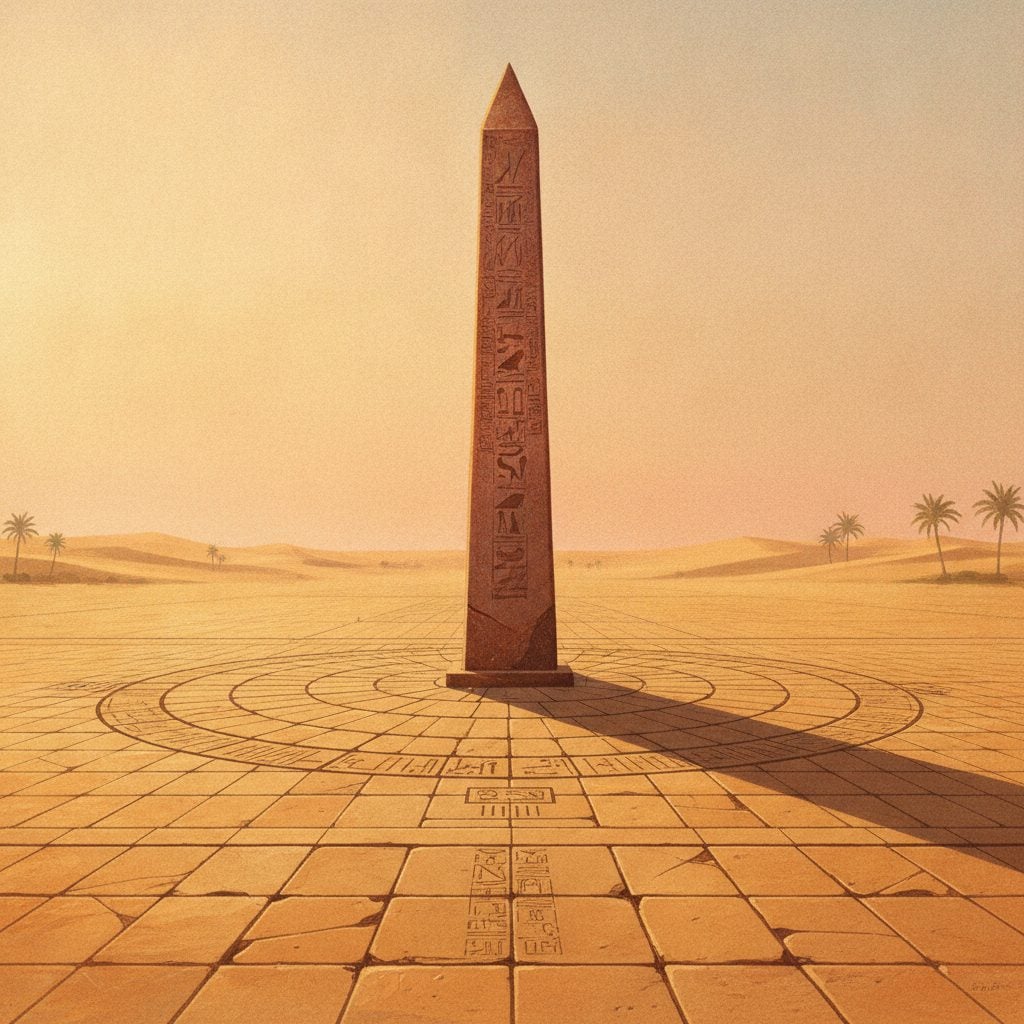
- Oldest: Egyptian obelisk sundials around 1500 BCE.
- How they work: a vertical or angled gnomon casts a shadow on a calibrated dial face.
- Calibration: the gnomon must be aligned with the Earth’s rotation axis (latitude-specific).
- Accuracy: ~5 to 15 minutes versus clock time. The ‘equation of time’ explains seasonal variation.
On this page
Related Almanac guides
Sources cited in this guide
Sundials are the world’s first time-measuring devices, dating to ancient Egypt around 1500 BCE. They use the position of the sun’s shadow on a calibrated dial face to tell the time of day. Per Britannica’s sundial history, the basic design has hardly changed in 3,500 years; only the calibration techniques have evolved. This guide is how sundials actually work, the math of the ‘equation of time’ correction, and how to build a simple sundial at home.
How Sundials Actually Work (the Math)
Per Britannica and NIST history of timekeeping.
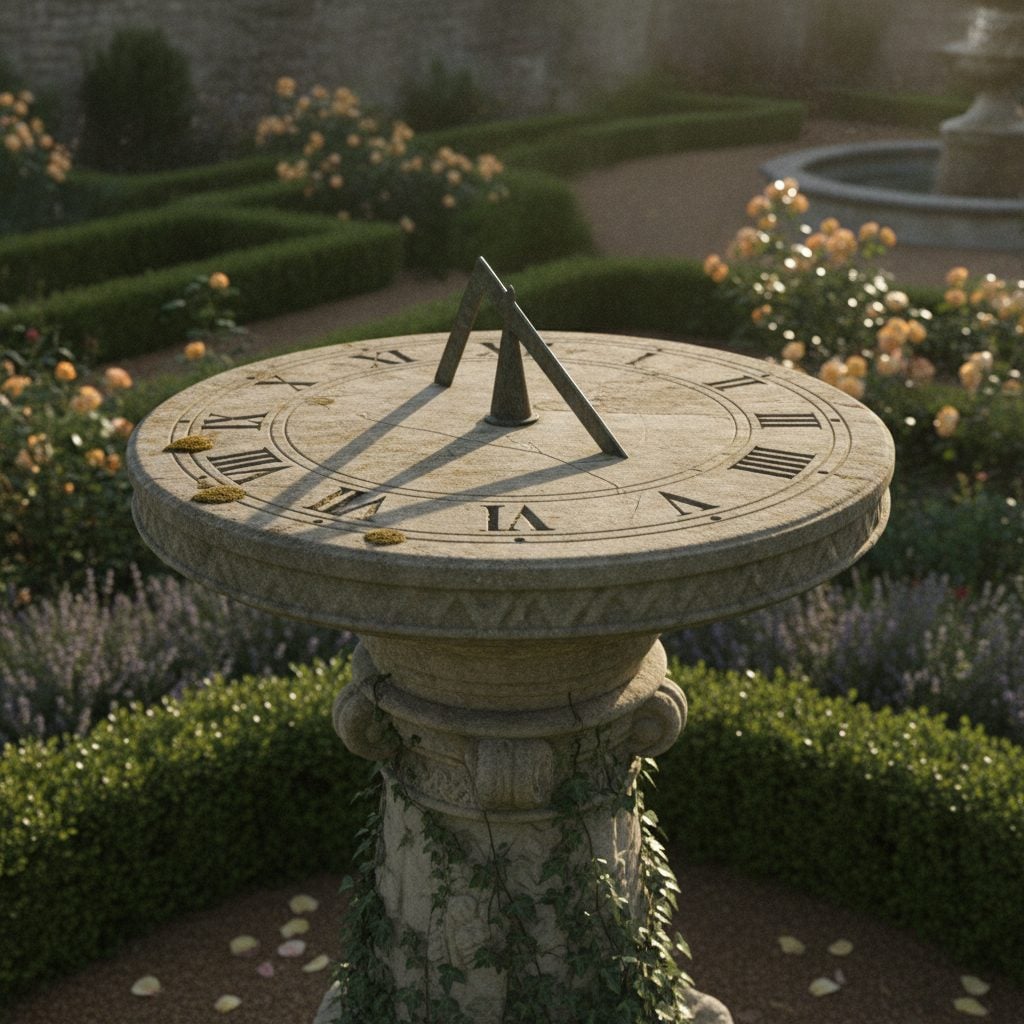
- The gnomon. The vertical or angled post that casts the shadow. For accuracy the gnomon angle must match your latitude.
- The dial face. Calibrated with hour lines. The lines are NOT evenly spaced; they widen toward sunrise and sunset and narrow at noon.
- True noon. When the sun is at its highest point of the day, the shadow points directly north (in the Northern Hemisphere). This moment is solar noon, NOT 12:00 clock noon.
- Equation of time. The difference between solar noon and clock noon varies by date due to Earth’s elliptical orbit. Up to 16 minutes off either way.
- Seasonal variation. A sundial reads correctly at the equinoxes; reads early in March-April and August-September; reads late in February and November.
How to Build a Simple Sundial
Standard DIY approach for a horizontal sundial.
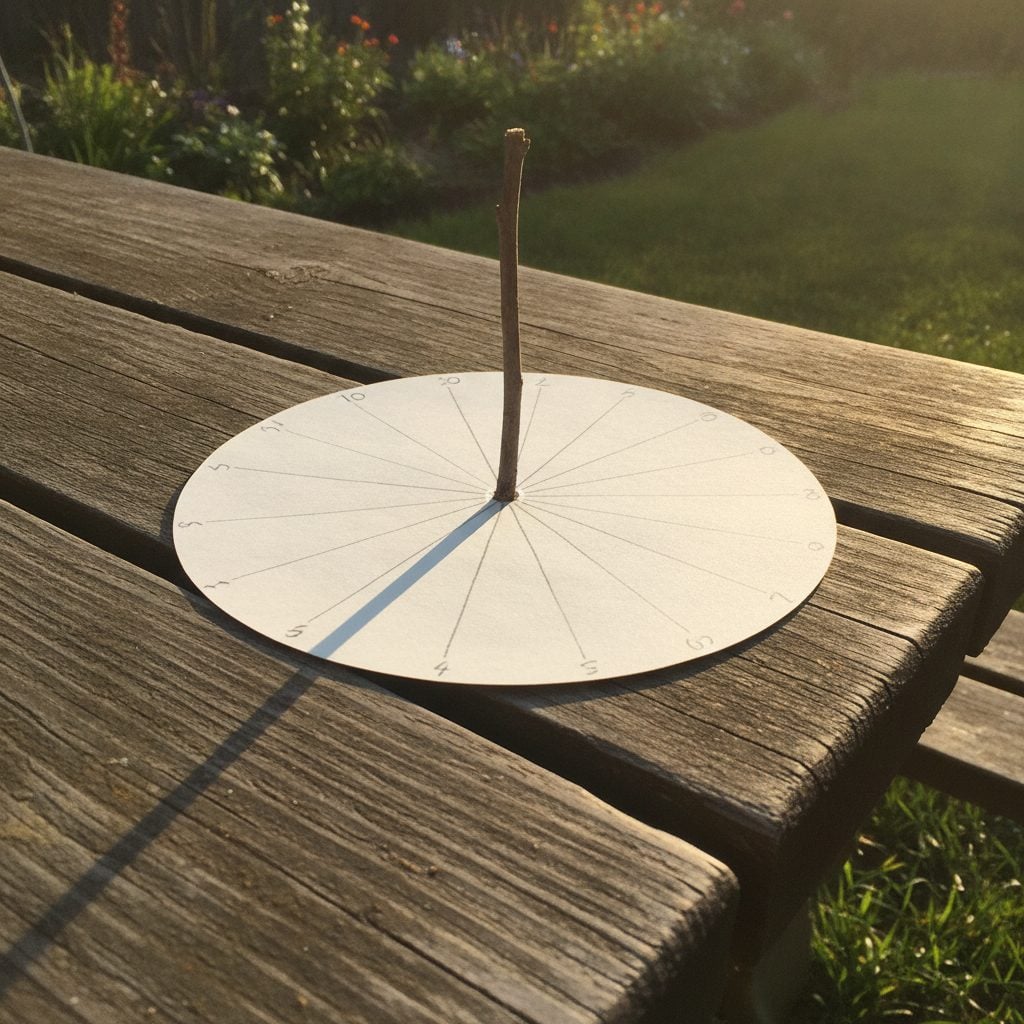
- Materials: a flat circular disc (paper, wood, stone), a vertical stick or wire (the gnomon).
- Calibrate the gnomon angle. Set it at an angle equal to your latitude (e.g., 42 degrees for Boston).
- Mark north. Use a compass or align with Polaris at night. The gnomon’s shadow should point north at solar noon.
- Mark the hours. Using true solar time, mark where the shadow falls every hour from sunrise to sunset on a sunny day.
- Optional: equation-of-time correction table. Display alongside the sundial showing how many minutes to add or subtract to reach clock time on each date.
Original Sundial Article
Below is the original Almanac coverage of sundials.

Sundials FAQ
How accurate are sundials?
Within 5 to 15 minutes of clock time, depending on date and design. The equation of time accounts for seasonal variation up to 16 minutes either way. Modern precision-built sundials with correction tables can hit within a few minutes year-round.
When were sundials invented?
Egyptian obelisk sundials date to about 1500 BCE, making them the world’s oldest known time-measuring devices. Babylonians and Greeks developed more sophisticated designs by 500 BCE. Roman engineers spread them throughout the Empire.
Do sundials work at night?
No, they require direct sunlight to cast a shadow. Moondials (using moonlight) exist but are far less common and harder to read because the moon’s brightness varies through its cycle. Some sundial gardens include moondials beside their sundials.
Why doesn’t a sundial show 12:00 noon when the sun is highest?
Two reasons. The first is the ‘equation of time’ due to Earth’s elliptical orbit; solar noon and clock noon differ by up to 16 minutes by date. The second is time zone: clock noon is calibrated to a time zone, not your specific longitude.
Can I make a sundial in my backyard?
Yes. Calibrate the gnomon angle to your latitude, align the dial face so the gnomon shadow points north at solar noon, and mark the hours on a sunny day. A simple paper or wood horizontal sundial takes 1 to 2 hours to build.


This article was published by the Staff at FarmersAlmanac.com. Any questions? Contact us at questions@farmersalmananac.com.
- Farmers' Almanac Staff

- Farmers' Almanac Staff
- Farmers' Almanac Staff
- Farmers' Almanac Staff






Great article! My grandson was just asking about time, clocks and other time keepers. I can’t wait till we can make our very own sundials. I plan to make one with two of my three grandchildren, the ones that are old enough, and will make them with a concrete base and put their own saying on the dial along with their hand print and the date. Great gift for mothers and others for Christmas. Thanks again. Your Grandmother in good time, Gigi
Teach your children well Gigi…and I’d love to see what you come up with! ??