Soil Temperature Chart: Best Soil Temps for Planting Every Vegetable
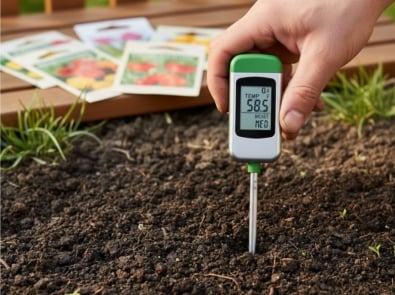
Digital soil thermometer measuring the temperature of dark, tilled garden soil with seed packets nearby.

Quick Reference The 50-degree line. Below 50 degrees Fahrenheit, almost no warm-season seeds will germinate. Above 50, cool-season crops thrive. How to measure: Soil thermometer, 4 inches deep, in the morning, in the planting bed itself. Cool-season crops (germinate at 40-65 degrees): Lettuce, spinach, peas, kale, radishes, beets, carrots, onions, broccoli, cabbage, cauliflower. Warm-season crops
What Is Humidity? Plain-English Guide to Relative, Absolute, and Dew Point

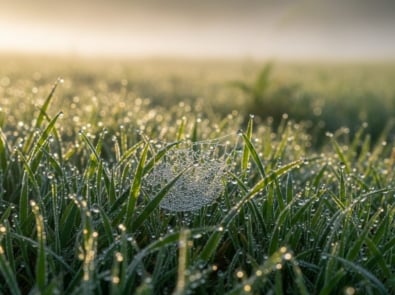
Morning dew droplets cling to blades of green grass and a delicate spider web at sunrise.

Quick Reference Humidity: Water vapor in the air, in invisible gas form. Three types: Relative humidity (a percentage), absolute humidity (grams per cubic meter), specific humidity (grams per kilogram of air). Dew point: The temperature at which the air would be 100 percent saturated. The cleaner outdoor-comfort measure. Why warm air feels mugger: Warm air

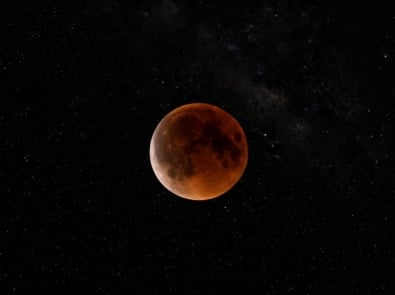
Blood Moon: What It Is, Why It Looks Red, and When the Next One Happens

Total lunar eclipse glows copper red in a dark sky filled with many bright stars.

Quick Reference What it is: A blood moon is a total lunar eclipse, when Earth’s shadow falls completely across the Moon and the Moon turns deep red or copper. Why red: Earth’s atmosphere bends red wavelengths of sunlight through the shadow and onto the Moon. Same physics as a sunset. NASA terminology: NASA calls it

Polar Vortex: What It Is, Why It Floods the US With Cold Air, and How to Prepare

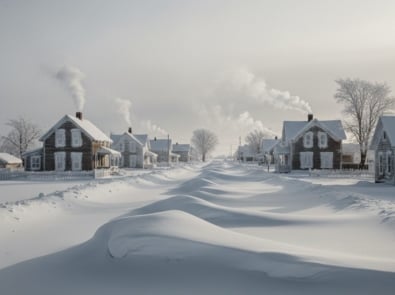
Deep snow drifts cover a residential street with smoke rising from the chimneys of wooden houses.

Quick Reference What it is: A large area of cold low-pressure air that circulates around each pole. Always there, always strongest in winter. Two layers: A stratospheric polar vortex (10 to 30 miles up) and a tropospheric polar vortex (lower, where weather happens). Strong vortex: Cold air locked at the pole. Winter cold stays north.

Aurora Forecast: How to Read Kp, G-Scale, and Find the Northern Lights Tonight

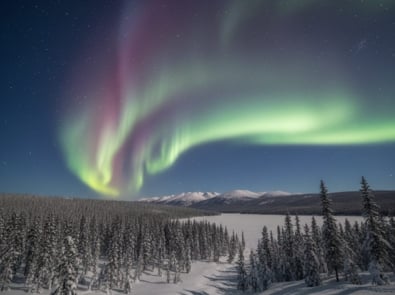
Green and pink northern lights shine over a snowy spruce forest and distant mountains at night.

Quick Reference The two main numbers: Kp index (0 to 9, planetary geomagnetic activity) and the G-scale (G1 minor through G5 extreme storms). Kp 5 (G1 minor): Aurora possible across far northern US, including Maine, Michigan, Minnesota, Wisconsin, and the Dakotas. Kp 7 (G3 strong): Aurora visible as far south as Pennsylvania, Iowa, and northern

Hail Damage: How to Identify It, What It Costs, and What to Do First

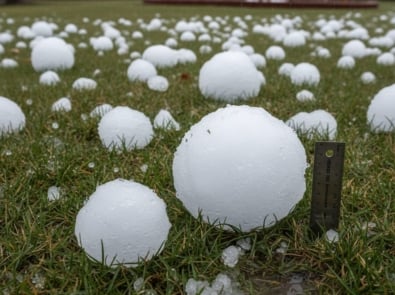
Large round hailstones sit on a green lawn with a ruler measuring their significant size.

Quick Reference Severe threshold: Hail of 1 inch or larger is officially severe per the National Weather Service. 1-inch hail can dent vehicles and damage roofs. Hail size scale: Pea (0.25″), marble (0.5″), penny (0.75″), quarter (1″), golf ball (1.75″), tennis ball (2.5″), baseball (2.75″), softball (4″), grapefruit (4.5″+). Largest US hailstone: Vivian, South Dakota,

Hypothermia Symptoms: The Three Stages, Warning Signs, and What to Do

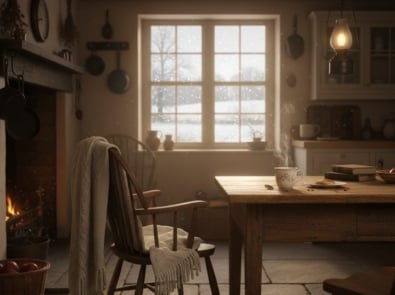
Wool blanket draped over a wooden chair in a warm kitchen with a snowy window view.

Quick Reference What it is: Body core temperature below 95 degrees Fahrenheit (35 degrees Celsius). Mild (90 to 95): Shivering, slurred speech, fast heart rate, fatigue, mild confusion. Watch for the “umbles”: stumbles, mumbles, fumbles, grumbles. Moderate (82 to 90): Violent shivering that then stops, severe confusion, drowsiness, slow weak pulse, blue lips and fingers.

Beaufort Wind Scale: All 13 Forces from Calm to Hurricane, Explained

A three-masted tall ship sails across choppy ocean waters during a golden sunset with cloudy skies.

Quick Reference Created: 1805 by Royal Navy Rear-Admiral Sir Francis Beaufort. Range: Force 0 (calm, less than 1 mph) through Force 12 (hurricane, 73 mph and above). Original purpose: Standardize sailing condition reports across the British Navy. Adopted: Royal Navy 1838, internationally 1853, land observations added 1916. Why still used: Lets observers describe wind without

Plan Your Day. Grow Your Life.

Enter your email address to receive our free Newsletter!

Name*
What are you intrested in?*
Privacy*