

In Like a Lion, Out Like a Lamb: Origin, Meaning, and Whether It Verifies
Is this saying about March true? We take a closer look at this bit of weather folklore.
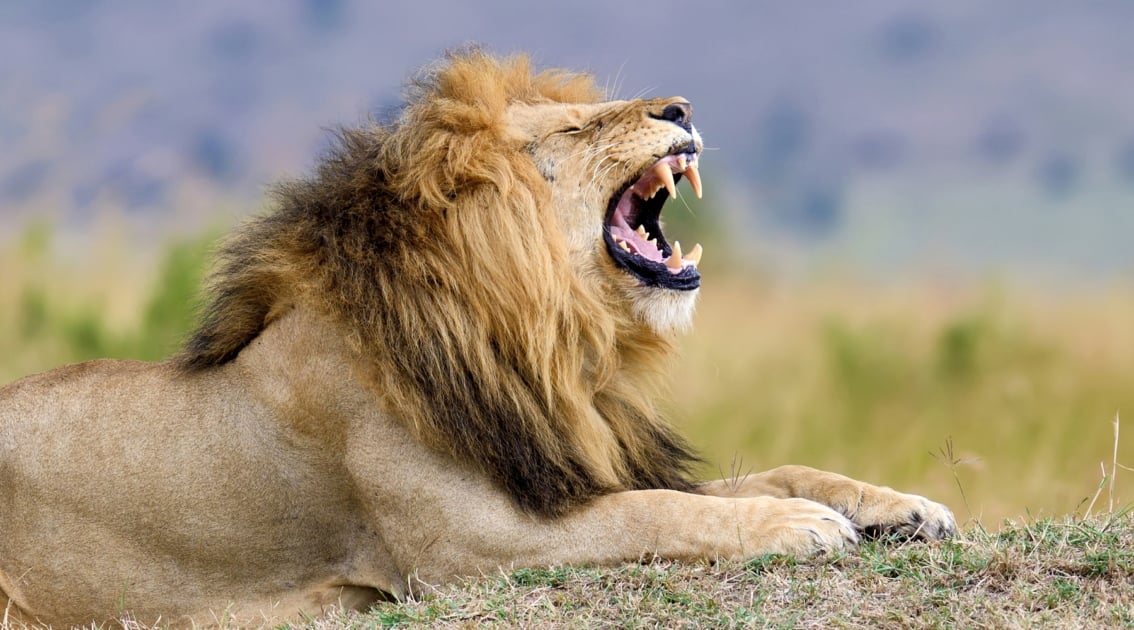
What does “in like a lion, out like a lamb” actually mean?
It is the short form of a weather saying that predicts a stormy start to March will be balanced by a calm end of the month, and vice versa. It is folklore, not a forecast.
Is the lion and lamb saying actually true?
No. Long-term climate data shows no statistically significant link between early-March and late-March weather. The saying lands true often enough to feel right because March is so variable everywhere.
Where did the saying come from?
It shows up in English almanacs as early as the 17th century, likely tied to older European zodiac symbolism (Leo opposite Aries) and to a folk belief that good and bad weather have to balance out month-to-month.
Why is March weather so unpredictable?
March is when the polar jet stream begins to retreat north, leaving the central and eastern U.S. caught between winter air masses and early-spring warm fronts. The result is wide day-to-day swings.
What is the most reliable March weather saying?
“March winds and April showers bring May flowers.” That sequence does line up with the real climatology of spring across most of the U.S. and Canada.
Does the lion-lamb saying apply to other months?
Some folk versions extend it to April, but the saying is firmly attached to March. The transition from winter to spring is the only month where the metaphor really earns its keep.
What will March’s weather be like by you? Check your zone’s forecast now. For more seasonal folklore, browse our Best Days calendar and our maple syrup facts.
Quick Reference: In Like a Lion, Out Like a Lamb
- Origin: European weather folklore predating the Almanac, tied to a belief that March weather has to balance itself out.
- Saying: “If March comes in like a lion, it will go out like a lamb” (and vice versa).
- Does it verify: rhyme, not forecast. NOAA records show no statistical link between early- and late-March weather.
- Why it persists: March is the most variable U.S. weather month, so the saying lands true often enough to feel right.
- Better predictor: our long-range weather forecast for your zone.
- Sister sayings: “A dry March and a wet May fill barns with corn and hay,” and others below.
You probably grew up hearing “in like a lion, out like a lamb.” It is the shorthand for the longer saying, “If March comes in like a lion, it will go out like a lamb,” and it is one of those bits of weather folklore that everyone repeats but almost no one questions. The basic claim is that the weather at the start of March predicts the weather at the end of the month, and that the two have to balance each other out. That is a beautiful idea. It is also, when you actually run the numbers, not really how weather works.
This piece walks through where the saying comes from, what it actually claims, whether modern climate data backs it up, and what other March-weather lore is worth taking a little more seriously. RELATED: Spring Weather Forecast.
Where the Saying Came From
The lion/lamb pairing shows up in English-language almanacs and farm journals as early as the 17th century, and almost certainly traveled to North America with European settlers. Some folklorists trace it to older European zodiac symbolism: March begins under Pisces but the spring equinox crosses into Aries, the ram (a lamb), with Leo the lion sitting almost exactly opposite in the night sky. So the month “begins under the lion’s house and ends under the lamb’s.” Pretty, and almost certainly the kind of after-the-fact storytelling that fits a rhyme.
Ancestral Beliefs, Balance
The people who first kept this saying alive often believed that bad spirits could affect the weather in unwanted ways, and that the responsible thing was to be cautious about what you did, said, and planted at certain points in the year. Calendars in pre-industrial Europe were studded with feast days, blessings, and prohibitions that all tried to manage that kind of risk.
Those beliefs almost always included the idea that there should be a balance in weather and in life. If a month came in bad, all roaring and snarling like a lion, it should go out good and calm, docile, like a lamb. The reverse held just as firmly: a quiet, easy first week meant the back end would bite. It is the same logic that powers “red sky at morning, sailors take warning,” and dozens of related rhymes.
With March being such a changeable month, in which we can see warm spring-like temperatures one week and a late-season snowstorm the next, you can understand how this saying might hold true some of the time. The U.S. National Weather Service routinely calls March the country’s most volatile weather month, swinging between deep winter and early spring on a daily basis (see the Britannica entry on March). When the saying lands, it lands hard, and we remember it. When it does not, we quietly forget.
We can only hope that if March starts off stormy it will end on a calm note, but the key word is hope. As a forecasting tool, the saying is closer to a rhyme than a rule.
Does the Lion-and-Lamb Saying Actually Verify?
Two ways to test the claim. First, look at decades of March data and see whether stormy first weeks correlate with calm last weeks. Second, look at the temperature swing between the start and end of the month and see whether the difference predicts anything. Multiple long-range climate studies have run versions of both, and the answer is the same each time: there is no statistically significant link between early-March and late-March weather at almost any U.S. station. Cold snaps and warm-ups in March are mostly driven by what the jet stream is doing in the moment, not by what happened three weeks ago.
That said, two real patterns make the saying feel true: most of the U.S. does warm up between March 1 and March 31 simply because the sun climbs higher, so a stormy March 1 is statistically likely to be followed by a calmer (and warmer) March 31 regardless of the lion-lamb logic. And severe spring storms become more common, not less, as the month goes on. So the saying captures a real climate trend by accident, then gets the cause wrong.
More March Weather Lore
The lion-and-lamb saying gets the headline, but it is far from the only March rhyme floating around. Some other March-related weather lore worth knowing:
- A dry March and a wet May; Fill barns and bays with corn and hay.
- As it rains in March, so it rains in June.
- March winds and April showers, Bring forth May flowers.
- So many mists in March you see, so many frosts in May will be.
- Is’t on St. Joseph’s day (19th) clear,
So follows a fertile year;
Is’t on St. Mary’s (25th) bright and clear,
Fertile is said to be the year.
The “March winds, April showers, May flowers” sequence is the only one of those with anything like a track record; the rest are folkloric rhymes that survive because they are catchy. If you want March-weather guidance that actually pencils out, the cold-night-and-warm-day swing that drives a sugar-maple run (see our backyard maple sugaring guide) is the most reliable seasonal tell in the woods.
When to Trust March Folklore (and When Not To)
Old weather rhymes are not all created equal. The ones that survive scrutiny tend to encode a real observation about pressure, sky, or animal behavior. “Red sky at night” is real (high pressure to the west). “Mackerel sky, mackerel sky, never long wet, never long dry” is real (mid-level moisture changing). The lion-lamb rhyme, by contrast, is more aesthetic balance than meteorology. Take it as a charming way to remember that March is unpredictable, not as a calendar to plan a barbecue.
In Like a Lion, Out Like a Lamb FAQ
What does “in like a lion, out like a lamb” actually mean?
It is the short form of a weather saying that predicts a stormy start to March will be balanced by a calm end of the month, and vice versa. It is folklore, not a forecast.
Is the lion and lamb saying actually true?
No. Long-term climate data shows no statistically significant link between early-March and late-March weather. The saying lands true often enough to feel right because March is so variable everywhere.
Where did the saying come from?
It shows up in English almanacs as early as the 17th century, likely tied to older European zodiac symbolism (Leo opposite Aries) and to a folk belief that good and bad weather have to balance out month-to-month.
Why is March weather so unpredictable?
March is when the polar jet stream begins to retreat north, leaving the central and eastern U.S. caught between winter air masses and early-spring warm fronts. The result is wide day-to-day swings.
What is the most reliable March weather saying?
“March winds and April showers bring May flowers.” That sequence does line up with the real climatology of spring across most of the U.S. and Canada.
Does the lion-lamb saying apply to other months?
Some folk versions extend it to April, but the saying is firmly attached to March. The transition from winter to spring is the only month where the metaphor really earns its keep.
What will March’s weather be like by you? Check your zone’s forecast now. For more seasonal folklore, browse our Best Days calendar and our maple syrup facts.

This article was published by the Staff at FarmersAlmanac.com. Any questions? Contact us at [email protected].
- Farmers' Almanac Staff

- Farmers' Almanac Staff

- Farmers' Almanac Staff

- Farmers' Almanac Staff

This specific subject REALLY gets my goat! (or my chin beard…). It never fails to ruffle my
feathers, really. Know why? Because it is a near-perfect example of our cultural degeneracy
since my boyhood. that’s why. Follow my logic, if you can stretch your mind that far:
First, most importantly — There would be NO such expression unless it was ‘catchy’
and caught folks off-guard. Which is why the ORIGINAL idiom is Lamb/Lion. It’s
mildly ‘Counter-intuitive’. Got that? Perhaps not.
Second, also importantly — Over the previous half century, we have been inundated
with teachers who have seldom been readers. You read correctly! When I attended el-
ementary school, most teachers were readers and they encouraged us to read also.
Hence, I became this old-fangled thing called a ‘reader’. Which means that I have been
observing this pheomenond First-hand since about 1955. Geez. That makes me Old.
But, in my particular case, also Wise.
Third, most importantly — Our so-called ‘Media’ have been most at fault for the above-
cited ‘degeneracy’ (look that word up in a real dictionary, please). All too often some
youthful Media type thinks it cute or witty to ‘twist’ an expression, a word, or the
pronunciations of a Place-name. Ex.: “Kabooool” for Kabul, or (lately) “Keev” for
(what has always been!) Kiev, as in the “Great Gates at Kiev” by Mussorgski.
Anyway, I actually have a life ! and chose not to bother teaching. It would have long
ago KILLED ME! Nor did I wish to compete against the Media or Internet. A losing
proposition, at best!
There you have it, folks. The “Proper” idiom is the Lamb/Lion varient because it
is slightly “off” — Which is precisely why it came into usage! Otherwise there
would be Zero need for any such expression. It’s a matter of what we called Common
Sense. But that would get us into some Paine. Thomas Paine. And who wants to
go THERE?
TY for reading. Now get thee into some Geo. Orwell essays about our Eng. Language
and its never-ending struggle for survival against laziness and corruption.
This year March came in like a lion for sure. Hope to see that lamb at the end of the month.
We do too!
whats it going out like
For the east coast at least, it’s going out like a lion, same as it came in.
So true! Thanks for being one of our “Weather Watchers” and sharing your experience with others here, Amanda. It will be fun to hear what kind of weather everyone else sees! Stay in touch 🙂
West coast as well this year. In No. Cal, we got rain and snow for the past week and it there’s no end in sight as of 4-1-2025.
Here we are, one year after my last post. March came in like a lamb again. Punxsutawney Phil (our weather predicting ground hog) predicted an early spring for this year. For all of February and the now early March he has been right. Sorry, FA, but you missed this one.
March 1st 2024…… The weather in N. Cal. is A LION. It’s raining hard here in the afternoon. We have more rain coming Sat./Sun. Break on Mon. Then 3 more days of rain. I think that we will have rain for awhile, but on and off. And I think March will go out like a LAMB…… because it will be Easter.
March 1 2024 Snowing in extreme Northwest Montana. 28 deg.Temps. to drop to 20 tomorrow.
Here in Ohio, March came in like a lamb. But snowstorms can occur in March and even in April.
February had 2 awful snowstorms, with over 12 inches of snow.
Here in Western Pennsylvania March came in like a Lamb. I hope it does not go out like a Lion. I do remember the White Hurricane of March 13, 1993. Had a 4 foot deep drift in my drive way.
Came in like a lion in Arkansas. Sure hope it goes out like a lamb.
We are warm and warm and fuzzy like a lamb in Florida-Thank you, God!
more often than not, I have seen more March’s come in like a lion and leave like a lamb and vice-versa