

Grow Herbal Tea at Home: Plant Your Own Tea Garden
Make a little extra room in your garden or a few flower pots and build your herbal tea garden with these easy tips.
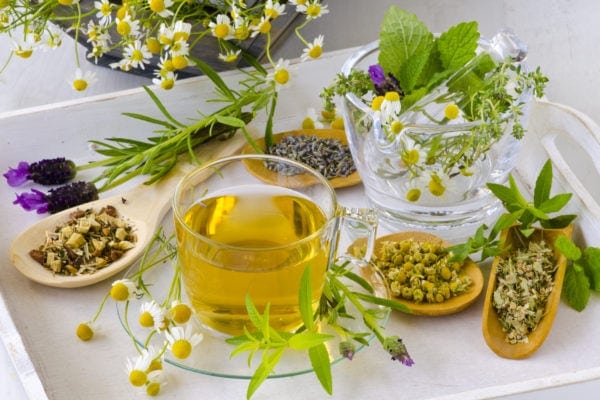
Quick Reference: Planting an Herbal Tea Garden
- Three easy starters: chamomile, lemon balm, and lavender all grow in a garden bed, a window box, or a few pots.
- What they want: full sun and well-drained soil. Chamomile dislikes heat above 98 degrees for long.
- Watch lemon balm: it spreads like its mint-family cousins, so keep it in a planter or a buried pot.
- Harvest: gather flowers early in the morning as they open; pick leaves anytime.
- Steep: flowers or leaves in boiling water, roughly 2 to 5 minutes for leaves and 5 to 10 minutes for flowers.
How do you like your tea? Hot with milk and honey, iced with a little lemon and sugar, or brewed only with the infusing powers of the sun? Whichever way you drink it, keeping your favorite herbs on hand is a sure way to have a soothing cup any time of year. The best way to stock that shelf is to grow herbal tea plants yourself. Make a little extra room in a garden bed or set out a few flower pots, and this 2026 growing season you can build a tea garden with three forgiving herbs and the easy tips below.
Why Grow Your Own Herbal Tea Garden
A boxed tea bag is convenient, but a homegrown cup is fresher, costs pennies, and tells you exactly what went into it. Chamomile, lemon balm, and lavender are hardy, pretty in a border, and useful long after the kettle goes cold. Bees love them, they perfume a yard, and a single packet of seeds or one nursery start can supply tea for years. You do not need an herb plot either. A sunny sill or a trio of pots by the back step will do the job.
Below we walk through each of the three herbs, how to grow it, and how to turn the harvest into tea. Then we add a few companion herbs worth tucking in, notes on harvesting and drying, and two tried-and-true recipes to pour over ice.
Chamomile
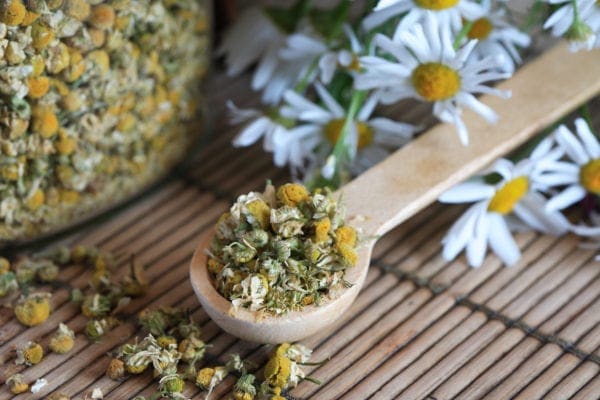
Chamomile is one of the most popular tea herbs, simple to grow, and lovely in a garden or a window box. Its daisy-like flowers carry a sweet, apple-like aroma that is good for attracting bees, and the blooms double as pretty edible flowers for a garnish. Folks grow two main kinds. German chamomile is an annual that can reach up to two feet tall. Roman chamomile is a perennial that grows about 4 to 12 inches tall. Because the Roman type grows out rather than up, it makes an attractive and effective ground cover. Both varieties can be used for tea.
To grow chamomile:
Like many herbs, chamomile loves full sunlight and prefers well-drained soil. It will grow just about anywhere but does not like very hot temperatures, above 98 degrees, for very long. Prepared as an infusion, chamomile can help calm the nerves and relieve an upset stomach, and it has long been used to ease colic in small children. To use it for tea, harvest the flowers early in the morning, when they are young and just opening. Deadhead often to promote constant blooms. If you grow the perennial kind, cut it back in the fall to prevent woodiness the next season, and cover it with mulch to protect it from winter weather. To make a cup, steep about 1 tablespoon of fresh flower heads, or 2 teaspoons if dried, in one cup of boiling water. Let the blossoms steep for five to ten minutes, then sip and relax. For a full plant profile, the North Carolina State Extension keeps a detailed chamomile growing guide.
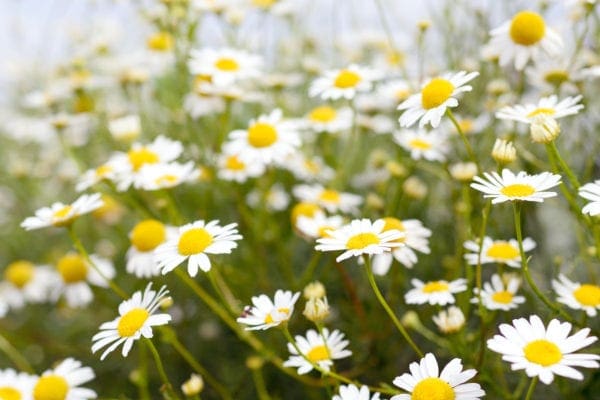
Lemon Balm
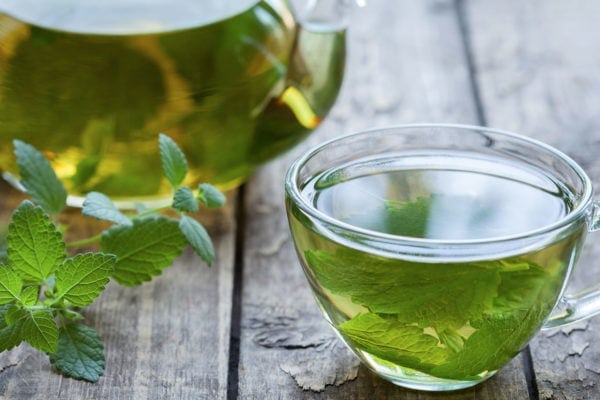
Known as the “heart’s delight” in southern Europe and used medicinally by the Greeks nearly 2,000 years ago, lemon balm makes a soothing hot tea or a cooling one sweetened with honey. Like many plants in the mint family, it is easy to grow just about anywhere. A word of caution, though: lemon balm will spread. If you plant it in the open garden, keep it contained in a small planter box or a pot buried in the ground. It also grows well in a pot aboveground. When growing in a pot, prune often so the leaf stock matches the rootstock.
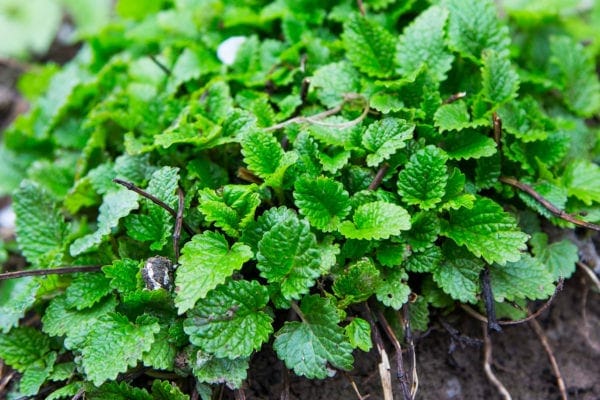
To grow lemon balm:
Lemon balm prefers full sun with some midday shade and grows well in moist soil. You can harvest the leaves anytime, but the flavor is best right when the flowers begin to open. For a tea, infuse a few leaves in boiling water and let them steep for 2 to 5 minutes. Add honey while the tea is still hot, then cool it if you like it iced. Similar to chamomile, lemon balm helps calm the nerves and lift the spirit. It is also used to bring relief from bronchial complaints, colds, and headaches.
Lavender
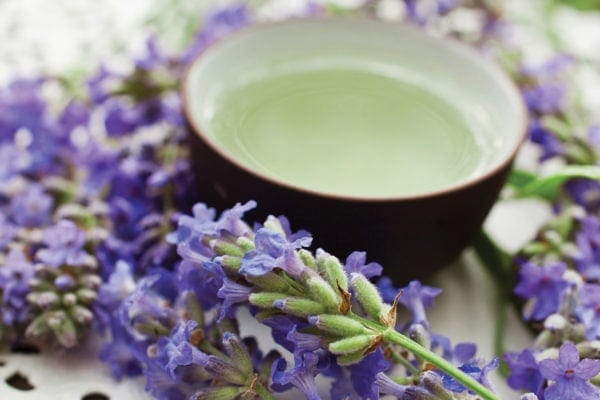
An herb with a fresh, clean scent, lavender has a number of uses beyond herbal tea. It works as an insect repellent, goes into bathwater, is stitched into pillows, and spread through a garden it throws a lovely purple haze across the landscape. There are many varieties to choose from, the most popular being lavender officinalis and lavender spica. All lavender prefers similar growing conditions. A sunny, open spot discourages fungus and lets the plant grow tall and free. Your soil will need to be very well drained, perhaps even bordering on sandy, and a little lime content helps.
To grow lavender:
Lavender can be grown in containers but tends to do better in a garden space. Sow seeds in late summer or autumn, and you can divide and replant in the autumn as well. To harvest, gather the flowering stems just as the flowers begin to open; the leaves can be picked at any time. To make a tea, infuse about 2 tablespoons of fresh flowers, or 4 teaspoons dried, in boiling water and steep 2 to 5 minutes. Lavender tea is helpful for soothing headaches, calming the nerves, and easing faintness and dizziness. For more kitchen-garden herbs to grow alongside it, the Clemson Cooperative Extension has a plain-English guide to growing herbs.
A Few More Herbs Worth Adding
Once the first three take hold, it is hard to stop at three. A tea garden welcomes company, and a handful of other herbs steep into fine cups on their own or blended with the chamomile, lemon balm, and lavender you already have.
- Mint: spearmint and peppermint make a bright, settling tea. Like lemon balm, mint runs, so pot it or bury a barrier to keep it in bounds.
- Lemon verbena: a tender shrub with a strong lemon-drop flavor. Grow it in a pot and bring it indoors before frost in colder regions.
- Bee balm (bergamot): a native perennial the pollinators adore, with a mellow, Earl-Grey-like note in the cup.
- Rose hips and rose petals: the fruit of the rose brews a tart, vitamin-rich tea, and the petals add fragrance.
Thinking about which plants sit well side by side saves headaches later. Our companion planting guide shows which herbs and vegetables make good neighbors, so your tea patch earns its keep next to the rest of the garden.
Harvesting and Drying Your Tea Herbs
Fresh herbs make wonderful tea, but a dried supply carries you through winter. The rule of thumb is simple: gather flowers early in the morning, just as they open and after the dew has burned off, when the oils that carry the flavor are at their peak. Pick leaves anytime, though they too are strongest right before the plant blooms.
- Bundle and hang: tie small bunches and hang them upside down in a warm, dark, airy spot for one to two weeks.
- Screen dry: spread flower heads on a mesh screen or a paper-lined tray out of direct sun.
- Store: once the leaves crumble and the stems snap, strip them into clean glass jars, label with the date, and keep them out of the light.
Dried herbs are more concentrated than fresh, so remember the old measure when you brew: about 2 teaspoons of dried leaf or flower stands in for 1 tablespoon of fresh.
Planting Your Tea Garden by the Moon
Chamomile, lemon balm, and lavender are grown for the parts that stand above the ground, their leaves and flowers, which makes them above-ground crops. Traditional Gardening by the Moon wisdom says to sow above-ground crops during the light, or waxing, of the Moon, when the old timers believed the moisture was drawn upward. Root crops go in during the dark, or waning, of the Moon.
- Herbs grown for leaves and flowers are above-ground crops. Favor the light of the Moon for planting.
- The Gardening by the Moon Calendar lists this month’s Best Days to plant above-ground crops in your area.
Gardening by the Moon is a planning tradition, not a guarantee, but generations of gardeners have leaned on it, and it costs nothing to try alongside good soil and full sun. Pick a Best Day, tuck your seeds in, and let the season do the rest.
Homemade Herbal Tea Recipes
Once your herbs are up and harvested, put them to work. Here are two favorites to get you started, one steeped slow and served over ice, the other quick and fragrant.
Chamomile-Pomegranate Tea
Ingredients:
4 tablespoons fresh chamomile
3 cups boiling water
1 cup pomegranate juice
1/3 cup sugar, or less if using honey
Directions:
Place the chamomile in a large heat-proof measuring cup or pitcher and pour the boiling water over it. Steep 1 hour, or until cooled to room temperature. Remove and discard the chamomile. Add the pomegranate juice and the sugar or honey to taste, stirring until it dissolves. Serve over ice and garnish with mint sprigs.
Lavender Lemon Balm Iced Tea
Ingredients:
2 cups boiling water
1 teaspoon dried lavender flowers
1 teaspoon dried lemon balm leaves, or 1 tablespoon fresh leaves
Honey to taste
Directions:
Pour the water over the herbs and steep for 3 to 5 minutes, then strain. Sweeten with honey. Chill and serve over ice with fresh lemon and a sprig of lavender.
Whether you keep a single pot on the sill or give over a corner of the garden, a tea garden pays you back cup after cup. Plant it this season, dry a little for winter, and you will have a soothing brew on hand whenever the kettle sings.

Herbal Tea Garden: Frequently Asked Questions
How do you grow herbal tea at home?
Start with a few forgiving herbs like chamomile, lemon balm, and lavender in a garden bed, a window box, or pots. Give them full sun and well-drained soil, harvest the flowers in the morning and the leaves anytime, then steep them in boiling water. You do not need a large plot; a sunny sill and three pots will grow herbal tea for the year.
Which herbs are easiest to grow for tea?
Chamomile, lemon balm, and lavender are three of the easiest and most rewarding. Chamomile grows almost anywhere in full sun, lemon balm thrives so readily it will spread, and lavender does best in a sunny, well-drained, slightly sandy spot. Mint and bee balm are easy additions once you want more.
How do I keep lemon balm from taking over the garden?
Lemon balm is in the mint family, so it spreads. Keep it in a planter box or sink a bottomless pot into the ground to hold the roots in check, and prune it often so the leaf stock matches the rootstock. Deadheading before it sets seed also slows its march across the bed.
When should I harvest tea herbs for the best flavor?
Gather flowers early in the morning, just as they open and after the dew dries, when their oils are strongest. Leaves can be picked anytime but taste best right before the plant blooms. Chamomile flowers in particular should be harvested young and just opening, and deadheading often keeps new blooms coming.
How long should I steep homemade herbal tea?
It depends on the herb. Steep leaves like lemon balm or lavender for about 2 to 5 minutes, and steep chamomile flowers for five to ten minutes. As a general measure, use 1 tablespoon of fresh flowers or leaves, or 2 teaspoons dried, per cup of boiling water. Taste as you go and pull the herbs when the flavor suits you.
Can I grow a tea garden in containers or indoors?
Yes. All three herbs grow well in pots, and containers are the smart choice for spreaders like lemon balm and mint. Set them in your sunniest window or on a bright porch, use a well-drained potting mix, and water when the top inch of soil feels dry. Bring tender herbs like lemon verbena indoors before the first frost.
Does planting herbs by the Moon really work?
Gardening by the Moon is a traditional planning method, not a guarantee. Herbs grown for their leaves and flowers are above-ground crops, so the old rule is to plant them during the light, or waxing, of the Moon. Hard scientific proof is limited, but generations of gardeners have used the calendar to time their work, and it costs nothing to try alongside good soil and full sun.

Sherie Blumenthal
Sherie Blumenthal is a Food Access Coordinator with Lots to Gardens, an urban gardening and community nutrition initiative sponsored by St. Mary’s Health System in Lewiston, Maine.
- Sherie Blumenthal

- Sherie Blumenthal
- Sherie Blumenthal
- Sherie Blumenthal



I am working on expanding my tea garden. One of my favorite herbs is tarragon. At the end of a long day a warm cup of tarragon tea combined with a little lemongrass.
I am working on increasing my tea garden. One of my favorite herbs is tarragon. At the end of a long day I combine it with lemongrass. This make a wonderful hot or cold tea.
A cat ? poops in my garden daily. I have tried every suggestion out there on Pinstrest and bought out the garden city.
I have had same issues. I tried many things last year that did not work. This year I found a croaking frog and hooting owl to set in the flower beds along with green lizard worked. I cant get over how they don’t poop anymore. They are motion sensored. You have to try. I am amazed it works. It’s a miracle. I found them on Amazon.
This is amusingly hyper specific to the project I’m working on right now which is a tea garden in our front yard planter. Hoping to do these 3 plus coneflower because echinacea is so good for colds too.