

Why Are There So Many Ladybugs? Asian Lady Beetle vs Ladybug
Is your house being invaded by ladybugs this fall? We explain why.
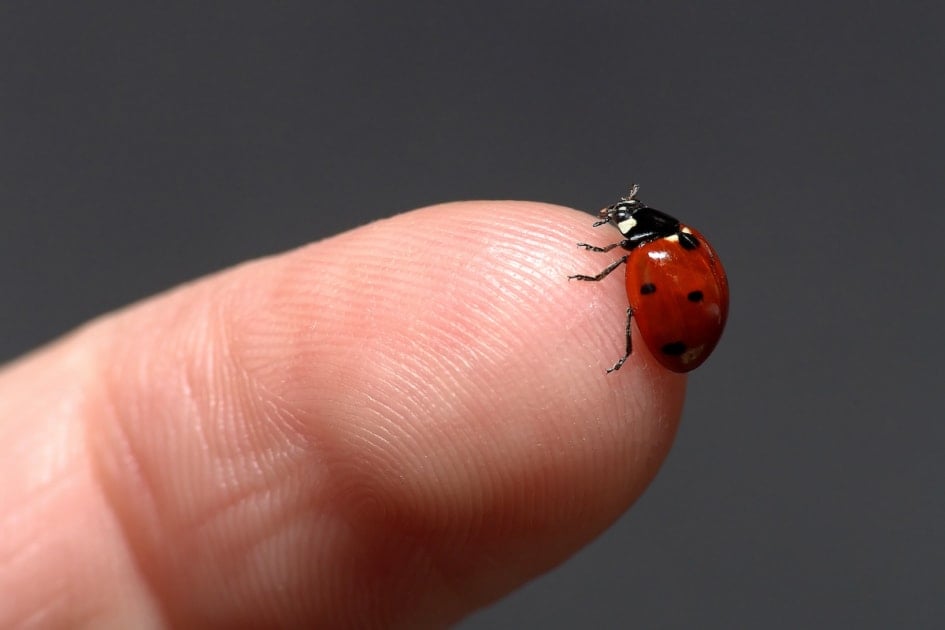
Quick Reference
- Why are there so many ladybugs: Most fall swarms in the U.S. are multicolored Asian lady beetles seeking warm overwintering sites, not native American ladybugs.
- Peak swarm window: Early October through mid-November, on the first warm afternoons that follow a cold night.
- Where they cluster: South and southwest-facing walls in sun, then any gap around a window, door, or soffit.
- Harsh winter sign? No. There is no scientific link between ladybug numbers and the coming winter forecast.
- Good or bad? Beneficial outdoors (they eat aphids, scale insects, and other soft-bodied pests), nuisance indoors (staining secretions, allergens).
- Quickest fix indoors: Vacuum, then seal entry points with caulk before next fall.
Is your house being invaded by ladybugs? From time to time, many readers write to us and ask: where do all the ladybugs come from? They seem to be everywhere in the fall. Are they a sign of a harsh winter to come? Are they bringing good luck? The short answer is that most of the beetles climbing your siding on a warm October afternoon are not the storybook American ladybug at all. They are Harmonia axyridis, the multicolored Asian lady beetle, doing exactly what they were bred to do: hunt aphids, then find a warm crack to ride out winter.
Why Are There So Many Ladybugs This Fall?
You may have heard the superstition that ladybugs bring good luck, but they do not seem to have any winter weather-predicting ability. There is no significance between the number of ladybugs you see and the upcoming winter forecast. Fall infestations of these beetles are more a sign of winter’s approach. As the temperatures begin to cool, these bugs love when a sunny day beckons to them to come out and soak up the rays. If it is a warm autumn day, you may see tons of ladybugs on the sunniest side of your house.
As the nights cool, the bugs gravitate to warm places during the day, soaking up the sun’s rays on your house. They will do anything or go anyplace for a bit of warmth. In fact, if there is a tiny opening around a window or door, they find their way in and seem to invite all of their relatives. Penn State Extension reports that the swarms usually start in early October, on the first sunny, warm afternoon that follows a cold night, and that the beetles target south or southwest-facing walls because they reflect the most heat.

Are Ladybugs a Sign of a Hard Winter?
Short answer: no. A heavy fall swarm tells you the autumn afternoon is warm and the beetle population had a good aphid year, not that a brutal winter is on the way. None of the trusted folk signs of a hard winter on our list of 20 signs of a hard winter ahead rely on ladybug counts. The folklore that does check out, the rhyme “When ladybugs swarm expect a day that is warm,” is a same-day forecast, not a seasonal one.
Bottom line, the ladybugs are getting the last bit of warmth and mean no harm. Ladybugs are friends of the garden. They feed on insect eggs, small worms, aphids, and other pests. They can, however, damage carpets and furniture with their secretions. And if your home is really infested, when they die they can be all over window sills throughout the house. Best way to get rid of them indoors? Vacuum. Outside, leave them alone, they are doing free work for your aphid problem and earning their keep as part of natural garden pest control.
Is It an Asian Lady Beetle or the American Ladybug?
Both look a lot alike and behave the same. There are a few ways to tell them apart, and the difference matters because almost every “ladybug invasion” story you read in October is really about the Asian species, not the native one.
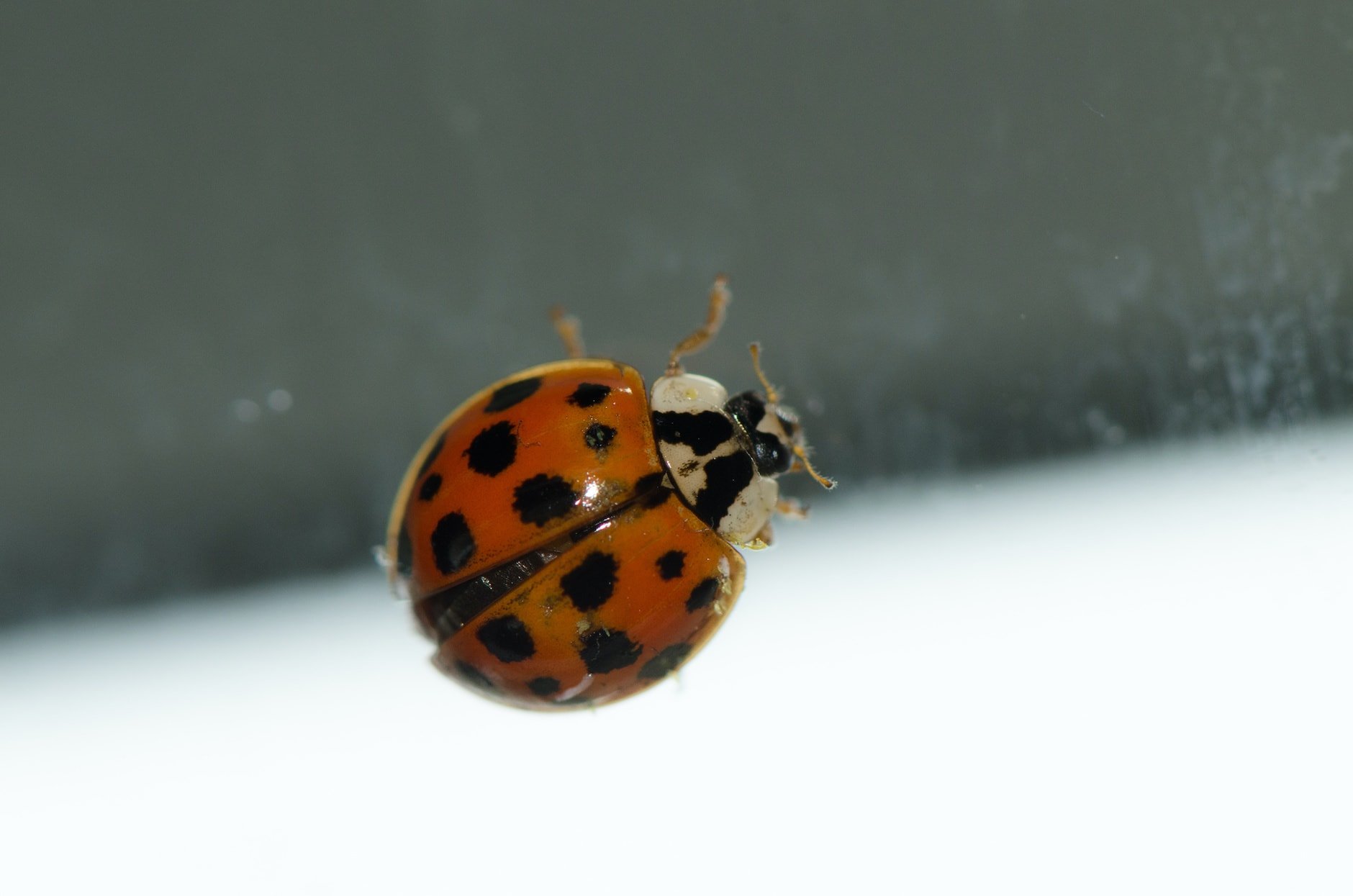
Asian Lady Beetle: Has a very distinctive white “W” shape on its pronotum, which is the area between the head and body. Their bodies are usually orange or yellowish with black spots, and the number of spots varies from none at all up to nineteen. Some sources describe the same marking as a black “M” when viewed from the other direction. Either way, it is the most reliable field mark.
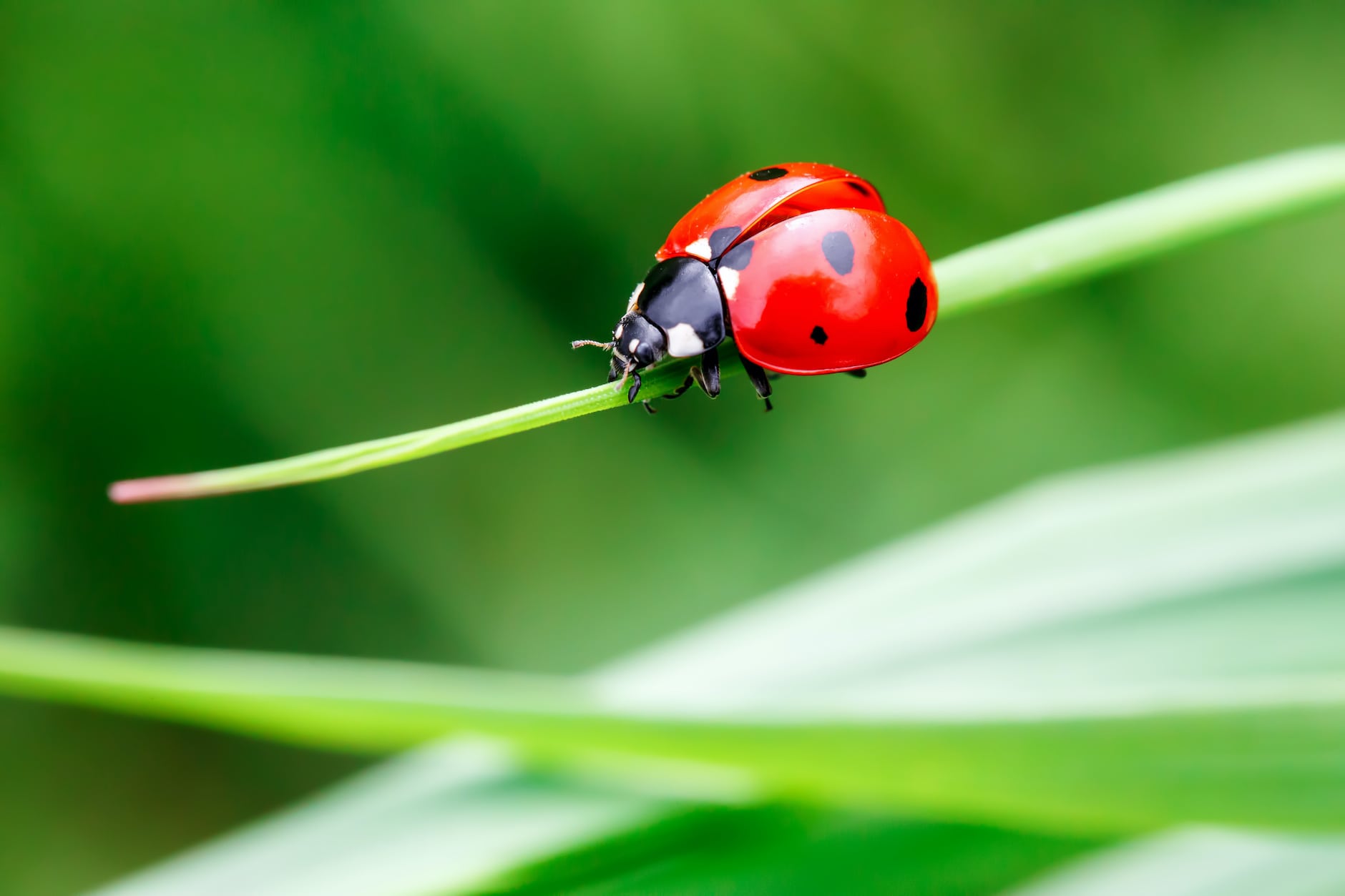
American Ladybug: Has a shiny black pronotum, the area between the head and body, with two tiny white circles. Bodies are a dark red with black spots, usually a clean and even seven on the common nine-spotted and convergent species native to North America. The American ladybug is the one folklore really refers to when it talks about good luck, and the one quietly losing ground to its Asian cousin.
Side-by-Side at a Glance
How the Asian Lady Beetle Got Here
The multicolored Asian lady beetle is not an accident. The U.S. Department of Agriculture introduced the species from eastern Asia as a biological control agent for aphids and scale insects on orchard and field crops. According to Penn State Extension, the first formal releases were in Pennsylvania in 1978 and 1981, with the first overwintering populations recorded in 1993. The USDA Agricultural Research Service notes that the species now occurs across most of the United States after a mix of intentional releases and accidental entries, with the first large feral populations spotted near the port of New Orleans in 1988.
The release worked, almost too well. Harmonia axyridis eats aphids on a scale our native ladybugs cannot match, which has been a quiet win for soybean, pecan, and apple growers. The price tag is the fall house-invader story you and your neighbors trade every October.
Regional Pattern: When Ladybug Swarms Arrive Across the U.S. and Canada
Two things to take from that table. First, the swarm always rides the same pattern, cold night followed by a warm afternoon, just shifted by latitude. Second, that the Asian lady beetle is now established from the Atlantic provinces clear across to British Columbia, not only in the Pennsylvania and Mid-Atlantic states where it was first released.
Practical Steps If Ladybugs Are in Your House
- Vacuum, do not swat. Crushed beetles release a yellow defensive fluid that stains drapes, paint, and upholstery. A vacuum with a clean bag or canister is the cleanest exit.
- Empty the canister outdoors. The smell is mild but real, and a few beetles inside a warm vacuum will crawl back out.
- Seal the entry points. Caulk gaps around windows, doors, soffits, attic vents, and utility pipes. Do this in late summer, before the first cold night, not in the middle of the swarm.
- Skip the pesticide spray indoors. Spraying inside walls leaves dead beetles that attract carpet beetles and dermestids, which are a worse pest than the ladybugs.
- Leave the outdoor ones alone. The same beetles that annoy you on a window screen are the ones quietly clearing aphids off your roses and tomatoes all summer.
- Check the south wall. If the beetles are concentrating on one side of the house, that is your warmest wall, and it is also the side most likely to need fresh caulk.
Ladybug Folklore, Honestly Sorted
- Good luck if one lands on you. Old European folklore, carried over to North America. Pleasant, harmless, no test of it has ever held up. Same family of belief as 11:11 good luck traditions.
- Count the spots to count the months until a wish comes true. Charming nursery folklore. Spot counts are genetic, not predictive.
- “When ladybugs swarm, expect a day that is warm.” This one is real, in a same-day way. The beetles only swarm on warm sunny afternoons, so if you see a swarm, today is warm. It does not tell you about tomorrow or about winter.
- A heavy fall swarm means a harsh winter. Folk belief, not borne out by entomology. Swarm size tracks summer aphid abundance and fall weather windows, not coming cold.

Frequently Asked Questions
Why are there so many ladybugs on my house this fall?
Almost certainly multicolored Asian lady beetles looking for an overwintering site. They cluster on the warmest wall, usually the south or southwest side, on the first sunny afternoon that follows a cold night. Once they find a gap, they crawl into wall voids and attics in groups that can number in the thousands.
Are ladybugs and Asian lady beetles the same thing?
No. The native American ladybug is dark red with seven black spots and a shiny black pronotum with two white dots. The Asian lady beetle is paler, orange to yellow, with anywhere from zero to nineteen spots and a white “W” (or black “M”) shape on its pronotum. They are close cousins but different species, with very different indoor behavior.
Do lots of ladybugs in fall mean a hard winter is coming?
No. Entomologists have not found any connection between fall ladybug numbers and winter severity. A big swarm tracks how many aphids the beetles ate over the summer and how many warm afternoons fall offers, not how cold January will be. For real cold-season tells, look at our list of 20 signs of a hard winter ahead.
How do I get rid of ladybugs in the house without staining everything?
Vacuum, do not crush or spray. A crushed beetle releases a yellow defensive fluid that stains paint, drapes, and upholstery. Use a vacuum with a clean canister or a sealed bag, then empty it outdoors well away from the house. Avoid indoor insecticide, dead beetles in wall voids draw a worse pest, the carpet beetle.
Are ladybugs good or bad for the garden?
Very good. Both the native ladybug and the Asian lady beetle feed on aphids, scale insects, mealybugs, mites, and the eggs of soft-bodied pests. A healthy ladybug population is one of the cheapest pest control crews you will ever have. The trouble starts only when they decide your siding is a winter cabin.
Where did the Asian lady beetle come from?
Eastern Asia. The USDA released the species in the United States as a biological control agent for crop aphids, with documented releases in Pennsylvania in 1978 and 1981. Overwintering populations were first recorded in 1993, and the first really large feral populations were spotted near the port of New Orleans in 1988.
Will sealing my house actually stop them?
Mostly, yes, if you do it before the swarm starts. Caulk gaps around windows, doors, soffits, and utility pipe entries by late summer. Add screens behind attic vents. The beetles are persistent, and any unsealed half-inch crack on a warm October wall is an open door.
Tell Us What You Are Seeing
Are the ladybugs back at your place this fall? Are they the deep-red American kind or the paler orange Asian ones? Drop a note in the comments below and tell us your region, your wall direction, and roughly when the first swarm showed up this year. The more readers chime in, the better picture we get of how the swarm is moving across the country.


This article was published by the Staff at FarmersAlmanac.com. Any questions? Contact us at [email protected].
- Farmers' Almanac Staff

- Farmers' Almanac Staff

- Farmers' Almanac Staff

- Farmers' Almanac Staff




Swarmed today. Several dozen arrived together on the warm south side of my home in Mattapoisett.
Lots of ladybugs appearing in my car esp around the drivers seat and windows with me
This is in the Connecticut area, USA
I only see ladybugs come in, in the spring. Not in the fall
Hello from Holland.Two decades or more ago I saw a documentary (BBC) that made clear that orange lady bugs hybernated in a weather station box with time laps camera that shows them getting covered with frost and after defrosting coming alive ! If winters would be colder then minus ten centigrade they’d hybernate elsewhere.They were better at forecasting then humans was the comment on their track record !
Why am I seeing lady bugs at the end of January 2024 in Southern Idaho..early spring?
I live in the deep south, the ladybugs that I am seeing are the gold/yellow ones with black dots. They’re pesky little devils, very persistant too! I don’t have an infestation of them, just see 3 or 4 around. They really came indoors since the temperature dropped into the teens, with the wind chill factor in the single digits at night. I hope they go away as soon as it warms back up. I have lived in this house for 37 years and only one time have I ever had this problem. This is my second time experiencing them in all the years I’ve lived here.
We just noticed a TON of Ladybugs all over the south side of our bright white home here in NC on 1st day of November 2022. I believe they are the Asian ladybugs. It’s kinda freaky. There are also a few wasps. And we’ve had a LOT of stink Bugs lately too.
Really not enjoying this many.
Have never minded (in fact love) ladybugs, but this is just kinda creepy.
We’re seeing the same in BC in Canada
I live in Kentucky and today is Oct 24th 2023 and there are a million lady bugs amd asian lady beetles along with stink bugs swarming the outside of my red brick, white house and of course getting in somehow. I bet there have been a thousand in my house today!!! I’m going nuts trying to get em out. Stink bugs not as many but they are around too of course and I will not vacuum them up yuck!
Hi Casey, I live in Connecticut and I have hundreds of the ladybugs out side of my house today Oct 25th 2023 and they are making their way into my inclosed porch. This may have something to do with winter.
Hi Casey, I live in Maryland and I see a lot of Ladybugs today (Oct 26) on the aluminum siding of my house. Unfortunately, I’m seeing quite a few stink bugs too.
They do tend to show up when it’s warm.
I have many flooding the south side of my house today in Central Southern Illinois!
So many of those Asian Lady beetles in our house. They showed up late summer and early fall. They are still popping up in our house this snowy winter.
I had flat card board box’s on my porch of my home. When I pulled them out they were hundreds of red and black spot lady bugs all together. I thought maybe they were breeding there