10 More Extreme Weather Events of the 21st Century: 2006-2022
Ten 21st-century US weather catastrophes from the 2006 heat wave to Hurricane Ian. Costs, casualties, and what each one taught us. Farmers' Almanac.
Quick Reference
- Costliest event: Hurricane Harvey (2017), $125 billion (2017 USD), tied with Katrina.
- Deadliest event: Hurricane Maria (2017), 3,059 deaths total with 2,975 in Puerto Rico.
- Largest tornado outbreak: Super Outbreak, April 25-28, 2011. 360 tornadoes confirmed across 21 states.
- Most lopsided rainfall: Cedar Bayou, Houston, 51.88 inches in under 48 hours during Harvey, a North American record.
- Sources: National Weather Service, National Hurricane Center, Environment Canada, and NOAA / NWS climate data.
In 2007, the Almanac published an article listing the Top 11 Most Memorable Weather Events, which evolved from two earlier extreme-weather pieces in 1999 and 2001. Now that we are nearly a quarter of the way into the 21st century, it was time to add ten more events that made national headlines this century. The previous list named one 21st-century blockbuster, Hurricane Katrina. Below are ten more, presented chronologically rather than by magnitude.
The list is purely subjective. Some readers will rightly wonder why an event they remember is missing — the January 2009 ice storm that hit Arkansas, Kentucky, and Missouri; the late-season March 2008 snowstorm that buried Ohio; or Hurricane Dorian in September 2019. So many events, so little space. We also did not include the brutally hot summer of 2023 because that heat was confined primarily to the nation’s midsection and Southwest; the Northeast US largely avoided it. Not so in 2006, when virtually all of the contiguous US and southern Canada saw long stretches of extreme heat. Perhaps we will return with another list as we approach the midpoint of the century.
10 More Extreme Weather Events
1) North American Heat Wave, July/August 2006
The Summer 2006 North American heat wave affected most of the United States and Canada, killing at least 225 people and bringing extreme heat to a remarkable spread of locations. From July 15 to July 22 very high temperatures spread across most of the US and Canada. On Monday, July 17, every state except Alaska, Minnesota, and North Dakota recorded temperatures of 90°F or greater. From July 23 to July 29 the abnormal heat concentrated on the West Coast and Southwest deserts. From July 29 to August 4 the heat wave moved eastward, with temperatures approaching 100°F in Rochester, NY on August 1 and a heat index there reaching 110°F. La Guardia Airport in New York recorded three consecutive days above 100°F. From August 4 to August 27, high temperatures persisted across the South and Southeast US.
2) The Super Outbreak of Tornadoes, April 2011
This was the largest, costliest, and one of the deadliest tornado outbreaks ever recorded. From April 25 to April 28, 2011, severe tornadoes ripped through the Southern, Midwestern, and Northeastern United States, leaving catastrophic destruction. Over 175 tornadoes struck Alabama, Mississippi, and Tennessee, the most severely damaged states. Other destructive tornadoes touched down in Arkansas, Georgia, Kentucky, Louisiana, New York, and Virginia, with storms also affecting other states across the South and East.
In total, 360 tornadoes were confirmed by NOAA’s National Weather Service (NWS) and Environment Canada in 21 states from Texas to New York into southern Canada. 348 people were killed: 324 tornado-related deaths across six states and 24 fatalities from other thunderstorm-related events such as straight-line winds, hail, flash flooding, or lightning. Total damages reached $10.2 billion, making the Super Outbreak the costliest tornado outbreak in US history.
3) Joplin, Missouri Tornado, May 22, 2011
If the Super Outbreak was not enough, less than a month later a large and devastating multiple-vortex tornado struck Joplin, Missouri on the evening of Sunday, May 22, 2011. This EF-5 tornado began just west of Joplin and intensified very quickly, reaching a maximum width of nearly one mile during its path through the southern part of the city.
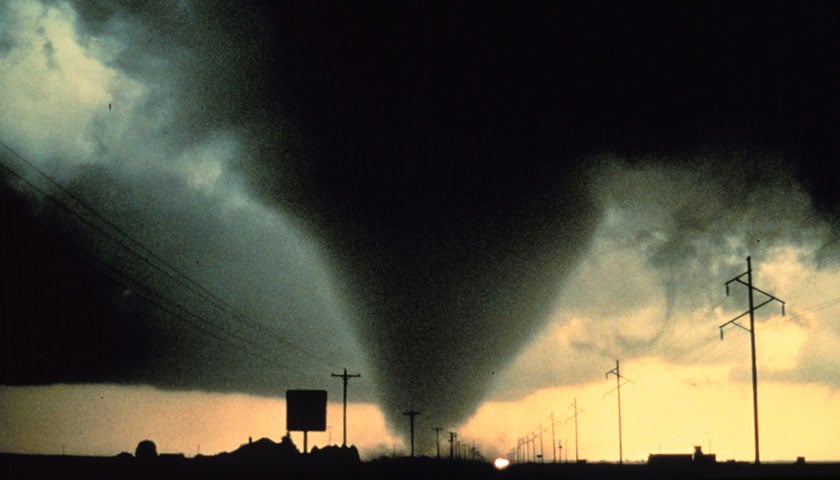
The tornado tracked eastward through Joplin, reaching peak speeds in excess of 200 m.p.h. and continuing across Interstate 44 into rural portions of Jasper and Newton counties before weakening and dissipating. The Joplin tornado claimed 161 lives, caused more than 1,300 injuries, and produced nearly $3 billion in damages. It is considered the costliest single tornado in United States history and one of the single deadliest US twisters since 1953.
4) Buffalo’s “Snow-vember,” November 17-19, 2014
This epic lake-effect event will be long remembered as one of the most significant winter events in Buffalo’s snowy history. Over 5 feet of snow fell over areas just east of Buffalo, with mere inches a few miles to the north. The storm caused 13 fatalities, hundreds of major roof collapses and structural failures, thousands of stranded motorists, and scattered food and gas shortages because of impassable roads. Trees gave way under the weight of the snow, causing isolated power outages.
While the first storm was impressive on its own, a second lake-effect event on November 19-20 dropped another 1 to 4 feet of snow over nearly the same area and compounded rescue and recovery efforts. Storm totals from the two events peaked at nearly 7 feet, with many areas buried under 3 to 4 feet of dense snowpack by the end of the event. Eight months after the storm, the snow’s remnants were still evident in Buffalo.
5) Hurricane Harvey, August 2017
This was a devastating Category 4 hurricane that made landfall in Texas and Louisiana in late August 2017, causing catastrophic flooding and more than 100 deaths. Harvey is tied with 2005’s Hurricane Katrina as the costliest tropical cyclone on record, inflicting $125 billion (2017 USD) in damage, primarily from rainfall-triggered flooding in the Houston Metropolitan Area and Southeast Texas.
On August 25th, Harvey made landfall along the Middle Texas Coast. Worse yet, once the storm moved inland, it stalled and meandered over South and Southeast Texas for many days. Harvey produced devastating winds (145 m.p.h. recorded at the Aransas County Airport in Rockport) and extremely heavy rainfall, with some areas receiving more than 40 inches of rain in less than 48 hours. Cedar Bayou in Houston received a storm total of 51.88 inches of rainfall, a new North American record.

6) Hurricane Maria, September 2017
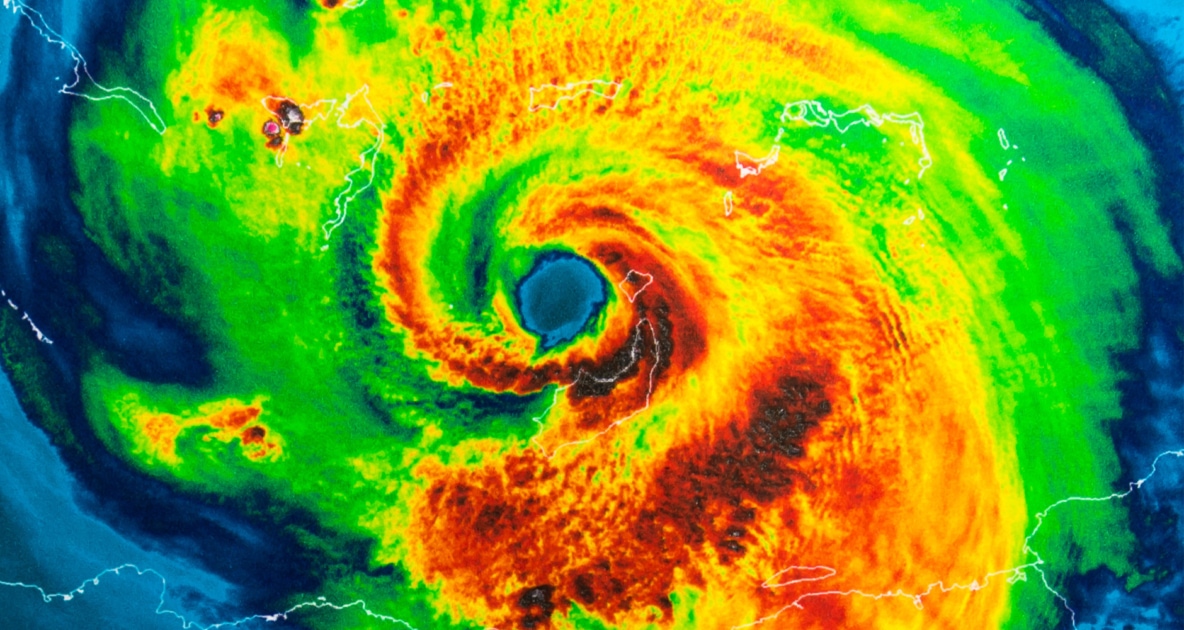
Maria devastated the northeastern Caribbean, particularly the US commonwealth of Puerto Rico, which accounted for 2,975 of the 3,059 total deaths. It is the bloodiest and costliest ($91.6 billion in 2017 USD) hurricane to strike the island of Puerto Rico, and the deadliest hurricane in terms of category strength to strike the country of Dominica and the US Virgin Island territory.
Based on observations from the Hurricane Hunters, Maria’s intensity was lowered from Category 5 status, with 175 m.p.h. winds just southeast of St. Croix, to a Category 4 hurricane with 155 m.p.h. winds south of Vieques. At approximately 6:15 a.m. AST, Maria made landfall in Yabucoa, Puerto Rico, as a strong Category 4 hurricane with maximum sustained winds of 155 m.p.h. As the center of the storm moved west-northwestward, widespread hurricane-force winds spread all over mainland Puerto Rico along with extremely heavy rainfall that produced major to catastrophic flooding and flash flooding, especially across the northern half of Puerto Rico.
7) North American Cold Wave, January/February 2019
In late January 2019, a severe cold wave hit the Midwestern United States and Eastern Canada, killing at least 22 people. It came after a winter storm brought up to 13 inches of snow in some regions from January 27-29 and ushered in the coldest temperatures in over 20 years to most locations in the affected region, including some all-time record lows. What made this frigid air mass dangerous-to-deadly was the addition of strong, gusty winds in excess of 40 m.p.h. Wind chills as cold as -60°F resulted.
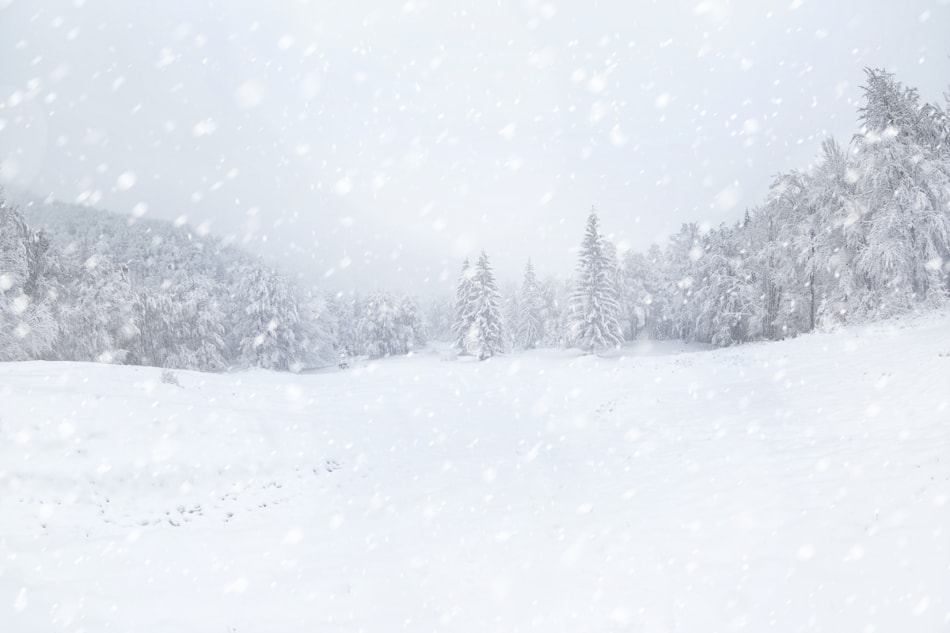
In early February, a concentration of Arctic air popularly referred to as the polar vortex moved west and locked over Western Canada and the Western United States. The setup reinforced the flow of frigid air and led to severely cold temperatures that canceled numerous flights, closed schools, and left dangerous conditions across much of the country. February 2019 ranked among the coldest and snowiest on record in many regions.
8) Texas Power Crisis, 2021
In mid-February 2021, a series of severe winter storms swept across the United States. The polar jet stream dipped particularly far south, stretching from Washington State to Texas and running back north along the East Coast, allowing a polar vortex to push very cold air across the country and spawning multiple storms along the jet stream track. The result was record low temperatures throughout Texas, with readings in Dallas, Austin, Houston, and San Antonio falling below ambient air temperatures recorded in Anchorage, Alaska. The state suffered a major power crisis as the frigid, stormy weather triggered the worst energy infrastructure failure in Texas state history, leading to shortages of water, food, and heat.
More than 4.5 million homes and businesses were left without power, some for several days. At least 246 people were killed directly or indirectly, with some estimates as high as 702 fatalities. Data showed that failure to winterize power sources, including wind turbines and natural gas infrastructure, had caused the grid failure.
9) Tornado Outbreak, December 10-11, 2021
A deadly late-season tornado outbreak, the deadliest on record in the month of December, produced catastrophic damage and numerous fatalities across portions of the Southern US and Ohio Valley from the evening of December 10 through the early morning of December 11, 2021. Severe storms swept through the American heartland, including an EF-4 tornado that carved a path stretching 165.7 miles across Kentucky.
Entire city blocks turned to rubble. Homes and businesses were left in shambles. The hardest-hit part of the state was western Kentucky in Graves County, where the tornado decimated the small town of Mayfield. The tornado brought 190 m.p.h. winds and damaged or destroyed more than 60 businesses in this town of just 10,000 people. Overall, the outbreak produced 57 fatalities and more than 515 injuries.
10) Hurricane Ian, September 2022
Ian was a deadly and extremely destructive Atlantic hurricane, the third-costliest weather disaster on record at $113 billion (2022 USD), and the deadliest hurricane to strike the state of Florida since the 1935 Labor Day hurricane, as well as the strongest hurricane to make landfall in Florida since Michael in 2018. Ian brought significant wind damage and flooding to western Cuba, central Florida, and North Carolina and South Carolina in late September and early October 2022.
Flash flooding generated by the storm’s relentless winds, rainfall, and coastal storm surges killed 161 people and produced widespread property damage along its path. Ian became a Category 5 hurricane briefly as it approached Florida, with maximum sustained winds peaking at 162 m.p.h. The winds slowed slightly to about 150 m.p.h. when it made landfall in Florida as a Category 4 hurricane, making it the fifth-strongest storm ever to strike the United States.
Patterns Across the Decade
Three patterns repeat. First, the costliest events on this list (Harvey, Maria, Ian) were all hurricanes whose damage came from water rather than wind — storm surge, inland rainfall, or flash flooding rather than the headline wind speed. Second, every single weather event on the list cascaded into infrastructure failure: levees in 2005 (Katrina, on the previous list), Texas power generation in 2021, structural roof collapses in Buffalo in 2014. Designing for the average storm is not enough; the once-a-decade event reveals what was actually built. Third, the cold-side events (the 2019 cold wave and the 2021 Texas crisis) involved the polar vortex spilling further south than usual.
For broader context on the cities most likely to be shut down by these patterns, see our 10 major US cities shut down by weather piece, and our 10 worst weather cities ranking for the year-round picture.
What to Plan For Now
The events on this list happened to specific places at specific times, and no single household can prepare for all ten. But the lessons travel. Keep a working generator (or an electric backup) in any region prone to ice or polar-vortex events. Know your evacuation route if you live anywhere on the Gulf Coast or the Atlantic seaboard. Watch the National Hurricane Center cone for at least two days’ lead time during a tropical event. The Farmers’ Almanac long-range forecast publishes seasonal outlooks for each US region so you can prepare your household before a season arrives.

Frequently Asked Questions
What was the costliest US weather event of the 21st century?
Hurricane Harvey in August 2017, tied with 2005’s Hurricane Katrina at $125 billion (2017 USD). Harvey’s damage was driven primarily by rainfall-triggered flooding in the Houston Metropolitan Area and Southeast Texas. Cedar Bayou in Houston received 51.88 inches of rain, a new North American record.
Which event killed the most people?
Hurricane Maria in September 2017, with 3,059 deaths total and 2,975 in the US commonwealth of Puerto Rico. Maria is the deadliest hurricane in terms of category strength to strike Dominica and the US Virgin Island territory, and the bloodiest hurricane to strike the island of Puerto Rico.
How many tornadoes formed in the 2011 Super Outbreak?
360 tornadoes were confirmed by NOAA’s National Weather Service and Environment Canada in 21 states, from Texas to New York into southern Canada, between April 25 and 28, 2011. The outbreak killed 348 people and produced $10.2 billion in damage.
What made the Joplin tornado so deadly?
The Joplin tornado on May 22, 2011 was an EF-5 with peak winds in excess of 200 m.p.h. and a maximum width of nearly one mile. It tracked through the southern part of the city, killing 161 people, injuring more than 1,300, and producing nearly $3 billion in damage. It is considered one of the single deadliest US twisters since 1953.
What caused the 2021 Texas Power Crisis?
A polar vortex carried unusually cold air into Texas in mid-February 2021. Temperatures in Dallas, Austin, Houston, and San Antonio fell below ambient air temperatures in Anchorage, Alaska. Wind turbines and natural gas infrastructure had not been winterized, and the resulting failure cut power to more than 4.5 million homes and businesses, with at least 246 deaths and some estimates as high as 702.
How does Hurricane Ian rank in US history?
Ian was the third-costliest weather disaster on record at $113 billion (2022 USD) and the fifth-strongest storm ever to strike the US. It was the deadliest hurricane to hit Florida since the 1935 Labor Day hurricane and the strongest in Florida since Hurricane Michael in 2018, killing 161 people across western Cuba, central Florida, and the Carolinas.
Why is Buffalo’s Snow-vember on the list?
Two back-to-back lake-effect events between November 17 and November 20, 2014 deposited up to 7 feet of snow on areas just east of Buffalo. The first storm killed 13 people and caused hundreds of roof collapses. The second storm dropped another 1 to 4 feet of snow on the same areas. Eight months later, remnants of the snow were still visible.


Caleb Weatherbee
Caleb Weatherbee is the official forecaster for the Farmers' Almanac. His name is actually a pseudonym that has been passed down through generations of Almanac prognosticators and has been used to conceal the true identity of the men and women behind our predictions.
- Caleb Weatherbee

- Caleb Weatherbee
- Caleb Weatherbee
- Caleb Weatherbee