What Is Baby Led Weaning? A Complete Guide for Parents
Quick Reference: Baby Led Weaning
- What it is: Baby led weaning (BLW) skips spoon-fed purees and starts your baby on soft finger foods they can self-feed.
- When to start: Around 6 months, once baby sits unsupported, holds their head up, has doubled birth weight, and shows interest in food.
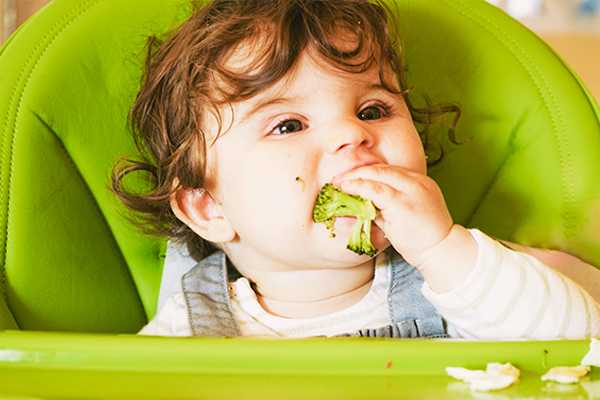
- Ideal first foods: Banana spears, avocado wedges, steamed sweet potato sticks, soft-cooked broccoli, scrambled egg, and shredded meats.
- Foods to avoid before age 1: Honey, cow’s milk as a drink, whole grapes, hard raw vegetables, whole nuts, and chewy proteins.
- AAP guidance: Breastmilk or formula stays the primary source of nutrition for the first 6 months and remains complementary through age 2 and beyond.
- Cut-size rule: Strips or sticks no smaller than baby’s own fist, not bite sized. Bigger is safer at this stage.
- Best Days tie-in: Use the Farmers’ Almanac Best Days for Weaning to plan the transition on a favorable moon-sign date.
Important: Farmers’ Almanac does not offer medical advice. This article is intended for educational purposes only. Always consult your child’s healthcare provider.
Baby led weaning (BLW) is an alternative approach to introducing solids to your baby. BLW skips the spoon feeding of baby cereals or purees and goes straight to finger foods that your baby can self-feed. Large chunks of squishy food are placed directly on the table or highchair tray for your baby to grab and gnaw on. It is called “baby led” because your baby can feed themselves at their own pace, putting them in control of how much they eat, allowing them to eat intuitively from the start. Here are the important tips, baby led weaning foods, and recipes.
RELATED: Best Days for Weaning and Potty Training
Baby led weaning has grown from a small British parenting movement into a mainstream approach recommended by pediatricians across the US and Canada. A 2024 review in the peer-reviewed journal Nutrients found that infants who followed a baby led weaning approach had comparable growth and iron status to spoon-fed infants, and no higher choking risk when parents followed safe-food guidelines. That is the plainest evidence yet that self-feeding is a reasonable option for families whose babies show developmental readiness.
Why Choose Baby Led Weaning?
- Developmental skills: Picking up food, getting it into their mouth, chewing, and swallowing are all age-appropriate actions that involve fine motor skills. In this way, baby led weaning may help children develop additional skills such as brushing their teeth, using scissors, and tying their shoes.
- Encourages independence and self-regulation: Baby led weaning encourages independence, while also allowing babies to gauge their own appetites, leading to self-regulation over time. Encouraging natural hunger and satiety cues may inspire a healthier relationship with food.
- Improves social interaction: With BLW, the baby becomes an active participant in family mealtime, where they can interact and watch others for appropriate mealtime role-modeling.
- Makes mealtime easier: When babies can independently feed themselves and explore their food, rather than being spoon-fed, it is easier to eat together as a family.
- Save time and money: When everyone in the house is eating the same food, you will save time and money. Commercially and homemade prepared purees for your baby take time and money. “Instead of buying or making specific foods to feed your baby, you’re preparing the same meal for the whole family, with modifications as needed for your newest eater,” explains pediatrician Kimberly Churbock, MD from the Cleveland Clinic.
- Food exposure: While pureed baby foods provide nutrition, they only offer one texture. Baby led weaning exposes your baby to various textures, more similar to what they will experience in the future.
Important: Farmers’ Almanac does not offer medical advice. This article is intended purely for educational purposes.
When To Start
As soon as your baby is ready to eat solid food, they can try baby led weaning. According to the American Association of Pediatrics (AAP), a baby is ready to start eating solids when:
- They can hold their head up well and begin to sit up unsupported.
- They have doubled in birth weight (typically around 4 to 6 months of age).
- They show interest in food (watching you eat, reaching for your food, opening their mouth when food comes nearby).
- When you feed them, they can move the food to the back of their mouth to swallow rather than spit it out.
Dr. Churbock highlights that “every baby is different. If your baby was born prematurely, you may see signs of readiness closer to their corrected age of 6 months, rather than their chronological age of 6 months.” Baby led weaning is about following your baby’s lead and watching for signs of developmental readiness. If you are concerned about your baby’s readiness, consult with your child’s healthcare provider.
Note: The AAP recommends that your baby should be provided breastmilk or formula exclusively for the first 6 months, and that it should continue to be your baby’s primary source of nutrition, along with complementary food, for at least two years and beyond.
Best Days for Weaning by the Moon
Farmers’ Almanac readers have used the moon-sign calendar to time weaning transitions for generations. The idea is old, gentle, and often comforting when the transition feels stressful: pick a day when the moon is in a “barren” sign (like Aries, Gemini, Leo, Virgo, or Sagittarius), then start the new routine. Our Best Days for Weaning feature does the sign-checking for you, and the full Best Days Calendar covers dozens of other planning tasks too.
This is a planning tool, not medical advice. It works because it gives parents a concrete date to aim for, a helpful psychological anchor when the transition feels open-ended. Pediatricians agree that consistency and a start date help. The Best Days calendar just gives you one that fits an older rhythm.


Baby Led Weaning Foods
When introducing solids to your baby, look for foods that are: nutritious (whole foods, rather than processed), easy to grasp with fingers, and room temperature. Be sure that it is soft or well-cooked and cut into sticks or strips that are no smaller than their fist, not bite sized.
At first, they will grasp with their fists and smash it into their mouths, however over time they will grasp with their thumb and forefinger.
Ideal baby led weaning foods:
- Bananas, avocados, kiwi, strawberries, and applesauce.
- Soft steamed apple or pear slices, skin removed.
- Cooked vegetables, such as strips of sweet potatoes, carrots, squash, broccoli, and cauliflower.
- Ground, soft, or shredded meats and fish, yogurt, scrambled eggs, and cheese.
- Overcooked pasta.
- Oatmeal, yogurt, and applesauce.
Avoid round fruits that are not cut, such as grapes; hard or raw vegetables; tough or chewy proteins; other milk besides human or formula and juices; and honey until the baby is 1 year old.
Baby Led Weaning vs Traditional Spoon Feeding
A common question at 5 or 6 months is whether to spoon-feed purees or start straight in on self-feeding. Both approaches deliver nutrition safely when done well. This table sums up the real practical differences, so you can decide what suits your kitchen and your baby.
Helpful Tips
There is no “right way” to introduce solid foods to your baby. Baby led weaning, purees, or a combination of both are all perfectly acceptable ways to begin solids. Do whatever you and your baby are comfortable with. If you want to experiment with baby led weaning, you do not have to ditch the purees. Try handing your baby a spoonful of puree and let them work on moving it to their mouth independently.
- Use a highchair that allows them to sit up straight. Good posture allows them to have better control over their arms and hands.
- Introduce water in a training cup when you introduce solids.
- Introduce a new food every few days to check for possible sensitivities or food allergens. Pediatricians recommend exposing potential allergens, such as dairy, eggs, and nut butter, early. (Avoid giving whole nuts due to risk of choking.)
- When baby is hungry, provide a bottle or nurse before offering solid food to avoid frustration.
- Dr. Churbock says to “embrace and expect some mess. Self-feeding is a great sensory experience for babies, but it is not without some trial and error.” Place a mat under your baby’s chair or use a large bib or smock for easier cleanup.
- Do not panic if your baby gags. The gag reflex is different than choking and is generally a sign that baby is learning to move the food around their mouth, a skill they will need to acquire to eat solids.
- Try rolling slippery foods that are hard to grip in something like baby cereal, ground flax, or ground almonds.
Safe-Food Rules and Choking-Hazard Checklist
Every family that starts baby led weaning worries first about choking. The safe-food rules below come from the AAP and the peer-reviewed literature. Follow them and BLW carries about the same choking risk as spoon feeding, according to the 2024 Nutrients review linked above.
- Cut soft foods into strips longer than baby’s fist. Not bite-sized.
- Cook until squishable between your thumb and forefinger.
- Never leave baby unattended while eating.
- Seat baby upright in a supportive high chair, feet supported if possible.
- Avoid: whole grapes, cherry tomatoes, whole nuts, popcorn, hot dog rounds, chunks of meat, hard raw carrot or apple, honey (before age 1), cow’s milk as a drink (before age 1).
- Learn the difference between gagging (loud, red-faced, effective) and choking (silent, blue-tinged, ineffective). Take an infant CPR class before you start solids.
Baby Led Weaning Recipes
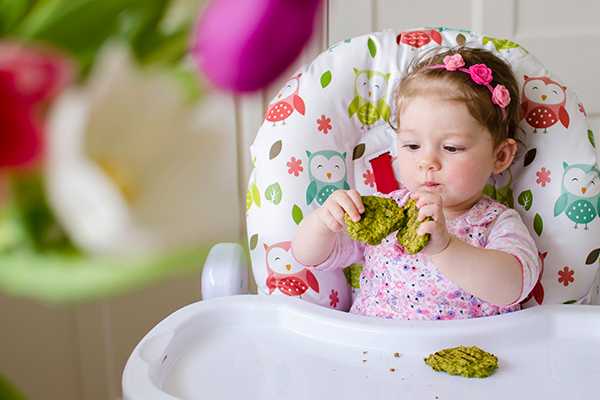
Here are a handful of baby led weaning recipes to try:
A Week-by-Week Sample Menu
A rough plan helps you get started without overthinking every meal. This is a sample only. Adapt to your baby’s cues, your family’s schedule, and your pediatrician’s guidance.
- Week 1: One meal a day. Soft banana spear, ripe avocado wedge, or a strip of steamed sweet potato. Watch for interest and readiness cues.
- Week 2: Add a second meal a day. Introduce well-cooked broccoli florets and soft steamed pear.
- Week 3: Introduce a protein: scrambled egg strips, shredded chicken, or soft flaked fish.
- Week 4 and beyond: Three modified family meals a day, plus breastmilk or formula on demand. Rotate colors and textures. For seasonal produce ideas, our planting calendar shows what is fresh in your region each month.
Baby Led Weaning FAQ
What is baby led weaning in one sentence?
Baby led weaning is an approach to starting solids in which your baby self-feeds soft finger foods from around 6 months of age, skipping the purees and spoon-feeding stage entirely.
When should I start baby led weaning?
Around 6 months, once your baby can sit unsupported, holds their head up, has doubled their birth weight, and shows clear interest in food. Premature babies may reach these milestones closer to their corrected age rather than their chronological age.
Is baby led weaning safe? Isn’t it a choking hazard?
Peer-reviewed research including the 2024 Nutrients review found no higher choking risk when parents follow standard safe-food rules: cut soft foods into strips longer than the baby’s fist, cook until squishable, seat baby upright, and never leave them unattended. Gagging looks alarming but is a normal part of learning to eat.
Can I combine baby led weaning with purees?
Yes. Many families use a combined approach. You can offer purees on a preloaded spoon while also putting finger foods on the tray. Dr. Kimberly Churbock of the Cleveland Clinic notes there is no single right way to start solids. Do what works for your baby and your kitchen.
What foods should I avoid before age 1?
Honey (risk of infant botulism), cow’s milk as a drink (breastmilk or formula only), whole grapes and cherry tomatoes, whole nuts, popcorn, hot dog rounds, hard raw vegetables like carrots and apples, and any tough or chewy protein. Cook and cut everything to squishable strips.
How much should my baby eat during baby led weaning?
At first, very little. Breastmilk or formula remains the primary source of nutrition through 12 months. The AAP recommends breastmilk continue as a complementary food for at least two years and beyond. Baby led weaning is about exposure to textures and self-feeding practice, not calorie targets.
Do I need special equipment for baby led weaning?
Not really. You need an upright high chair with foot support, a large bib or full-sleeve smock, a splash mat under the chair, and a training cup for water. A silicone place mat that sticks to the tray helps with mess but is optional.
How do I know if my baby is gagging or choking?
Gagging is loud, red-faced, and effective at moving food back to the front of the mouth. Choking is silent, blue-tinged, and the baby cannot cough or make sound. If in doubt, act as if it is choking and begin infant back blows and chest thrusts. Take an infant CPR course before you start solids. If your baby is turning blue, call 911.
Join The Discussion
Have you tried baby led weaning, or do you know someone who has?
What are your favorite baby led weaning foods?
Do you have any baby led weaning recipes to share?
Tell us in the comments!


Natalie LaVolpe
Natalie LaVolpe is a freelance writer and former special education teacher. She is dedicated to healthy living through body and mind. She currently resides on Long Island, New York, with her husband, children, and dog.

This article was published by the Staff at FarmersAlmanac.com. Any questions? Contact us at [email protected].
-
Farmers' Almanac Staff

-
Farmers' Almanac Staff

-
Farmers' Almanac Staff

-
Farmers' Almanac Staff