Planetary Parade: The March 2026 Parade of Planets
Quick Reference: The March 3, 2026 Planetary Parade
- What it was: a stretch of early March 2026 evenings when as many as six planets gathered along the same sweep of sky.
- The planets: Mercury, Venus, Saturn, Jupiter, Uranus, and Neptune.
- Naked-eye headliners: Venus, Jupiter, and Saturn, with Mercury low and fleeting in the twilight.
- Binocular bonus: Uranus and Neptune, faint and best from a dark spot.
- When folks looked: about 30 minutes after sunset, scanning low in the west to southwest.
- The double feature: a total lunar eclipse, or “Blood Moon,” ran overnight March 2 to 3.
For a few evenings in early March 2026, the night sky put on a show that skywatchers had circled on their calendars for weeks. Folks called it a “planetary parade,” a stretch of nights when several planets gathered in the same general sweep of sky along the ecliptic, the path the Sun traces. From a clear, dark spot, you could catch several planets in one sitting, with a couple of faint worlds waiting for binoculars. Whether or not you stepped outside that week, the event is a fine excuse to understand what a parade of planets really is and how to be ready when the next one rolls around.
What Is a Planetary Parade (Parade of Planets)?
A “planetary parade,” sometimes called a “parade of planets,” is simply a night when several planets appear bunched along the same line of sky at the same time. It is not a rare cosmic accident, and the planets are not truly lining up in space. The name does a lot of friendly exaggeration. The real reason is geometry, and once you understand it, the whole thing makes plain sense.
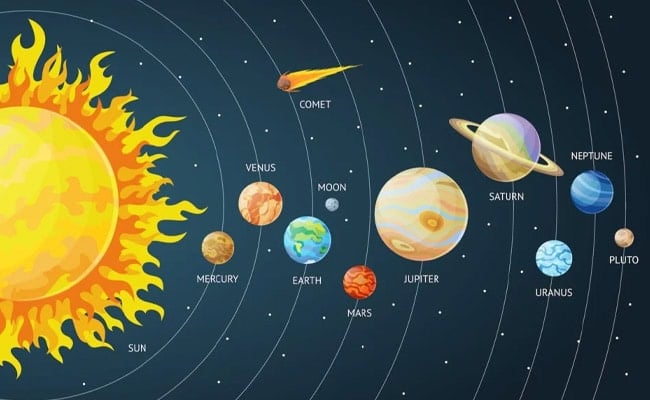
The planets all orbit the Sun in nearly the same flat plane, like marbles rolling around the rim of a wide, shallow bowl. From our seat here on Earth, that shared plane shows up in the sky as a single gentle arc called the ecliptic. The Sun, the Moon, and the planets all travel along it. So when a few planets happen to sit on the same side of their orbits at once, we see them strung out along that arc on the same evening. They look like neighbors, even though millions of miles separate them. NASA keeps a plain-English rundown of the planets and how they move in its solar system guide if you want the full picture.
Because each planet moves at its own pace, these groupings come and go on their own schedule. Some years bring a tidy cluster of two or three bright planets. Other years, like the early March 2026 stretch, line up as many as six along the same sweep of sky at once. Think of it like a parade with floats: a few are loud and obvious, and a couple are subtle, there if you know where to look.
The March 2026 Parade: As Many as Six Planets
Despite the fun name, the planets were not actually lining up in space that week. They were spread out along their orbits, but from Earth’s point of view they appeared grouped along the same sky highway. That happens because the planets orbit in nearly the same plane, so we see them track along a similar line.
In late February into early March 2026, as many as six planets were part of the show: Mercury, Venus, Saturn, Jupiter, Uranus, and Neptune. Two of those were definitely a binocular or telescope situation.
What People Could See on March 3
On a clear evening, from most of North America, the naked-eye lineup looked like this:
- Venus, the headliner. Brilliant, unmistakable, and low in the western sky after sunset.
- Jupiter, bright and higher up than Venus, usually the second-easiest to pick out.
- Saturn, visible in the same general evening window, but fainter than Jupiter and Venus.
- Mercury, the trickiest naked-eye planet here: low, fleeting, and easy to lose in twilight.
And for anyone with optics, even basic binoculars, two more worlds joined in:
- Uranus, faint, best with binoculars from a darker location.
- Neptune, even fainter, with binoculars or a small telescope strongly recommended.
That mix of brilliant and barely-there is normal for a parade. Some worlds shout, and others only whisper. If you want a feel for how planets read differently than the fixed stars and patterns around them, our look at why the constellations do not look like anything is a friendly companion read.
When People Looked
The sweet spot was usually shortly after sunset, once the sky darkened a bit, but before the lowest planets sank out of view. The same rule of thumb works for any evening parade:
- Step outside about 30 minutes after sunset.
- Give your eyes 10 to 15 minutes to adjust, and ditch bright phone screens if you can.
- Start scanning low in the west to southwest.
Where People Looked (and How to Find the Line)
- Pick a spot with a clear western horizon, a hilltop, an open field, a lakeshore, anywhere the trees and buildings do not block the view.
- The planets appear along a gentle arc, not a perfectly straight line.
- Start with Venus, then work outward. Once you have got the brightest anchor, the rest become easier.

Make It a Farmers’ Almanac Kind of Evening: Simple, Practical Tips
These tips served stargazers well for the March 2026 parade, and they hold up for any night you head outside to look up:
- Go darker if you can. Even a short drive away from bright streetlights helps.
- Bring binoculars. They are the best bang for your buck tool for casual planet hunting.
- Use a stargazing app set to night mode or a red screen if available. It can confirm what you are seeing, especially Saturn versus a bright star.
- Dress warmer than you think. Standing still under the sky cools you down fast.
- Do not expect six bright pearls. Some planets were subtle, and Mercury can be a blink-and-you-miss-it challenge.
A Little Extra Magic: March 2 to 3 Also Featured a Lunar Eclipse
For anyone who wanted to turn the evening into a full celestial double feature, there was also a total lunar eclipse overnight March 2 to 3, often called a “Blood Moon” because of its coppery-red color at peak. If skies cooperated, you could catch the planets in the evening and the eclipse later at night, which made it one of those rare dates that felt like it came straight out of an old skywatching calendar. If you like to track the Moon through its phases and the year’s eclipses, our full Moon dates and times page is a handy bookmark.
How to Catch the Next One
The good news about a parade of planets is that it is never truly a one-time event. Because the planets keep circling the Sun on their own clocks, groupings of two, three, or more worlds along the ecliptic come around again and again. Some are modest, with a couple of bright planets close together. Others, like the early March 2026 stretch, gather a fuller crowd. There is no need to chase a single date. The habit of looking up is what pays off.
Here is how to be ready when the next one comes:
- Watch the western sky after sunset. Most evening parades show up low in the west to southwest, the same window where the March 2026 planets gathered. Get in the habit of a glance outside on clear nights.
- Learn the bright anchors. Venus and Jupiter are the two easiest planets to spot, and once you can pick them out, the fainter worlds nearby are easier to find.
- Keep binoculars by the door. They turn a two-planet night into a four- or five-planet night.
- Follow the Moon and the sky calendar. Eclipses, full Moons, and planet groupings often cluster, so a calendar habit catches more than one event at a time.
Keep an eye on the Farmers’ Almanac sky and stargazing pages for the next round of alignments, and let the weather, not a fixed date, set your plans. A clear night and a clear horizon are most of the battle. Even if you spend a lot of time looking down at the garden, our Gardening by the Moon Calendar is one more reason to keep an eye on the sky as the seasons turn.
Final Thought: The Best Part Is That It Is Free
No tickets, no special gear required, just a clear horizon and a few minutes outside. Whether you caught two planets that March or all the way up to six with optics, the real win is the perspective shift, the reminder that the night sky is always doing something, even when we are too busy to notice. The same holds true for the next parade, and the one after that.

Planetary Parade: Frequently Asked Questions
What is a planetary parade?
A planetary parade, also called a parade of planets, is a night when several planets appear strung along the same sweep of sky at the same time. They are not lining up in space. Because the planets orbit the Sun in nearly the same flat plane, we see them track along a single arc called the ecliptic, so a few can appear grouped together from our point of view.
Which planets were in the March 2026 planetary parade?
As many as six planets were part of the early March 2026 show: Mercury, Venus, Saturn, Jupiter, Uranus, and Neptune. Venus, Jupiter, and Saturn were visible to the naked eye, with Mercury low and fleeting in the twilight. Uranus and Neptune were faint and best seen with binoculars or a small telescope.
When and where did people look on March 3, 2026?
The best window was about 30 minutes after sunset, once the sky darkened but before the lowest planets sank out of view. Skywatchers gave their eyes 10 to 15 minutes to adjust, then scanned low in the west to southwest along a gentle arc. Venus was the easiest anchor to find first.
Was there really a lunar eclipse during the March 2026 parade?
Yes. A total lunar eclipse, often called a “Blood Moon” for its coppery-red color at peak, ran overnight March 2 to 3, 2026. If skies cooperated, you could see the planets in the evening and the eclipse later at night, a rare celestial double feature on the same date.
Are planetary parades rare, and how do I catch the next one?
They are not truly rare. Because each planet moves at its own pace, groupings of two, three, or more worlds along the ecliptic come around again and again. To catch the next one, watch the western sky after sunset on clear nights, learn the bright anchors Venus and Jupiter, keep binoculars handy, and follow a sky calendar so you do not miss the bigger gatherings.
Do I need a telescope to see a planetary parade?
No. The brightest planets, like Venus and Jupiter, are easy to see with the naked eye from a spot with a clear western horizon. Binoculars help with fainter worlds such as Uranus and Neptune, and a small telescope adds detail, but the main event needs nothing more than a clear sky and a few minutes outside.

- Tim Konrad

- Tim Konrad
- Tim Konrad
- Tim Konrad