First Frost Dates 2026: When Should You Expect the First Frost of Fall?
When will the first frost arrive where you live? See our 2026 regional first-frost guide, average frost dates, and what gardeners should protect before temperatures fall.

From the northern Rockies in September to the Gulf Coast in late November, the first frost of fall arrives on a very different schedule depending on where you live. Here’s when you can typically expect the first frost—and what gardeners should do before it arrives.
For gardeners, farmers, and anyone who keeps an eye on the changing seasons, the first frost of fall is one of the surest signs that colder weather is taking hold.
In parts of Alaska, the northern Rockies, and high-elevation areas of the West, freezing temperatures can arrive before September is even over. Across much of the Midwest and Northeast, October is the key month. Farther south, the first freeze may hold off until November or December—or may hardly occur at all.
So, when is the first frost in 2026 where you live?
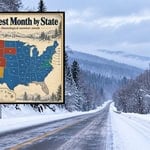
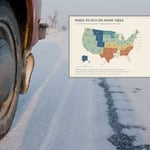
The map above provides a broad regional guide based on historical first-frost and first-freeze patterns. For a more precise estimate, use our Farmers’ Almanac Average First Frost Dates by City, which includes hundreds of locations across the United States.

What Is the “First Frost”?
The terms frost and freeze are often used interchangeably, but they are not exactly the same thing.
A freeze occurs when the measured air temperature falls to 32°F or lower. NOAA’s National Centers for Environmental Information uses the 1991–2020 U.S. Climate Normals to estimate when the first widespread fall freeze usually occurs across the country.
Frost, on the other hand, refers to ice crystals forming on surfaces such as grass, leaves, and car windshields. Frost can sometimes appear even when the official air temperature is several degrees above 32°F because temperatures right at ground level can be colder than readings taken several feet above the ground. The National Weather Service notes that this is why frost may develop on clear, calm nights with official temperatures in the mid-30s.
For gardening purposes, Farmers’ Almanac traditionally uses average light-frost dates, generally associated with temperatures around 29°F to 32°F. These dates are based on the 1991–2020 U.S. Climate Normals.
Frost and Freeze Temperatures
As a general rule:
- Frost conditions: Frost may form with reported air temperatures around 33°F–36°F under clear, calm conditions.
- Light freeze: 29°F–32°F. Tender vegetation can be damaged or killed.
- Moderate freeze: 25°F–28°F. Many garden plants can suffer significant damage.
- Hard or severe freeze: Around 24°F or colder. Most unprotected tender vegetation is likely to be killed.
The National Weather Service generally issues a Freeze Warning when temperatures of 32°F or below are expected during the locally defined growing season.
First Frost Dates 2026: A Regional Guide
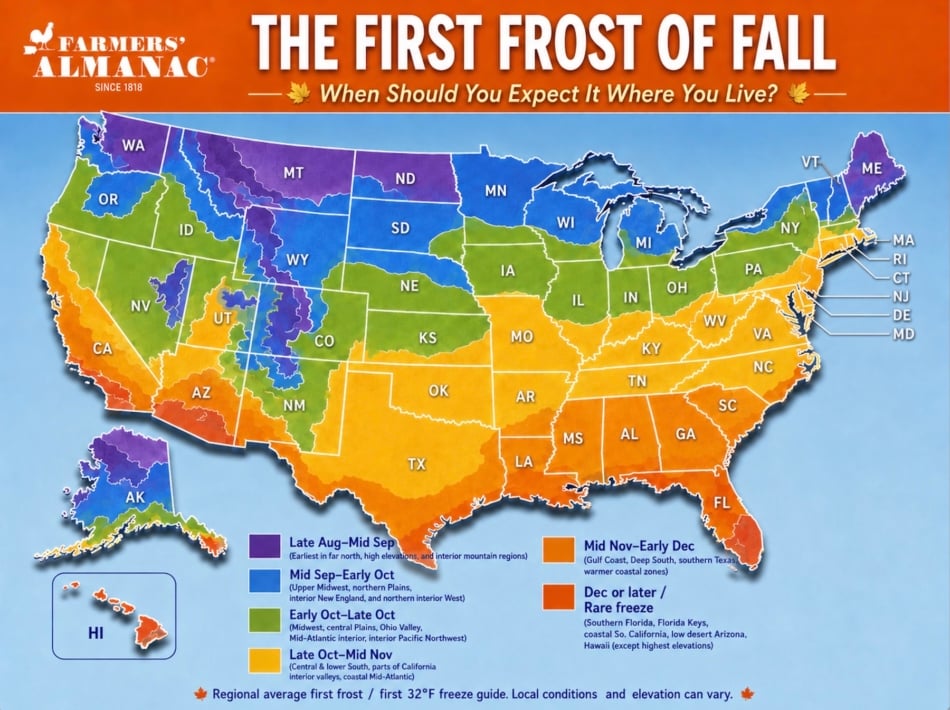
These are average ranges, not predictions for a particular night in 2026. Your actual first frost could arrive earlier or later depending on weather patterns, elevation, proximity to water, and even where your garden sits in the landscape.
Wondering what this winter looks like after the frost arrives? See the Farmers’ Almanac 2026–2027 Winter Weather Forecast for the zone-by-zone outlook.
Only
$13.99
Per Year
See the next 12 months of this calendar
Become a Farmer’s Almanac member and get access to all the Farmer’s Almanac 1818 information.
Long-Range Gardening Calendar
Weather Forecasts (US & Canada)
Moon Phases
Best Days Calendar
Zodiac Calendar
Cancel any time
Late August Through Mid-September
Most likely areas:
Far northern locations, high elevations, Alaska, and parts of the interior Mountain West.
Some of the coldest parts of the country can see freezing temperatures remarkably early. NOAA notes that portions of the high mountains and far northern United States can experience their first freeze before August 31.
Examples from Farmers’ Almanac climate-normal data include:
- Nome, Alaska: around August 26
- Fairbanks, Alaska: around September 4
- Ely, Nevada: around September 7
- Baker, Oregon: around September 9
- Idaho Falls, Idaho: around September 12
- Bozeman, Montana: around September 16
- Lake Placid, New York: around September 16
Gardeners in high mountain valleys should pay especially close attention. Elevation can make frost arrive much earlier than it does in nearby lower terrain.
Mid-September Through Early October
Most likely areas:
Northern Plains, northern Rockies, Upper Midwest, northern New England, and colder interior portions of the West.
By late September, frost becomes increasingly common across states such as North Dakota, Montana, Minnesota, Wyoming, Idaho, and northern New England.
Typical first-frost dates include:
- Bismarck, North Dakota: about September 23
- Great Falls, Montana: about September 25
- Duluth, Minnesota: about September 26
- Concord, New Hampshire: about September 29
- Bangor, Maine: about September 30
- Billings, Montana: about October 1
This is also when gardeners across northern growing zones should be prepared to harvest or protect tomatoes, peppers, basil, cucumbers, beans, squash, and other frost-sensitive plants.
Early October Through Late October
Most likely areas:
Much of the Midwest, central Plains, Great Lakes, Ohio Valley, interior Northeast, higher portions of the Mid-Atlantic, and much of the interior Pacific Northwest.
October is the heart of first-frost season for a large portion of the United States.
Examples include:
- Denver, Colorado: about October 6
- Cedar Rapids, Iowa: about October 7
- Albany, New York: about October 9
- Omaha, Nebraska: about October 12
- Des Moines, Iowa: about October 14
- Indianapolis, Indiana: about October 21
- Columbus, Ohio: about October 22
- Pittsburgh, Pennsylvania: about October 22
Even within the same state, first-frost dates can differ by several weeks. Lake influence, elevation, city heat, and terrain all matter.
Late October Through Mid-November
Most likely areas:
Lower Midwest, Mid-Atlantic, much of the central and upper South, parts of California, and milder coastal locations.
By Halloween, colder nights begin reaching considerably farther south.
Typical dates include:
- Charlotte, North Carolina: about October 30
- Raleigh-Durham, North Carolina: about October 31
- Dover, Delaware: about October 31
- Birmingham, Alabama: about November 3
- Philadelphia, Pennsylvania: about November 5
- Washington, D.C.: about November 12
- Atlanta, Georgia: about November 13
- New York City: about November 14
Coastal locations often remain frost-free longer than nearby inland areas because large bodies of water cool more slowly in autumn.
Mid-November Through Early December
Most likely areas:
Deep South, Gulf Coast, southern Texas, warmer desert regions, and some mild coastal areas of the West.
Across much of the South, the growing season can continue well into November.
Examples include:
- Shreveport, Louisiana: about November 11
- Baton Rouge, Louisiana: about November 17
- Savannah, Georgia: about November 21
- Mobile, Alabama: about November 28
- Las Vegas, Nevada: about November 28
- Tucson, Arizona: about November 30
- Fresno, California: about December 6
- Sacramento, California: about December 7
December or Later—and Places Where Frost Is Rare
Parts of southern Florida, the Florida Keys, coastal Southern California, low desert Arizona, and Hawaii can remain frost-free for much or all of the year.
Even there, however, unusual cold snaps are possible.
Farmers’ Almanac climate-normal data puts the average first fall frost around:
- Phoenix, Arizona: December 30
- Orlando, Florida: approximately January 1
- Tampa, Florida: approximately January 3
Higher elevations in Hawaii can occasionally approach or fall below freezing, while freezing temperatures are exceptionally rare near sea level.
Your First Frost Date Is an Average—Not a Deadline
This is perhaps the most important thing to remember.
An average first frost date does not mean frost will occur on that exact date every year.
The dates in the Farmers’ Almanac frost tables are based on historical climate data. Our chart uses a probability level under which frost can still occur either before or after the listed date.
In other words, if your average first frost is October 15, don’t assume your tomatoes are guaranteed to be safe until October 14.
An early Canadian cold front, a clear calm night, or a particularly chilly air mass can move frost season ahead of schedule.
Likewise, an unusually warm autumn can delay the first freeze for weeks.
Why Your Neighbor May Get Frost When You Don’t
Frost can be surprisingly local.
Two gardens only a mile apart can experience different temperatures because of:
Elevation
Higher elevations are generally colder, which is why mountain communities often have much earlier frost dates than nearby valleys.
Low-Lying Areas
Cold air is heavier than warm air and tends to settle into valleys, hollows, and depressions. These areas are often called frost pockets.
Cities
Concrete, pavement, buildings, and other structures store daytime heat and release it slowly overnight. This urban heat island effect can help cities remain frost-free longer than nearby rural communities.
Lakes and Oceans
Water changes temperature more slowly than land. Coastal locations and areas near the Great Lakes may experience later fall freezes than inland locations at the same latitude.
Clouds and Wind
Clear, calm nights are especially favorable for frost because heat escapes rapidly from the ground.
A cloudy night can sometimes stay warmer because clouds help trap outgoing heat.
What Plants Need Protection From the First Frost?
Tender warm-season plants can suffer serious damage even from a light freeze.
Protect or Harvest These Before Frost
- Tomatoes
- Peppers
- Basil
- Cucumbers
- Beans
- Summer squash
- Melons
- Tender annual flowers
If frost is in the forecast, harvest ripe vegetables and bring container plants indoors when practical.
For plants that need to remain outside, see our complete guide to protecting outdoor plants from frost and freezing temperatures.
Plants That Can Handle a Light Frost
Not everything in the garden needs to come inside.
Cool-season vegetables are considerably tougher, including:
- Kale
- Spinach
- Lettuce
- Carrots
- Beets
- Broccoli
- Cabbage
- Brussels sprouts
- Parsnips
- Leeks
Some vegetables—particularly kale, carrots, parsnips, and other cool-season crops—may even taste sweeter after exposure to cold weather.
If you’re still planting, our guide to planting a fall vegetable garden explains how to count backward from your first-frost date when choosing crops.
You can also consult the Farmers’ Almanac Planting Calendar for seasonal gardening dates and traditional Gardening by the Moon guidance.
What To Do When Frost Is Forecast
When your local forecast finally shows temperatures dipping into the mid-30s, it is time to pay attention.
A few simple precautions can extend the growing season:
Cover tender plants before sunset. Old sheets, frost cloth, blankets, or other breathable coverings can help hold warmth from the soil around the plant.
Water the soil earlier in the day. Moist soil can retain and release more heat overnight than very dry soil.
Move containers indoors. Potted plants cool faster than plants rooted in the ground.
Harvest tender vegetables. Pick tomatoes, peppers, cucumbers, beans, and squash before a freeze.
Watch low spots in the yard. Frost may develop there even when your porch thermometer remains above freezing.
And always check your local National Weather Service forecast when cold weather approaches. A Frost Advisory indicates that frost may damage sensitive vegetation, while a Freeze Warning generally means temperatures of 32°F or colder are expected during the growing season.
When Does Fall Officially Begin in 2026?
Meteorologists consider fall to begin on September 1, while astronomical fall begins with the autumnal equinox later in September.
That distinction helps explain why the first frost may occur before “fall” has even officially arrived on the astronomical calendar in some northern and high-elevation locations.
Read our explanation of meteorological fall versus astronomical fall.
Find Your Average First Frost Date
The national map is a helpful overview, but frost is ultimately a local event.
Before harvesting your garden, planting fall vegetables, or covering flowers, check the average date for a city near you:
Find your local date: Farmers’ Almanac Average First Frost Dates by City.
And remember: an average frost date is a guide, not a guarantee. Keep an eye on your local forecast once nighttime temperatures begin dipping into the 30s.
The first frost may mark the end of summer’s garden, but for many cold-hardy crops—and for anyone who loves crisp mornings, colorful leaves, and the changing seasons—it is one of the unmistakable signs that fall has truly arrived.
Average First Frost Dates for Major US Cities
The table below lists average first fall frost dates for major cities across the United States, based on the 1991–2020 NOAA climate normals. These are the dates when temperatures typically drop to 32°F (“light freeze”) for the first time in autumn. Actual dates vary by year, elevation, and local microclimate.
| City | State | Avg First Frost | USDA Zone | Range (Early–Late) |
|---|---|---|---|---|
| Anchorage | AK | September 14 | 4b–5a | Aug 26–Oct 4 |
| Fairbanks | AK | August 28 | 2b–3a | Aug 10–Sep 16 |
| Duluth | MN | September 27 | 4a–4b | Sep 6–Oct 14 |
| Minneapolis | MN | October 8 | 4b–5a | Sep 20–Oct 24 |
| Fargo | ND | October 1 | 4a–4b | Sep 12–Oct 19 |
| Burlington | VT | October 3 | 5a–5b | Sep 12–Oct 21 |
| Portland | ME | October 8 | 5b–6a | Sep 20–Oct 22 |
| Concord | NH | September 22 | 5a–5b | Sep 1–Oct 9 |
| Syracuse | NY | October 10 | 5b–6a | Sep 22–Oct 24 |
| Albany | NY | October 7 | 5b–6a | Sep 16–Oct 24 |
| New York City | NY | November 11 | 7a–7b | Oct 23–Nov 25 |
| Boston | MA | October 27 | 6a–6b | Oct 10–Nov 13 |
| Hartford | CT | October 10 | 6a–6b | Sep 22–Oct 24 |
| Providence | RI | October 28 | 6a–7a | Oct 10–Nov 12 |
| Philadelphia | PA | November 6 | 7a–7b | Oct 18–Nov 22 |
| Pittsburgh | PA | October 15 | 6a–6b | Sep 27–Nov 1 |
| Baltimore | MD | November 12 | 7a–7b | Oct 25–Nov 27 |
| Washington, D.C. | DC | November 9 | 7a–7b | Oct 21–Nov 24 |
| Richmond | VA | October 26 | 7a–7b | Oct 7–Nov 10 |
| Raleigh | NC | November 7 | 7b–8a | Oct 17–Nov 22 |
| Charlotte | NC | November 5 | 7b–8a | Oct 16–Nov 19 |
| Asheville | NC | October 17 | 6b–7a | Sep 29–Nov 2 |
| Atlanta | GA | November 19 | 7b–8a | Oct 31–Dec 7 |
| Nashville | TN | October 31 | 7a–7b | Oct 13–Nov 17 |
| Knoxville | TN | October 29 | 7a–7b | Oct 10–Nov 15 |
| Memphis | TN | November 10 | 7b–8a | Oct 22–Nov 25 |
| Birmingham | AL | November 13 | 7b–8a | Oct 26–Nov 29 |
| Jackson | MS | November 15 | 8a–8b | Oct 27–Dec 2 |
| New Orleans | LA | December 5 | 8b–9a | Nov 14–Dec 26 |
| Baton Rouge | LA | November 22 | 8b–9a | Nov 3–Dec 11 |
| Miami | FL | Frost rare | 10a–11a | Frost possible only in severe cold snaps |
| Jacksonville | FL | December 16 | 9a–9b | Nov 22–Jan 8 |
| Orlando | FL | January 6 | 9b–10a | Dec 2–Feb 9 |
| Columbia | SC | November 1 | 7b–8a | Oct 13–Nov 17 |
| Charleston | SC | November 28 | 8a–8b | Nov 6–Dec 20 |
| Columbus | OH | October 18 | 6a–6b | Sep 30–Nov 3 |
| Cleveland | OH | October 27 | 6a–6b | Oct 7–Nov 11 |
| Cincinnati | OH | October 17 | 6b–7a | Oct 1–Nov 1 |
| Indianapolis | IN | October 15 | 6a–6b | Sep 27–Oct 31 |
| Chicago | IL | October 28 | 5b–6b | Oct 7–Nov 12 |
| Detroit | MI | October 20 | 6a–6b | Oct 1–Nov 6 |
| Milwaukee | WI | October 16 | 5b–6b | Sep 27–Nov 3 |
| Madison | WI | October 9 | 5a–5b | Sep 20–Oct 25 |
| Green Bay | WI | October 5 | 5a–5b | Sep 15–Oct 21 |
| Des Moines | IA | October 12 | 5b–6a | Sep 23–Oct 27 |
| Omaha | NE | October 9 | 5b–6a | Sep 20–Oct 25 |
| Kansas City | MO | October 26 | 6a–6b | Oct 7–Nov 10 |
| St. Louis | MO | October 29 | 6b–7a | Oct 10–Nov 15 |
| Little Rock | AR | November 4 | 7b–8a | Oct 15–Nov 20 |
| Oklahoma City | OK | November 5 | 7a–7b | Oct 15–Nov 20 |
| Tulsa | OK | November 2 | 7a–7b | Oct 13–Nov 18 |
| Dallas | TX | November 17 | 8a–8b | Oct 27–Dec 5 |
| Houston | TX | December 11 | 9a–9b | Nov 15–Jan 5 |
| San Antonio | TX | December 1 | 8b–9a | Nov 6–Dec 26 |
| El Paso | TX | November 9 | 8a–8b | Oct 20–Nov 27 |
| Amarillo | TX | October 29 | 6b–7a | Oct 8–Nov 16 |
| Billings | MT | September 29 | 5b–6a | Sep 8–Oct 18 |
| Great Falls | MT | September 20 | 4b–5b | Sep 1–Oct 8 |
| Boise | ID | October 12 | 7a–7b | Sep 23–Oct 27 |
| Cheyenne | WY | September 27 | 5a–5b | Sep 6–Oct 14 |
| Denver | CO | October 7 | 5b–6a | Sep 17–Oct 24 |
| Colorado Springs | CO | September 29 | 5b–6a | Sep 7–Oct 17 |
| Salt Lake City | UT | October 15 | 7a–7b | Sep 26–Nov 2 |
| Albuquerque | NM | October 29 | 7a–7b | Oct 10–Nov 14 |
| Santa Fe | NM | October 3 | 5b–6b | Sep 12–Oct 21 |
| Phoenix | AZ | December 25 | 9b–10a | Nov 27–Jan 22 |
| Tucson | AZ | November 26 | 9a–9b | Oct 31–Dec 22 |
| Flagstaff | AZ | October 1 | 6a–6b | Sep 12–Oct 18 |
| Las Vegas | NV | November 21 | 9a–9b | Oct 27–Dec 14 |
| Reno | NV | October 14 | 6b–7a | Sep 25–Nov 1 |
| Sacramento | CA | November 26 | 9a–9b | Nov 2–Dec 20 |
| San Francisco | CA | Frost rare | 10a–11a | Frost possible but rare; last frost typically Jan |
| Los Angeles | CA | Frost very rare | 10a–11b | Most years frost-free through winter |
| Fresno | CA | December 7 | 9a–9b | Nov 11–Jan 2 |
| Portland | OR | November 19 | 8a–8b | Oct 31–Dec 8 |
| Eugene | OR | November 7 | 8a–8b | Oct 18–Nov 25 |
| Medford | OR | October 22 | 7b–8a | Oct 3–Nov 8 |
| Seattle | WA | November 25 | 8b–9a | Nov 3–Dec 17 |
| Spokane | WA | October 7 | 6b–7a | Sep 17–Oct 24 |
| Honolulu | HI | No frost | 12a–13a | Frost does not occur |
For your specific zip code, use the Farmers’ Almanac Average Frost Dates Tool, which pulls location-specific data from the nearest official weather station. Your town’s date may differ from the nearest large city by two to three weeks depending on elevation and proximity to water.
Understanding Your Frost Date: 10%, 50%, and 90% Probability
Most frost date resources — including NOAA’s official data — publish frost probabilities rather than a single fixed date. The three most useful figures:
- 10% probability date: The date by which there is a 1 in 10 chance frost has already occurred. Very early frosts only. Use this if you are growing something truly irreplaceable.
- 50% probability date: The median frost date — frost has occurred in about half of recorded years by this point. This is the most commonly cited “average first frost date.” Use as your primary planning anchor.
- 90% probability date: By this date, there is only a 1 in 10 chance you have NOT seen frost yet. Frost is nearly certain. If you have not covered or harvested tender plants by this date, do it immediately.
Practical rule: plan your end-of-season harvest around the 50% date. Have frost cloth ready by the 10% date. Assume anything still in the ground after the 90% date has been gambling with time.


- Farmers' Almanac Staff

- Farmers' Almanac Staff
- Farmers' Almanac Staff
- Farmers' Almanac Staff