Hello, September 2026! Full Moon, Fall Equinox, Gardening, Holidays & More
September 2026 brings the Harvest Moon, the fall equinox, meteor showers, changing leaves, migrating birds, cooler nights, and plenty to do in the garden. Here’s your Farmers’ Almanac guide to everything worth watching this month.

September has arrived—and it may be one of the most interesting months of 2026.
The ninth month of the year sits right on the doorstep between summer and fall. The days are getting noticeably shorter, gardens are overflowing with late-season produce, birds and butterflies are beginning their long journeys south, and the first splashes of autumn color are starting to appear in the northern reaches of the country.
And there is plenty happening overhead, too.
September 2026 brings the Harvest Moon, the autumnal equinox, two minor meteor showers, brilliant Venus in the evening sky, a close look at Neptune, and several beautiful Moon-and-planet pairings.
So pour a cup of coffee, grab your calendar, and welcome a new month.
Here’s what to look forward to in September 2026.
September 2026 at a Glance
Mark these dates:
- September 1: Meteorological fall begins; Aurigid meteor shower peaks
- September 4: Last Quarter Moon
- September 6: Moon and Mars make a close pairing
- September 7: Labor Day
- September 8: Moon and Jupiter appear close together
- September 9: September Epsilon Perseid meteor shower peaks
- September 10: New Moon at 11:27 p.m. EDT
- September 11: Patriot Day; Rosh Hashanah begins at sundown
- September 13: National Grandparents Day
- September 14: Crescent Moon meets brilliant Venus
- September 17: Constitution Day and Citizenship Day
- September 18: First Quarter Moon
- September 20: Yom Kippur begins at sundown
- September 22: Autumnal equinox at 8:05 p.m. EDT; Venus near greatest brightness
- September 25–26: Neptune reaches opposition
- September 26: Full Harvest Moon at 12:49 p.m. EDT; National Public Lands Day
- September 27: Moon appears near Saturn
Astronomical dates are based on Eastern Time where noted.
For readers who want to follow the sky all month, bookmark the Farmers’ Almanac Moon phase calendar and our astronomy and Moon articles.
Hello, Meteorological Fall!
For meteorologists, fall begins September 1.
Meteorological seasons divide the year neatly into three-month periods based largely on the annual temperature cycle. That means meteorological fall consists of September, October, and November.
Astronomical fall is a different story.
That season begins later in September when Earth reaches the autumnal equinox.
And if September 1 doesn’t feel much like fall where you live, you’re not alone.
The Farmers’ Almanac 2026 Fall Weather Forecast calls for widespread warmth to linger across much of the country during September before cooler conditions gradually begin spreading southward as autumn progresses.
In other words: keep the shorts handy—but don’t put the sweater too far away.
The Days Are Getting Shorter—Fast
One of September’s most dramatic changes isn’t temperature.
It’s daylight.
During September 2026, some northern U.S. locations will lose well over an hour of daylight.
Seattle loses approximately 98 minutes between September 1 and September 30. Minneapolis loses about 89 minutes, Chicago about 80 minutes, New York roughly 77 minutes, Atlanta approximately 60 minutes, and Miami about 43 minutes.
That rapidly changing sunlight is one reason September can suddenly feel like fall even when afternoon temperatures remain summery.
See our full September 2026 daylight loss map to find out how quickly daylight is disappearing across the country.
Look Up! September 2026 Night Sky Highlights
September offers several reasons to step outside after sunset—or before sunrise.
September 1: Aurigid Meteor Shower
September begins with shooting stars.
The Aurigids peak around September 1. This is a relatively modest meteor shower, typically producing only a handful of meteors per hour under ideal dark-sky conditions, but the meteors can be swift and bright.
According to the American Meteor Society, the Aurigids are active around the beginning of September.
Find a dark location, let your eyes adjust for 20 to 30 minutes, and look generally overhead before dawn.
September 6: Moon and Mars
Early risers can watch the waning Moon make a close approach to Mars on September 6.
No telescope is required. The pairing should be an easy naked-eye sight provided skies are clear.
September 8: Moon Meets Jupiter
Two mornings later, the Moon passes close to Jupiter.
In portions of North America, the Moon will actually pass in front of Jupiter in an event known as a lunar occultation. Exact visibility depends strongly on location.
September 9: September Epsilon Perseids
Another small meteor shower, the September Epsilon Perseids, peaks around September 9.
Don’t expect anything comparable to August’s famous Perseids. The American Meteor Society considers this a minor shower, but patient observers under dark skies may still catch a few quick meteors streaking out of the region of Perseus.
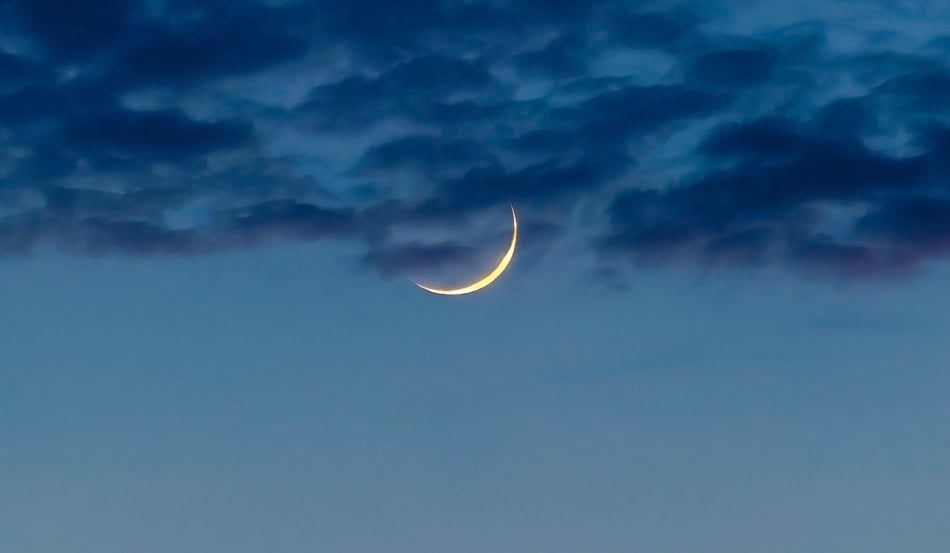
September 14: Crescent Moon and Venus
One of the prettiest sights of the month arrives around September 13–14, when a thin waxing crescent Moon joins dazzling Venus shortly after sunset.
For more on finding the planets, see Farmers’ Almanac’s guide to visible planets and night-sky events.
September 22: Venus Shines Bright
On the same day fall officially begins, Venus reaches roughly its greatest brilliance in the evening sky.
Look west after sunset.
If you see something extraordinarily bright that looks almost too bright to be a planet, it is probably Venus.
September 25–26: Neptune at Opposition
Distant Neptune reaches opposition overnight September 25–26.
At opposition, Earth passes between an outer planet and the Sun, putting that planet opposite the Sun in our sky and generally making it closest and brightest for the year.
Neptune is still far too faint to see with the unaided eye, but September provides one of the year’s best opportunities for telescope users to hunt for the blue planet.
September 2026 Moon Phases
Moon watchers have plenty to follow this month.
For the Eastern U.S., the major September 2026 Moon phases are:
Last Quarter: September 4 at 3:51 a.m. EDT
New Moon: September 10 at 11:27 p.m. EDT
First Quarter: September 18 at 4:43 p.m. EDT
Full Moon: September 26 at 12:49 p.m. EDT
The date of a phase can shift by one calendar day depending on your time zone.
And that September 26 full Moon has a very special name.
You can follow the Moon throughout the year with the Farmers’ Almanac Moon Phase Calendar.
September 26: The Full Harvest Moon
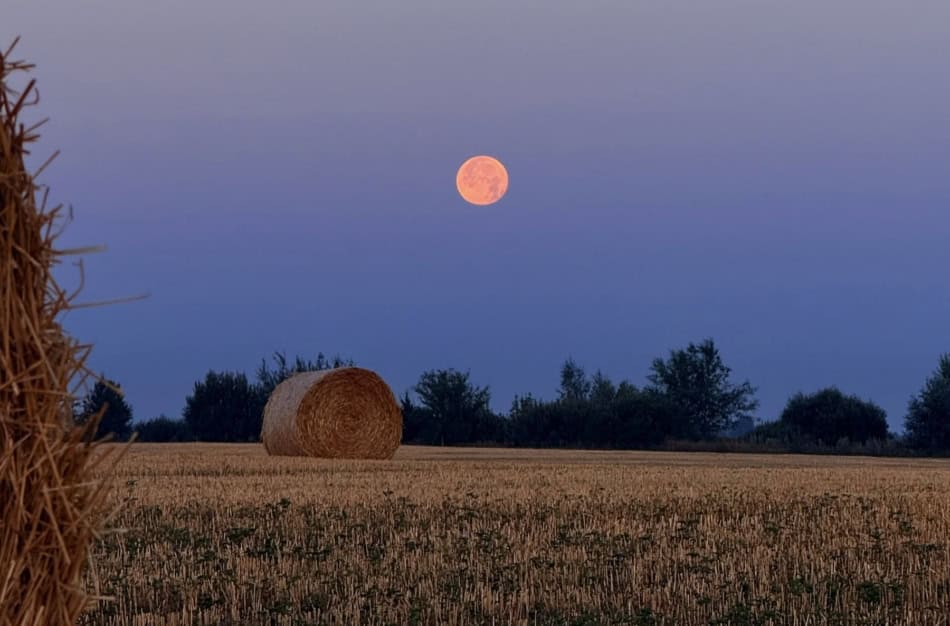
The Full Harvest Moon reaches peak illumination on Saturday, September 26, 2026, at 12:49 p.m. EDT.
Although the precise moment of fullness occurs during the afternoon, the Moon will look wonderfully full when it rises that evening.
The Harvest Moon is unique among traditional full Moon names because it isn’t tied strictly to September.
Instead, the Harvest Moon is the full Moon closest to the autumnal equinox.
In 2026, the equinox falls on September 22 and the full Moon follows four days later, making September’s full Moon the Harvest Moon.
Read more about the history, meaning, and traditions surrounding September’s Full Harvest Moon.
Why Is It Called the Harvest Moon?
The name goes back to the working rhythm of the harvest season.
Around the fall equinox, the Moon’s orbital path meets the eastern horizon at a relatively shallow angle. As a result, the Moon rises only about 25 to 30 minutes later on successive evenings for several nights in many northern locations rather than the more typical delay of around 50 minutes.
Before electric lights, that extra early-evening moonlight was valuable to farmers gathering crops after sunset.
Corn.
Pumpkins.
Squash.
Beans.
Grain.
The Moon effectively became nature’s lantern.
That connection between the September sky and the harvest is one reason the Harvest Moon remains one of the most beloved full Moons of the year.
September Astrology and Zodiac Dates
For readers who enjoy the Almanac’s traditional zodiac calendar, September also brings an interesting lunar cycle.
The month begins during Virgo season, traditionally associated with harvest, organization, work, and preparation.
The September 10 New Moon occurs in Virgo, making it a traditional time in astrology for fresh starts involving routines, organization, home projects, and practical plans.
Around the fall equinox, the Sun moves into Libra, the zodiac sign traditionally associated with balance.
And the September 26 Harvest Moon falls in Aries, opposite the Libra Sun. Farmers’ Almanac treats these zodiac traditions much as we treat weather lore and Gardening by the Moon—as old-fashioned planning traditions rather than scientific predictions.
September birthdays fall under Virgo and Libra, while the month’s traditional birthstone is the sapphire and its birth flowers are the aster and morning glory.
September 22: The First Day of Fall
This is the date autumn lovers have been waiting for.
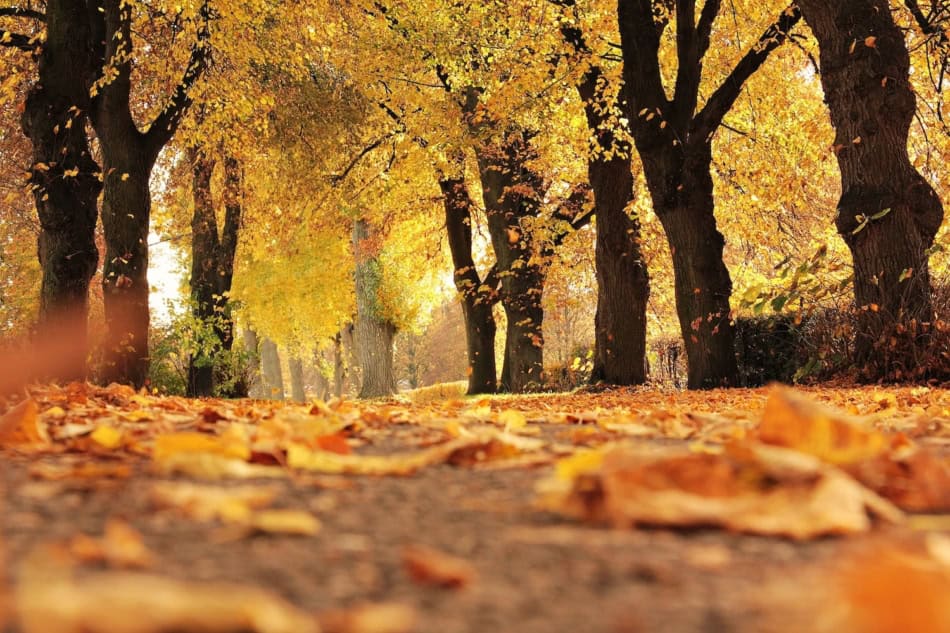
The autumnal equinox arrives Tuesday, September 22, 2026, at 8:05 p.m. EDT.
At that precise moment, the Sun crosses the celestial equator heading south.
For those of us in the Northern Hemisphere, it marks the official beginning of astronomical fall.
The word equinox comes from Latin words meaning roughly “equal night,” although day and night aren’t exactly 12 hours long everywhere on the equinox because of atmospheric refraction and the way sunrise and sunset are measured.
Still, the message from the sky is unmistakable.
Summer is ending.
From here until the winter solstice, the nights will continue gaining ground on the days.
The Great Fall Migration Is Underway
September isn’t just a month to look at the sky.
It’s a month to listen to it.
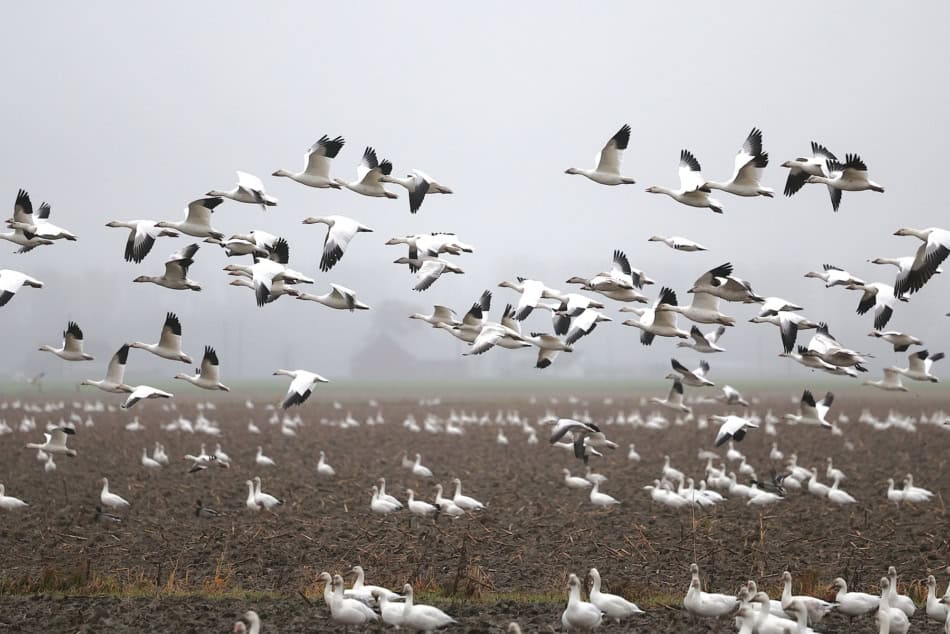
Millions of migratory birds are moving south across North America, and many songbirds make much of their journey at night.
Warblers, thrushes, sparrows, vireos, orioles, and other birds can stream overhead in enormous numbers while most of us are sleeping.
September is one of the heartbeats of fall bird migration.
On a quiet evening, step outside after dark and listen.
Those tiny “chip” or “zeet” sounds drifting down from the darkness may be migrating birds calling to one another thousands of feet above you.
Turning off unnecessary outdoor lights is also a simple way to make nighttime migration safer for birds.
Watch for Monarch Butterflies
Birds aren’t the only creatures heading south.
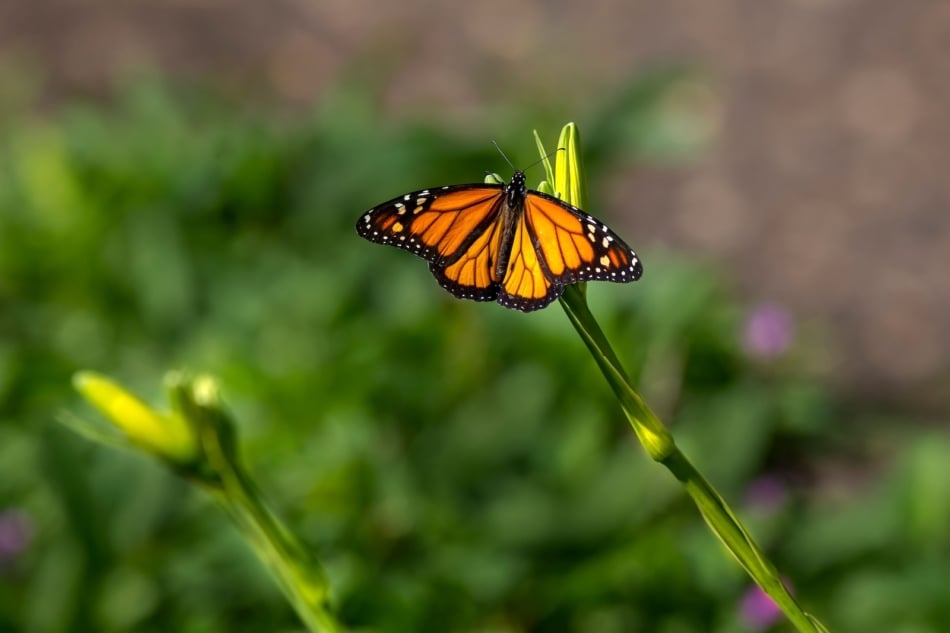
September is also prime time for the spectacular monarch butterfly migration.
The main wave generally advances from southern Canada and the northern United States early in the month through the Upper Midwest and Northeast, then toward the central United States and Mid-Atlantic later in September.
By October, the migration is moving heavily through the South toward the monarchs’ wintering grounds in Mexico.
A garden filled with late-blooming native flowers can provide valuable fuel for migrating monarchs.
Asters and goldenrod are especially fitting September blooms.
Fall Foliage Begins to Stir
Don’t expect peak autumn color across most of the country just yet—but September is when the transformation begins.
High elevations, far northern areas, and portions of northern New England, the Rockies, and Upper Midwest can begin showing their first serious color as September progresses.
The Farmers’ Almanac 2026 Fall Foliage Outlook gives especially strong prospects to the central Appalachians this season, with generally good color expected across much of the East and Southeast.
September is the opening act.
October gets most of the applause.
What To Do in the Garden in September
September may feel like the end of gardening season, but in many parts of the country it is really the beginning of a second growing season.
Cooler nights can make gardening more comfortable, and several crops thrive as temperatures fall.
Plant Fast-Growing Fall Vegetables
Depending on your climate and first frost date, September can still be a good time to sow:
- Spinach
- Arugula
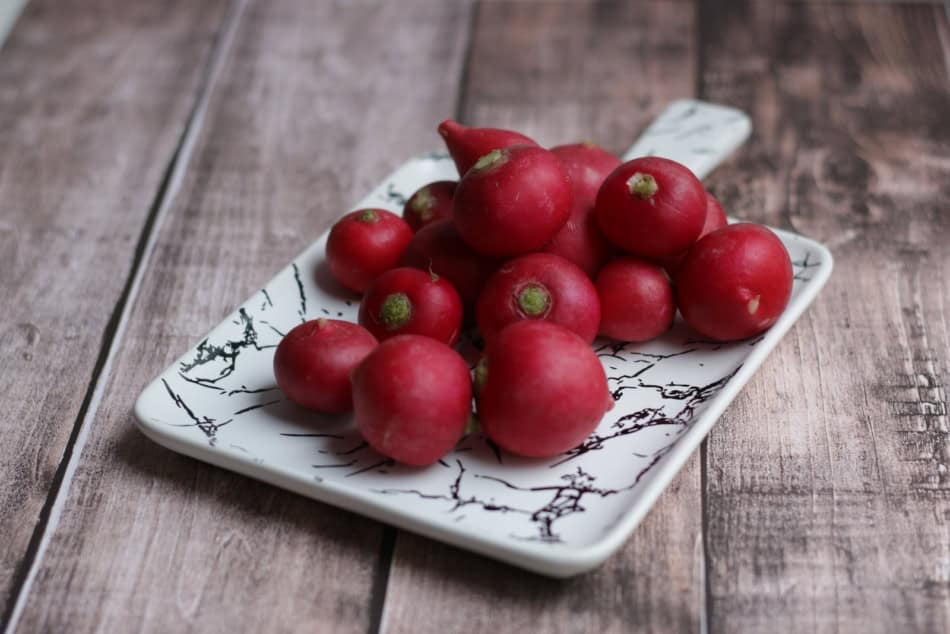
- Radishes
- Mustard greens
- Lettuce
- Kale and other hardy greens in suitable climates
The key is to work backward from your average first frost date and compare it with the crop’s days to maturity.
Keep Harvesting
September gardens often reach peak abundance.
Continue picking:
- Tomatoes
- Peppers
- Cucumbers
- Beans
- Zucchini
- Melons
- Potatoes
- Carrots
- Beets
- Herbs
- Apples and pears where ripe
Frequent harvesting can encourage some plants to keep producing until frost finally ends the season.
Start Thinking About Spring Bulbs
As the soil cools later in September and into October, gardeners in colder climates can begin planting spring-flowering bulbs such as:
- Daffodils
- Tulips
- Hyacinths
- Crocuses
Planting times vary widely by region, so don’t rush them into hot soil.
Prepare for the First Frost
September is also the month when gardeners in colder and higher-elevation areas need to begin watching nighttime temperatures.
Places such as Fairbanks, Ely, Idaho Falls, Bozeman, Lake Placid, Flagstaff, and other cold or elevated locations can experience their average first frost during September. Across much of the Midwest and Northeast, the risk increases rapidly heading into October.
Know where your old sheets, frost cloths, and garden covers are before the coldest night arrives.
Try Gardening by the Moon
For more than two centuries, Farmers’ Almanac readers have also used the phase and position of the Moon to traditionally time planting, harvesting, pruning, and other garden chores.
Our Gardening by the Moon Planting Calendar and Best Days Calendar can help you plan your September garden according to this longtime Almanac tradition.
Important September 2026 Holidays and Observances
September’s calendar includes celebrations, memorials, and seasonal traditions.
September 7 — Labor Day
Labor Day falls on Monday, September 7, 2026.
It is the only U.S. federal holiday in September and has long served as the unofficial farewell to summer vacation season.
September 11 — Patriot Day
September 11 is Patriot Day, a day of remembrance honoring the victims of the terrorist attacks of September 11, 2001.
September 11–13 — Rosh Hashanah
Rosh Hashanah, the Jewish New Year, begins at sundown Friday, September 11, and ends at nightfall Sunday, September 13, 2026.
September 13 — National Grandparents Day
National Grandparents Day falls on Sunday, September 13.
It’s a fitting September tradition—a chance to call, visit, share a meal, or ask a grandparent about the old family stories that deserve to be remembered.
September 17 — Constitution Day
September 17 is Constitution Day and Citizenship Day, commemorating the signing of the U.S. Constitution in Philadelphia in 1787.
September 20–21 — Yom Kippur
Yom Kippur begins at sundown Sunday, September 20, and ends at nightfall Monday, September 21.
September 26 — National Public Lands Day
September 26 is National Public Lands Day—and in 2026 it happens to fall on the same day as the Harvest Moon.
That sounds like an excellent excuse to spend some time outdoors.
September Weather Lore
Generations before weather satellites and smartphone forecasts, people watched the September landscape closely.
Clouds, wind, migrating birds, acorns, insects, leaves, and the timing of the harvest all became part of traditional weather lore.
One old saying recorded by Farmers’ Almanac advises:
“As the wind and weather is at the time of the equinox, so will be the wind and weather generally during the following three months.”
Science doesn’t support treating a single day’s weather as a reliable three-month forecast—but that’s never stopped generations of Almanac readers from watching the equinox sky and taking notes.
Try it yourself this year.
On September 22, write down the wind direction, temperature, cloud cover, and general weather.
Then check your notes again at the winter solstice.
September Is the Month of Change
Perhaps more than any other month, September asks us to pay attention.
One afternoon can still feel like July.
A few days later, you notice the first red maple.
Then the sun is setting before dinner.
A flock of geese passes overhead.
The garden begins to slow.
A sweatshirt comes out of the closet.
And suddenly autumn has arrived.
September 2026 gives us plenty of milestones along the way: Labor Day, migrating birds and butterflies, the equinox, changing leaves, brilliant Venus, the Harvest Moon, and the first hints of frost.
So enjoy the transition.
Take an evening walk.
Harvest something from the garden.
Watch the sunset arrive a little earlier.
Look for migrating birds.
And on September 26, step outside after dark and watch the Harvest Moon rise over the beginning of another autumn.
Hello, September. We’re glad you’re here.


- Farmers' Almanac Staff

- Farmers' Almanac Staff
- Farmers' Almanac Staff
- Farmers' Almanac Staff