Cool September Nights Do Something Beautiful to Apples
Why do apples suddenly turn redder in September? Cool nights, sunny days and anthocyanins create fall’s beautiful apple blush—but red doesn’t always mean ripe.

Those crisp September nights don’t just signal that fall is getting closer. In many apple varieties, a stretch of cool nights and sunny days can deepen the fruit’s red color—sometimes dramatically. Here’s the orchard science behind the autumn blush, plus how to tell when an apple is actually ready to pick.
Walk through an apple orchard after a few crisp September nights and you may notice something surprising.
The apples look different.
Fruit that was partly green or lightly blushed just days earlier can suddenly take on deeper streaks of crimson, ruby, and scarlet. The change can happen quickly enough that commercial growers watch late-summer temperatures almost as closely as they watch the calendar.
There’s real science behind it.
Red apple skin gets much of its color from pigments called anthocyanins, and their development is strongly influenced by both sunlight and temperature. For many varieties, the classic early-fall pattern—warm, sunny days followed by cool nights—is just about ideal.
And in Pennsylvania orchards, growers have already watched it happen in 2026.
Why Do Apples Turn Red?
An apple’s skin contains several pigments. Chlorophyll produces green, carotenoids contribute yellow and orange shades, and anthocyanins are largely responsible for red, purple, and crimson colors.
As an apple approaches maturity, its pigment balance begins changing. Chlorophyll often fades while anthocyanins increase in varieties genetically capable of producing red skin.
But genetics are only part of the story.
According to the University of Maryland Extension’s guide to apple red skin coloration, the two most important environmental factors influencing red apple color are light and temperature.
That’s where September weather comes in.
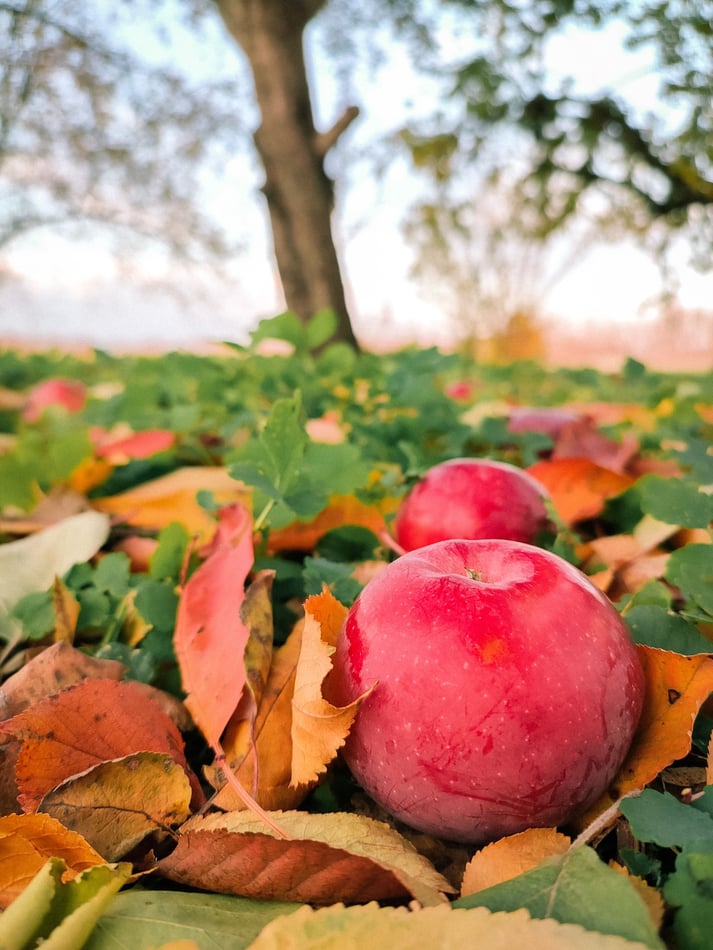
Cool Nights + Sunny Days = Redder Apples
For many red apple varieties, a beautiful September weather pattern is also a beautiful apple-coloring pattern.
University of Maryland researchers describe especially favorable preharvest conditions as bright days around 77°F followed by nights around 59°F. Sunny days allow the tree to keep producing carbohydrates through photosynthesis. Cooler nights reduce the amount of those carbohydrates consumed through respiration.
That matters because sugars provide raw material used in the production of anthocyanins.
In simple terms:
Sunshine helps make the fuel. Cool nights help the apple hold onto it.
The result can be a burst of red color.
Extended heat can have the opposite effect. Anthocyanin production becomes more difficult during very warm weather, particularly when daytime temperatures rise above about 90°F and nights remain above roughly 68°F. Early-season varieties such as Honeycrisp can be particularly vulnerable to poor color during hot harvest seasons.
The exact temperature response varies by apple.
Penn State Extension notes that several cool nights followed by warm, sunny days often improve coloration, but different cultivars respond differently. McIntosh can respond to temperatures below about 70°F, Fuji benefits from temperatures in the low 60s, while Redchief Delicious may require temperatures down into the low 50s for its strongest response.
So there is no single magic “apple-coloring temperature.”
But those chilly September mornings certainly can help.
Pennsylvania Growers Watched Apples Change Color This Summer
This isn’t merely something researchers see in controlled experiments.
It happened in Pennsylvania orchards this year.
A late-August Penn State Extension 2026 fruit maturity report noted a welcome break from summer heat in Adams County. Daytime temperatures dropped largely into the 70s and low 80s, while overnight readings fell into the 50s and low 60s.
Penn State reported a noticeable jump in red coloration across several varieties, particularly Gala, RubyMac and Fuji.
The numbers give an idea of just how quickly color can change.
Buckeye Gala fruit sampled by Penn State averaged about 72% red coloration on August 17 and nearly 91% by August 24.
That’s quite a wardrobe change in seven days.
And as September begins bringing longer nights and cooler mornings to traditional apple country, similar transformations may be unfolding in orchards farther north.
Why Is One Side of an Apple Redder Than the Other?
Here’s an easy bit of orchard detective work.
Pick up a striped or blushed apple and turn it over. One side may be deep red while the opposite side remains pale yellow, green, or only lightly pink.
The likely culprit is sunshine.
Light helps trigger the biochemical processes involved in anthocyanin production. University of Maryland Extension notes that the more useful light an apple receives—particularly certain ultraviolet wavelengths—the more red coloration it can develop, up to the point where excessive exposure risks sunburn.
That is why the exposed side of an apple can become brilliant red while the shaded side remains lighter.
Sometimes you can even see a pale outline where a leaf rested against the skin or where another apple shaded the fruit.
Professional growers take sunlight so seriously that orchard practices can be designed around it. Strategic pruning helps light penetrate the canopy, while some growers place reflective material underneath trees to bounce sunlight onto fruit growing in shaded portions of the canopy.
A little September sunshine can go a long way.
But Here’s the Catch: A Red Apple Isn’t Necessarily Ripe
This may be the most important thing to remember before your next apple-picking trip:
Color and ripeness are not the same thing.
An apple can look spectacular and still be immature inside.
In fact, some modern strains have been specifically selected because they develop attractive red skin reliably. University of Maryland Extension warns that highly colored strains can sometimes become red enough for sale before they have reached eating maturity.
Pennsylvania growers had a perfect example at the end of August.
In Penn State’s latest maturity report, updated September 1, 2026, Red Delicious sampled in Berks County already averaged 75.5% red coloration. Yet its starch index was only 2.0, and researchers advised growers that the fruit was not ready for harvest yet.
The outside was saying, “Pick me.”
The inside was saying, “Not quite.”
That’s why experienced orchardists look beyond the red blush.
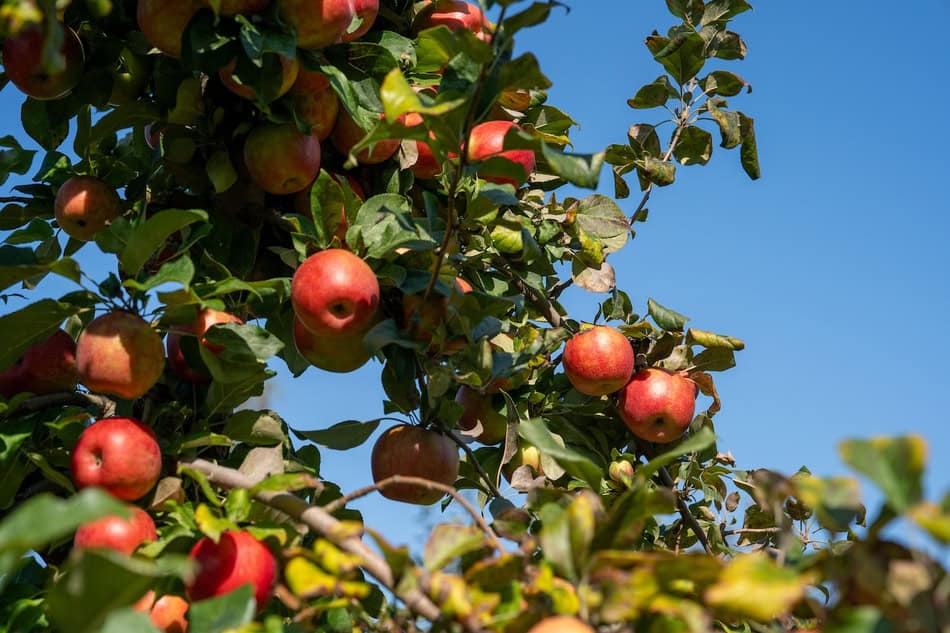
How Apple Growers Actually Know When Fruit Is Ready
Commercial apple growers don’t normally walk through an orchard looking for the reddest apple and declare harvest season open.
Instead, maturity is determined using several clues.
One is background or ground color. On many apples, look underneath the red stripes or blush. As maturity advances, that underlying color commonly shifts from a strong green toward yellow or creamy green.
Growers also measure firmness, often with an instrument called a penetrometer.
Then there is soluble solids, usually measured in degrees Brix. This gives growers an indication of dissolved sugars and other soluble materials in the juice.
One of the most useful measurements is the starch-iodine test.
As an apple matures, starch stored in the flesh is gradually converted into sugars. When iodine is applied to a cut apple, areas containing starch turn dark while areas in which the starch has broken down remain lighter. By comparing the resulting pattern with a variety-specific chart, growers can estimate how far maturity has progressed.
Penn State Extension emphasizes that optimum harvest decisions may involve a combination of red coloration, background color, firmness, soluble solids and starch breakdown rather than any single measurement.
Fortunately, you don’t need a laboratory to pick apples in your backyard.
The Home Orchard Test: Pick It or Leave It?
If you have an apple tree at home, start with the variety. A Gala naturally reaches maturity much earlier than a late-season Fuji or Pink Lady. Our Farmers’ Almanac guide to 21 popular apple varieties and when they are in season can help establish the expected harvest window.
Pick it when the fruit is within its normal harvest season, the green background beneath the blush is beginning to lighten, the apple comes away with a gentle upward twist, the flesh is crisp and juicy, and—most importantly—it tastes like the apple you expected.
Leave it when the background remains distinctly green, the fruit stubbornly clings to the tree, or a bite tastes hard, starchy, sour, or undeveloped—even if the outside has already turned beautiful red.
Oregon State Extension recommends looking at the ground color beneath the red blush, particularly on varieties such as Gala and Honeycrisp. Mature apples also tend to separate readily when lifted and gently twisted. And for the backyard grower, one of the most useful tests remains wonderfully low-tech: cut one open and taste it.
Brown seeds can provide another clue, but no single sign should be treated as perfect for every cultivar.
And don’t judge the entire tree from one apple. Fruit growing on a sunny outer branch may color and mature somewhat differently from fruit tucked deep inside the canopy.
Which Apples Show the Most Dramatic Fall Color?
Some varieties make September’s transformation especially easy to see.
Gala
Gala can develop brilliant red stripes and blush, and newer highly colored strains such as Buckeye have been selected partly for stronger coloration. Penn State’s 2026 observations showed just how quickly Gala color can intensify during favorable late-summer weather.
Honeycrisp
Honeycrisp is technically more of a bicolored apple than a uniformly red one, making that familiar red-over-yellow appearance particularly dependent on growing conditions.
University of Minnesota Extension recently noted that cooler nights can improve anthocyanin development and apple color and that this is one reason cooler climates are particularly well suited to Honeycrisp production.
Fuji
Fuji often develops a much richer blush as harvest approaches. Penn State notes that cooler temperatures can be especially important to Fuji coloration, while its 2026 maturity report showed substantial differences in red color among different Fuji strains even when their internal maturity was similar.
McIntosh
An old Northern favorite, McIntosh is another apple whose coloration benefits from cooler late-season weather. That helps explain why McIntosh is so closely associated with the crisp autumn climate of New England, New York, and other northern apple-growing regions.
Red Delicious
Few apples demonstrate the difference between redness and ripeness as clearly as Red Delicious.
It can develop its trademark deep red exterior before internal maturity has caught up—as Penn State’s 2026 Pennsylvania crop measurements have already demonstrated.
You can explore more old favorites and newer cultivars in our Farmers’ Almanac guide, Apple Season Is Here: 8 Best Apple Varieties and How to Use Them.
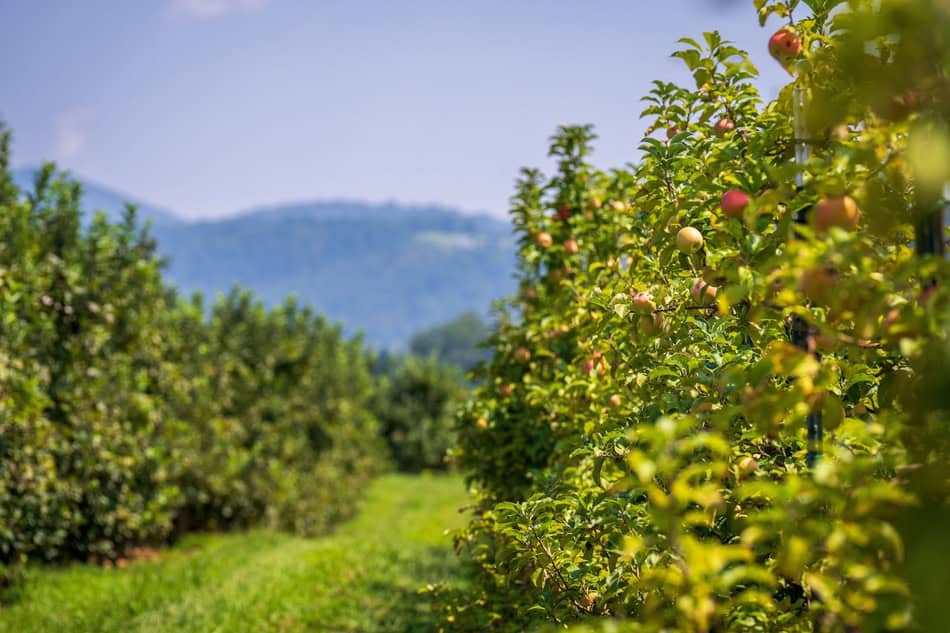
The Best Apple-Picking Weather May Be the Weather You Love Most
There is something wonderfully fitting about all of this.
The same weather that makes September feel like September—clear blue afternoons, comfortable sunshine, cool evenings, and chilly mornings—can also help transform an orchard.
The leaves have not necessarily turned yet.
The first frost may still be weeks away.
But the apples know fall is coming.
So the next time you walk into an orchard on a cool September morning, look carefully at the fruit. Notice the apple that is brilliant crimson on its sunny side and pale beneath a leaf. Compare apples in the shade with those hanging at the edge of the canopy.
You are watching weather leave its mark on the harvest.
Just remember: the reddest apple on the tree isn’t automatically the ripest.
Give it a gentle twist.
Check the color underneath the blush.
And, when in doubt, take a bite.
For more seasonal harvest guidance, see our Farmers’ Almanac guide to when common fruits are ready to harvest, or consult our traditional Best Days Calendar for picking apples and pears.
Quick Apple Ripeness FAQ
Do cold nights make apples turn red?
Cool nights can encourage red coloration in many red and bicolored apple varieties, particularly when they are followed by sunny days. The ideal temperature varies by cultivar.
What makes an apple red?
Red apple skin is largely produced by pigments called anthocyanins. Their production is influenced by genetics, fruit maturity, sunlight, temperature, tree nutrition and other growing conditions.
Does a redder apple mean it is sweeter?
Not necessarily. Red color and internal ripeness are related processes, but one does not guarantee the other. An apple can develop a deep red exterior before starch has converted sufficiently to sugar.
How can I tell when an apple is ready to pick?
Know the variety’s normal harvest season, look for the background color to lighten from green, gently lift and twist the fruit, and taste-test a representative apple. Commercial growers also use firmness, Brix and starch-iodine testing.
Why is only half of my apple red?
The redder side was probably exposed to more sunlight. Shaded portions of the apple receive less light to stimulate anthocyanin production.

- Tim Konrad

- Tim Konrad
- Tim Konrad
- Tim Konrad