8 Superstitions People Still Believe—And Where They Came From
You may not call yourself superstitious—but do you knock on wood, cross your fingers or avoid walking under ladders? Here’s where 8 familiar beliefs really came from.

You probably don’t consider yourself superstitious.
But have you ever knocked on wood after saying something hopeful? Avoided walking under a ladder? Felt just a little uneasy when a black cat crossed the road? Or automatically crossed your fingers while waiting for good news?
Some of the most common superstitions are so deeply woven into everyday life that we follow them without even thinking about why.
And many are surprisingly old.
From medieval fears about black cats to ancient beliefs about mirrors, iron, salt, and unlucky numbers, today’s little rituals are remnants of a time when people looked for signs of good and bad fortune almost everywhere.
Here are 8 superstitions people still believe—and the strange stories behind where they came from.
Common Superstitions At a Glance
| Superstition | Traditional Meaning |
|---|---|
| Knock on wood | Protect good luck |
| Black cat crosses your path | Bad luck |
| Break a mirror | Seven years of bad luck |
| Walk under a ladder | Bad luck |
| Spill salt | Bad luck unless you throw some over your shoulder |
| Friday the 13th | An unlucky day |
| Hang a horseshoe | Brings or protects good luck |
| Cross your fingers | Hope for good fortune |
Of course, none of these beliefs can actually predict your future. They’re folklore, not science. But the history behind them tells us a great deal about how earlier generations tried to make sense of an uncertain world.
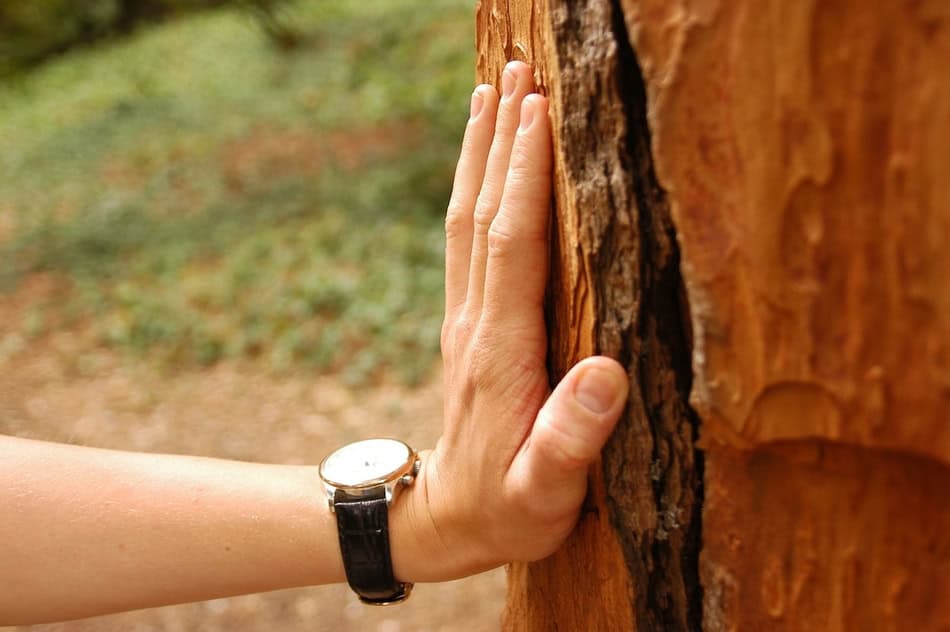
1. Knock on Wood
You’ve just said, “I’ve never gotten a speeding ticket.”
Then, almost automatically:
Knock on wood.
The idea is that touching or knocking on wood somehow prevents your good fortune from being reversed.
Where did that come from?
No one knows for certain.
One widely repeated explanation connects the custom with ancient European beliefs that trees were inhabited by gods, spirits, or supernatural beings. Touching or knocking against a tree may have been a way of asking those spirits for protection—or acknowledging them after experiencing good fortune.
Christian traditions later produced another possible explanation, linking protective wood with the wooden cross of Jesus.
But historians haven’t established one definite origin.
What we do know is that versions of “touch wood” and “knock on wood” became established expressions by the 19th century.
Centuries later, plenty of people who don’t believe in tree spirits still reach for the nearest table after tempting fate.
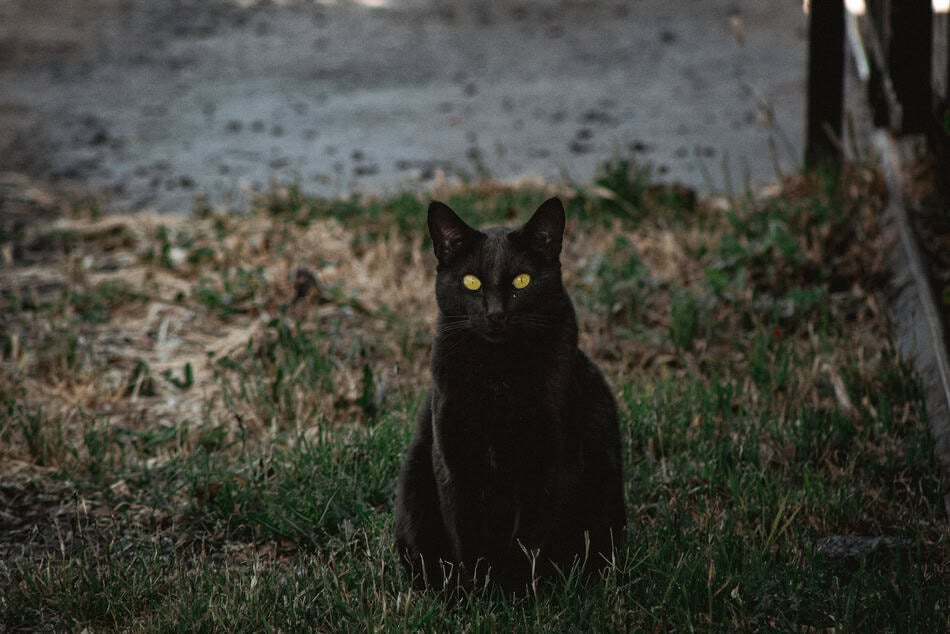
2. A Black Cat Crossing Your Path Brings Bad Luck
Few animals have suffered more from superstition than the black cat.
Cats were highly regarded in ancient Egypt, where they became associated with protection and divinity.
Their reputation changed dramatically in parts of medieval Europe.
During the Middle Ages, cats—particularly black cats—became increasingly associated with witchcraft, evil spirits, and the Devil. Some people believed witches could transform themselves into cats, while others believed cats served as supernatural companions or “familiars.”
That made unexpectedly encountering a black cat an ominous event.
Eventually, the idea developed that a black cat crossing directly in front of you could mean misfortune was coming your way.
But here’s the fascinating part:
Black cats aren’t unlucky everywhere.
In some traditions, they have represented prosperity, protection, and good fortune. Sailors and fishermen’s families have also regarded black cats as lucky in various parts of Britain.
So is a black cat lucky or unlucky?
Apparently, that depends entirely on whom you ask.

3. Breaking a Mirror Means Seven Years of Bad Luck
Crash.
A mirror falls from the wall and shatters.
Almost immediately, someone says:
“That’s seven years of bad luck.”
Why seven?
Mirrors have been surrounded by supernatural beliefs for thousands of years because ancient people did not always regard reflections as simply optical phenomena.
In several cultures, reflections were connected with a person’s soul, spirit, or life force. Damaging someone’s reflection could therefore symbolically damage the person.
The familiar seven-year penalty is often connected to an ancient Roman belief that human life renewed itself in cycles of roughly seven years.
Under that interpretation, breaking a mirror damaged your good fortune—but after seven years, your life would supposedly renew itself.
Whether that explanation represents the superstition’s exact origin is difficult to prove.
What isn’t difficult to prove is that fear of broken mirrors has lasted remarkably well.
A century-old American collection of superstitions preserved by the Library of Congress records multiple beliefs connecting broken looking glasses with bad luck and even death.
That’s a long time for a household accident to carry such a terrible reputation.
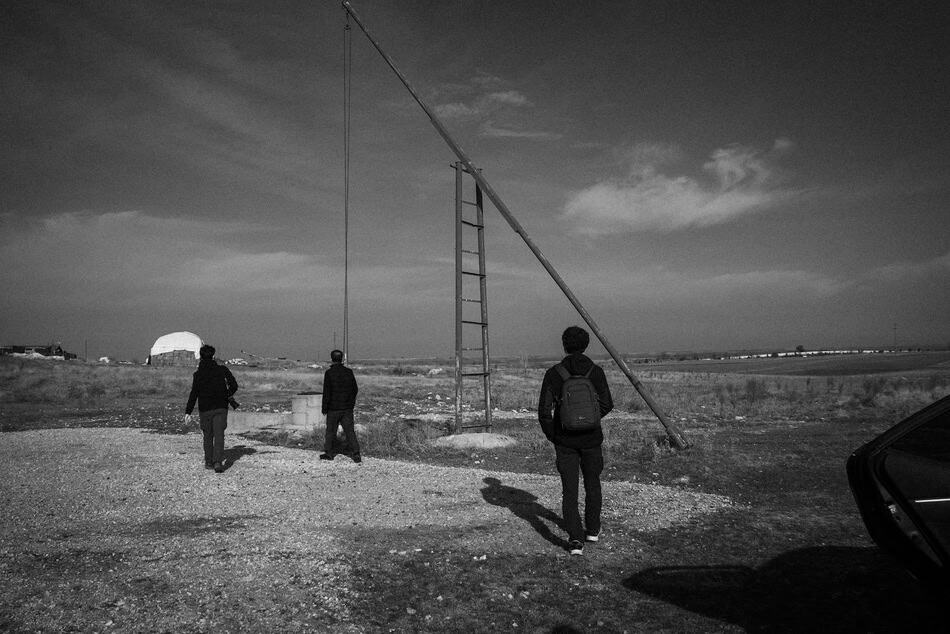
4. Walking Under a Ladder Brings Bad Luck
There is one excellent reason not to walk beneath a ladder:
Something might fall on you.
But folklore gave us several much more dramatic explanations.
A ladder leaning against a wall creates a triangle. In Christian Europe, the triangle could symbolize the Holy Trinity—the Father, Son, and Holy Spirit.
Walking through that triangle was therefore sometimes said to violate or “break” a sacred space.
Other explanations point toward executions. Ladders were historically associated with gallows and hangings, giving the space beneath them an understandably sinister reputation.
And older traditions sometimes treated triangles themselves as spiritually significant.
The exact origin remains uncertain.
But when ancient symbolism, medieval religion, executions, and the very real possibility of a paint can landing on your head all tell you to walk around the ladder, perhaps it’s no surprise that this superstition survived.
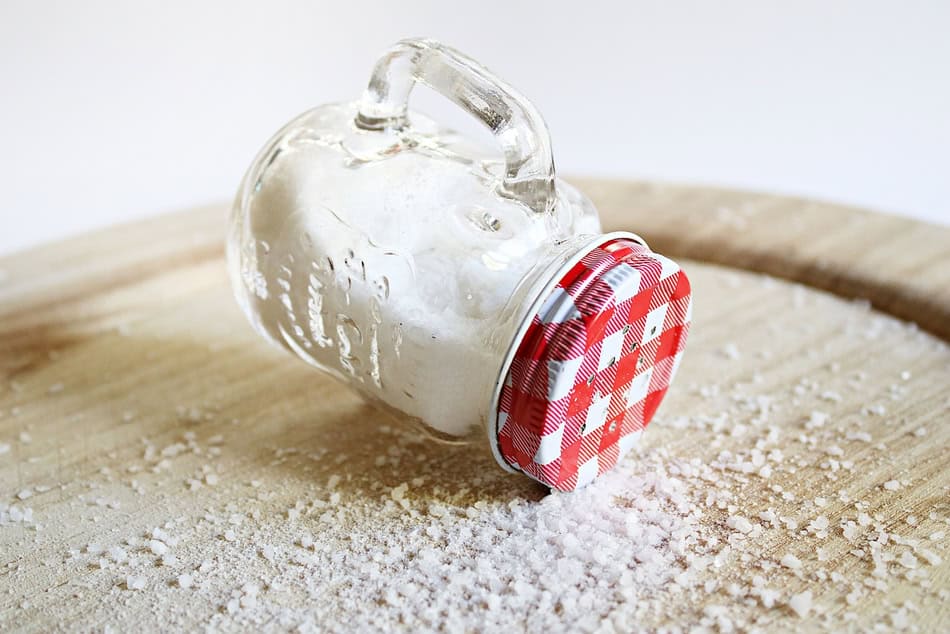
5. Spilling Salt Is Bad Luck
Knock over the salt shaker and someone may immediately tell you:
Throw a pinch over your left shoulder.
This is one of our strangest surviving kitchen superstitions.
Salt was extraordinarily valuable throughout much of history. Before refrigeration, it was essential for preserving food. It was also used in religious ceremonies and became associated with purity, protection, friendship, and permanence.
Wasting it was no small matter.
Over time, spilled salt became associated with misfortune.
Salt also acquired a place in Christian imagery. Leonardo da Vinci’s famous Last Supper, painted in the late 15th century, depicts an overturned salt container near Judas Iscariot—the disciple who betrayed Jesus.
The painting probably didn’t create the superstition, but it helped reinforce the connection between spilled salt, betrayal, and approaching disaster.
So why throw salt over the left shoulder?
According to later folklore, evil or the Devil waited behind a person’s left shoulder. Tossing salt backward was supposed to blind or drive away the unwanted visitor.
Does it work?
Your kitchen floor may have an opinion.
6. Friday the 13th Is Unlucky
Hotels skip the 13th floor.
Some airplanes have no row 13.
And whenever the 13th day of the month lands on a Friday, millions of people still take notice.
But why is Friday the 13th considered unlucky?
The answer may involve ancient religious beliefs, medieval folklore—and one of the most dramatic events of the Middle Ages.
Fear of the number 13 has much older roots. In Christian tradition, Jesus shared the Last Supper with his 12 apostles, making 13 people at the table. Judas Iscariot, who betrayed Jesus, later became associated in folklore with the unlucky 13th guest.
Friday developed an ominous reputation of its own. Jesus’ crucifixion is traditionally commemorated on Good Friday, helping give the day an association with sorrow and misfortune in Christian culture.
But one of the most fascinating theories surrounding Friday the 13th takes us to medieval France.
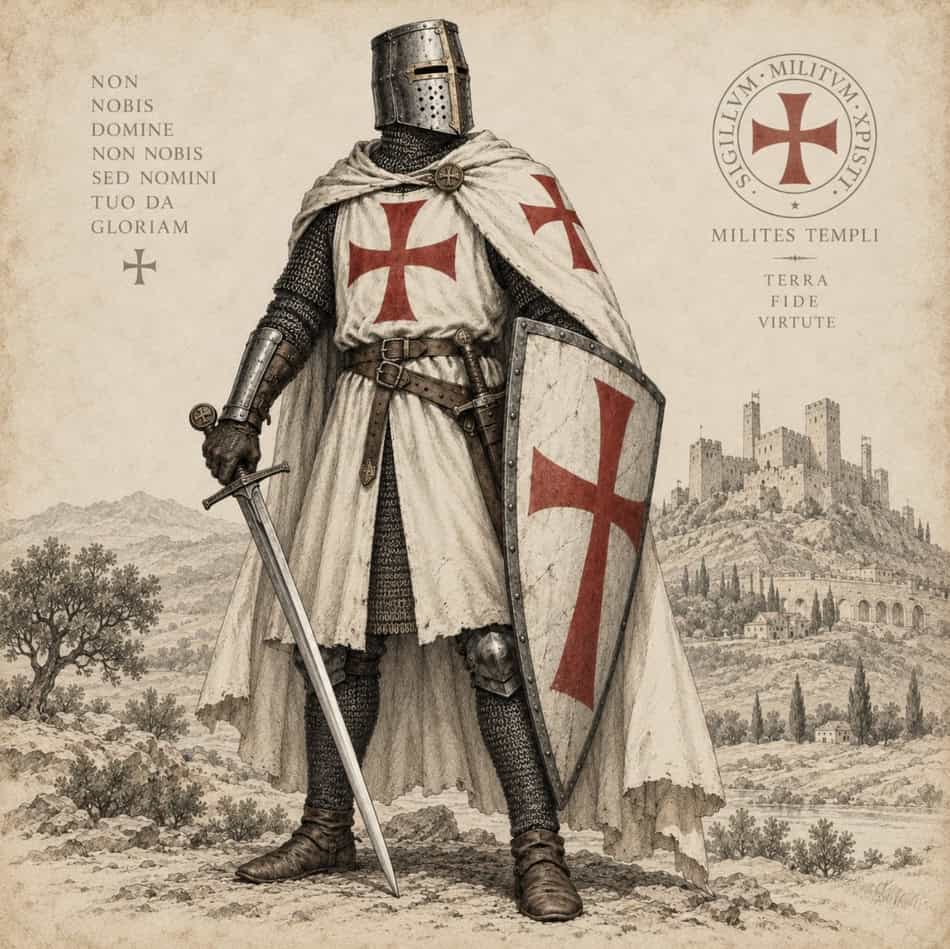
The Knights Templar and Friday, October 13, 1307
At dawn on Friday, October 13, 1307, King Philip IV of France launched a massive attack against the Knights Templar, one of the wealthiest and most powerful military religious orders of the Middle Ages.
Across France, Templars were arrested—including their Grand Master, Jacques de Molay.
Philip was deeply indebted and had increasingly clashed with the powerful order. The Templars were accused of heresy and other crimes, and many were subjected to brutal interrogation and torture. Some confessed under duress.
Their property was seized, and the persecution continued for years. Pope Clement V formally dissolved the Knights Templar in 1312, and Jacques de Molay was burned at the stake in Paris in 1314.
Because the attack began on Friday the 13th, a popular story eventually developed that this terrible day for the Knights Templar was the origin of our fear of Friday the 13th.
It’s a wonderfully eerie explanation.
There’s just one problem:
Historians aren’t sure it’s true.
There is little evidence that medieval Europeans immediately began treating Friday the 13th as an especially unlucky date because of the Templars. The connection appears to have become popular much later.
More likely, several traditions gradually came together: an old suspicion of the number 13, a separate belief that Friday was unlucky, and eventually the unforgettable story of what happened to the Knights Templar on Friday, October 13, 1307.
By the late 19th and early 20th centuries, fear of the specific date was becoming firmly established in popular culture. Thomas W. Lawson’s bestselling 1907 novel Friday, the Thirteenth helped spread the ominous reputation even further.
Today, fear of the number 13 even has a name: Triskaidekaphobia.
7. A Horseshoe Brings Good Luck
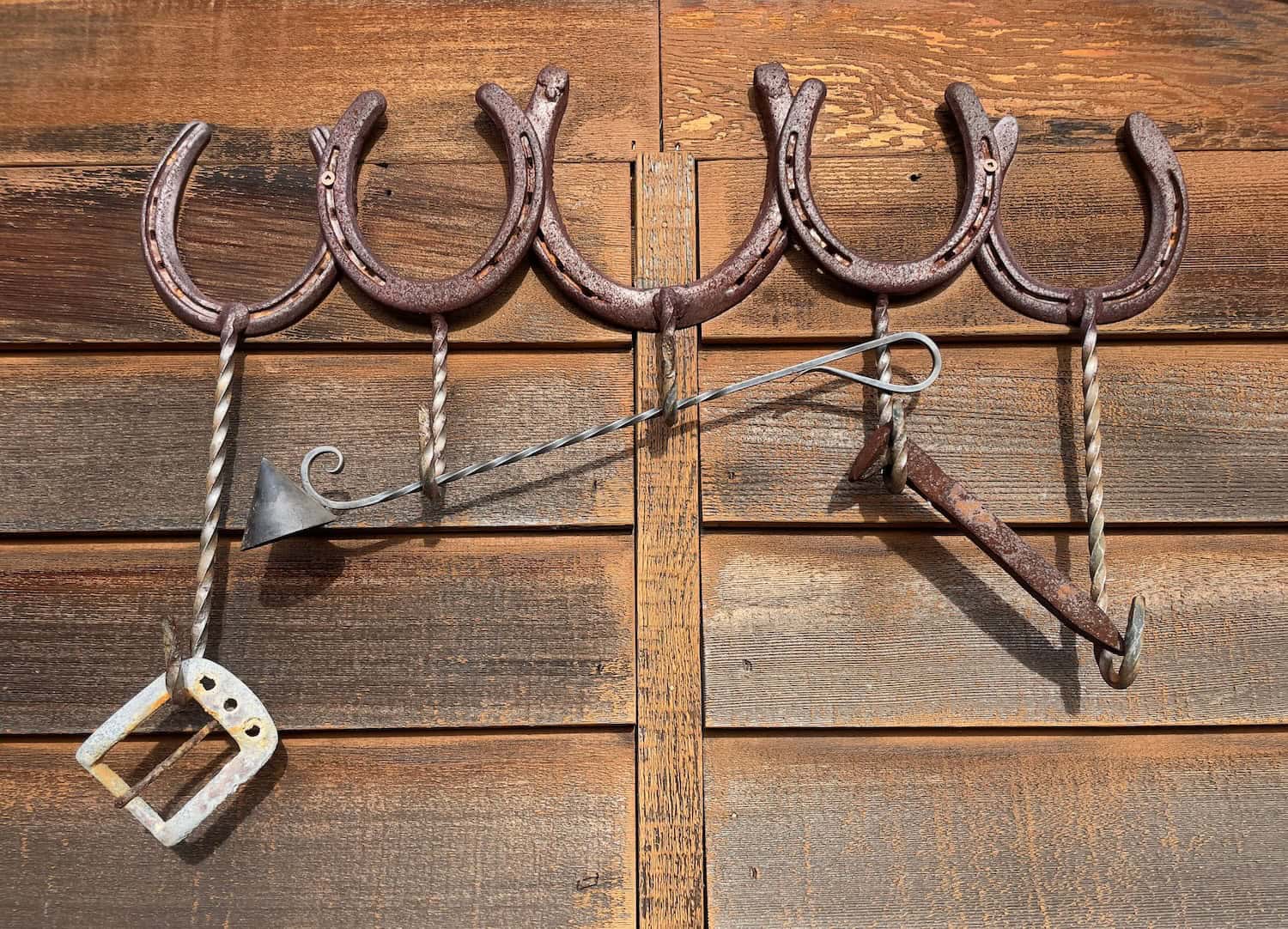
Walk into an old barn, farmhouse, pub, or cottage and you may find a horseshoe hanging above the doorway.
For centuries, people have treated horseshoes as protective charms.
Part of their reputation probably comes from the material itself.
Iron was long believed in European folklore to repel witches, fairies, evil spirits, and other supernatural beings. A horseshoe provided an especially convenient piece of iron to hang near the entrance to a house.
Christian folklore added a colorful story involving St. Dunstan, a 10th-century English churchman who later became Archbishop of Canterbury.
According to legend, the Devil once asked Dunstan—who had worked as a metalworker—to shoe his horse. Dunstan instead nailed the horseshoe directly onto the Devil’s hoof and refused to remove it until the Devil promised never to enter a place displaying a horseshoe.
It’s a legend rather than documented history, but it became one of the classic explanations for the lucky horseshoe.
There is even disagreement about which way a horseshoe should hang.
Some say the open ends must point upward so the good luck doesn’t “spill out.”
Others hang it downward so luck pours onto everyone passing beneath it.
Apparently even good luck needs instructions.

8. Crossing Your Fingers Brings Good Luck
Waiting for test results?
Hoping your team wins?
Trying to get the last available seat on a flight?
Fingers crossed.
The crossed-fingers gesture has become such a universal symbol of hope that we use the emoji 🤞 without giving its origins much thought.
Like many old superstitions, however, its beginnings are uncertain.
One popular explanation connects the gesture with early Christianity. Before Christianity became widely accepted in the Roman world, believers may have used small versions of the cross as signs of recognition or protection.
According to one version of the story, two people would each extend a finger and cross them together to form a small cross while making a wish or seeking protection.
Eventually, one person could make the symbol alone simply by crossing two fingers.
The historical evidence for that exact progression isn’t conclusive, but the symbolism of the cross has undoubtedly contributed to the gesture’s long association with protection and good fortune.
Today, crossing your fingers requires no particular religious belief at all.
It’s simply our nearly universal shorthand for:
I really hope this works.
Why Do We Still Believe in Superstitions?
That might be the most interesting question of all.
Most people who knock on wood don’t actually believe a spirit lives inside their dining-room table.
They simply feel better doing it.
Psychologists have found that superstition becomes especially attractive when something matters to us but the outcome is outside our control.
That explains why superstition appears so often in sports, gambling, exams, travel, weddings, farming, fishing, and weather lore.
We can’t guarantee what happens next.
So we perform a little ritual anyway.
Interestingly, the ritual itself can sometimes affect us—even if it can’t affect luck.
In a series of experiments published in Psychological Science, researchers found that activating familiar good-luck beliefs, including keeping fingers crossed or using lucky charms, could improve participants’ confidence and persistence on certain tasks.
The superstition wasn’t magically changing reality.
It was changing how the person approached reality.
And perhaps that helps explain why these traditions refuse to disappear.
Superstitions Are Pieces of Living Folklore
Whether you believe in them or not, superstitions are tiny pieces of history we carry around with us.
Every time someone knocks on wood, avoids a ladder, hangs a horseshoe, crosses their fingers, or tosses salt over a shoulder, they’re repeating a ritual that may have traveled through hundreds—or even thousands—of years of human culture.
Long before weather satellites, scientific medicine, modern psychology, and instant information, people lived in a world filled with uncertainty.
They looked for patterns.
They watched for signs.
And they developed rituals they hoped would keep fortune on their side.
We may understand the world differently today.
But apparently, we’re still not willing to take any chances.
Which of these superstitions do you still follow—even if you don’t actually believe it? Tell us in the comments.
More Folklore From Farmers’ Almanac
Love old beliefs, weather sayings, lucky traditions, and forgotten customs? Explore more folklore and weather lore from Farmers’ Almanac, where we’ve been collecting the wisdom, observations, traditions, and curious beliefs of generations since 1818.


- Farmers' Almanac Staff

- Farmers' Almanac Staff

- Farmers' Almanac Staff
- Farmers' Almanac Staff