Best Days to Fish in October 2026, by the Moon

Quick Reference: October 2026 Moon Dates
- Last Quarter: Saturday 3 October, 9:25 a.m. EDT
- New Moon: Saturday 10 October, 11:50 a.m. EDT
- First Quarter: Sunday 18 October, 12:12 p.m. EDT
- Full Moon, the Hunter’s Moon: Monday 26 October, 12:11 a.m. EDT
- The two windows the tradition favours: 8 to 12 October, and 24 to 28 October
The Farmers’ Almanac fishing calendar has never been about one rule. It uses the phase of the Moon, the zodiac sign the Moon is passing through, and a long accumulation of experience. But the Moon phase is the part you can plan a weekend around, and in October 2026 the dates fall unusually neatly.
The Two Windows Worth Booking
The tradition holds that fish feed hardest around the new and full Moon, when the gravitational pull is strongest and light levels change fastest. In October that gives two clear windows, and they are conveniently spaced a fortnight apart.
| Window | Dates | Moon | Why the tradition favours it |
|---|---|---|---|
| First | Thursday 8 to Monday 12 October | New Moon, Sat 10 Oct | Darkest nights of the month, strongest tidal pull, baitfish move |
| Second | Saturday 24 to Wednesday 28 October | Full Moon, Mon 26 Oct | Bright nights, strong pull, extended feeding after dusk |
Between those two, the quarter moons on 3 and 18 October are the quiet stretches in the tradition. That does not mean staying home. It means the calendar expects you to work harder for the same fish.
The Second Ingredient: the Moon’s Sign
The other half of the formula is which zodiac sign the Moon is passing through, a piece of almanac practice that goes back centuries. The water signs and the fertile signs have always been rated most favourably. In October 2026 the Moon is in Virgo on the 8th, Libra on the 10th, Scorpio on the 12th, Sagittarius on the 15th, Capricorn on the 18th, Pisces on the 22nd and Taurus on the 26th.
Scorpio and Pisces are the two water signs the Moon passes through in October. Here is the whole month, with the Moon’s illumination and sign computed for noon Eastern each day.
| Dates | Moon sign | Illumination | Note |
|---|---|---|---|
| 1 to 2 Oct | Gemini | 71 to 60 percent | Waning after the Harvest Moon |
| 3 to 4 Oct | Cancer | 49 to 38 percent | Last Quarter on the 3rd |
| 5 to 6 Oct | Leo | 27 to 18 percent | Quiet stretch |
| 7 to 8 Oct | Virgo | 10 to 5 percent | First window opens |
| 9 to 10 Oct | Libra | 1 to 0 percent | New Moon, Sat 10 Oct |
| 11 to 13 Oct | Scorpio | 1 to 9 percent | Water sign, window closes |
| 14 to 15 Oct | Sagittarius | 16 to 23 percent | Quiet stretch |
| 16 to 18 Oct | Capricorn | 32 to 50 percent | First Quarter on the 18th |
| 19 to 20 Oct | Aquarius | 60 to 69 percent | Building |
| 21 to 23 Oct | Pisces | 78 to 92 percent | Water sign, second window opens |
| 24 to 25 Oct | Aries | 97 to 100 percent | Peak brightness |
| 26 to 27 Oct | Taurus | 99 to 97 percent | Hunter’s Moon, Mon 26 Oct |
| 28 to 29 Oct | Gemini | 91 to 84 percent | Window closes |
| 30 to 31 Oct | Cancer | 74 to 63 percent | Waning into November |
Read across it and the shape of the month is obvious. The two water sign stretches, Scorpio from the 11th and Pisces from the 21st, each sit right beside a major moon phase. That overlap is what the old calendars were built to catch.
Major and Minor Periods
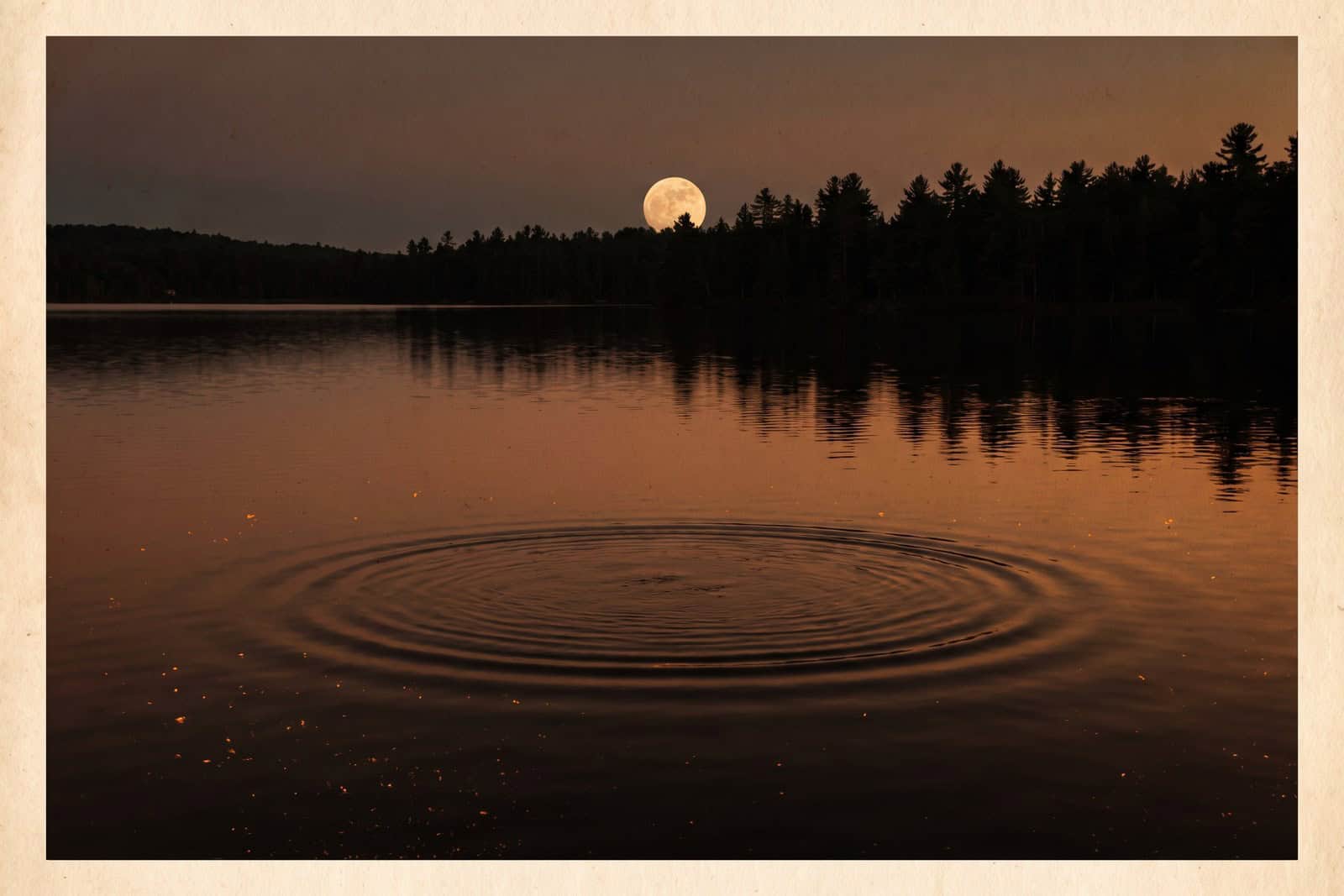
There is a third layer that most anglers use without naming it. The major feeding period is traditionally taken as the hour or so either side of the Moon crossing your meridian, whether it is above your head or below your feet. The minor periods are moonrise and moonset. During the first October window the Moon crosses overhead in New York at 11:09 a.m. on the 8th, 11:53 a.m. on the 9th, 12:38 p.m. on the 10th, 1:24 p.m. on the 11th and 2:11 p.m. on the 12th, sliding about three quarters of an hour later each day. Subtract roughly an hour per time zone as you head west.
For the day by day ratings, the fishing calendar does the whole calculation for you and rates each day Best, Good, Fair or Poor, with a best time of morning or evening.

What the Calendar Cannot Know
The formula is a starting point, not a guarantee. Local conditions, tides, water temperature and the weather on the day will all matter more than the Moon on any single trip. October is also a month of fast cooling water in the north, which moves fish deeper and shortens the productive part of the day.
- Fish the hour either side of dawn and dusk, whatever the calendar says.
- A falling barometer ahead of a front often beats a textbook moon date.
- In the north, check the water temperature before the calendar. Cold water slows everything.
- Take the local regulations seriously. October is a closed season for some species in some states.
Frequently Asked Questions
What are the best days to fish in October 2026?
The tradition points at two windows: 8 to 12 October around the new Moon on Saturday 10 October, and 24 to 28 October around the full Hunter’s Moon at 12:11 a.m. EDT on Monday 26 October.
When is the new Moon in October 2026?
Saturday 10 October at 11:50 a.m. EDT. The nights either side of it are the darkest of the month.
When is the full Moon in October 2026?
The Hunter’s Moon is full at 12:11 a.m. EDT on Monday 26 October, so it is best watched on Sunday night, 25 October.
Does the Moon really affect fishing?
Anglers have worked to the Moon for centuries, and the reasoning is that gravitational pull and changing light levels influence feeding. Treat it as a way to choose between two free weekends rather than a promise of a full net.
How does the Farmers’ Almanac fishing calendar work?
It combines the phase of the Moon, the zodiac sign the Moon is in, and long accumulated experience, then rates each day Best, Good, Fair or Poor with a best time of morning or evening.
Read Next
- Fishing Calendar: Best Days and Times to Fish
- Hunter’s Moon 2026: October Full Moon Date and Folklore
- Next Full Moon: Dates, Times, and Traditional Names

Josh Morley grew up in Liverpool, where checking the sky before you leave the house is less a habit than a survival skill. He has spent his working life with data, and he came to the Farmers' Almanac by way of the thing the two have in common: the weather is the largest dataset any of us live inside, and most of us read it every day without noticing.
- Josh Morley

- Josh Morley

- Josh Morley
- Josh Morley