When Is the First Hard Freeze in Your State? A 50-State Guide

Quick Reference: First Hard Freeze
- Frost is 32F or a little above, ice on surfaces. Hard freeze is 28F or lower for several hours.
- The hard freeze usually arrives two to three weeks after the first frost
- Northern Plains, northern Rockies and northern New England: early to mid October
- Midwest, Great Lakes, interior Northeast: late October to mid November
- Mid Atlantic, Upper South, Pacific Northwest valleys: mid November to early December
- Gulf Coast, Florida peninsula, low deserts, Pacific coast: December, or not every year
The first frost is a warning. The first hard freeze is the event. When the thermometer settles at 28F or lower for a few hours, the growing season is over for everything but the hardiest greens. Water left in hoses and irrigation lines turns to ice. The ground begins its slow freeze from the top down. Below is when that typically happens in every state, and the short list of jobs worth finishing first.
Frost and Hard Freeze Are Not the Same Thing
A frost forms when surfaces cool enough for ice crystals to appear, which can happen with the official air temperature still in the mid 30s. Tender plants such as basil, tomatoes and impatiens blacken, and hardier crops shrug it off. A freeze is an air temperature of 32F or lower. A hard freeze, sometimes called a killing freeze, is 28F or lower held for several hours. The National Weather Service issues a Freeze Warning at 32F and, in many offices, a Hard Freeze Warning at 28F. The lower figure is the one that matters for pipes, hose bibs and the last of the harvest.
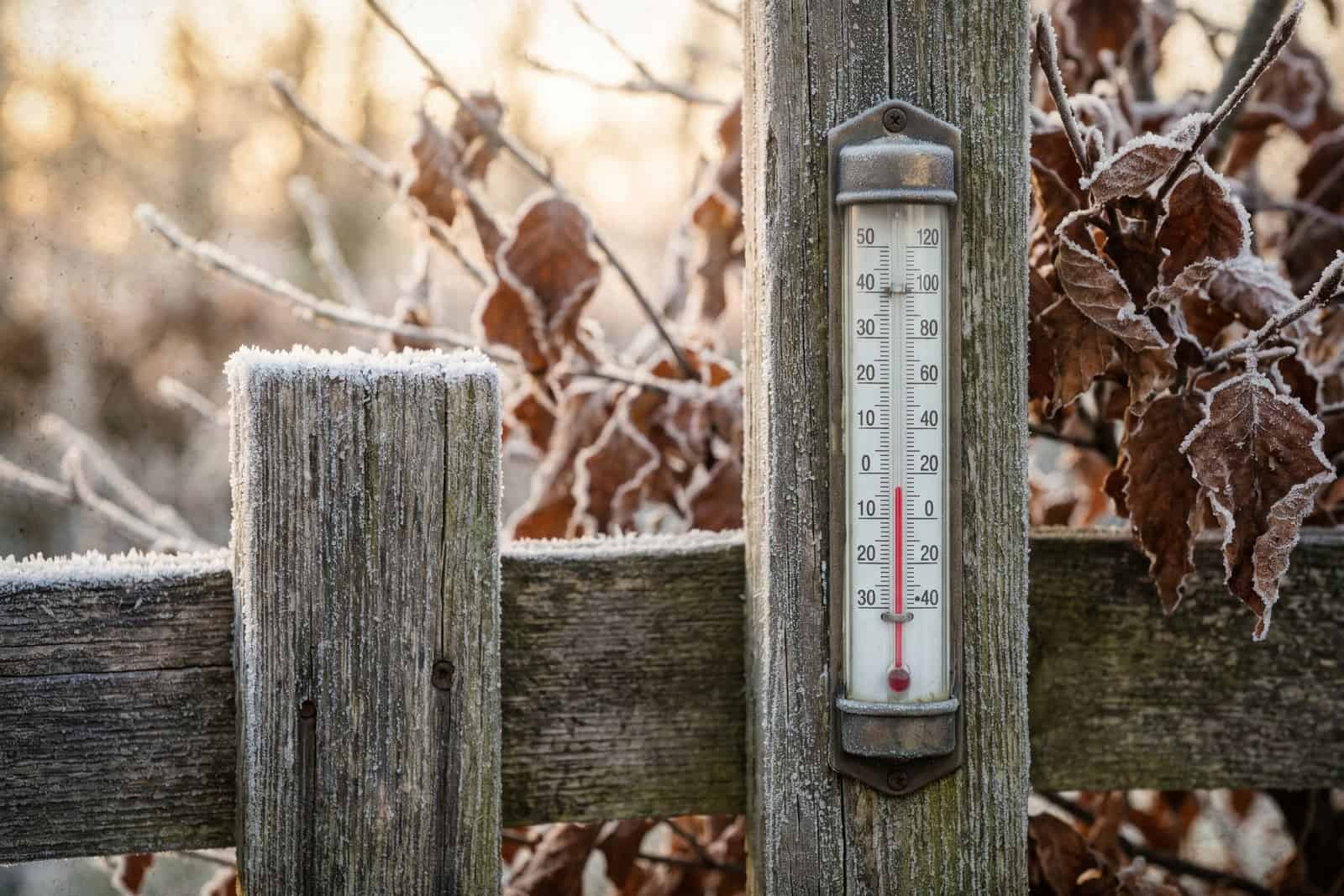
The gap between the two is useful. In most of the country the first hard freeze follows the first frost by two to three weeks, which is your window to lift tender bulbs, drain the sprinklers and bring in the squash. The dates below use the same NOAA 1991 to 2020 normals as our 2026 first frost map.
First Hard Freeze by State
Each row gives a representative city, its average first frost and the typical window for the first 28F reading. The note tells you which parts of the state run early. Mountains, high valleys and open prairie freeze first; coasts, big lakes and city centers hold on longest.
| State | Representative city | Average first frost (32F) | Typical first hard freeze (28F) | Earlier or later |
|---|---|---|---|---|
| Alabama | Birmingham | November 13 | Late November to early December | Earlier in the Tennessee Valley, later on the Gulf |
| Alaska | Anchorage | September 14 | Late September to early October | Fairbanks and the Interior freeze hard by mid September |
| Arizona | Flagstaff | October 1 | Mid October (high country); rare in Phoenix and Tucson | Low deserts may go whole winters without 28F |
| Arkansas | Little Rock | November 4 | Mid to late November | Ozarks run one to two weeks earlier |
| California | Sacramento | November 26 | Mid December (inland valleys); rare on the coast | Sierra foothills and high desert freeze in October |
| Colorado | Denver | October 7 | Mid to late October | Mountain towns freeze hard in September |
| Connecticut | Hartford | October 10 | Late October to early November | Shoreline runs about two weeks later |
| Delaware | Wilmington | October 30 | Mid November | Coastal Sussex County a week or so later |
| Florida | Jacksonville | December 16 | Late December to January (north); rare central and south | Miami and the Keys almost never reach 28F |
| Georgia | Atlanta | November 19 | Late November to early December | North Georgia mountains freeze hard by early November |
| Hawaii | Honolulu | No frost | None at sea level | Only the summits of Mauna Kea and Haleakala freeze |
| Idaho | Boise | October 12 | Mid to late October | Mountain valleys freeze hard in September |
| Illinois | Chicago | October 28 | Late October to mid November | Northern counties earlier, southern tip later |
| Indiana | Indianapolis | October 15 | Late October to early November | Lake Michigan shore a week later |
| Iowa | Des Moines | October 12 | Late October | Northwest corner a week earlier |
| Kansas | Wichita | October 28 | Early to mid November | Northwest Kansas two weeks earlier |
| Kentucky | Louisville | October 30 | Early to mid November | Eastern mountains earlier |
| Louisiana | Baton Rouge | November 22 | Early to mid December (north); rare on the coast | New Orleans can skip 28F in a mild winter |
| Maine | Portland | October 8 | Mid to late October | Caribou and the North Woods freeze hard by early October |
| Maryland | Baltimore | November 12 | Mid to late November | Western mountains in late October |
| Massachusetts | Boston | October 27 | Early to mid November (coast); late October (Worcester hills) | Cape Cod the latest in the state |
| Michigan | Detroit | October 20 | Late October to early November | Upper Peninsula freezes hard by mid October |
| Minnesota | Minneapolis | October 8 | Mid to late October | International Falls and the Arrowhead by early October |
| Mississippi | Jackson | November 15 | Late November to early December | Gulf Coast later still |
| Missouri | St. Louis | October 29 | Early to mid November | Northern Missouri a week earlier |
| Montana | Billings | September 29 | Early to mid October | Great Falls and the high line by late September |
| Nebraska | Omaha | October 9 | Late October | Panhandle a week or two earlier |
| Nevada | Reno | October 14 | Late October (north); rare in Las Vegas | High desert valleys freeze hard in early October |
| New Hampshire | Concord | September 22 | Early to mid October | White Mountains by late September |
| New Jersey | Newark | November 5 | Mid to late November | Northwest hills in late October |
| New Mexico | Albuquerque | October 29 | Early to mid November (Rio Grande valley) | Santa Fe and the high country by mid October |
| New York | Albany | October 7 | Late October (upstate) to late November (NYC) | Adirondacks and Tug Hill by early October |
| North Carolina | Raleigh | November 7 | Mid to late November | Asheville and the mountains by early November |
| North Dakota | Fargo | October 1 | Early to mid October | Northwest corner in late September |
| Ohio | Columbus | October 18 | Late October to early November | Lake Erie shore a week later |
| Oklahoma | Oklahoma City | November 5 | Mid to late November | Panhandle in late October |
| Oregon | Portland | November 19 | Early to mid December (west); mid October (east) | Bend and the high desert freeze hard in early October |
| Pennsylvania | Philadelphia | November 6 | Early November (Pittsburgh) to late November (Philadelphia) | Northern tier and the Poconos by mid October |
| Rhode Island | Providence | October 28 | Early to mid November | Block Island later |
| South Carolina | Columbia | November 1 | Mid to late November (inland); early December (coast) | Upstate earlier |
| South Dakota | Sioux Falls | October 5 | Mid October | Black Hills by late September |
| Tennessee | Nashville | October 31 | Early to mid November | Memphis a week later, the Plateau earlier |
| Texas | Dallas | November 17 | Early December (Dallas); early November (Panhandle); rare on the coast | Houston and the coast may not see 28F every winter |
| Utah | Salt Lake City | October 15 | Late October to early November | High valleys by late September |
| Vermont | Burlington | October 3 | Mid to late October | Northeast Kingdom by early October |
| Virginia | Richmond | October 26 | Early to mid November | Shenandoah and the Blue Ridge in late October |
| Washington | Seattle | November 25 | Early to mid December (west); mid to late October (east) | Spokane freezes hard by late October |
| West Virginia | Charleston | October 25 | Early to mid November | Mountain counties in October |
| Wisconsin | Madison | October 9 | Mid to late October | Milwaukee lakeshore a week later, the North Woods earlier |
| Wyoming | Cheyenne | September 27 | Early to mid October | Jackson and the mountain valleys by mid September |
Two patterns stand out. Elevation beats latitude: Flagstaff has usually had its hard freeze by mid October, while Phoenix, 150 miles to the south, often goes the whole winter without one, and Denver freezes before Boston. Water delays everything: Chicago’s lakefront, Cleveland’s shore and the whole of coastal New England run a week or more behind the inland counties beside them.
What to Do Before the Hard Freeze
Most of these take an afternoon. Do them in the two weeks between the first frost and the first 28F reading and nothing gets caught out.
- Disconnect and drain garden hoses, and shut off any outdoor faucet that has an interior valve. A hose left attached is the most common cause of a burst pipe inside the wall. See our sprinkler and faucet guide for timing by state.
- Blow out or drain the irrigation system. Underground lines hold water that expands when it freezes.
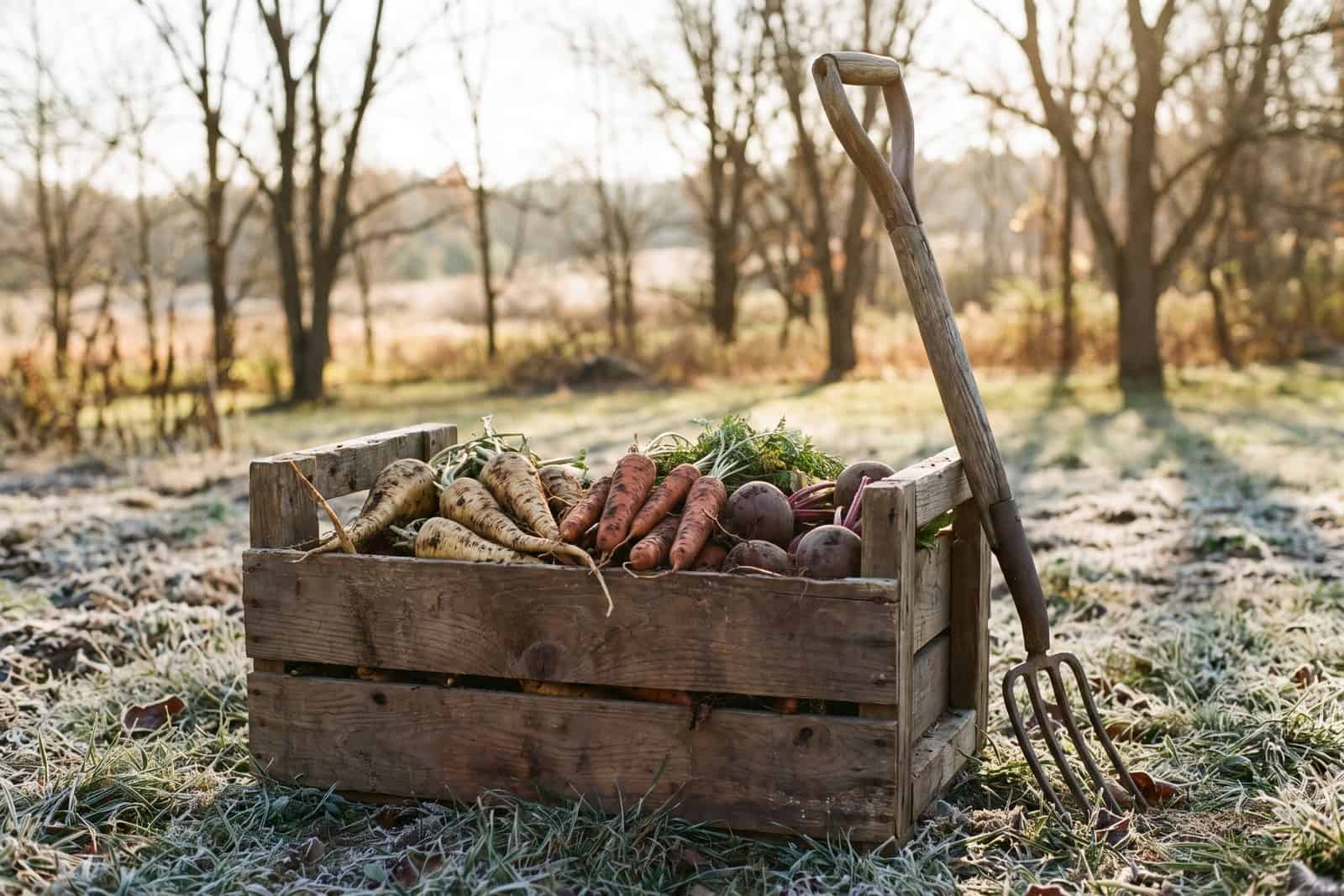
- Harvest everything tender. Peppers, tomatoes, squash and pumpkins come in before the first frost; root crops such as carrots, parsnips and beets can stay until the hard freeze and taste sweeter for it.
- Lift tender bulbs and tubers. Dahlias, gladiolus, cannas and caladiums come out after the first frost blackens the tops, and before the ground freezes.
- Plant spring bulbs. Tulips and daffodils go in once the soil has cooled, and can keep going until the ground freezes solid. Timing by state in our bulb planting guide.
- Mulch new perennials after the first hard freeze, not before. The point is to keep the ground frozen and stop heaving, not to keep it warm.
- Run the furnace once while it is still mild, so any fault shows up before you depend on it. More in our checklist for turning on the heat.
Why the Date Moves From Year to Year
The normals above are 30 year averages, and the spread around them is wide. In a northern city such as Minneapolis the first 28F night can land in late September one year and the first week of November the next. A clear, calm night after a cold front is what does it: without cloud or wind, heat radiates away from the ground and the air at grass level drops several degrees below the official reading. Valleys and low spots, where cold air pools, freeze first. A sloping garden or one close to a large body of water gets a few days’ grace.
For the broader outlook on the season ahead, the Farmers’ Almanac long range forecast for your region is on our extended forecast page.
Get the sky and season ahead, every week
The Farmers’ Almanac newsletter carries the dates worth circling, the Best Days, and the long range outlook for your region. Sign up free.
Frequently Asked Questions
What temperature is a hard freeze?
A hard freeze is 28F or lower for several hours. A frost can form with air temperatures in the mid 30s, and a freeze is 32F or lower. The 28F threshold is the one that kills most remaining garden plants and can burst unprotected pipes.
How long after the first frost does the first hard freeze come?
Typically two to three weeks. In the northern Plains and northern Rockies the gap can be a week or less, because autumn arrives fast. Along the Gulf Coast and in the low deserts a hard freeze may not follow the first frost at all in a mild winter.
Which states get a hard freeze first?
Alaska, then the high country of Wyoming, Montana, Colorado and New Mexico, the Dakotas, Minnesota and northern New England, all typically by mid October. Interior Alaska and the highest mountain valleys freeze hard in September.
Which states rarely get a hard freeze?
Hawaii, the Florida peninsula, coastal southern California, the Phoenix and Tucson low deserts, and the immediate Gulf Coast of Texas and Louisiana. All of these can reach 28F in a severe cold outbreak, but not in a typical winter.
Can I still plant bulbs after the first hard freeze?
Yes, as long as you can still get a trowel into the ground. The hard freeze affects the air and the surface; the soil a few inches down takes weeks longer to freeze solid. Bulbs need about six weeks of root growth before that happens.
Are these dates a forecast for this autumn?
No. They are long term averages from NOAA climate normals. Any single year can run early or late by two or three weeks. For the seasonal outlook, see the Farmers’ Almanac extended forecast.
Read Next
- First Frost Dates 2026: When Should You Expect the First Frost of Fall?
- The Fall Garden Checklist: 6 Things to Do Before the First Hard Freeze
- When Should You Stop Mowing Your Lawn for the Year?
- First Snowfall Where I Live: When Will the First Snow Arrive in 2026?

Josh Morley grew up in Liverpool, where checking the sky before you leave the house is less a habit than a survival skill. He has spent his working life with data, and he came to the Farmers' Almanac by way of the thing the two have in common: the weather is the largest dataset any of us live inside, and most of us read it every day without noticing.
- Josh Morley

- Josh Morley
- Josh Morley
- Josh Morley