When to Winterize Sprinklers and Outdoor Faucets in Your State

Quick Reference: Winterizing Outdoor Water
- Garden hoses: disconnect, drain and store by the first frost
- Outdoor faucets: shut the interior valve and open the outside tap to drain, before the first hard freeze (28F)
- Irrigation systems: blow out with compressed air, or drain fully, before the first hard freeze
- North: finish by early to mid October. Midwest and Northeast: late October to mid November. South: late November or December
- Frost-free hose bibs still burst if a hose is left attached
- One hard freeze with a hose on the tap is enough to split a pipe inside the wall
Water expands by about nine percent when it freezes, and it does not care whether it is in a lake or a half-inch copper pipe. The most expensive version of this lesson is the hose left connected through the first hard freeze. Ice forms in the hose and backs up into the faucet. The pipe splits behind the wall, where nobody notices until the spring thaw. The fix takes ten minutes. Here is when to do it in every state.
Two Jobs, Two Deadlines
By the first frost: hoses off, drained and stored. Sprinkler timers switched off. This is the easy one and it removes the main cause of burst faucets.
By the first hard freeze: the irrigation system blown out or drained, and any outdoor faucet with an interior shut-off valve closed inside and opened outside so the stub of pipe is empty. A single night at 28F or lower for several hours is enough to freeze standing water in an exposed pipe. Typical hard freeze timing for every state is in our first hard freeze guide; the table below pairs it with the frost date.
Winterizing Deadlines by State
| State | Hoses off by (average first frost) | Irrigation blown out by (typical first hard freeze) | Earlier or later |
|---|---|---|---|
| Alabama | November 13 | Late November to early December | Earlier in the Tennessee Valley, later on the Gulf |
| Alaska | September 14 | Late September to early October | Fairbanks and the Interior freeze hard by mid September |
| Arizona | October 1 | Mid October (high country); rare in Phoenix and Tucson | Low deserts may go whole winters without 28F |
| Arkansas | November 4 | Mid to late November | Ozarks run one to two weeks earlier |
| California | November 26 | Mid December (inland valleys); rare on the coast | Sierra foothills and high desert freeze in October |
| Colorado | October 7 | Mid to late October | Mountain towns freeze hard in September |
| Connecticut | October 10 | Late October to early November | Shoreline runs about two weeks later |
| Delaware | October 30 | Mid November | Coastal Sussex County a week or so later |
| Florida | December 16 | Late December to January (north); rare central and south | Miami and the Keys almost never reach 28F |
| Georgia | November 19 | Late November to early December | North Georgia mountains freeze hard by early November |
| Hawaii | No frost | None at sea level | Only the summits of Mauna Kea and Haleakala freeze |
| Idaho | October 12 | Mid to late October | Mountain valleys freeze hard in September |
| Illinois | October 28 | Late October to mid November | Northern counties earlier, southern tip later |
| Indiana | October 15 | Late October to early November | Lake Michigan shore a week later |
| Iowa | October 12 | Late October | Northwest corner a week earlier |
| Kansas | October 28 | Early to mid November | Northwest Kansas two weeks earlier |
| Kentucky | October 30 | Early to mid November | Eastern mountains earlier |
| Louisiana | November 22 | Early to mid December (north); rare on the coast | New Orleans can skip 28F in a mild winter |
| Maine | October 8 | Mid to late October | Caribou and the North Woods freeze hard by early October |
| Maryland | November 12 | Mid to late November | Western mountains in late October |
| Massachusetts | October 27 | Early to mid November (coast); late October (Worcester hills) | Cape Cod the latest in the state |
| Michigan | October 20 | Late October to early November | Upper Peninsula freezes hard by mid October |
| Minnesota | October 8 | Mid to late October | International Falls and the Arrowhead by early October |
| Mississippi | November 15 | Late November to early December | Gulf Coast later still |
| Missouri | October 29 | Early to mid November | Northern Missouri a week earlier |
| Montana | September 29 | Early to mid October | Great Falls and the high line by late September |
| Nebraska | October 9 | Late October | Panhandle a week or two earlier |
| Nevada | October 14 | Late October (north); rare in Las Vegas | High desert valleys freeze hard in early October |
| New Hampshire | September 22 | Early to mid October | White Mountains by late September |
| New Jersey | November 5 | Mid to late November | Northwest hills in late October |
| New Mexico | October 29 | Early to mid November (Rio Grande valley) | Santa Fe and the high country by mid October |
| New York | October 7 | Late October (upstate) to late November (NYC) | Adirondacks and Tug Hill by early October |
| North Carolina | November 7 | Mid to late November | Asheville and the mountains by early November |
| North Dakota | October 1 | Early to mid October | Northwest corner in late September |
| Ohio | October 18 | Late October to early November | Lake Erie shore a week later |
| Oklahoma | November 5 | Mid to late November | Panhandle in late October |
| Oregon | November 19 | Early to mid December (west); mid October (east) | Bend and the high desert freeze hard in early October |
| Pennsylvania | November 6 | Early November (Pittsburgh) to late November (Philadelphia) | Northern tier and the Poconos by mid October |
| Rhode Island | October 28 | Early to mid November | Block Island later |
| South Carolina | November 1 | Mid to late November (inland); early December (coast) | Upstate earlier |
| South Dakota | October 5 | Mid October | Black Hills by late September |
| Tennessee | October 31 | Early to mid November | Memphis a week later, the Plateau earlier |
| Texas | November 17 | Early December (Dallas); early November (Panhandle); rare on the coast | Houston and the coast may not see 28F every winter |
| Utah | October 15 | Late October to early November | High valleys by late September |
| Vermont | October 3 | Mid to late October | Northeast Kingdom by early October |
| Virginia | October 26 | Early to mid November | Shenandoah and the Blue Ridge in late October |
| Washington | November 25 | Early to mid December (west); mid to late October (east) | Spokane freezes hard by late October |
| West Virginia | October 25 | Early to mid November | Mountain counties in October |
| Wisconsin | October 9 | Mid to late October | Milwaukee lakeshore a week later, the North Woods earlier |
| Wyoming | September 27 | Early to mid October | Jackson and the mountain valleys by mid September |
The second column is the one to put in the diary. Irrigation contractors in the northern half of the country are fully booked for the last two weeks before the typical hard freeze. A slot in the first half of the window is worth more than a cheaper one in the second.
How to Winterize an Outdoor Faucet
- Disconnect the hose, drain it fully and store it coiled indoors or in a shed. A hose left outside full of water will split.
- Find the interior shut-off valve for that faucet, usually in the basement or crawl space on the pipe leading to the wall. Close it.
- Go back outside and open the faucet. Leave it open all winter so any water that gets in can drain or expand harmlessly.
- If the interior valve has a small bleeder cap, open it with a bucket underneath to drain the last of the water.
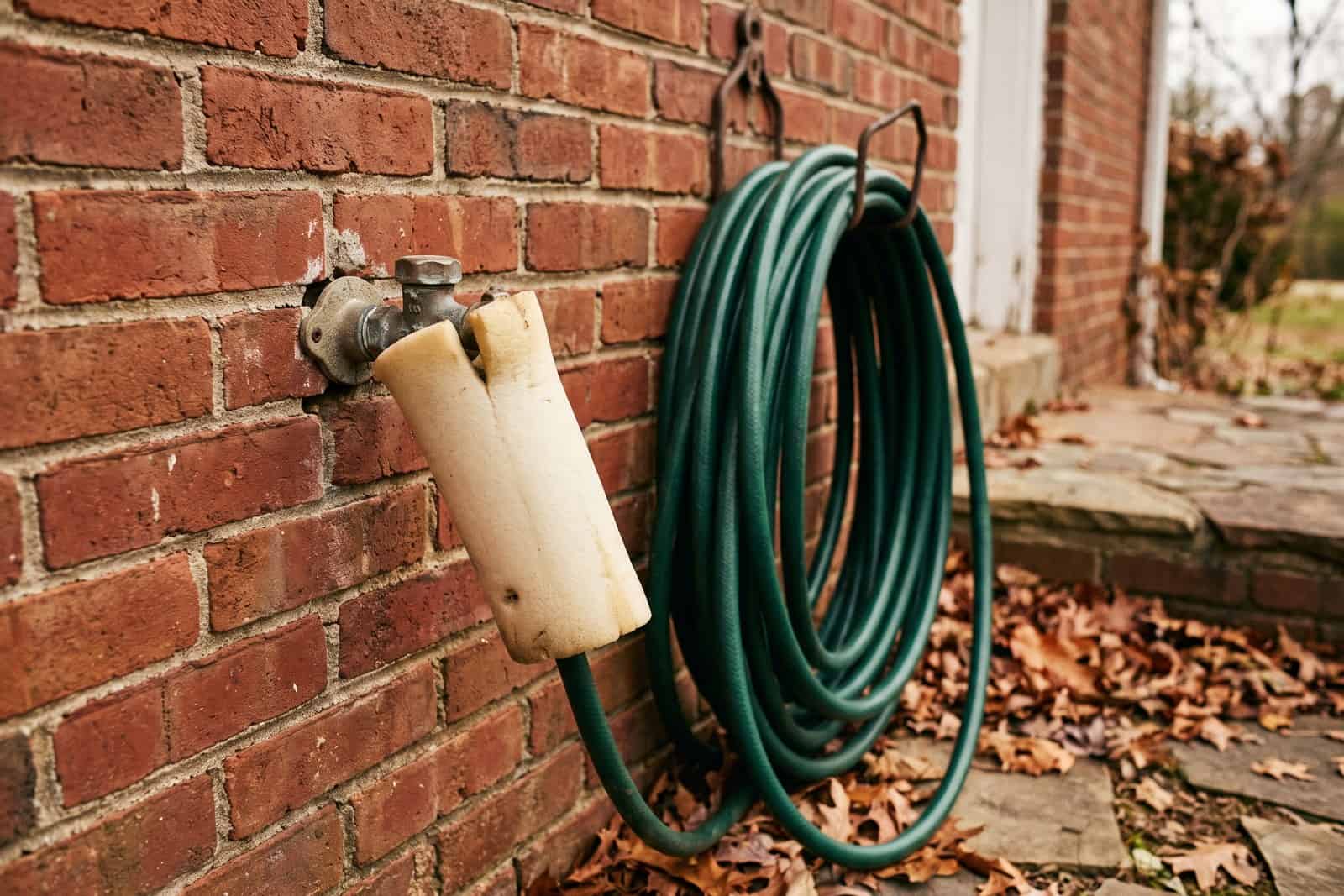
- No interior valve? Fit an insulated faucet cover (a foam dome, a few dollars at any hardware store). It is not a substitute for draining, but it buys several degrees.
- Frost-free hose bibs (the long-stem type that shuts off inside the warm wall) do not need draining, but they do need the hose removed. A connected hose traps water in the stem and defeats the design.
How to Winterize a Sprinkler System
There are three methods, and which one applies depends on how the system was installed.
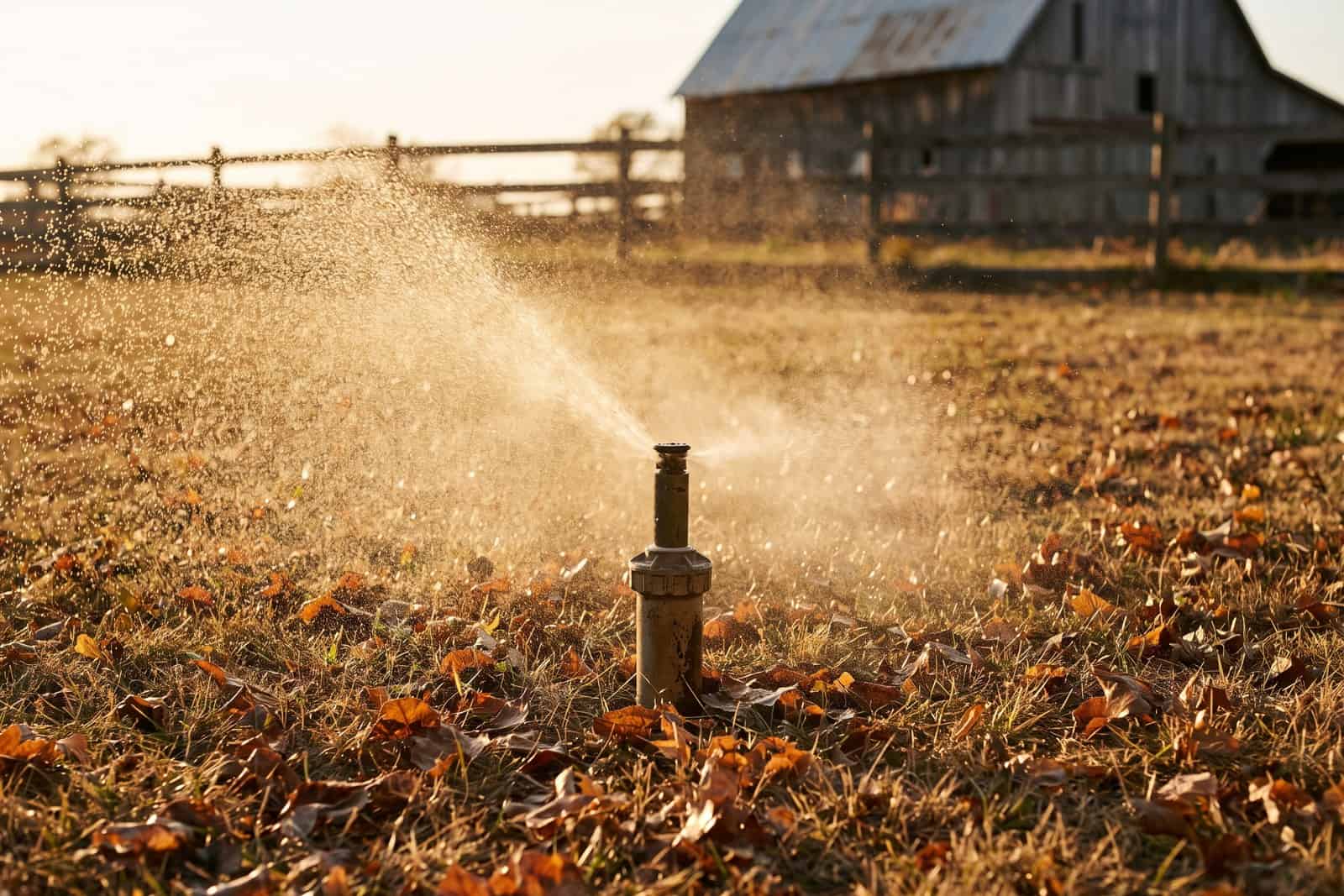
- Blow-out (most common): shut the water supply to the irrigation system, connect an air compressor to the blow-out port, and run each zone in turn at low pressure (no more than 50 psi for PVC, 80 psi for poly pipe) until only mist comes out of the heads. Wear eye protection. Most homeowners hire this out; a contractor commonly charges somewhere around 60 to 120 dollars for a residential system.
- Manual drain: if the system was installed with drain valves at the low points, shut the supply and open every drain valve, then open the test cocks on the backflow preventer. Only works on systems designed for it.
- Automatic drain: some systems drain themselves when pressure drops below a threshold. Shut the supply, run a zone briefly to release pressure, and check the low points.
Whichever method, the backflow preventer is the part that breaks. It sits above ground, holds water, and is the first thing to freeze. Drain it, open its test cocks to a 45 degree angle, and if it is exposed, wrap it. A replacement runs into the hundreds.
If You Get Caught Out
A hard freeze is forecast tonight and nothing is done. Disconnect the hoses now, that is the most important single step. Open the outdoor faucets. Shut off the irrigation controller and the system’s supply valve. Let a cold tap drip indoors overnight on any pipe run along an exterior wall.
Then book the blow-out for the next mild day. One night rarely freezes a buried line, but a buried line full of water will not survive a week of them.
Get the sky and season ahead, every week
The Farmers’ Almanac newsletter carries the dates worth circling, the Best Days, and the long range outlook for your region. Sign up free.
Frequently Asked Questions
At what temperature should I winterize my sprinklers?
Before the first hard freeze, 28F or lower for several hours. A light frost at 32F will not freeze buried lines, but it is the signal to book the blow-out, because the hard freeze typically follows within two to three weeks.
Do I need to disconnect my hose in winter?
Yes, everywhere a frost is possible. A connected hose holds water against the faucet, and when it freezes the ice pushes back into the pipe inside the wall. This is the most common cause of a burst pipe and it affects frost-free faucets too.
Can I blow out my sprinkler system myself?
Yes, with a compressor that delivers enough volume (around 10 cubic feet per minute for a typical home system) and care with the pressure: 50 psi or less for PVC, 80 psi for polyethylene. Run one zone at a time, stop when mist appears, and wear eye protection. Many people hire it out for the price of an hour’s labor.
What happens if I do not winterize my sprinkler system?
Water in the lines and heads freezes and expands, cracking pipes, fittings and the backflow preventer. The damage shows up in spring as wet spots, dead zones and a backflow unit that leaks under pressure.
When should I turn the outdoor water back on?
After the last spring frost for your area. Open the supply slowly to avoid a pressure surge, and check the backflow preventer and each zone for leaks before setting the timer.
Are these dates a forecast?
No. They are long term averages of first frost and first hard freeze from NOAA climate normals. Any autumn can run early, so a mid-window appointment is safer than a late one.
Read Next
- When Is the First Hard Freeze in Your State?
- When Should You Stop Watering Your Lawn in Fall?
- How to Winterize a Lawn Mower and Outdoor Power Equipment
- 10 Things To Do Before Turning On Your Heat This Fall

Josh Morley grew up in Liverpool, where checking the sky before you leave the house is less a habit than a survival skill. He has spent his working life with data, and he came to the Farmers' Almanac by way of the thing the two have in common: the weather is the largest dataset any of us live inside, and most of us read it every day without noticing.
- Josh Morley

- Josh Morley
- Josh Morley
- Josh Morley