When Should You Stop Watering Your Lawn in Fall? A State-by-State Guide
When should you stop watering your lawn in fall? See our state-by-state guide, plus the signs that tell you when your grass is ready for winter.

Your grass may look like it’s slowing down, but shutting off the sprinklers too early can leave a lawn stressed heading into winter. Here’s when lawn watering typically winds down in every state—and the simple test that tells you when your grass has had enough.
As September days grow shorter and mornings turn cooler, there comes a point when many homeowners ask the same question:
When should I stop watering my lawn in the fall?
It’s tempting to turn off the sprinklers as soon as summer ends. But in many parts of the country, your lawn still needs moisture well into autumn—even after you’ve started wearing a jacket outside.
Cool-season grasses can actually become more active again as summer heat fades. Iowa State University Extension notes that turfgrass can need roughly an inch of water per week while actively growing in fall, particularly during dry weather.
And while the first frost may make it feel like lawn season is over, frost and frozen soil are two very different things.
In cold climates, the best time to shut down routine irrigation is generally when grass growth has essentially stopped, natural precipitation is providing sufficient moisture, and the ground is approaching freeze-up.
That date can vary enormously depending on where you live.
Here’s how to know when it’s time.
Quick Answer: When Should You Stop Watering Your Lawn in Fall?
For most northern lawns, reduce watering as temperatures cool, but don’t automatically stop just because September or October has arrived.
Continue supplying water when:
- The grass is still actively growing.
- Rainfall has been scarce.
- The soil is dry several inches down.
- Your lawn has recently been seeded or sodded.
- The grass shows visible signs of drought stress.
As the weather gets cooler, your lawn loses less moisture through evaporation, so it generally needs less frequent irrigation than it did during summer.
The EPA recommends adjusting automatic irrigation schedules as the seasons change rather than leaving a summertime schedule running through fall.
In colder parts of the country, routine watering usually ends when the lawn becomes dormant and the soil begins freezing.
But there’s an important exception we’ll get to below:
A dry lawn may occasionally need water even during winter.
Don’t Stop Watering Just Because You Stop Mowing
Fall lawn care involves two different clocks.
Grass blades may stop growing quickly enough to need mowing, while the crowns and roots of the grass can remain physiologically active.
That’s why the date you put away your mower isn’t necessarily the day you should stop thinking about soil moisture.
If you haven’t already, see our companion guide:
When Should You Stop Mowing Your Lawn? State-by-State Guide
The two jobs are closely related, but they aren’t identical.
The Easiest Way to Tell If Your Lawn Still Needs Water
Forget the calendar for a moment and walk across your grass.
Then look behind you.
If the grass springs back quickly, the lawn probably has enough moisture.
If your footprints remain visible, or the blades appear dull, bluish-gray or wilted, the turf may need water.
Both Iowa State and Colorado State Extension recommend watching the turf for these signs of moisture stress rather than watering on a fixed schedule.
Farmers’ Almanac Tip
Push a screwdriver several inches into the soil.
If it slides into the ground relatively easily and the soil below the surface feels moist, you can probably wait.
If the soil is hard and dry, your lawn may still need a good soaking.
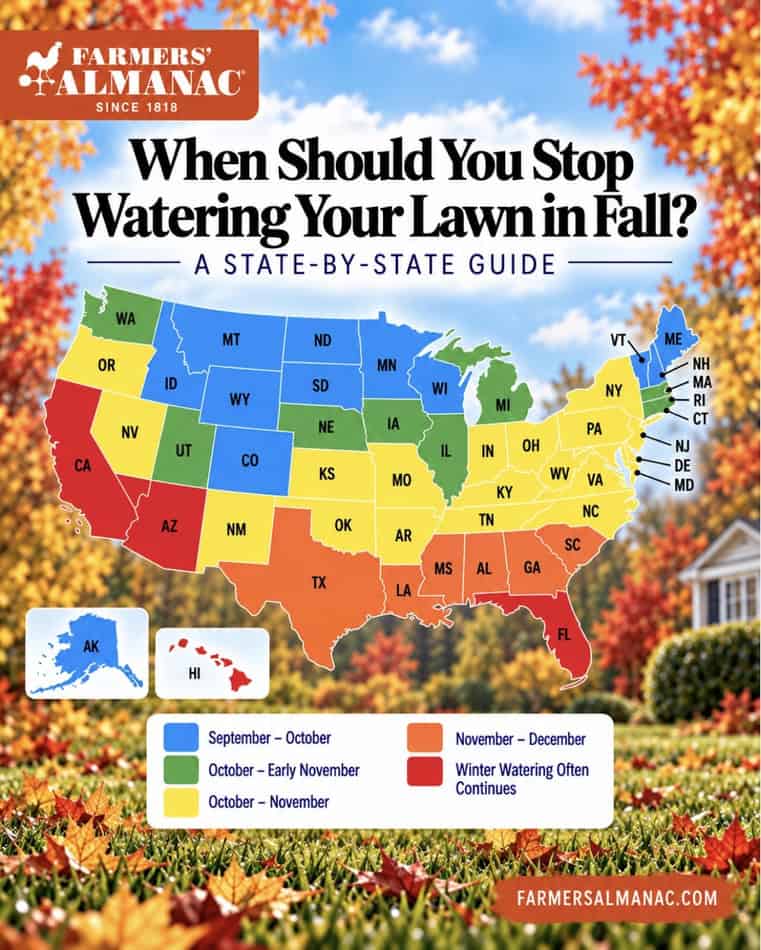
When Should You Stop Watering? State-by-State Guide
These are approximate periods when routine lawn irrigation usually begins winding down, not hard deadlines.
Elevation, rainfall, grass type, drought, soil conditions, and your particular microclimate can move these dates by several weeks.
A lawn in Buffalo is very different from one in New York City. Flagstaff and Phoenix might as well be in different states when it comes to fall lawn care.
Most importantly, never irrigate frozen ground.
| State | Typical Time Routine Fall Watering Winds Down |
|---|---|
| Alabama | November–December; later along Gulf Coast |
| Alaska | September–early October; earlier in colder interior areas |
| Arizona | September–October in high country; winter irrigation may continue in low deserts |
| Arkansas | Late October–November |
| California | October–November in colder interior/mountain areas; watering may continue through winter in dry coastal and southern areas |
| Colorado | Late September–October; occasional winter watering may be beneficial during prolonged dry periods |
| Connecticut | October–early November |
| Delaware | Late October–November |
| Florida | Reduce in fall, but irrigation may continue through winter as conditions require |
| Georgia | October–November; later in southern Georgia |
| Hawaii | Year-round as needed |
| Idaho | September–October |
| Illinois | October–early November |
| Indiana | October–November |
| Iowa | October–early November |
| Kansas | October–November |
| Kentucky | Late October–November |
| Louisiana | November–December; winter watering may still be needed during dry spells |
| Maine | September–October |
| Maryland | Late October–November |
| Massachusetts | October–early November |
| Michigan | October–early November |
| Minnesota | Late September–October |
| Mississippi | November–December |
| Missouri | October–November |
| Montana | September–October |
| Nebraska | October–early November |
| Nevada | October in colder areas; November or later around Las Vegas |
| New Hampshire | September–October |
| New Jersey | October–November |
| New Mexico | October in colder/high-elevation areas; November in warmer locations |
| New York | October upstate; October–November around NYC and Long Island |
| North Carolina | October–November; later toward the coast |
| North Dakota | September–October |
| Ohio | October–November |
| Oklahoma | October–November |
| Oregon | October–November; natural rainfall often reduces irrigation earlier west of the Cascades |
| Pennsylvania | October–November |
| Rhode Island | October–early November |
| South Carolina | November; later near the coast |
| South Dakota | September–October |
| Tennessee | Late October–November |
| Texas | October–December depending on location; South Texas lawns may need winter irrigation |
| Utah | October–early November |
| Vermont | September–October |
| Virginia | October–November |
| Washington | October east of Cascades; autumn rain often replaces irrigation in western Washington |
| West Virginia | October–November |
| Wisconsin | Late September–October |
| Wyoming | September–October |
Important
Think of these dates as the period when regular irrigation is usually reduced or discontinued, not a command to never water again until spring.
Your actual weather matters more than your state line.
RELATED: When Should You Stop Mowing Your Lawn for the Year? A State-by-State Guide
What About the First Frost?
Here’s where many homeowners go wrong.
The first frost does not automatically mean you should stop watering your lawn.
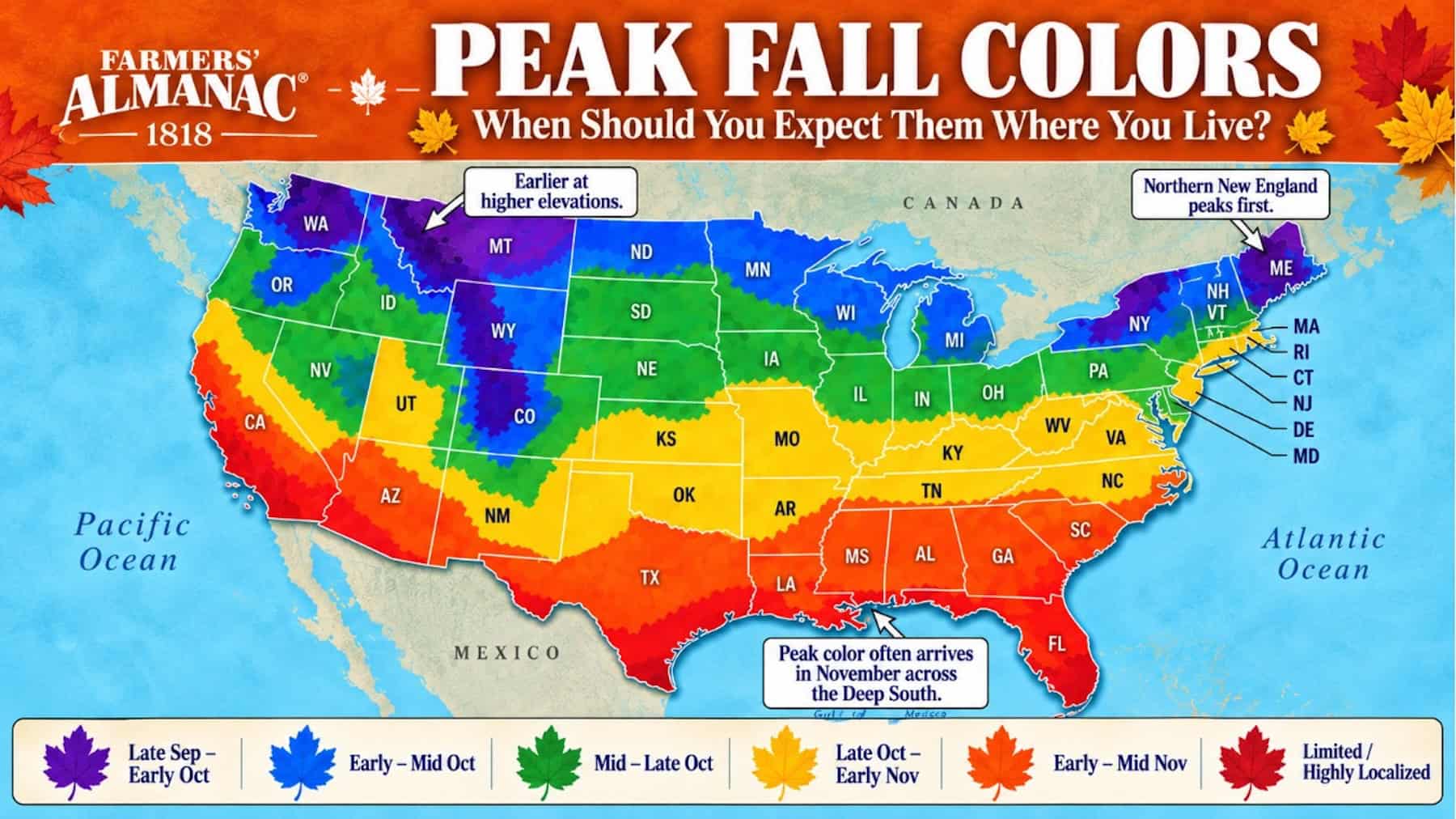
A light frost occurs when temperatures fall roughly into the 29°F–32°F range, but the soil several inches underground may still be well above freezing.
You can find the typical timing for your area in the Farmers’ Almanac Average First Frost Dates by City or our current 2026 First Frost Dates guide.
Cool-season grass may stay green—and its roots may continue functioning—after several frosty mornings.
A much more important milestone is when the soil begins freezing and can no longer absorb water normally.
University of Minnesota Extension recommends making sure lawns aren’t severely moisture-stressed before soil temperatures freeze.
Cool-Season Lawns May Still Be Thirsty in October
If your lawn contains grasses such as:
- Kentucky bluegrass
- Tall fescue
- Fine fescue
- Perennial ryegrass
autumn can actually be an important period of growth and recovery.
Cool temperatures reduce heat stress while soils remain relatively warm.
That means a cool-season lawn can still need water during a dry September or October.
Iowa State Extension recommends continuing to provide moisture when fall rainfall doesn’t supply enough, especially for newly seeded or renovated turf.
So if October turns unusually warm and dry, don’t shut off the sprinkler just because the calendar says fall has arrived.
What About Bermudagrass, Zoysia and Other Warm-Season Lawns?
Warm-season grasses follow a different schedule.
These include:
- Bermudagrass
- Zoysiagrass
- Centipedegrass
- St. Augustinegrass
As days shorten and temperatures cool, these grasses gradually enter winter dormancy.
But dormancy doesn’t mean you should abruptly starve the lawn of moisture.
University of Georgia Extension advises continuing irrigation while warm-season turf slows toward dormancy, while reducing or skipping irrigation when rainfall supplies enough water.
Once the lawn is fully dormant, its water needs fall substantially.
In warm southern areas without prolonged frozen ground, however, soil moisture should still be monitored during extended dry spells.
How Much Water Does a Lawn Need in Fall?
No universal number fits every lawn in America.
A commonly used starting point during active growth is about one inch of water per week, including rainfall, but requirements vary with weather, soil, grass type, and location.
As fall progresses, you will often need less supplemental irrigation because:
- Temperatures are lower.
- Evaporation decreases.
- Days are shorter.
- Grass grows more slowly.
- Autumn rain may supply much of the moisture you need.
If you receive an inch of soaking rain, don’t automatically run the sprinklers two days later just because they’re programmed to come on.
That’s exactly the kind of seasonal overwatering the EPA encourages homeowners to avoid.
Water Deeply, Not Every Day
When your lawn does need water in fall, it’s generally better to water deeply and less often than to use frequent, shallow sprinklings.
Deep watering encourages moisture to reach farther into the root zone.
Frequent light irrigation can encourage shallow rooting and waste water.
Iowa State recommends watering deeply and infrequently when irrigation is necessary.
What Is the Best Time of Day to Water in Fall?
Morning is usually the safest bet.
Iowa State recommends approximately 5 a.m. to 9 a.m., when temperatures are cooler and evaporation is relatively low while giving grass foliage time to dry afterward.
As temperatures fall toward freezing, timing becomes even more important.
You don’t want to coat your lawn, sidewalks or driveway with water immediately before a hard freeze.
Should You Give Your Lawn One Last Deep Watering Before Winter?
During a dry autumn, yes, that can be a good idea.
If the soil is dry and freezing weather is approaching, watering before the soil freezes can help turf enter winter without severe moisture stress.
University of Minnesota Extension specifically recommends watering lawns and other perennial plants before soil freezes during unusually dry autumns.
Think of it as sending your lawn into winter hydrated, not thirsty.
But don’t water saturated soil or add irrigation immediately after substantial rain.
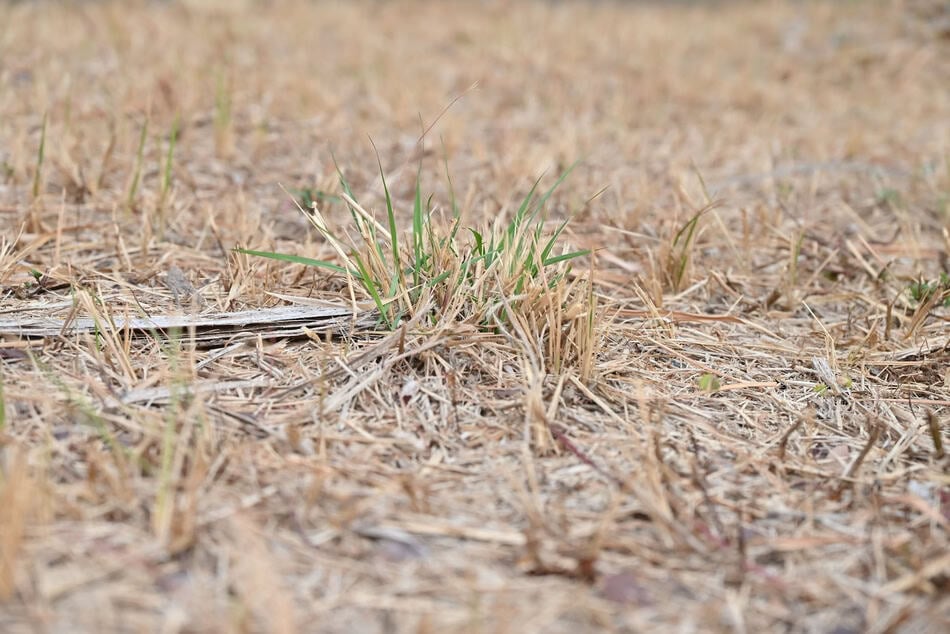
You May Actually Need to Water During Winter
This surprises many homeowners.
In dry climates, especially the Mountain West and central Plains, lawns can suffer from winter drought.
Colorado State University Extension recommends considering supplemental watering during prolonged dry periods when:
- There is little or no snow cover.
- The soil isn’t frozen.
- Air temperatures are above about 40°F.
- The lawn is especially exposed to sun or wind.
South- and west-facing lawns can be particularly vulnerable.
In these areas, an occasional winter watering every several weeks during unusually dry weather may help.
So for homeowners in places like Colorado, Wyoming, western Nebraska, New Mexico and portions of Utah, “turning off the sprinklers” doesn’t necessarily mean ignoring the lawn until April.
Newly Seeded Lawns Are Different
If you seeded or overseeded this fall, don’t follow the same watering schedule as an established lawn.
New grass has a shallow, developing root system and needs more consistent moisture.
During germination, keep the upper layer of soil moist. Once seedlings are established, transition gradually to deeper, less frequent watering.
The same caution applies to newly installed sod.
If you’re deciding when to stop watering solely because neighboring established lawns have shut down their sprinklers, you could stop far too early for new turf.
Don’t Forget to Winterize Your Irrigation System
There is another deadline homeowners need to consider:
When will your sprinkler pipes freeze?
In cold-winter climates, shut down and properly drain underground irrigation systems before damaging freezes reach them.
The EPA recommends winterizing irrigation systems by shutting off the water supply and draining lines before freezing conditions arrive.
This may mean shutting down your irrigation system before your lawn completely stops benefiting from moisture.
If your fall is particularly dry after you winterize the irrigation system, you can still use a hose or portable sprinkler on a warm day, when appropriate.
5 Signs It’s Probably Time to Stop Routine Lawn Watering
You can usually scale back or stop your regular sprinkler schedule when several of these occur together:
- Grass growth has dramatically slowed or stopped.
- Cooler weather and fall rain are keeping the soil naturally moist.
- The lawn no longer shows drought stress between rain events.
- Consistent freezing weather is approaching.
- The soil is beginning to freeze.
Notice what’s not on that list:
“It’s October.”
The calendar alone isn’t enough.
Don’t Make This Common Fall Sprinkler Mistake
One of the easiest ways to waste water in autumn is leaving an automatic irrigation controller on its July schedule.
A lawn that needed several irrigation cycles during hot, windy summer weather may need less supplemental water dramatically once temperatures fall.
EPA WaterSense recommends adjusting irrigation schedules with the seasons and considering weather- or soil-moisture-based controllers that prevent unnecessary watering.
If the sprinkler is running while autumn rain is falling, that’s a pretty good sign it’s time to revisit your settings.
So, When Should You Stop Watering Your Lawn?
The best answer isn’t a particular date.
Keep your lawn adequately moist while it is actively growing, gradually reduce irrigation as temperatures fall, and stop routine watering when grass enters dormancy and the ground approaches freezing.
For much of the northern United States, that means regular lawn watering winds down sometime from October into early November.
Far northern and high-elevation locations may finish in September or October.
Across much of the South, irrigation may continue into November or December.
And in frost-free parts of Florida, Southern California, Arizona, and Hawaii, there may be no true end to lawn-watering season at all.
Just remember:
Don’t water the calendar. Water the lawn.
Watch your grass.
Watch your rainfall.
Watch your temperatures.
And before winter truly sets in, make sure your lawn isn’t already suffering from drought as it heads into the coldest months of the year.


- Farmers' Almanac Staff

- Farmers' Almanac Staff

- Farmers' Almanac Staff

- Farmers' Almanac Staff