

Why You Should Stop Rinsing Your Dishes Before Loading Them: 6 Simple Ways to Get Cleaner Dishes

Are your dishes coming out cloudy, greasy, or covered in leftover food? Before replacing your dishwasher or spending money on expensive cleaning products, try these six simple tricks that can make a big difference.
There’s nothing quite as frustrating as opening the dishwasher after a full cycle, expecting sparkling-clean dishes, only to find cloudy glasses, greasy plates, and forks with bits of food still stuck to them.
But here’s some good news: Your dishwasher might not be the problem.
Sometimes, all it takes is a small change in how you use and maintain your machine. Something as simple as running the hot water before starting a cycle or cleaning a forgotten filter could dramatically improve your results.
At the Farmers’ Almanac, we’ve always believed that some of the best household solutions are also the simplest. In fact, our collection of old-fashioned household hints is full of practical wisdom that’s been passed down for generations.
Here are six easy ways to get cleaner dishes from your dishwasher, including a few tricks you might not have thought to try.
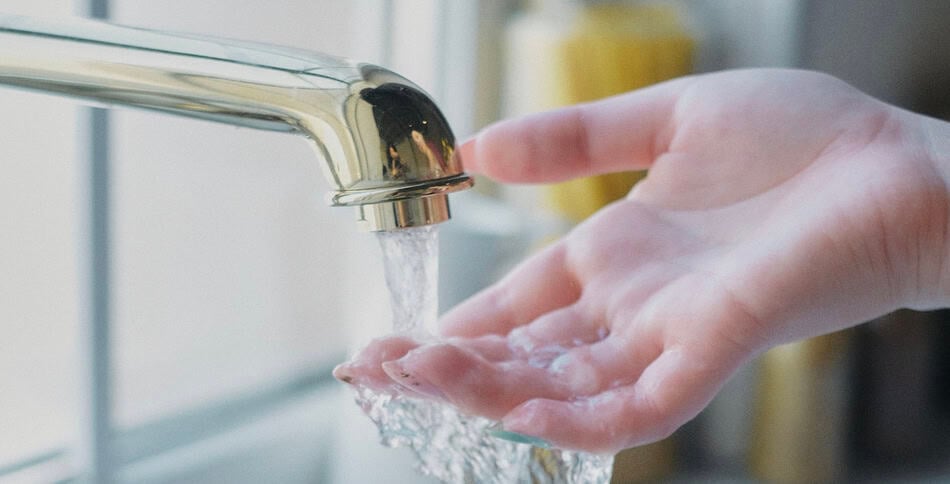
1. Run the Hot Water Before Starting Your Dishwasher
Here’s a simple trick that takes almost no effort but could noticeably improve how clean your dishes get.
Before starting your dishwasher, turn on the hot water at your kitchen sink and let it run until the water is hot.
Why does this work?
Many dishwashers are connected to the same hot-water supply as your kitchen faucet. When the water in those pipes cools between uses, the first water entering your dishwasher may be lukewarm or even cold.
And water temperature matters when it comes to breaking down grease, dissolving detergent, and removing stubborn food residue.
According to GE Appliances, many of its dishwashers are designed to receive water at approximately 120°F for optimal cleaning performance.
If the water entering your machine is too cool, cleaning performance can suffer.
What to do
- Turn on the hot water at your kitchen sink.
- Let it run until the water becomes hot.
- Turn off the faucet.
- Start your dishwasher immediately.
That’s it!
Farmers’ Almanac Tip: This trick can be particularly helpful if your water heater is located far from your kitchen or you haven’t used hot water in several hours.
Keep in mind that some newer dishwashers heat incoming water themselves, and some are designed for cold-water connections. Check your owner’s manual before making this a regular habit.
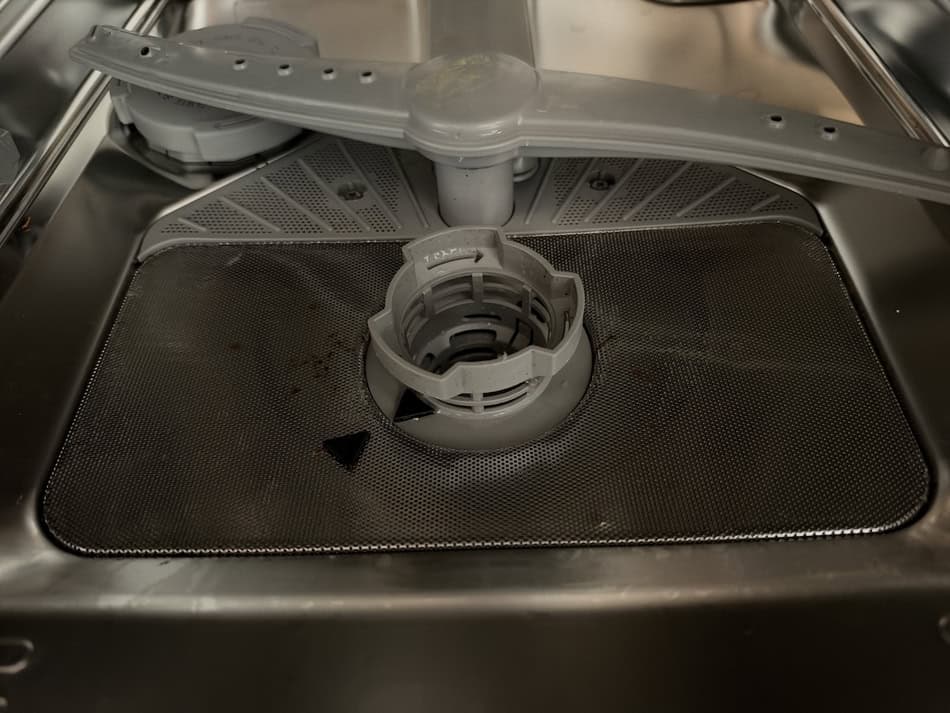
2. Clean the Filter and Drain at the Bottom of Your Dishwasher
When was the last time you cleaned your dishwasher filter?
If your answer is “I didn’t know my dishwasher had a filter,” you’re not alone.
Many dishwashers have a removable filter located at the bottom of the machine, underneath the lower dish rack.
Its job is to catch food particles and debris before they can circulate through the wash water or interfere with drainage.
But over time, that filter can become clogged with food scraps, grease, and other debris.
The result? Dishes that come out gritty, spotted, or still covered in tiny bits of food.
How to clean your dishwasher filter
- Pull out the bottom dish rack.
- Locate the filter, usually near the bottom spray arm.
- Remove it according to your dishwasher’s instructions.
- Rinse it thoroughly under warm running water.
- Use a soft toothbrush or small cleaning brush to remove stubborn debris.
- Carefully inspect the accessible drain area for food particles, labels, or other obstructions.
- Replace and secure the filter before running the dishwasher.
According to Whirlpool’s dishwasher filter cleaning guide, regular filter cleaning helps maintain water flow and prevent food particles from circulating back onto dishes.
How often should you clean it?
For dishwashers with removable manual-clean filters, checking about once a month is a good starting point. You may need to clean it more frequently if you use your dishwasher daily or notice food particles collecting at the bottom.
Some machines have self-cleaning filtration systems that require different maintenance, so always consult the manual.
One important warning: Never pour chemical drain cleaners into your dishwasher. If standing water remains after a cycle, the problem may involve the drain hose, pump, or another component.
3. Stop Rinsing Your Dishes Before Loading Them
This might surprise you, especially if you grew up in a household where every plate was rinsed before going into the dishwasher.
You generally don’t need to rinse your dishes before putting them in a modern dishwasher.
Today’s dishwashers are designed to handle ordinary food residue, and many have sensors that adjust cleaning cycles based on how dirty the dishes are.
Pre-rinsing can waste considerable amounts of water without improving the results.
The U.S. Environmental Protection Agency’s ENERGY STAR program specifically recommends scraping food off dishes rather than rinsing them before loading.
Here’s what to do instead
- Scrape large food scraps into the trash or compost bin.
- Remove bones, toothpicks, and other hard objects.
- Put dishes directly into the dishwasher.
- Use the appropriate cycle for particularly dirty dishes.
It’s that simple.
If you’re concerned about odors from dirty dishes sitting in the machine, use the dishwasher’s rinse-only setting if it has one.
An added bonus: Skipping the pre-rinse can save water, energy, and time.
For more money-saving ideas around the home, see our guide to 10 clever uses for everyday household items.
4. Make Sure You’re Loading Your Dishwasher Correctly
You might have the best dishwasher and detergent on the market, but if water can’t reach your dishes, they won’t get clean.
One of the most overlooked dishwasher mistakes is improper loading.
Every dishwasher uses spray arms to distribute water throughout the machine. These rotating arms need enough space to move freely and reach the surfaces of your dishes.
If a large cutting board, baking sheet, or serving spoon blocks a spray arm, you could end up with an entire section of poorly washed dishes.
Five loading tips for cleaner dishes
Don’t overcrowd the racks. Dishes need enough room for water and detergent to reach their surfaces.
Face dirty surfaces toward the spray. Plates and bowls should generally face toward the center or designated spray areas.
Angle cups and bowls downward. This prevents dirty water from collecting inside them.
Keep tall objects out of the spray arms’ path. Large utensils and cutting boards can prevent the arms from spinning.
Check the spray arms before starting. Give them a gentle spin by hand to make sure they can rotate freely.
You should also inspect the holes in your dishwasher’s spray arms. Food particles and mineral deposits can occasionally clog them, reducing the water reaching your dishes.
GE Appliances’ dishwasher performance guide emphasizes proper loading and keeping spray arms unobstructed as important steps for getting dishes clean.
Farmers’ Almanac Tip: If dishes in one particular area of your dishwasher consistently come out dirty, check the spray arm serving that section first.
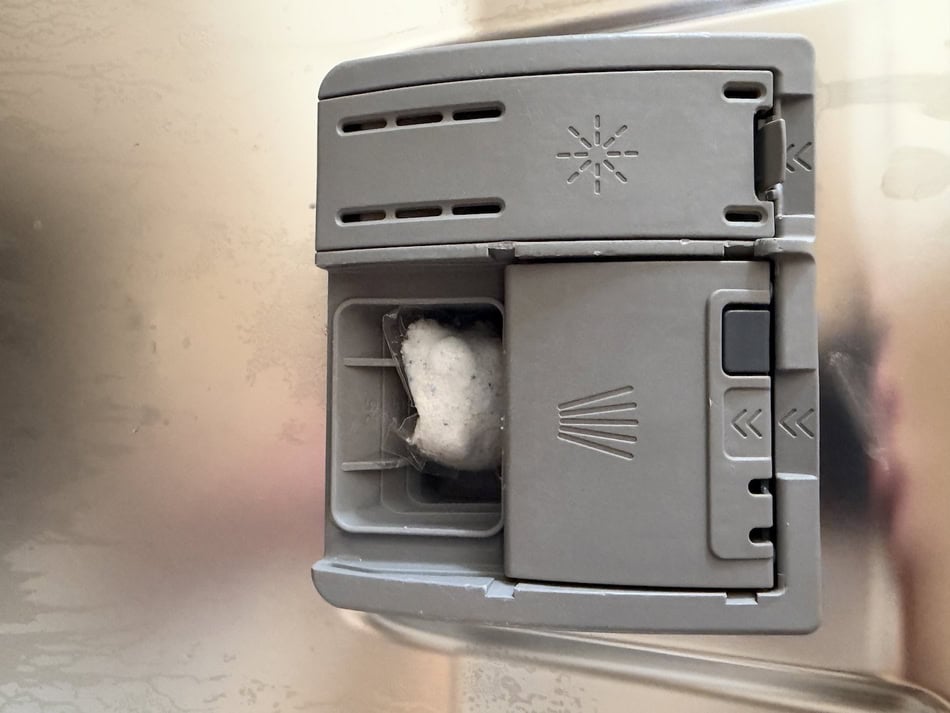
5. Use the Right Amount of Detergent—and Don’t Skip the Rinse Aid
When dishes come out dirty, it’s tempting to add more detergent.
But more soap doesn’t necessarily mean cleaner dishes.
Using too much dishwasher detergent can leave residue or contribute to cloudy-looking glassware. Too little detergent, meanwhile, may leave grease and food particles behind.
The right amount depends on your dishwasher, detergent type, soil level, and water hardness.
How to get better results
Use fresh detergent. Detergent exposed to moisture can clump together and lose effectiveness. Keep containers tightly sealed and stored in a cool, dry place.
Follow the manufacturer’s instructions. Use the recommended detergent type and amount for your particular dishwasher.
Don’t substitute regular dish soap. Hand-washing liquid can create excessive suds and potentially cause a mess or damage your machine.
Use rinse aid when recommended. This is especially helpful if you struggle with cloudy glasses, water spots, or dishes that remain wet after a cycle.
According to Whirlpool’s guide to dishwasher rinse aid, rinse aid helps water flow off dishes more easily, reducing spots and improving drying performance.
Why are your glasses cloudy?
If your drinking glasses always come out with a white film, your water could be part of the problem.
Hard water contains dissolved minerals, including calcium and magnesium, that can leave deposits behind as water evaporates.
Proper detergent dosage, rinse aid, and a dishwasher water-softening system (if your model has one) can help reduce mineral buildup.
Not all cloudy glassware can be restored, however. Permanent glass etching cannot simply be washed away.
For other inexpensive cleaning ideas, explore our popular article on 14 smart ways to use white vinegar around the home.
Just remember: Although vinegar is useful for many household cleaning jobs, it should not be used as a substitute for dishwasher rinse aid. Its acidity may damage certain internal dishwasher components.
6. Give Your Dishwasher a Good Cleaning Once a Month
It’s easy to forget that the appliance responsible for cleaning your dishes needs a little cleaning itself.
Over time, grease, detergent residue, minerals, and food particles can build up inside your dishwasher.
This buildup can contribute to odors, spotting, and less-than-perfect cleaning results.
Fortunately, keeping your machine clean usually doesn’t require much effort.
A simple monthly dishwasher-cleaning routine
Step 1: Empty the dishwasher. Remove all dishes and utensils.
Step 2: Clean the filter. If your dishwasher has a removable filter, take it out and rinse away any trapped debris.
Step 3: Wipe down the door and gasket. Use a damp cloth to remove food residue and grime, paying special attention to the rubber seal around the door.
Step 4: Inspect the spray arms. Look for mineral deposits or food particles blocking the spray holes.
Step 5: Clean the interior. Use a dishwasher-cleaning product approved by your appliance manufacturer, following its directions.
Step 6: Run the recommended cleaning cycle. Some dishwashers have a dedicated cleaning or machine-care setting.
Whirlpool recommends cleaning the interior approximately every 30 days to help prevent residue buildup and unpleasant odors.
A word about vinegar: You’ve probably heard the old trick of putting a bowl of vinegar in an empty dishwasher and running a hot cycle. While vinegar can dissolve certain mineral deposits, not every dishwasher manufacturer recommends this approach. Check your manual before trying it, and never mix vinegar with bleach or other cleaning chemicals.
For more ways to tackle stubborn household messes, visit our Farmers’ Almanac cleaning tips and advice section.
Quick Reference: 6 Ways to Get Cleaner Dishes
| Tip | Why it works |
|---|---|
| Run hot water before starting, when recommended | Helps certain dishwashers begin with water at the proper temperature |
| Clean the filter and drain area | Prevents trapped food from interfering with cleaning |
| Scrape, don’t pre-rinse | Saves water and lets modern dishwashers do the washing |
| Load dishes correctly | Allows spray arms to reach dirty surfaces |
| Use proper detergent and rinse aid | Helps reduce food residue, spotting, and cloudiness |
| Clean the dishwasher monthly | Helps control buildup and odors |
Frequently Asked Questions
Why does my dishwasher leave food on my dishes?
The most common causes include a dirty filter, blocked spray arms, overcrowded racks, inadequate water temperature, or an unsuitable washing cycle.
Start by checking the filter and loading arrangement. These are two of the easiest problems to fix without calling a technician.
Should you run hot water before starting the dishwasher?
For many dishwashers connected to a hot-water supply, yes. Running the kitchen faucet until the water is hot can help ensure the dishwasher begins with adequately heated water.
However, not all dishwashers need this step. Some newer models heat incoming water themselves, and some are designed for cold-water connections.
How often should you clean your dishwasher filter?
A monthly check is a reasonable starting point for many removable filters, but the recommended frequency depends on your dishwasher model and how often you use it.
Why do my glasses come out cloudy?
Hard-water deposits, detergent residue, or permanent glass etching may be responsible. Rinse aid and correct detergent dosage can help prevent some types of cloudiness.
Is it better to hand-wash dishes or use a dishwasher?
In most cases, a modern, energy-efficient dishwasher uses less water and energy than washing an equivalent load of dishes by hand.
According to ENERGY STAR, certified dishwashers incorporate features such as soil sensors, improved filtration, and more efficient spray systems that improve performance while conserving resources.
The Bottom Line
You don’t necessarily need a new dishwasher to get cleaner dishes.
Sometimes the solution is as simple as checking the water temperature, cleaning a clogged filter, or making sure your plates and glasses aren’t blocking the spray arms.
Taking just a few minutes to maintain your dishwasher—and changing a couple of everyday habits—could make a noticeable difference in how your dishes look after every wash.
And that means less scrubbing, less wasted water, and more time for things you’d rather be doing.
At the Farmers’ Almanac, we believe practical household wisdom never goes out of style. For more helpful ideas, explore our collection of timeless household tips and money-saving tricks.
Have a tried-and-true dishwasher trick of your own? Share it in the comments below!

