

Edible Flowers: A Practical Guide to Eating Your Garden
Salads, soups, drinks, syrups, jellies, ice cream, and main dishes will never be the same when you include edible flowers in your recipes. Learn more!
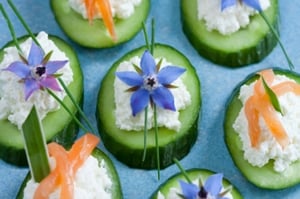
Edible Flowers at a Glance
- Best beginner picks: nasturtium (peppery), pansy (mild mint), rose petal (floral), lavender (sweet-citrus), borage (cucumber).
- What to eat: petals and buds only, unless a recipe says otherwise. Strip white bases off rose and dianthus, they turn bitter.
- Where to source: your own pesticide-free garden, a farmer’s market grower who confirms food-grade, or grocery clamshells labeled edible. Skip florist bouquets and garden-center plants, both are usually sprayed.
- Don’t wash, do shake: water collapses petals. Shake gently, check for bugs, pull off stamens and pistils if the recipe calls for it.
- Toxic look-alikes to avoid: daffodil, foxglove, lily of the valley, oleander, sweet pea, hydrangea, azalea, all toxic. When in doubt, leave it out.
Candied angelica, pickled nasturtium, fresh English daisies tucked into a salad bowl: edible flowers turn an ordinary plate into something guests photograph before they eat. They are also one of the cheapest dinner-party upgrades in your yard, if you grow the right ones and follow a few rules.
Salads, soups, drinks, syrups, jellies, ice cream, and main dishes never quite go back to plain once you start including edible flowers in your recipes. Cooks have leaned on them throughout history, especially in Victorian kitchens. Many varieties carry useful amounts of vitamins A and C, and most dry or freeze well for off-season use. Not every flower is safe (some are flatly toxic), but creative cooks can lift gifts from summer gardens and farmers’ markets well past the usual bouquet. Roses, violets, lavender, scented geraniums, orange blossoms, hibiscus, and lemon verbena show up most often in both sweet and savory recipes. They are also what top bartenders reach for when they want to color and flavor a cocktail. Steeped with sugar and water for light syrups, or whipped into butter for a fragrant surprise on muffins and scones, edible flowers earn their keep on a festive table.
Worth knowing up front: the U.S. Food and Drug Administration treats culinary flowers like any other fresh produce, which means provenance matters more than presentation. Where the flower was grown, what it was sprayed with, and how it was handled all decide whether it ends up on a plate or in the bin.
Rule One: Where the Flower Comes From
Even when a flower lands squarely in the consumptive category, it should not get a hard rinse. Cold water collapses petals and bruises color. So you need to know up front that what you are about to eat is free of bugs, pesticides, and chemical soil additives. That single fact rules out almost every flower in the floral cooler. Bouquets from the local flower shop, nursery, or garden center are bred for shelf life and sprayed accordingly, food-safety not their job.
Better paths to a safe stem:
- Your own garden, if you’ve kept it pesticide-free and away from lawn-spray drift. Easiest, cheapest, freshest.
- A farmers’-market grower who will tell you on the spot whether the blooms were grown for the kitchen or for the vase.
- Grocery stores that stock edible flowers alongside the herbs, in labeled clamshells. Prices run high and shelf life is short, so check the package for browning edges before you buy.
- Local greenhouse staff can often point you to clean varieties if you’re unsure what to plant or pick.
Once you have safe blooms, treat them gently. Pick in the cool of morning after the dew dries. Shake off dust and insects, do not soak. Store in a single layer between damp paper towels in a sealed container in the fridge, and use within two days.
Taste: Edible Doesn’t Mean Delicious
Where taste is concerned, edible doesn’t always mean delicious. Flavors run from peppery (nasturtium) to minty (pansy) to perfumy (rose petal), with plenty in between. Start by letting flowers gently complement a dish rather than carry it, a handful tossed into a green salad reads as a flourish; the same handful crammed into the center of the plate reads as garnish you have to chew around. Consume petals and buds only unless a recipe specifies otherwise, and pull off stamens and pistils on bigger blooms (squash blossom, day lily) where the recipe calls for it.
A Flavor Cheat Sheet for the Most Common Picks
| Flower | Flavor Profile | Best Paired With |
|---|---|---|
| Nasturtium | Peppery, watercress-like heat with faint sweetness; one of the boldest edible flower flavors | Green salads, avocado, goat cheese, summer pasta |
| Lavender | Intensely floral and slightly sweet; can taste soapy if overdone; use sparingly | Shortbread, lemonade, honey, ice cream, lamb |
| Viola / Pansy | Mild, slightly grassy, and delicately sweet; subtle; more decorative than flavorful | Salads, cakes, cocktails, cheese plates (visual impact) |
| Rose petals | Delicate floral sweetness; flavor varies by variety; highly fragrant roses taste strongest | Desserts, jams, rosewater, ice cream, Turkish delight |
| Borage | Cool, crisp cucumber flavor; refreshing and clean | Summer cocktails, Pimm’s, salads, cold soups |
| Calendula (pot marigold) | Peppery, tangy, and slightly bitter; earthy; sometimes called “poor man’s saffron” for color | Rice, soups, egg dishes, cheese (adds golden color) |
| Elderflower | Intoxicatingly floral, musky-sweet, lychee-like; very aromatic | Cordials, liqueurs, elderflower fritters, champagne, cocktails |
| Chamomile | Delicate apple-like sweetness with mild herbal notes; the flavor of chamomile tea, very gentle | Tea, honey, shortbread, panna cotta, dessert garnish |
| Squash blossom | Mild, slightly sweet, vegetal; faint nectar quality; absorbs flavors it is cooked with | Stuffed and fried (ricotta + herbs), quesadillas, pasta, pizza |
| Dandelion | Young flowers: honey-sweet. Older flowers: distinctly bitter. Leaves are the most bitter part | Salads, dandelion wine, fritters, jams (young flowers), wilted greens |
What Not to Eat: The Toxic List
Some of the prettiest flowers in your yard are also some of the most dangerous to nibble. Poison Control keeps the standard list:
- Daffodil, narcissus, and jonquil (all parts toxic, bulbs included)
- Foxglove (cardiac glycosides, even the leaves)
- Lily of the valley (cardiotoxic across the plant)
- Oleander (one of the most toxic ornamentals in North America)
- Sweet pea (the flowering ornamental, not the edible legume)
- Hydrangea (cyanogenic compounds)
- Azalea, rhododendron, and mountain laurel (grayanotoxins)
- Wisteria pods and seeds
- Calla lily, anthurium, and other Araceae (oxalate crystals)
- Buttercup, larkspur, monkshood, autumn crocus, hellebore
When in doubt, leave it out. A flower that looks similar to one on a safe list is not a safe list. Identify the species, not just the colour.
Recipes to Try
Try these recipes for a fragrant foray into the world of edible flowers:
Hibiscus Syrup

- Petals from 10 large hibiscus flowers
- 1/4 cup fresh-squeezed lemon juice
- 1 cup boiling water
- 1 cup sugar
Directions:
Cover petals with lemon juice in a deep glass bowl. Microwave for two minutes on HIGH. Mix sugar and boiling water in a saucepan, heat over high heat on stove top until boiling and sugar is thoroughly dissolved. Add the petals and lemon juice mixture to the sugar water. Stir well. Simmer over medium heat until reduced by 1/3 volume (approximately one hour). Strain to remove petals, then store in a covered jar in refrigerator. Syrup keeps for a year and is delicious over fresh fruit, ice-cream, custard, pound cake, etc.
Rose Petal Omelet
- Petals from one large, red, preferably fragrant rose; reserve a few for garnish
- 1 Tbsp. butter
- Salt and fresh clipped chives
- Soft cheese, such as brie, Gouda or gruyere for filling
Directions:
Melt butter in a nonstick pan or omelet pan over medium low heat. Add all but a few rose petals, the eggs and seasonings to a blender. Process on low until petals are very fine. Pour into pan, reduce heat a little, cover and cook until set. Add cheese to center, fold over and slide onto plate. Sprinkle with reserved petals and serve.
Lavender Shortbread
- 1 1/2 cups (3/4 lb.) butter at room temperature (no substitutes)
- 2/3 cup sugar
- 2 Tbsp. very finely chopped lavender florets (fresh or dried)
- 1 Tbsp. chopped fresh mint
- 2 1/3 cups flour
- 1/2 cup cornstarch
- ¼ tsp. salt
Directions:
Preheat oven to 325°F. Cover bottoms of two baking sheets with parchment or brown paper. In a large bowl, cream together butter, sugar, lavender, and mint with an electric mixer. Mix until light and fluffy, about three minutes. Add flour, cornstarch, and salt and beat until incorporated. Divide dough in half. Flatten into squares and wrap in plastic. Chill until firm. On a floured board, roll or pat out each square to a thickness of 1/2 inch. Cut the dough into 1 1/2 -inch squares or rounds. Transfer to baking sheets, spacing cookies about one inch apart. Prick each cookie several times with a fork. Bake 20 to 25 minutes until pale golden (do not brown). Cool slightly, transferring to a rack. Sprinkle with lavender powdered sugar.* Makes about 4 dozen.
*Put four or five sprigs of lavender flowers in a sealed jar with powdered sugar for a day before using the sugar.

Frequently Asked Questions About Edible Flowers
Which edible flowers are best for beginners?
Nasturtium, pansy, viola, calendula, and chive blossom are the gentlest starts. They are easy to grow, the flavors are friendly, and none of them have toxic look-alikes that an untrained eye is likely to confuse them with.
Can I eat flowers from a florist or garden center?
Almost never. Floral roses, bedding plants, and nursery stock are routinely sprayed with systemic pesticides and fungicides that do not wash off. Treat any flower from a florist or garden center as decorative only, and source edible flowers from your own pesticide-free garden, a farmer’s-market grower, or a labeled grocery clamshell instead.
Why shouldn’t I rinse edible flowers under the tap?
A hard rinse bruises the petals and washes out the volatile oils that carry the flavor. Shake gently to dislodge dust, brush off insects with a soft brush, and dry on paper towel. If a particular bloom needs a real clean, dip briefly in cool water and pat dry immediately.
Which parts of an edible flower do you actually eat?
Petals and buds only, unless the recipe specifies otherwise. Pull off the stamens and pistils on larger blooms like squash blossom and day lily. On rose, dianthus, and chrysanthemum, strip the white heel at the base of each petal, that’s where the bitterness sits.
Are pansies safe for kids?
Pansies and violas are generally considered safe in small culinary amounts, which is why they are a favorite for candied garnishes on cakes for children. Make sure the plant was grown pesticide-free, and as with any new food, introduce a small taste first to rule out an individual reaction.
How long do edible flowers keep in the fridge?
Two days is the realistic window for most petals. Lay them in a single layer between damp paper towels in a sealed container. Hardier blooms like hibiscus and lavender dry well and keep for months. Many varieties freeze well into ice cubes, which is the easiest way to bank a flush of summer blooms for winter cocktails.
Which common flowers are toxic and should never be eaten?
Daffodil, foxglove, lily of the valley, oleander, sweet pea (ornamental), hydrangea, azalea, rhododendron, mountain laurel, wisteria, calla lily, buttercup, larkspur, monkshood, autumn crocus, and hellebore are all on the standard Poison Control list. When in doubt, leave it out, and identify by species rather than by colour.
A Final Word on Eating Your Garden
Edible flowers reward cooks who treat them as ingredients, not decoration. Grow a small patch of nasturtium and calendula next to your garlic bed, plant a row of lavender along the path, tuck a few hibiscus into the porch border, and the kitchen takes care of itself by July. Add a candied violet to a cake, drop a borage flower into a tall glass of iced tea, finish a salad with a fistful of chive blossoms, and a midsummer table starts to feel like the kind of meal people remember. For more seasonal recipes, see our take on garlic harvest and the lore behind July’s hot, sweet weather.


Beth Herman
Beth Herman is a freelance writer with interests in healthy living and food, family, animal welfare, architecture and design, religion, and yoga. She writes for a variety of national and regional publications, institutions, and websites.
- Beth Herman

- Beth Herman
- Beth Herman
- Beth Herman



A tart addition is Oxalic. This shamrock shaped plant with tiny yellow flowers is pretty and delicious. The whole plant can be snipped and will grow back. It is considered a weed in “weed killers” but the pink or white varieties make a great border.
Oh, thank you for the dandelion tip…I appreciate it!
Dandelions were a must in my grandmother’s and mother’s cooking BUT they say to get them before they bloom and use the white at the end of the leaf -so as not to have a bitter taste.