

National Scrapple Day: Love It Or Hate It?
November 9th is National Scrapple Day. Learn the origins of this Pennsylvania-Dutch breakfast food that is so popular in the Mid-Atlantic regions, it even has its own festival!
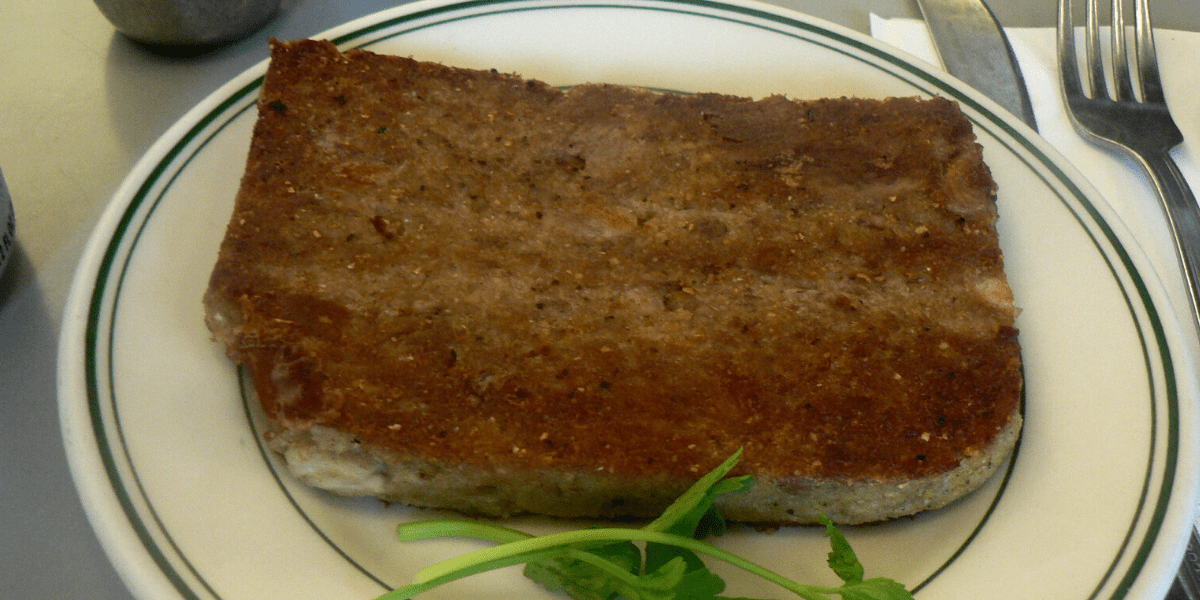
Quick Reference: Scrapple
- What it is: a savory pork-and-cornmeal loaf, pan-fried in slices. Pennsylvania Dutch in origin.
- Also called: pon haus (“pan rabbit” in Pennsylvania Dutch); historically also panhas.
- When: National Scrapple Day is November 9.
- Where it’s most loved: Pennsylvania, Delaware, New Jersey, Maryland, eastern Virginia, and the D.C. area.
- Classic plate: two thin slices fried golden brown beside sunny-side-up eggs and toast, with maple syrup, apple butter, or ketchup on the side.
- Modern twists: turkey scrapple (leftover Thanksgiving bird), beef scrapple, even a vegetarian “mushroom scrapple” on heritage menus.
Here at Farmers’ Almanac, we love exploring different regional foods and cuisines and learning about their history and origin. With November 9 being National Scrapple Day, we thought we would “dig in” to some facts about this unusual breakfast food enjoyed by the folks in the Mid-Atlantic region, where it is most popular. For those not familiar with it, scrapple has been called “mystery meat” and takes a little getting used to. So what is it, exactly? See the Britannica entry on scrapple for a short history.
What Is Scrapple?
Also known by the Pennsylvania Dutch name pon haus (which translates literally to “pan hare,” or rabbit), scrapple is said to have been invented by 17th- and 18th-century German colonists who settled near Philadelphia and Chester County, Pennsylvania. As a result, you will find scrapple as a regional favorite in the rural areas near Philadelphia, Baltimore, Washington, D.C., eastern Pennsylvania, New Jersey, Maryland, Delaware, and eastern Virginia.
Created so that hungry, hard-working, prudent rural immigrants could make use of all manner of foodstuffs, scrapple originally consisted of a mixture of pork scraps (head, brains, heart, liver, skin) and other trimmings, boiled with bones attached for flavor (later discarded once a suitable broth was achieved). It was then simmered with cornmeal, wheat flour or sometimes buckwheat flour, onions, and spices like sage and thyme. The final result was poured into bread pans, cooled overnight, sliced, and pan-fried.
How Is Scrapple Served?
Formed into loaves and pan-fried, scrapple was typically served at breakfast with apple butter, ketchup, mustard, honey, or maple syrup. While today’s scrapple, available primarily in Mid-Atlantic-area grocery stores, follows different standards using FDA-approved animal anatomy, it is still a tasty tradition served alongside sunny-side-up eggs and toast. With the current trend toward lighter, healthier eating, scrapple is also seen in a later incarnation made with turkey instead of pork, or with beef for a different flavor entirely. Scrapple is also appearing more and more on the menus of heritage-based restaurants in Brooklyn, NY, and other places. The Apple Scrapple Festival in Bridgeville, Delaware, held the second weekend of October, draws thousands every year.
Lead image by Stu Spivak, Wikimedia Commons
Though it takes a little time and patience, why not try these recipes and surprise family and guests with an established Pennsylvania Dutch breakfast treat?
How to Fry Scrapple So It Doesn’t Fall Apart
- Slice thin and cold. 1/4 to 3/8 inch is right. A warm slice crumbles.
- Pat dry, dust lightly with flour or cornmeal. Helps the crust set.
- Use a heavy pan and butter or rendered lard. Cast iron and medium heat get the best edge.
- Do not crowd the pan. Leave a thumb-width between slices.
- Flip once. Five to seven minutes per side. The crust should sound crackly when you tap it with a spatula.
- Serve hot. Crisp on the outside, soft and steamy inside. Maple syrup on the side, never poured straight on top.
Traditional Scrapple Recipe
Ingredients:
- 1 whole pork butt, cut into 6 to 8 pieces
- 4 whole hocks, fresh
- 1 whole onion, peeled and cut in half
- 3 stalks celery, roughly chopped
- 1 tablespoon black peppercorns
- 4 bay leaves
- Water
- 1 tablespoon cayenne pepper
- 2 tablespoons ground black pepper
- 3 tablespoons kosher salt
- 1 tablespoon chopped sage leaves
- 3 cups white cornmeal
- 3 cups yellow cornmeal
- Clarified butter for pan frying
- Applesauce or maple syrup
Instructions:
- In a large stockpot, add pork butt, hocks, onion, celery, peppercorns, and bay leaves. Barely cover with water and simmer over low heat until pork is tender and meat falls off the bones, about 2 hours.
- Drain and reserve the stock. Pour the solid contents onto a sheet pan so that you can easily discard the celery, onions, peppercorns, bay leaves, and all of the bones. Pull the meat completely off the bones, being careful to remove all small pieces of bone.
- Add the meat to a food processor and pulse to coarsely chop. Do not over grind.
- Measure 1 gallon of stock and return it to the pot with the meat, cayenne, black pepper, salt, and sage. Bring to a simmer over low heat.
- Add the cornmeal and stir, stir, stir. Simmer until smooth and thick, about 15 minutes. Add a little stock or water, if needed, to ensure a smooth texture.
- Pour into 3 loaf pans and refrigerate until solid, preferably overnight. Unmold, slice, and fry in clarified butter until golden brown. Serve with applesauce or maple syrup.
Turkey Scrapple Recipe
A great way to use up leftover holiday turkey for brunch the next day.
Ingredients:
- Turkey bones and skin
- 5 cups water
- 1 cup cornmeal
- 1/4 cup flour
- Water
- 2 teaspoons salt
- 1/2 teaspoon pepper
- Leftover turkey meat and scraps
- Maple syrup
Instructions:
- Preheat oven to 350°F.
- Simmer skin and turkey bones, cleaned of meat, in 5 cups water to make stock measuring 3 cups.
- Discard skin and bones.
- In a food processor, grind leftover turkey meat to measure 4 cups.
- Mix cornmeal, flour, salt, and pepper with 1 cup water. Add to the measured broth and ground turkey. Stir well.
- Bake in a well-greased small roaster or Dutch oven about two hours, stirring occasionally. If a bit of brown crust adheres to the sides of the roaster, scrape it into the scrapple.
- Put into a loaf pan and chill. Slice and fry in shortening or oil until golden brown. Serve with syrup.

Scrapple FAQ
What exactly is scrapple?
A savory loaf of pork scraps and trimmings simmered with cornmeal and spices, chilled, sliced, and pan-fried. The Pennsylvania Dutch breakfast classic.
When is National Scrapple Day?
November 9 every year. The Apple Scrapple Festival in Bridgeville, Delaware, runs the second weekend of October.
What goes well with scrapple?
Sunny-side-up eggs and toast are the classic. Apple butter, maple syrup, ketchup, mustard, and honey all show up beside it. Hot coffee is non-negotiable.
What is the Pennsylvania Dutch name for scrapple?
Pon haus, literally “pan rabbit.” The phrase is a slightly tongue-in-cheek nod to the dish’s improvised, scrappy origins.
How do I keep scrapple from falling apart in the pan?
Cold slices, dry surface (pat with a paper towel), a light dusting of flour or cornmeal, hot cast-iron pan, butter or lard, and only one flip. Five to seven minutes a side.
Can I make scrapple with turkey or beef?
Yes. Turkey scrapple is a popular post-Thanksgiving trick (recipe above). Beef scrapple shows up in some western Pennsylvania kitchens. The technique stays the same; the protein changes.
Is scrapple the same as livermush?
Close cousins, not the same. Livermush is a North Carolina dish weighted heavily toward pork liver and bound with cornmeal. Scrapple uses a wider mix of cuts and is more often spiced with sage and thyme.
For more regional food reading from the Almanac kitchen, see our companion guides: what the heck is poutine?, viva la Cuban sandwich, and turnip vs rutabaga.


Beth Herman
Beth Herman is a freelance writer with interests in healthy living and food, family, animal welfare, architecture and design, religion, and yoga. She writes for a variety of national and regional publications, institutions, and websites.
- Beth Herman

- Beth Herman
- Beth Herman
- Beth Herman




I grew up in PA around Amish. I always ate scrapple with Karo syrup on.
NO … just NO NO NO
no no no no no no no no no no
I live in SW Kansas. Grandma Lora would make this after Thanksgiving & Christmas by boiling the Turkey carcass and using that meat along with cornmeal. She would fry it for breakfast with syrup. She called it Ponhaus , the recipe looks the same as this Scrapple . Good memories and some good food <3
Easier recipe, 1LB Jimmy Dean sausage. Use directions on box for cornmeal mush. Cook sausage in the boiling water, add the wet cornmeal . Cook 5 minutes stirring constantly. Pour into a a bread loaf pan. Cool until set. Cut and fry slices.
Is this like head cheese?
No, it is more like a tamale without the husk, and formed in loaves. We slice ours and fry it in a dry skillet and eat it as a side like hash browns, but with molasses instead of ketchup.
D & W has the BEST scrapple…and I now can’t find it anywhere.
Even the sores with D & W lunch meats…ALSO THE BEST!!!….don’t carry their scrapple.?????????????where is it sold?
I guess I could ride down to State road…if they still have that retail store
Mr. Melton I’m from the heart of the Amish country on the border of Lancaster and Chester county Pennsylvania. When someone or something is mentioned about Pennsylvania Dutch it’s in relation to their dielect of the German language. It’s people like you that need to do their homework.including Kiki
My Grandfather was “PA Dutch” When he didn’t want us to know what he was saying to my grandmother he spoke in German. He then my father and now my brother has kept the family recipe for scrapple going with some changes. They never used all the above spices and my brother uses buckwheat now. All tasted better than I can find in any grocery or butcher shop!!
My dad would do the same, but his family immigrated to the Downers Grove region in Illinois from Prussia (pre-WWI). He’d speak to my mother’s mother (maternal grandmother to me) in German when he didn’t want us kids to know what he was saying, since Grandma was also of Dutch heritage but her family was from the Pelican Rapids, MN, region, and then she emigrated to North Dakota. I really screwed it up for him when I took formal German in my senior year in high school, and then again in my first year of college. He could no longer hide what he was saying! But just the same, he was proud of me for choosing to learn it… I was a straight A student in the language, even though it was a ‘high’ version, and he spoke the ‘low’ (local dialect he learned from his parents).
I think I will pass on this! 😉 Having been raised and living in KY, I have never eaten squirrel, rabbit or any wild animal that I know of.
Wish we could get it in Kentucky
Pennsylvania Dutch were primarily GERMAN, not Dutch. Pennsylvania Deutsch. You should fix that. That being said, I’m from NJ and my parents served us scrapple as kids. I’ve never known a recipe (like the one you show) that didn’t have organ meat in it. In fact, as soon as I found out what was in it, I never ate it again!!
Thanks, Kiki, we’ve fixed the story!