

February Birth Month Symbols, Birthstone and Fun Facts

Quick Reference: February at a Glance
- Birthstone: Amethyst (purple quartz, symbol of clear thinking and calm)
- Birth flowers: Violet (faithfulness, remembrance) and primrose (young love, new beginnings)
- Zodiac signs: Aquarius (January 20 to February 18) and Pisces (February 19 to March 20)
- Birth tree (Celtic): Cedar, for those born February 9 to 18
- Winter constellation: Canis Major, home to Sirius, the brightest star in the night sky
- Bird of the month: Chickadee
- Herbs: Fennel (Aquarius) and sage (Pisces)
- Full Moon: Snow Moon, also called Hunger Moon and Ice Moon
- Length: 28 days in a common year, 29 in a leap year
Welcome to February, the shortest month and the one that quietly carries the most symbolism. Violets and primroses, the amethyst birthstone, two zodiac signs, a winter Moon, and the only Leap Day on the calendar all belong to this 28-day stretch. The Farmers’ Almanac has tracked the signs since 1818, and February gives us plenty to track.
February Birth Month Symbols
February’s symbols match its quiet, cold character. The violet, the flower of February, stands for faithfulness and remembrance. The amethyst birthstone is tied to awareness and clear thinking. Aquarius and Pisces share the month, one inventive and one intuitive. The chickadee, February’s bird, sticks out the winter while others fly south. Healing herbs like fennel and sage round out the symbolism, both with kitchen and folk-medicine roots that go back centuries.
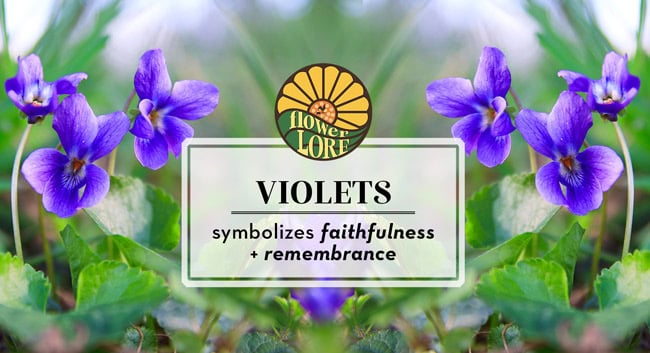
February Birth Month Flower: Violet
The violet is the traditional birth flower for February, with over 650 species in the Viola family. Small, fragrant, and heart-leaved, violets show up in shades from soft lavender to deep purple to white, each color carrying a slightly different meaning. They grow wild across forests in North America, Europe, and Asia, and you may know them as pansies or “hearts-ease,” a folk name that points to their reputation for calming a worried mind.
Violets carry different meanings in different traditions. Native American stories tie them to togetherness and steadiness. In the Victorian language of flowers, they stood for trust and modesty. They also turn up at funerals and memorials, a sign of remembrance. The flower threads its way through zodiac symbolism, wedding posies, and religious art.
In Christian folklore, violets are a sign of purity and are often linked to the Virgin Mary. Greek myths frame them as symbols of protection and transformation. The deep purple of their petals connects them, by old association, to royalty and nobility.
Related: Birth Month Flowers: Plant A Family Garden
Violets are also edible and nutritious. The petals turn up in salads, teas, syrups, and candied confections, and the leaves carry vitamins A and C. Folk healers have long used violet preparations for sore joints, headaches, and coughs. Gardeners value them as a tough, low-growing ground cover with a long bloom window.
Primrose, the second February flower: Some traditions name primrose as a secondary February flower, especially in Britain, where its pale yellow blooms can show as early as late winter. In folk symbolism, primrose stands for young love and new beginnings, a fitting partner for a month that ends on the edge of spring.
Read more about violet flower symbolism

February Birthstone: Amethyst
Amethyst is the birthstone for February, a purple quartz with a long history. The name comes from the Greek amethystos, meaning “not drunk,” and was tied to the wine god Bacchus on the theory that the stone would keep its wearer sober. The gem turns up in protective amulets in ancient Egypt and in royal tombs, including those of King Tutankhamen, where it stood for spiritual protection and high status.
Related product: February Birthstone Amethyst Necklace
The mythical ties run deep. In Greek lore, amethyst stood for clear thinking and caution, valued in conflict and in business deals. Christians read it as a symbol of healing, linking its color to the purple robe of Christ and to one of the stones in the priestly breastplate. The gem is also bound to love folklore: St. Valentine is said to have worn a ring set with Cupid carved in amethyst.
From Leonardo da Vinci, who wrote that amethyst dispelled evil thoughts and sharpened wit, to modern wearers, the stone has kept its appeal. It is associated with calm, clear thinking, and spiritual growth, and remains the standard stone given for an eighth wedding anniversary.
Related: See all birthstones by month | January birthstone: garnet

February Colors: Purple, Light Blue, Yellow, And Pink
The signature color for February is purple, drawn from the amethyst birthstone and the violet birth flower. Purple has long been read as a sign of wealth and royalty. Light blue, a secondary February color, has a calming effect. Yellow, the color of late-winter sun and the early primrose, brings cheerfulness and creativity. Red and pink belong to February too, the colors of Valentine’s Day and the month of love.

Full Snow Moon
The February full Moon goes by the Snow Moon, a name that traces back to the deep snows of late winter in much of North America. It picks up other names too. “Deep Snow Moon” and “Ice Moon” describe the cold. “Hunger Moon” points to the lean stretch of late winter, when stored food ran low and game was hard to find.
February’s Moon is also the only one capable of a “Black Moon,” a calendar month with no full Moon at all. This is rare and the next one falls in 2037. Even rarer: in 2048, the full Moon lands on February 29, Leap Day, an alignment that happens only about every 400 years. These quirks add to the lore and pull readers back to the night sky.
Learn more about the Full Snow Moon
Related: Full Moon Dates and Times
February fun fact:
- February is the only month where it is possible to go the entire time without a full Moon.
Zodiac Signs: Aquarius and Pisces
February is one of the few months that holds two zodiac signs. Aquarius covers January 20 to February 18, and Pisces takes over February 19 to March 20. The handoff lands right around the third week of the month.

Aquarius (January 20 to February 18)
Despite the “aqua” in the name, Aquarius is the last air sign of the zodiac, represented by the water bearer. Aquarians are typically read as creative, inventive, and progressive. They lean on reason and evidence rather than other people’s emotions, which can register as distant. That is not apathy; it is a deeply analytical way of looking at the world. They thrive on diverse social circles that keep stretching their thinking.
Related: What Is Your Zodiac Sign?
That inventive streak is also where Aquarians get stuck. Once they have settled on an unusual approach, they can hold it past the point of usefulness. The same trait that finds the fresh angle can read as stubborn when challenged. Still, the willingness to think differently is what makes them one of the more interesting signs to share a room with.
Related: Learn more about Aquarius
Pisces (February 19 to March 20)
Pisces is the twelfth and last sign of the zodiac, a water sign whose Latin name means “fishes.” Pisces is typically described as creative, imaginative, compassionate, and loving, symbolized by two fish. People born under it are often called old souls, drawn to the spiritual side of things and to romantic and creative pursuits. Pisces tend to be sensitive to other people’s feelings, sometimes to a fault, and will put others ahead of themselves more often than is good for them.
What is the difference between astrology and astronomy? Find out.
Pisces prioritize their social life and make loyal, sympathetic friends. Their emotional antenna picks up moods that other people miss. Go-with-the-flow by nature, they thrive on spontaneity, and they do well in careers that ask for creativity and intuition, especially in helping roles. They can look lost in their own daydreams, but once a Pisces decides to commit, they commit fully.
Pisces is read as the most sensitive sign in the zodiac. That sensitivity makes them vulnerable to criticism and prone to people-pleasing. They are the gentlest of the signs and they tend to see the world through forgiving eyes. A Pisces is a good person to have in your corner.
Related: Learn more about Pisces
February Herbs of the Month
The link between herbs and zodiac signs comes from an old idea that a plant’s qualities can echo the personality traits of the sign it belongs to. Each herb is said to bring out the good qualities of people born under its sign, or to help with the problems they often run into. The pairings are not science, but they give a gardener a useful frame for which herbs to plant in honor of a February birthday.
- Aquarius herbs (Jan to Feb): Fennel is the primary herb for Aquarius, a perennial grown for kitchen, garden, and pollinator use. Its name comes from Foeniculum, Roman for “fragrant hay.” The plant carries small yellow flowers in summer and a licorice-like taste in seed and frond. The whole plant has been used in cooking and folk medicine, with traditional uses tied to digestion, respiratory comfort, and menstrual symptoms. Ancient Romans, Greeks, and Egyptians used fennel in ceremonies as a sign of wealth and pleasure. Queen Anne’s lace, clove, comfrey, rosemary, violet, and valerian are other herbs paired with Aquarius.
- Pisces herbs (Feb to March): Sage is the primary herb for Pisces. Native to the Mediterranean, sage is a staple in many cooking traditions and has been for centuries. The botanical name comes from the Latin salvere, meaning “to be saved.” Its strong aroma and early-season flavor make it a versatile kitchen herb, and it is packed with compounds that have been studied for oral health, brain function, cholesterol, and blood sugar. Sage was a popular tea in China by 812 AD. In Ancient Rome it was a fixture of the pharmacopeia, used for wounds, sore throats, and digestion. It is also the herb burned in smudging, an old practice of cleansing a space, an object, or a person with the smoke. Mugwort, basil, lemon balm, and borage are other herbs paired with Pisces.
February Birth Month Bird: Chickadee
The chickadee is February’s bird of the month, and it earns the spot by sticking out the cold. While other birds head south, chickadees stay put, foraging through the day and defending their home patch. They are small, plain, and tough, a fair picture of the kind of staying power February asks of all of us.
Chickadees are also social. They move in mixed-flock groups through the winter, sharing alarms and food sources, and their cheerful chirps lift a long winter walk.
Across many cultures, the chickadee and other small year-round birds stand for hope and persistence.
Fun bird facts:
- Chickadees have remarkable memory for stored food. They cache seeds in dozens of separate spots and use spatial memory to find them again, sometimes months later.
- Chickadees have complex vocalizations and a wide range of calls. The most familiar is the “chick-a-dee-dee-dee,” which some listeners hear as “cheese-bur-ger.” That mishearing has given them the nickname “cheeseburger bird.”
- In the United States, February is recognized as National Bird-Feeding Month.
What Does “February” Mean?
February stands apart from the calendar in that it does not get its name from a Roman god. It comes from Februalia, an old Roman cleansing festival held mid-month. Participants performed purification rituals as a way to reset for the year. The name carries that meaning forward: February is a month for clearing the old to make room for spring and the lengthening days in the Northern Hemisphere.
Across the British Isles, February picked up its own folk names. The Anglo-Saxons called it Sol-monath, sometimes translated as “cake-month,” from the practice of offering cakes to the gods. They also called it “sprout-kale” for the early cabbages that pushed up from the ground. In Wales, February is still sometimes called y mis bach, “the little month,” a tidy name for a short stretch right before spring.
February fun facts:
- February is one of the most misspelled words in the English language. The hidden first “r” trips up writers and spellers across every age group.
- In the Middle Ages, young men and women would draw names to see who their Valentine would be. They would pin the name to their sleeve for a week so everyone could see. This is believed to be the origin of the expression “to wear your heart on your sleeve.”
Related: How Did The Months Of The Year Get Their Names?
February Calendar
The original Roman calendar had ten months and ran 304 days, with no January or February. King Numa Pompilius added the two missing months to better match the Moon’s cycles. The Romans believed even numbers were unlucky, so Numa shaved a day off the 30-day months to give the calendar an alternating rhythm of 29 and 31. The arithmetic still came up short at 354 days, another unlucky even number.
One month had to take the hit. February drew the short straw and was left with 28 days, perhaps because it was already the Roman month of remembrance for the dead. Centuries of calendar reform have come and gone, but February has stayed the shortest month on the calendar we use today.
Why is an Extra Day (Leap Day) Added in February?
Leap years occur every fourth year on the Gregorian calendar, adding an extra day on February 29. That extra day shifts every date from March onward by one extra weekday. A date like March 10, 2023, which fell on a Thursday, lands on a Saturday in 2024.
The reason for the leap is astronomical. The Gregorian year is 365 days long. The actual solar year, the time it takes Earth to complete one orbit around the Sun, runs about 365.24 days. Leap years bank the leftover hours so the calendar does not drift away from the seasons. According to the Smithsonian National Air and Space Museum, if we stopped adding leap days, in about 700 years the Northern Hemisphere’s summer would begin in December instead of June.
The fix is not perfect. The four-year adjustment leaves a surplus of about 44 minutes every four years, which works out to one extra day every 129 years. To clean that up, the Gregorian calendar skips century-year leaps unless the year divides by 400. The year 1900 was not a leap year; 2000 was. The next skipped century leap is 2100.
Related: Read more about Leap Year
February fun fact:
- Do you have a Leap Day birthday? The odds of being born on February 29 are about 1 in 1,461. People born on February 29 are sometimes called “leapers” or “leaplings.” Do you know a leapling? Tell us in the comments.
February Weather Lore
February serves up the full late-winter mix: snow, ice storms, the occasional severe-weather outbreak, and the first hints of warmer days at the end of the month. February is the snowiest month for many locations, especially California’s Sierra Nevada Mountains, where deep snowpack builds the reservoirs of the West.
Related: Snow Myths And Odd Facts
February can also turn ugly across the South and the Mid-Atlantic when cold air slides over warmer surface air, glazing roads and power lines with ice. Even so, the daylight gains across the month are real, an average of more than an hour of added daylight from February 1 to February 28, and the longer light is the first sign that spring is on the way.
Psst, have you seen our Spring Extended Weather Forecast?
Related: Farmers’ Almanac Long-Range Weather Predictions
Here is some classic February weather folklore, the kind of measured signs almanac readers have weighed against the actual forecast for generations:
- Groundhog Day falls on the second day of February. The groundhog, Punxsutawney Phil, is supposed to leave his burrow in Punxsutawney, Pennsylvania. If he does not see his shadow, it means spring is on the way. If he does see his shadow, he returns to his hole because six more weeks of winter are coming.
- A Scottish proverb warns that an early-month thaw may not hold: “If the laverock (skylark) sings afore Candlemas, she’ll mourn as lang after it.” Candlemas is the Christian feast that lands on February 2, the same day as Groundhog Day.
- An English version of the same rule, common in farmers’ almanacs for centuries: “If Candlemas Day (February 2) be fair and bright, winter will have another flight. But if it be dark with clouds and rain, winter is gone and will not come again.”
- “If the weather be fine and frosty at the start of February, there is more winter ahead than behind.”
- February 12 to 14 are said to be borrowed from the month of January, so the weather was expected to run cold and January-like. Stormy weather on those days was a sign of fair weather to come; pleasant weather on any February day was read as a warning of poor weather later in the year.
- “When the cat lies in the sun in February, she will hide behind the stove in March.” A reminder that a warm late-winter day is often borrowed against a colder one.
None of these are forecasts. They are signs, read against the local pattern, and they hold up better in places with stable winters than where the jet stream swings far and fast.
February Night Sky
Step outside on a February night and the cold pays you back in stars. Around 9 p.m. local time, look to the southern sky for the “Great Winter Hexagon,” a six-cornered pattern of the brightest winter stars: Sirius (in Canis Major, February’s winter constellation), Procyon, Pollux, Capella, Aldebaran, and Rigel. Sirius, the brightest star in the night sky, is the standout, low and twinkling near the southern horizon.
Related: Monthly Stargazing Night Sky Guide
Gardening: Start Planning
February is when most gardeners start prepping for spring, even with snow still on the ground. Most of the work happens at the kitchen table and on the seed shelf. Here is how to use the month.
Garden planning: Sketch the layout. Pick the crops you want to grow, match each to the sunniest, best-drained spot you have, and plan any new beds, paths, or trellises.
Buying seeds and tools: Work through the seed catalogs and order early, especially for popular and heirloom varieties that sell out. Check your tool shed for what is dull, broken, or missing, and stock up on potting mix, seed trays, and labels.
Starting seeds indoors: Some crops need a head start under lights. Set up a warm spot with grow lights or a sunny south-facing window. Long-season crops like tomatoes, peppers, eggplants, and slow-germinating flowers go in first. Count back from your last spring frost date to time it right.
Related: Farmers’ Almanac Gardening By The Moon Calendar
Getting the soil ready: On a mild day, clear last year’s debris, pull early weeds, and topdress beds with compost or aged manure.
Using cold frames or hoop houses: A cold frame or low hoop house extends your season at both ends. Set them up in February so they are ready before the last frost.
Trimming plants: Late-winter dormancy is the right window to prune most trees and shrubs. Remove dead and crossing branches, open up the canopy, and shape young plants for the long haul.
Learning more about gardening: Use the winter to read up on local pest pressure, soil testing, and any new crop you want to try. Extension classes, gardening books, and local growers all pay off when warm weather comes.
Best wishes with the head start on your spring garden.
Recipes For February
Stay warm and well-fed with a couple of Farmers’ Almanac reader favorites for the month:
Clam Chowder
Lemon Chicken Curry Soup
February Trivia
- The first United States postage stamp was issued on February 1, 1842.
- February is Black History Month in the United States and Canada, a tradition that began as Negro History Week in February 1926 and became a full month in 1976.
- February holds Valentine’s Day on the 14th and Presidents’ Day on the third Monday.
- February has the fewest days of any month and is the only month that can pass without a full Moon.

February Birth Month FAQ
What is the February birthstone?
Amethyst, a purple variety of quartz. It is read as a stone of clear thinking, calm, and spiritual awareness. Its name comes from the Greek amethystos, meaning “not drunk.” Amethyst is also the traditional gift for an eighth wedding anniversary.
What is the February birth flower?
The violet is the primary birth flower for February, with the primrose recognized as a secondary flower in some traditions, especially in Britain. Violets symbolize faithfulness, modesty, and remembrance.
What zodiac sign is February?
February has two zodiac signs. Aquarius runs January 20 to February 18, and Pisces runs February 19 to March 20. If you were born on or before the 18th, you are an Aquarius; from the 19th on, you are a Pisces.
Why does February have only 28 days?
King Numa Pompilius added January and February to the original Roman ten-month calendar. The Romans considered even numbers unlucky, but the arithmetic of fitting twelve months into a lunar cycle forced one month to take an even count. February drew the short straw, partly because it was already the month set aside for remembrance of the dead.
What is the February full Moon called?
The Snow Moon, named for the deep snows of late winter in much of North America. It is also called the Hunger Moon, the Ice Moon, and the Deep Snow Moon in different traditions.
What is the birth tree for February?
In the Celtic tree zodiac, the cedar is the birth tree for people born February 9 to February 18. Earlier February dates (December 24 to January 20) belong to the birch, and later February dates (February 19 to March 18) belong to the rowan.
What constellation is associated with February?
Canis Major, the Great Dog, is the standout winter constellation visible in the February evening sky. It is home to Sirius, the brightest star in the night sky. Pisces, the constellation tied to the second February zodiac sign, also sits in the late-winter sky.
Is February a Leap Year month every year?
No. Leap years come around every four years on the Gregorian calendar. The next Leap Day after 2024 falls on February 29, 2028. Century years are skipped unless they divide evenly by 400, which is why 1900 was not a leap year but 2000 was.
Join The Discussion
Were you born in February?
Which of February’s symbols is your favorite?
Do you know any February fun facts, symbols, or folklore not mentioned above?
Share with your community in the comments below.


- Farmers' Almanac Staff

- Farmers' Almanac Staff

- Farmers' Almanac Staff
- Farmers' Almanac Staff




I went to school with 3 Leap Year babies!