

9 Easy Houseplants Anyone Can Grow: The Almanac’s Low-Maintenance Guide
Whether you’re a beginner or a veteran green thumb, these houseplants are easy to grow and will fill your home with lush greenery your neighbors will envy!
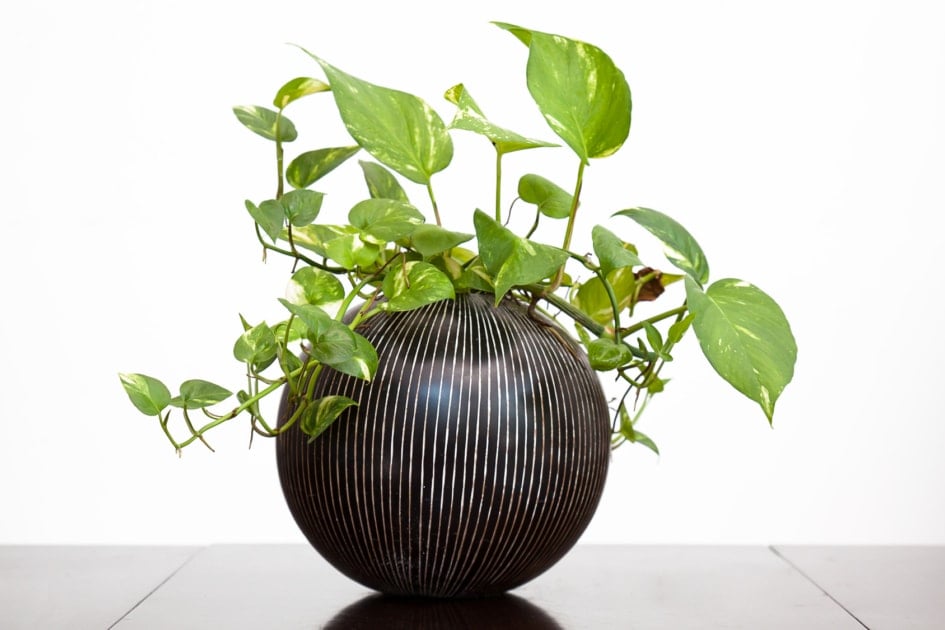
Quick Reference: 9 Easy Houseplants
- The 9 plants: peace lily, snake plant, heartleaf philodendron, dieffenbachia, spider plant, cactus, dragon tree, jade, pothos.
- Fastest to establish: pothos and spider plant, both root from cuttings in a glass of water in 7 to 14 days.
- Lowest light tolerator: snake plant (Dracaena trifasciata) survives north-facing windows and office fluorescents.
- Watering rule: touch the top inch of soil; if it is dry, water. If it is damp, wait.
- Pet safety: peace lily, philodendron, pothos, dieffenbachia, dragon tree, and jade are toxic to cats and dogs. Snake plant and spider plant are safer.
- Air-quality claim: houseplants deliver only modest air purification in normal homes per Drexel University 2019 research; the real wins are humidity, aesthetics, and mood.
Houseplants bring the outdoors inside and let you garden year-round, no yard required. Growing plants indoors improves indoor air moisture and, per recent NASA and public-health research, supports mood and mental wellbeing. Plant parenthood is a growing trend, and 9 of the easiest species make an excellent starter kit for anyone who claims to have a brown thumb.
Whether you are a beginner or a self-described plant killer, the 9 species below tolerate the imperfect light, uneven watering, and forgetful weekends every household has. The New York Botanical Garden lists these same species in its beginner houseplant guide, and the ASPCA plant toxicity database confirms which are safe around dogs and cats. Important note: several of these plants are toxic if chewed or ingested, so keep them out of reach of pets and small children.

9 Easy Houseplants Anyone Can Grow
1) Peace Lily
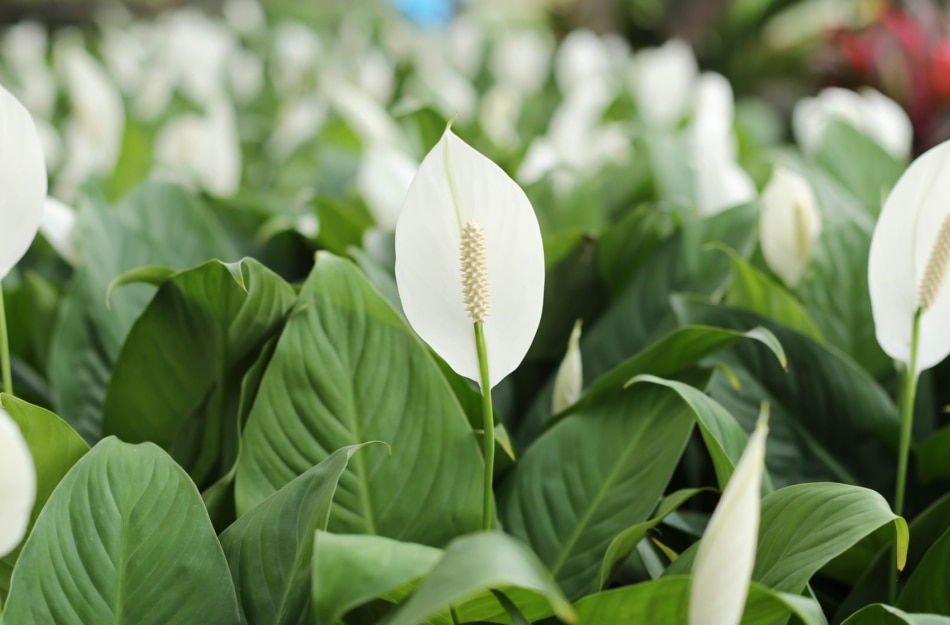
The look: dark green leaves that occasionally produce elegant white spathe flowers.
Light: lower to medium indirect light. Too much direct sun scorches the leaves.
Water: water thoroughly when the top of the soil feels dry. If the plant droops, water immediately, and it perks up within an hour.
Feeding: all-purpose fertilizer at half strength during watering, once every 4 to 6 weeks in spring and summer.
Pet note: toxic to cats and dogs (calcium oxalate crystals). Display well out of reach.
2) Snake Plant (Mother-in-Law’s Tongue)
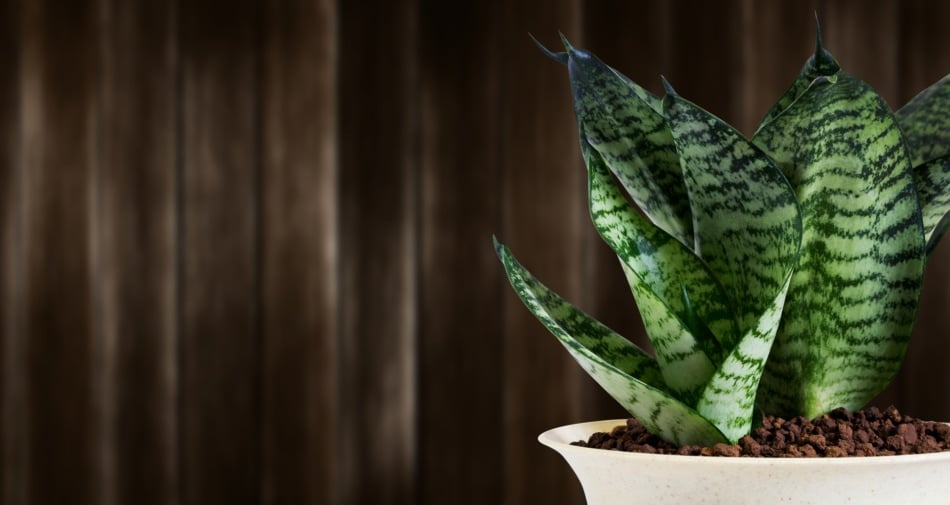
The look: long sword-shaped leaves with pointy tips, often striped or variegated.
Light: tolerates low light, though bright indirect brings out stronger variegation.
Water: deeply, only when the top of the soil is fully dry (every 2 to 3 weeks in most homes). Overwatering is the number-one killer.
Feeding: diluted balanced fertilizer every 2 months in spring and summer, none in winter.
Pet note: mildly toxic to cats and dogs if chewed in quantity. Still one of the more forgiving choices for pet households.
3) Heartleaf Philodendron (Sweetheart Plant)
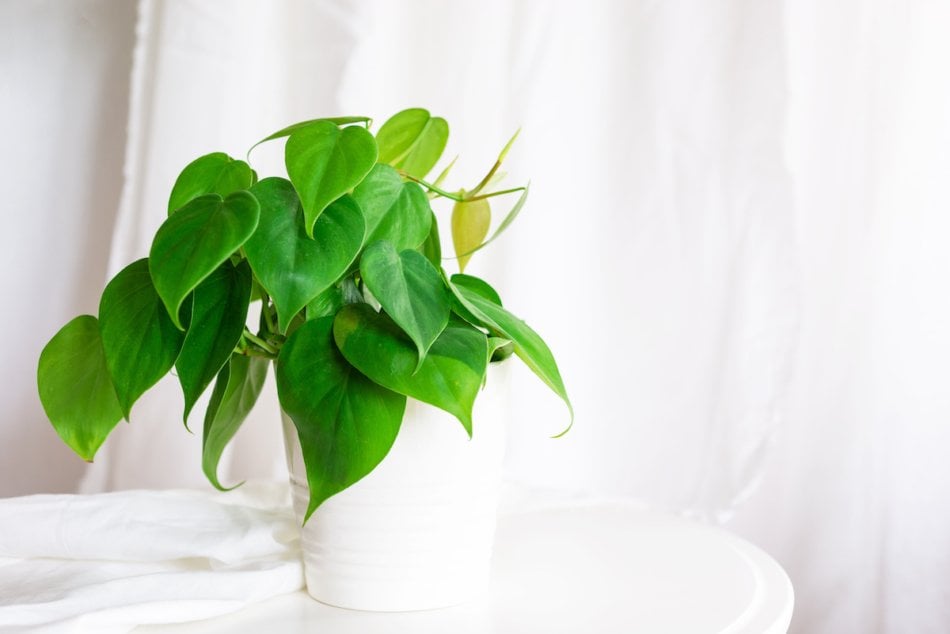
The look: heart-shaped leaves on a fast-growing trailing vine.
Light: moderate to low, tolerates north-facing windows.
Water: drought-tolerant. Let the top of the soil dry between waterings.
Propagation: snip a 4-inch cutting below a leaf node, root in a glass of water for 2 to 3 weeks, then pot in soil.
Pet note: toxic to cats and dogs.
4) Dieffenbachia (Dumb Cane)
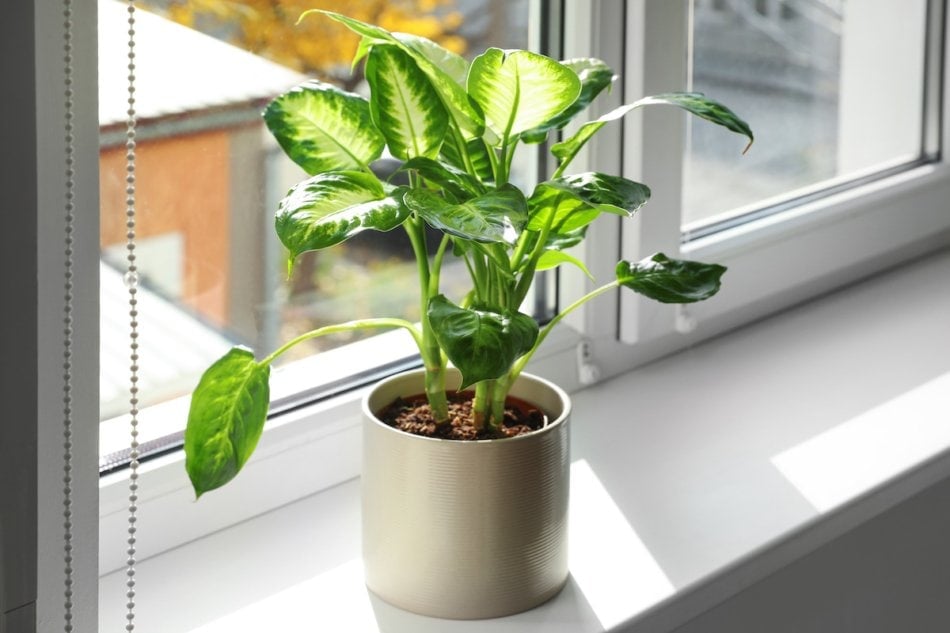
The look: long oval leaves, often boldly variegated in cream and green.
Light: low to medium indirect. Direct sun bleaches the variegation.
Water: water thoroughly when the top of the soil is dry.
Pet note: notably toxic (the sap causes oral swelling in pets and humans). Place out of reach of pets, toddlers, and grazing houseguests.
5) Spider Plant
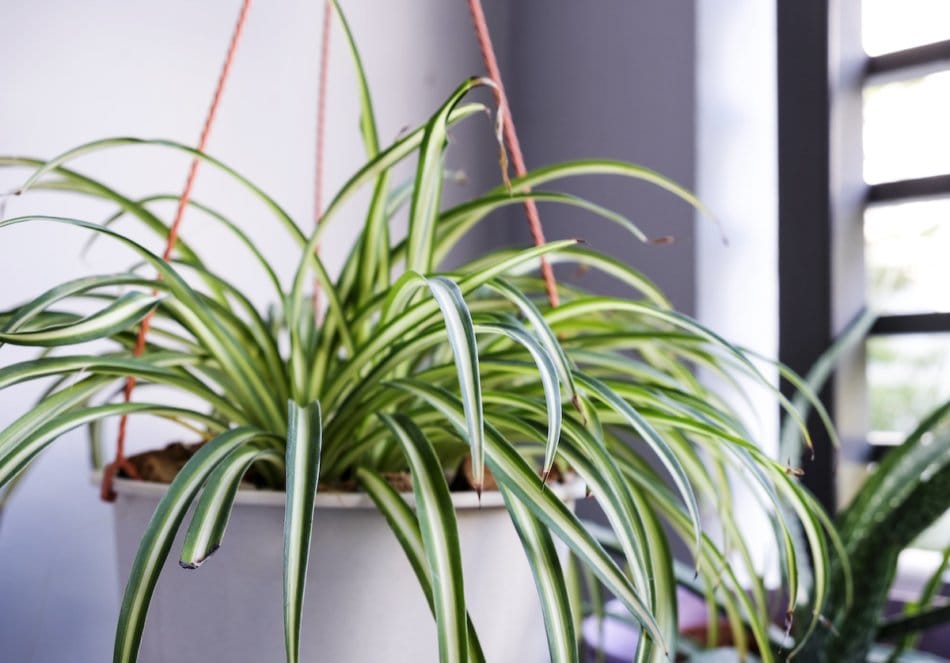
The look: long narrow leaves with small white flowers and dangling plantlets (babies).
Light: bright indirect light.
Water: allow the soil to dry briefly, then water lightly.
Propagation: pluck a baby, set it in a glass of water for a week, then pot.
Pet note: non-toxic per ASPCA. Cats may nibble the leaves; the plant tolerates that abuse but the cat may vomit.
6) Cactus (and Air Plants)

The look: hundreds of species, from tiny pincushion barrels to columnar giants; many bloom in spring.
Light: loves direct sun. A south window is ideal.
Water: very little. In winter, once a month is often enough.
Companion idea: pair with air plants for a sculptural desk display. See our full air plant care guide.
Pet note: most cacti are non-toxic but spines are hazardous to noses and paws.
7) Dragon Tree (Dracaena marginata)
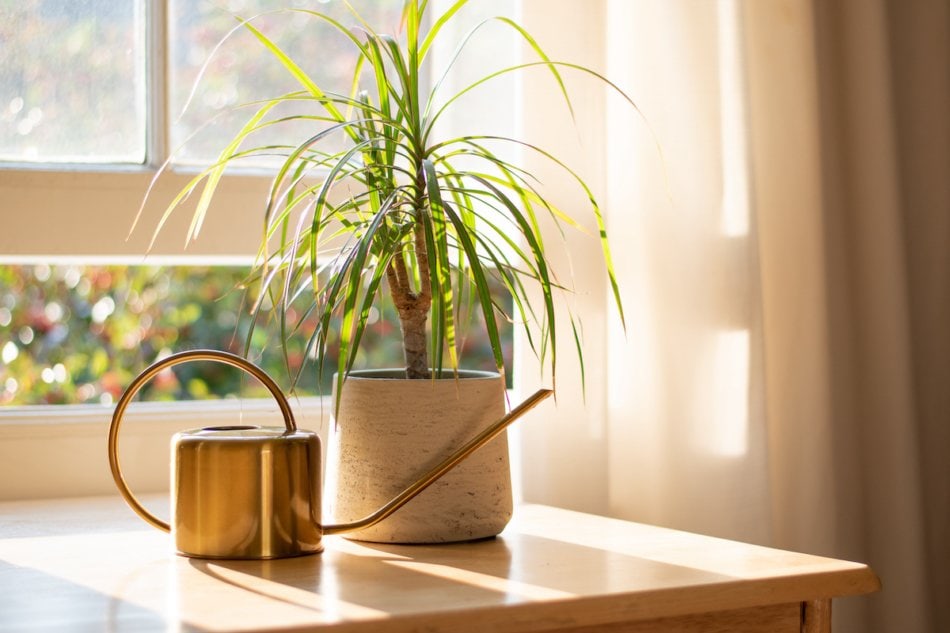
The look: palm-like tree with long, narrow, spike-shaped leaves edged in red.
Light: loves a sunny location, tolerates less light with slower growth.
Water: allow the soil to dry between waterings. Use filtered water; dragon tree is sensitive to fluoride and chlorine.
Feeding: a light dose of balanced fertilizer once a year.
Pet note: toxic to cats and dogs.
8) Jade Plant (Friendship Tree, Money Tree)
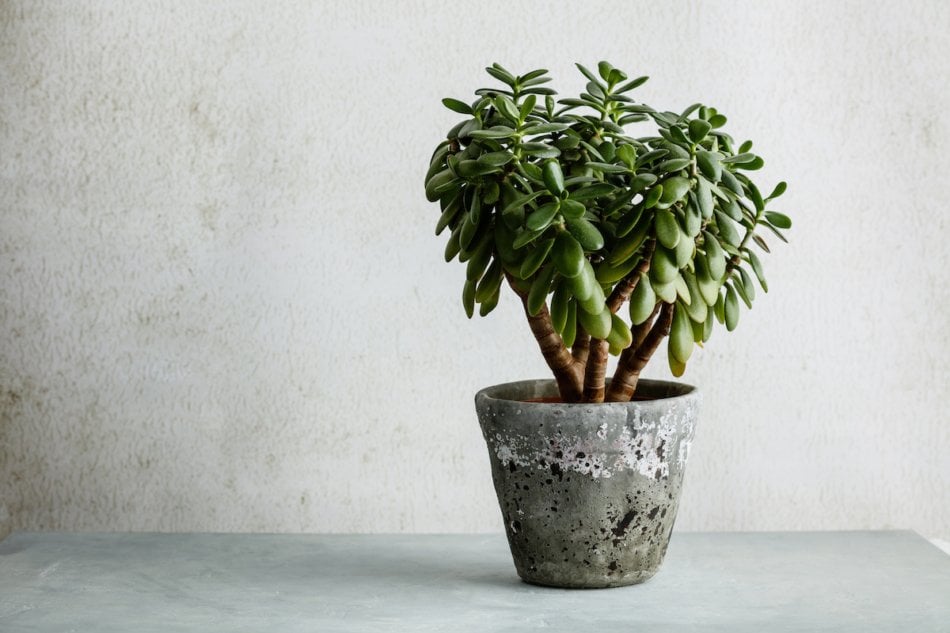
The look: plump succulent leaves on a woody stem; often trained as an indoor bonsai.
Light: thrives in bright indirect sunlight; can take some direct sun.
Water: keep the soil lightly moist in spring and summer, mostly dry in winter.
Flowers: produces small pink or white star-shaped flowers in early spring when mature.
Pet note: toxic to cats and dogs (mild).
9) Pothos (Devil’s Ivy)
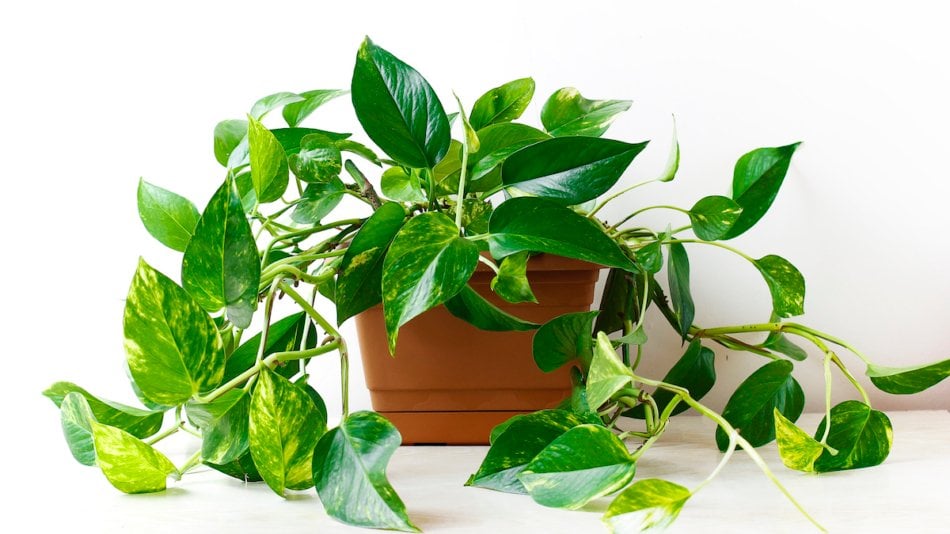
The look: trailing ivy vine that can reach 10 feet or more indoors.
Light: tolerant of nearly everything, even office fluorescents.
Water: let the top of the soil dry briefly before watering. Prune to keep the base bushy.
Propagation: cuttings root readily in water in 10 to 14 days.
Confused with philodendron? Read our comparison: Do you know the difference between philodendron and Devil’s Ivy?
Pet note: toxic to cats and dogs.
Regional Care Notes: Match Your Home’s Winter Air
Indoor climate varies dramatically by region and season, and that changes how often you water and where you place plants.
- Northern winters (Zones 3-5): forced-air heat drops indoor humidity below 25 percent. Group plants together and add a humidity tray for tropicals like peace lily and philodendron.
- Mid-Atlantic and Midwest (Zones 5-7): cool basements grow cacti and jade well; heated south-facing rooms suit dragon tree and pothos.
- Southern homes (Zones 7-10): air conditioning dries the air in summer. Move plants away from AC vents.
- Coastal Pacific Northwest and Canada: lower light in winter cuts photosynthesis. Rotate pots a quarter turn every 2 weeks so growth stays even, and skip fertilizing December through February.
Do Houseplants Really Clean the Air?
The famous NASA Clean Air Study from 1989 found that common houseplants removed VOCs from sealed test chambers. That study became one of the most-cited reasons to fill homes with plants. A 2019 meta-analysis from Drexel University, published in the Journal of Exposure Science and Environmental Epidemiology, calculated the real-world effect: in a normal home with normal ventilation, you would need 100+ plants per room to meaningfully affect indoor air quality.
The honest takeaway: houseplants deliver only a modest air-purification benefit in real homes. The bigger wins are humidity, aesthetics, and mental wellbeing. If you already like plants, that is plenty of reason to grow them.

Easy Houseplants FAQ
What is the easiest houseplant for beginners?
Snake plant and pothos share the top spot. Both tolerate low light, forgetful watering, and cool indoor temperatures. Snake plant handles the widest range of light. Pothos grows the fastest visible progress.
How often should I water indoor plants?
Ignore fixed schedules. Touch the top inch of soil. If it is dry, water thoroughly until it drains from the bottom. If it is damp, wait. Most easy houseplants get by on weekly watering in summer and every 2 to 3 weeks in winter.
Which of these houseplants are safe around cats and dogs?
Spider plant is non-toxic per ASPCA. Snake plant is mildly toxic but rarely fatal. Peace lily, philodendron, pothos, dieffenbachia, dragon tree, and jade are all toxic to cats and dogs; place them out of reach.
Why are my houseplant leaves turning yellow?
Nine times out of ten it is overwatering. Yellowing usually starts with lower leaves. Let the pot dry down properly between waterings and check that the pot drains freely.
Do houseplants really improve air quality?
Modestly, per Drexel University’s 2019 follow-up to the NASA Clean Air Study. In a typical home you would need 100+ plants per room to see meaningful air cleaning. Real benefits are humidity, aesthetics, and mental wellbeing.
How much light do easy houseplants need?
Bright indirect light suits most (an east or west window). Snake plant, philodendron, and pothos tolerate low light. Cactus, dragon tree, and jade prefer bright direct light from a south window.
Can I grow houseplants without a green thumb?
Yes. Every plant on this list forgives typical mistakes. Start with 2 or 3 species, learn their watering rhythm over a month, then add more.


This article was published by the Staff at FarmersAlmanac.com. Any questions? Contact us at [email protected].
- Farmers' Almanac Staff

- Farmers' Almanac Staff

- Farmers' Almanac Staff

- Farmers' Almanac Staff





Where can you buy these plants or the Jade plant. I have never heard of it.
Hi Laura, a local greenhouse may have houseplants including these or sometimes your grocery stores have them. If you’re lucky you live close to a greenhouse as we love to support our local growers.