How to Identify Deadly Nightshade: Real Identification, Toxicity, and the Edible Nightshades on Your Plate
Editor Emeritus Peter Geiger shares how to remove deadly nightshade (belladonna) from your property. Plus, edible nightshade plants like tomatoes and potatoes that you may want to avoid eating and why.
Quick Reference: Deadly Nightshade
- Botanical name: Atropa belladonna. NOT the same as bittersweet nightshade (Solanum dulcamara) which is also toxic but less deadly.
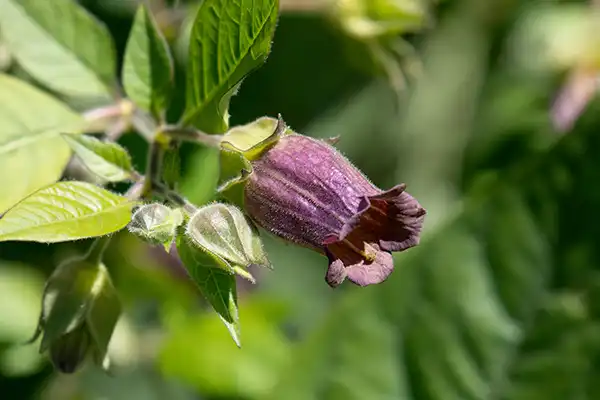
- ID: 3 to 5 ft tall, dull green oval leaves, bell-shaped purple-brown flowers, single shiny BLACK berries the size of small cherries.
- Toxic compound: tropane alkaloids (atropine, scopolamine). 2 to 5 berries can kill a child.
- Edible nightshades: tomatoes, peppers, eggplant, potatoes. Same family (Solanaceae), completely safe to eat.
- Tool: the Almanac’s foraging safety + Queen Anne’s lace ID.
On this page
Related Almanac guides
Deadly nightshade (Atropa belladonna) is one of the most toxic plants in the eastern US and the source of medieval witchcraft folklore for a real biological reason: its alkaloids (atropine, scopolamine) cause hallucinations at low doses and death at higher ones. The same plant family (Solanaceae) also includes tomatoes, peppers, eggplant, and potatoes, which are completely safe. This guide is how to identify the deadly one, the symptoms of poisoning, and the relationship to the food crops you grow.
The 5 Diagnostic Cues for Deadly Nightshade
Per USDA NRCS Plants Database and Britannica’s belladonna entry, five visual cues confirm deadly nightshade and separate it from harmless lookalikes.
- Height. 3 to 5 ft tall, erect, multi-branched stem.
- Leaves. Dull green, oval, pointed tip, 3 to 7 inches long, alternating along stem.
- Flowers. Bell-shaped, purple-brown, drooping, late spring to early summer.
- Berries. Single SHINY black berries the size of small cherries. The distinguishing feature.
- Habitat. Shaded forest edges, especially limestone soils. Increasingly common in the eastern US.
Symptoms of Deadly Nightshade Poisoning
Per NIH National Library of Medicine tropane alkaloid toxicity research.
- Dose. 2 to 5 berries can kill a child. 10 to 20 berries are lethal to most adults. All parts of the plant are toxic.
- Early symptoms (within 30 minutes). Dry mouth, dilated pupils, blurred vision, rapid heartbeat.
- Advanced symptoms. Hallucinations, delirium, confusion, slurred speech.
- Late stage. Seizures, respiratory failure, coma.
- What to do. Suspected poisoning is a medical emergency. Call poison control or 911 immediately.
Deadly Nightshade and Other Nightshades (Detail)
Below are the original sections covering what deadly nightshade is, how to ID and remove it, other forms, the edible nightshade vegetables, and medicinal uses.
Suggested Substitutions
Luckily there are many suitable substitutes and alternatives:
- Potatoes: Use sweet potatoes instead.
- Tomatoes: Fruits such as strawberries, blueberries, and pineapple are great alternatives to tomatoes in a salad. And for tomato sauce? Try pureed butternut squash.
- Peppers: Replace peppers with cucumbers, radishes, and carrots for the same crunchy texture.
- Eggplants: Zucchini and portobello mushrooms offer comparable texture and work well in many recipes.
- Paprika and Cayenne Spices: Black or white pepper, ginger, horseradish, garlic, and mustard powder.
Nightshade’s Connection with Pollen Allergies
There appears to be a correlation between sensitivity to pollens, such as ragweed, and the alkaloids present in nightshades.
Ragweed pollen contains proteins that mimic the alkaloids in nightshades, such as eggplant, and the immune system may mistake the alkaloid in nightshades for the allergic pollen protein. Some people refrain from ingesting nightshades during ragweed season to improve symptoms.
Planting “Don’ts”
Generally speaking, we don’t recommend planting different nightshade plants near each other in your garden as they are susceptible to the same diseases. For example, tomatoes and potatoes are both susceptible to blight, which can pass from one plant to the next.


Deadly Nightshade FAQ
What does deadly nightshade look like?
3 to 5 feet tall with dull green oval leaves, bell-shaped purple-brown drooping flowers, and single shiny black berries the size of small cherries. The shiny black single berries are the most diagnostic feature. Grows in shaded forest edges, especially on limestone soils.
Is deadly nightshade really deadly?
Yes. Per NIH toxicology research, the tropane alkaloids atropine and scopolamine cause severe symptoms at low doses and death at higher ones. 2 to 5 berries can kill a child; 10 to 20 can kill an adult. All parts of the plant are toxic.
Are tomatoes and potatoes nightshades?
Yes, taxonomically. They belong to the same family (Solanaceae) as deadly nightshade. The difference is that edible nightshades have been selectively bred for thousands of years to have minimal toxic alkaloids in the parts we eat. Wild ancestors of tomato and potato are mildly toxic.
What’s the difference between deadly nightshade and bittersweet nightshade?
Deadly nightshade (Atropa belladonna) has single shiny black berries and bell-shaped purple-brown flowers. Bittersweet nightshade (Solanum dulcamara) has clusters of bright red berries and small purple flowers with yellow centers. Both are toxic, but deadly nightshade is more lethal.
Is deadly nightshade native to the US?
Native to Europe and parts of North Africa. Introduced to the US and is naturalized in the eastern US, especially in shaded forest edges. Per USDA listings, it is increasingly common.


Peter Geiger
Peter Geiger is the Editor Emeritus of the Farmers' Almanac. Read his full biography.
- Peter Geiger

- Peter Geiger
- Peter Geiger
- Peter Geiger