

What Is an Ice Quake? Cryoseism Causes and Where They Happen
Sometimes frigid temperatures are enough to move the Earth. Learn more!
Quick Reference
- What it is: A cryoseism, also called an ice quake or frost quake. A loud boom and brief shake from frozen ground, not a real earthquake.
- What causes it: Wet soil that drops from above freezing to well below zero in a few hours. The water expands as it freezes and cracks the bedrock or surface.
- What you hear: A sharp pop or boom, sometimes loud enough to wake a household. Often mistaken for a tree limb snapping or a transformer blowing.
- Where it happens in the US: Connecticut, Maine, Massachusetts, Michigan, New York, Ohio, Vermont, and Wisconsin.
- Where it happens in Canada: Most of the country, especially Ontario, Quebec, and the Maritimes.
- Best time to expect one: A January or February cold snap that follows a wet fall or a midwinter thaw.
An ice quake sounds like an earthquake, lands like an earthquake, and is not an earthquake. The boom comes from frozen ground, not shifting fault lines. Cryoseism is the technical name. Folks who have lived through one usually call it a frost quake, because the cold cracks the soil and the bedrock under it like a frozen log splitting open.
This guide walks through what an ice quake is, what causes it, where it happens in the United States and Canada, and how to tell one apart from a real seismic event the next time the ground jolts you awake on a single-digit winter night.
What Is an Ice Quake?
An ice quake, or cryoseism, is a sudden release of stress in frozen ground. The cause is water turning to ice. Water expands by about nine percent when it freezes, and when soil is saturated and the temperature drops fast, that expansion pushes against the bedrock with enough force to fracture it. The crack releases a pop, a boom, or a sharp jolt.
The sound carries, but the shaking does not. A real earthquake rolls across miles. An ice quake stays put. One household feels the boom; the neighbors a quarter mile away may not feel a thing. That single difference is the easiest way to spot one.
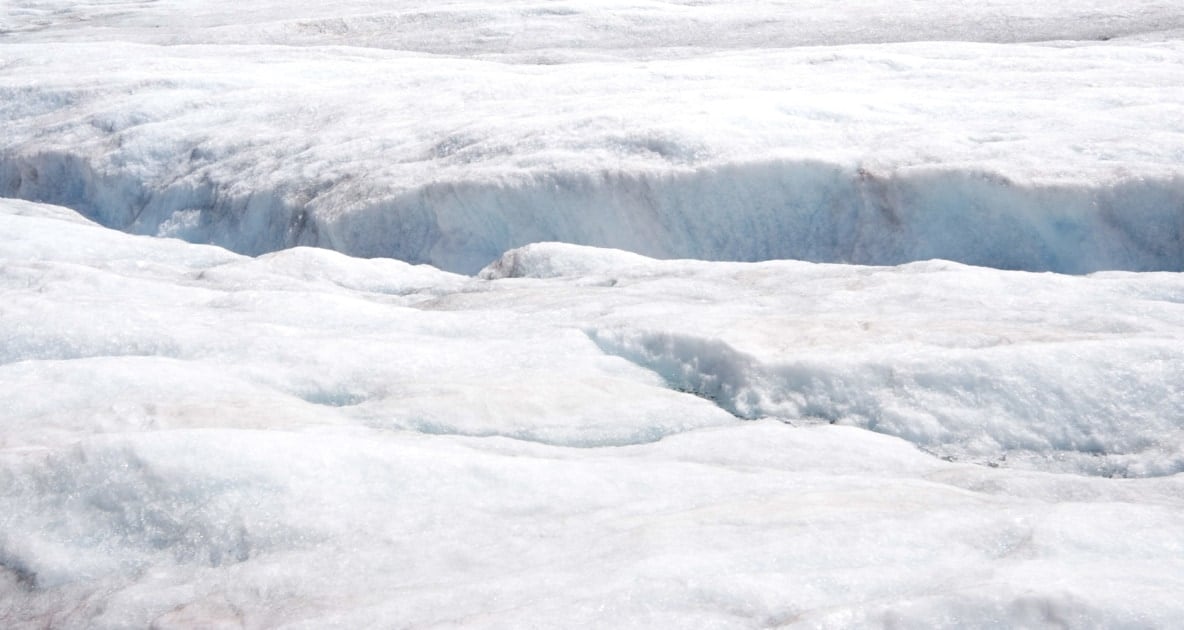
Cryoseisms also happen on glaciers, where ice sheets are constantly expanding, contracting, and grinding against rock. Glacier ice quakes can boom for miles as fissures open along the ice. The Almanac focuses here on the kind that wakes you up in your bedroom in February, not the kind that splits an ice sheet in Greenland.
What Causes An Ice Quake?
Three ingredients have to line up for a cryoseism:
- Saturated soil. A wet fall, a heavy rain, or a quick midwinter thaw soaks the top few feet of ground.
- A fast, deep freeze. Air temperature drops from above freezing to well below zero in a matter of hours. A polar vortex outbreak is a classic trigger.
- Little or no insulating snow cover. Bare ground freezes faster and harder. A thick blanket of snow protects the soil and usually prevents the boom.
When the moisture in the soil freezes, it expands. That rapid expansion places stress on the bedrock below, which can sometimes crack under the pressure with an explosive pop. The release is what you hear. The brief, very localized shake is what you feel. The crack itself may show up at ground level as a thin split, but in deep snow you might never see it.

Signs You Just Had an Ice Quake
The telltale signs are simple, and they line up almost the same way every time.
- A short, sharp boom or a string of pops.
- A brief, localized shake that feels like a minor earthquake but lasts a second or two.
- The shake is felt by you and maybe your closest neighbors, no one further out.
- A small crack in the ground, often just a few feet long, sometimes hidden under snow.
- The temperature outside has dropped fast, usually fifteen degrees or more in a few hours.
- The ground was wet going into the freeze, from rain, melt, or a recent thaw.
Many people who have experienced ice quakes initially thought there had been an earthquake, and were surprised to find that no one else experienced it. That mismatch is the giveaway. Real earthquakes get reported on local news within minutes. Ice quakes do not.
Where Ice Quakes Happen in North America
Ice quakes have been reported in most of Canada. In the United States, only a handful of states experience them, all located in New England and the Great Lakes region.
| Region | Where reports are most common |
|---|---|
| New England (US) | Connecticut, Maine, Massachusetts, New York, Vermont |
| Great Lakes (US) | Michigan, Ohio, Wisconsin |
| Eastern Canada | Ontario, Quebec, New Brunswick, Nova Scotia, Prince Edward Island |
| Western Canada | Manitoba, Saskatchewan, parts of Alberta after a wet fall |
The pattern is wet ground plus a sharp arctic outbreak. That combination is most common east of the Mississippi and along the Great Lakes shoreline, where moist autumn weather meets the kind of polar air that pushes south every January and February. The drier interior West has the cold but not the moisture, so cryoseisms are rarely reported there. For more on what these arctic intrusions look like, see our explainer on the Alberta Clipper and how lake effect snow wrings moisture out of the same air masses that fuel ice quakes downstream.
Ice Quake vs. Earthquake: How to Tell the Difference
| Trait | Earthquake | Ice Quake |
|---|---|---|
| Origin | Movement along a fault deep underground | Frozen water cracking shallow soil and bedrock |
| Time of year | Any season | Deep winter, almost always January or February |
| Reach | Felt across miles or counties | Felt in one yard, one block, or one farm |
| Sound | Often a low rumble | A sharp pop or a sudden boom |
| Aftershocks | Possible | Sometimes a string of pops in the same hour |
| USGS reading | Registers on seismographs | Usually too local and too shallow to register |
If the news has nothing to say and the dog up the road is not barking, you probably had a frost quake.
Are Ice Quakes Dangerous?
Cryoseisms rarely cause serious damage. The cracks they leave in the ground are usually narrow and shallow. Foundations sit on footings that go below the frost line, so the boom passes without taking a wall with it. A few homeowners have reported hairline drywall cracks or a porch step that shifted, but those are the outliers.
The bigger risk on a frost-quake night is the cold itself. The same arctic air that triggers the boom can drop wind chills into life-threatening territory. If you live in any of the states above and you hear a pop in the dark, the practical move is to make sure the heat is on, the pipes are wrapped, and the household is checked, then go back to bed. Our cold weather safety tips walk through what to keep on hand for the worst nights of winter.
How to Tell If You Just Lived Through One
- Check the temperature. If it has dropped fifteen degrees or more in a few hours, conditions are right.
- Check local news and the United States Geological Survey earthquakes map. If nothing is logged near you within thirty minutes of the boom, it was almost certainly a cryoseism.
- Walk the yard at first light. Look for a fresh, narrow crack in the ground, usually a foot or two long, that was not there yesterday.
- Ask the neighbors. A felt-by-everyone event is an earthquake. A felt-by-one-house event is an ice quake.
- Note the date. Pattern recognition over a few winters tells you whether your land sits on saturated soil that pops every cold snap, or whether one strange night was a one-time event.
Recent Ice Quake Reports
Reports tend to spike after the same kinds of cold spells that fill our historic blizzard archive. The 2014 polar vortex woke households across Toronto, southern Ontario, and the upper Midwest with a string of overnight booms. The January 2019 cold outbreak that bottomed out near minus 30 across the Great Lakes brought another wave of frost-quake reports from Wisconsin and Michigan. Each event followed the same recipe: a wet fall, a fast plunge, a household jolted awake.

Frequently Asked Questions
What is a cryoseism in plain English?
A cryoseism is a sudden boom and small jolt caused by saturated soil freezing fast. The water in the ground expands as it turns to ice and cracks the bedrock. The technical name is cryoseism. Most folks call it an ice quake or a frost quake.
Can ice quakes damage a house?
Rarely. The cracks are usually narrow and shallow, and a properly set foundation sits below the frost line. A few people have reported hairline drywall cracks or a slightly shifted porch step, but serious structural damage is uncommon.
How do I know it was an ice quake and not an earthquake?
Check three things. First, the United States Geological Survey will not log a frost quake on its earthquakes map. Second, ice quakes are felt only by the closest few neighbors, not the whole town. Third, they happen in the dead of winter after a fast deep freeze, almost never in summer.
What states get ice quakes most often?
In the United States, ice quakes have been reported in Connecticut, Maine, Massachusetts, Michigan, New York, Ohio, Vermont, and Wisconsin. In Canada, most of the country sees them at some point, with the heaviest concentration in Ontario, Quebec, and the Maritimes.
Why does deep snow seem to prevent ice quakes?
Snow insulates the ground. A thick snow pack slows how fast soil cools, so the freezing front moves down inch by inch instead of shocking the soil all at once. Without that buffer, bare or thinly covered ground freezes faster and is more likely to pop.
When during winter are ice quakes most common?
January and February see the most reports, especially during a polar vortex outbreak that follows a wet fall or a midwinter thaw. A January thaw that soaks the ground, then refreezes hard a week later, sets up the textbook conditions.
Should I report an ice quake to anyone?
There is no central agency that tracks frost quakes the way the United States Geological Survey tracks earthquakes. Local universities and the National Weather Service office for your region sometimes collect reports informally, and posting in a neighborhood group or local weather Facebook page often turns up neighbors who heard the same boom.
Join the Discussion
Lived through a frost quake? Share your story below. We have heard from readers in Maine, Wisconsin, and Ontario who woke up to a single boom in the dead of winter and spent the next morning trying to figure out what they had just lived through. The Almanac wants the next account on the record. Tell us where you were, what the temperature did the day before, and whether the ground showed a crack at first light.


Jaime McLeod
Jaime McLeod is a longtime journalist who has written for a wide variety of newspapers, magazines, and websites, including MTV.com. She enjoys the outdoors, growing and eating organic food, and is interested in all aspects of natural wellness.
- Jaime McLeod

- Jaime McLeod
- Jaime McLeod
- Jaime McLeod




I live in North East Md where temperatures have plummeted from 50 degrees to below zero within a few days. Christmas Eve my husband and I heard a loud boom but saw nothing outside. Then we heard a second boom and the house vibrated. We looked to see if a large tree had fallen in the yard but sill nothing. I later heard someone call it an ice quake. If it was snowing I would have thought it was snow thunder. That was the first time I’ve heard that before.
Ok so just now i experienced exactly this! I first heard this loud noise accompanied with the house shook real hard and as I was looking at the windows I could see the snow like snow blowing off the roof at the same time so I went out the back door cat had followed right behind me expecting to see all my neighbors out and all I’m screaming what was that? no one else was out there I look like an idiot I cannot believe what just happened
so I started Googling it and of course it came up to this and no one will ever believe it because it was only me and the cats here andlike I said I’m outside screaming looking at my neighbor’s and no one else was out there so I just carefully came back in I’m still shaking over this
Maggie, the same thing happened to me! The cats went crazy. But no one heard or felt a thing. Just an ice quake. Having been through a 7.0 earthquake, I’m familiar with how they feel and they can be very unsettling! But you’re ok!
Live in central ohio. Felt one side of house shake and a loud boom. We thought maybe chimney fell or roof. No such thing…nothing disturbed. A puzzle until saw meteorologist talk about icequake the following morning.
So I wonder if this is what happened last night? ?
We heard a loud boom. I hadn’t gone to bed yet. My husband was in bed sound asleep. He came rushing out to the living room and I was rushing back to the bedroom all to see if each other heard the same thing. He went outside and looked around the house with the flashlight, went up in to the crawl space, checked the furnace, because it sure sounded like something exploded.
I live in Western Kentucky. There was a loud boom yesterday that was heard by neighbors and other areas of the county..which is Graves County. Hadn’t ever heard of a frost quake before. Just wondering if that’s what it was.
Was at home in the afternoon and it sounded like something hit the house (siding or roof) with enormous force and big boom. I live in Kane County, Il just south of Mchenry county. This happened in late January but I also heard an even greater boom in the Fall years ago. It sounded as if a plane crashed in my yard. Nothing observed in either incidents.
Heard them many times. At first, it was startling. I have also had my battery operated clocks all stop at the same time from the cold. Northern Ohio gives us a vast amount of weather oddities.
Several years ago after a soggy fall, winter set in with really cold weather lots of snow. One extremely cold day I was outside a felt and heard a loud boom. Minutes later I went inside used the water and had a massive amount of sand come through the faucet followed by no water. Turned out the ground shifted and sheared off/ collapsed our well. Natural disaster not covered under our homeowners insurance.
this morning a loud crackling boom came from the roof, shook the house.
It felt like a tree landed on the roof. I went outside and everything was fine.
this is weird. it is the second time it happened. the other time was December.
Fairfield county, CT
i woke up to a huge cracking/popping explosion type noise that sounded like something went through the roof at 3:35 a.m. today. I live in McHenry County Illinois and never heard anything like it in my life!! Very scary not having any idea what happened!! Thankfully I did talk to several other people who heard it too! It was a very hard noise to describe, especially being woken up by it! Thank you for sharing all of your experiences and will assume that’s what it was ; )
Where in mchenry. I’m in pistakee highlands… Near johnsburg.. And have been hearing and feeling loud bangs…a few weeks ago it was on the south west part of my yard… Today the northeast side… I’m in my basement and it has happened 4 times in the last hour…