

Jellyfish Facts: 11 Strange Truths About Jellies
How much do you know about these strange floating marine marvels? Are they really made of jelly? How do you really get rid of stings? We have the answers.
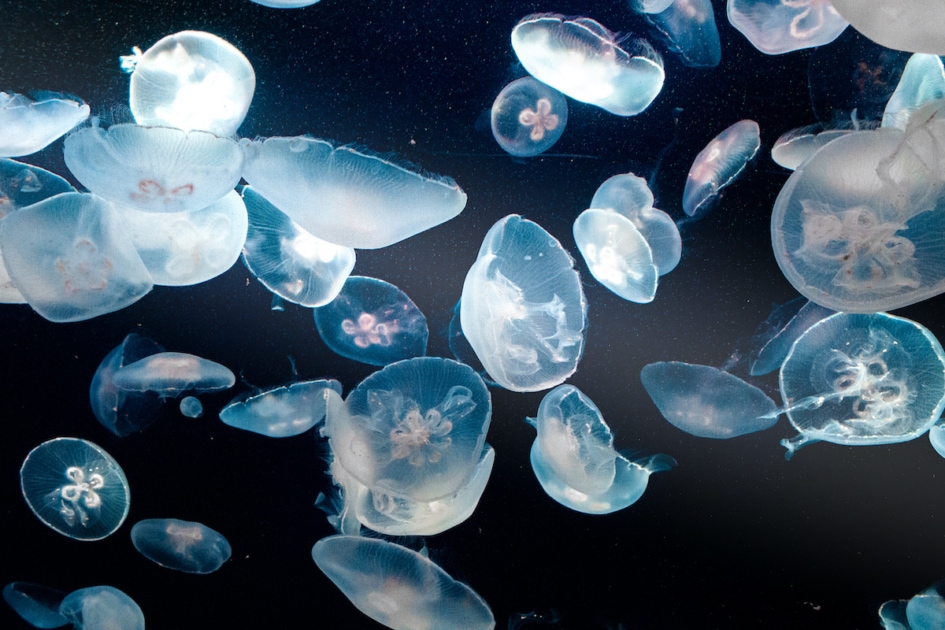
Quick Reference: Jellyfish Facts
- Not a fish: jellies have no bones, gills, fins, or scales, and no brain or heart either.
- Mostly water: a jellyfish is about 95% water, which is why it looks like a blob on the sand.
- Many kinds: at least 9,000 known species of Cnidaria, from nearly invisible to the 200-pound Nomura’s jellyfish.
- If you get stung: rinse the spot with vinegar, do not scrub, and skip the old pee-on-it myth.
- Built to last: one species, Turritopsis dohrnii, can reset its life cycle, which has earned it the name immortal jellyfish.
Walk any American beach in the summer of 2026 and sooner or later you will meet one washed up on the sand, a clear blob that looked a lot more graceful an hour ago in the surf. These fascinating creatures are marine marvels, and the jellyfish facts below run from the harmless to the downright strange. Here are the ones that can take your breath away without laying a tentacle on you.
Jellyfish Facts Worth Knowing Before Your Next Beach Day
Jellyfish have drifted through the world’s oceans for a very long time, far longer than fish, dinosaurs, or trees. The National Oceanic and Atmospheric Administration’s National Ocean Service notes that these animals have existed for at least 500 million years, which makes the jellyfish one of the oldest animals on Earth. Understanding a few simple facts about them goes a long way toward enjoying the water and steering clear of trouble.
1. They Are Not Fish
They are no way, no how fish of any type or description. They don’t have bones, gills, fins, scales, or any other fish equipment or body parts. They have no brain and no heart either, yet they get along just fine without them. “The fish part of the name is wrong,” says marine education specialist Terri Kirby Hathaway. So, what should you call them? “Well, jellies.”
2. They’re Named After a Greek Monster
Some jellies look like dainty umbrellas or bells decorated with an elegant fringe suspended from the center or the edge. The billowing main shape is called the medusa, as it resembles Medusa who had serpents for hair according to Greek mythology. It is a fitting name for an animal whose trailing tentacles fan out behind it like a head of loose snakes.
3. Jellies Get Around
“They can only move up and down in the water column,” says Hathaway. “They can’t go east, west, north, or south intentionally.” Jellies move up by collapsing the medusa, like quickly closing an umbrella, which pushes water down and propels them upward. Beyond that, these creatures go where the winds blow and the currents take them. Some jellies travel around the world in the ballast tanks of oceangoing ships, then invade new waters as non-native species when the ships jettison the tanks.
4. The Sting’s The Thing
Scientists classify jellies in the phylum Cnidaria, with a silent “C.” The name comes from the Greek word cnidos, meaning stinging nettle, for the specialized stinging cells called cnidocytes or nematocysts. Each cell “explodes” on contact, launching a harpoon-like organelle full of neurotoxins into whatever touched it. Jellies feed and defend themselves this way.
Most stings are painful but not life-threatening. There are exceptions in Pacific waters. Close relatives like sea anemones and corals, which spend their adult lives attached to the sea bottom, can also sting. Rinsing, not scrubbing, with vinegar is the best antidote, and vinegar is one of those everyday staples worth keeping on hand. See our roundup of the many uses of vinegar for more.

5. Jellyfish Are Simpletons
Most jellies are simple organisms. Think of them as “bags” made of two cell layers, an outer ectoderm or epidermis, which houses the stinging cells, and an inner endoderm or gastrodermis, which lines the gut. The filling between the layers is the mesoglea, a layer of jellylike substance that gives the animal its volume and weight. Some are transparent, others are colorful and translucent, and some even change colors with the salinity of the water.
6. They’re Not Made Of Jelly
Jellies are 95% water. That is one reason they look so elegant beneath the surface but turn into a blob of goo once they are stranded on the beach. With that much water and no skeleton, there is simply not much left when the tide goes out.
Read our Summer Beach Safety Tips
7. They Come In All Shapes And Sizes
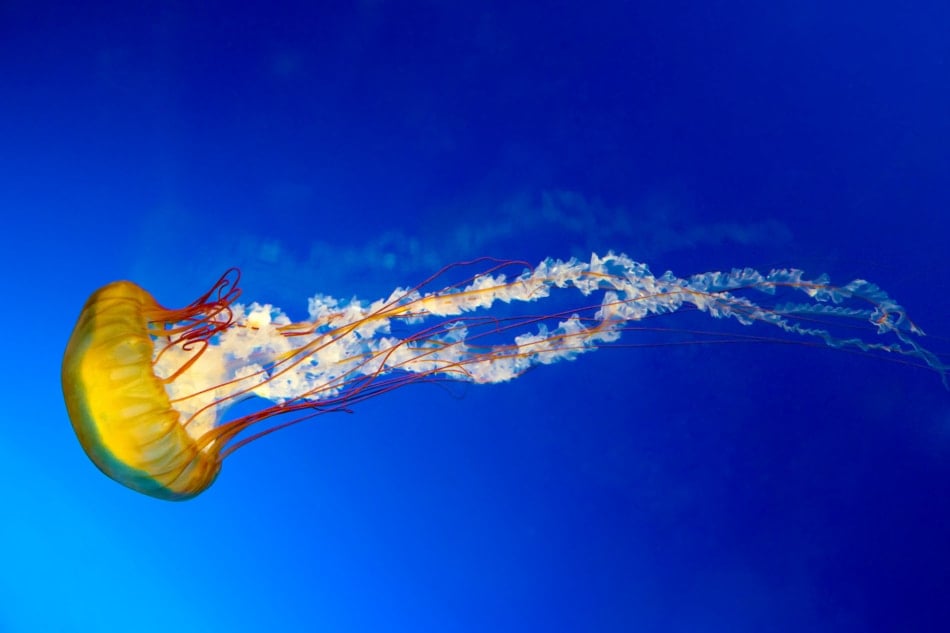
There are at least 9,000 known species of Cnidaria, and some inhabit every ocean. Their sizes span from tiny to wow. The smallest medusae are barely visible, but they still pack a sting. The largest, the Nomura’s jellyfish, can grow from the size of a grain of rice to six feet across in six months. A single jelly of this species can weigh up to 200 pounds.
8. They’re Simple Yet Complex
Medusozoa jellies have a two-step procreation plan. First, free-floating sperm fertilize the eggs. This produces larvae that sink and attach to a firm surface. Then the larvae grow into polyps that bud and release tiny medusae, which in turn grow into the adult form. It is a roundabout way to make more jellyfish, but it has worked for hundreds of millions of years.
9. Jellyfish “Blooms” Can Cause Chaos
Sudden massive reproductive surges, known as “blooms,” can deplete local fish supplies, ruin fishing nets, and even shut down nuclear plants by clogging the cooling water intakes. The cause of these blooms is still not completely understood. Warmer water and shifting currents may play a part, which is one more reason to keep an eye on the ocean conditions where you swim.
10. The Portuguese Man O’ War Is Not A True Jellyfish
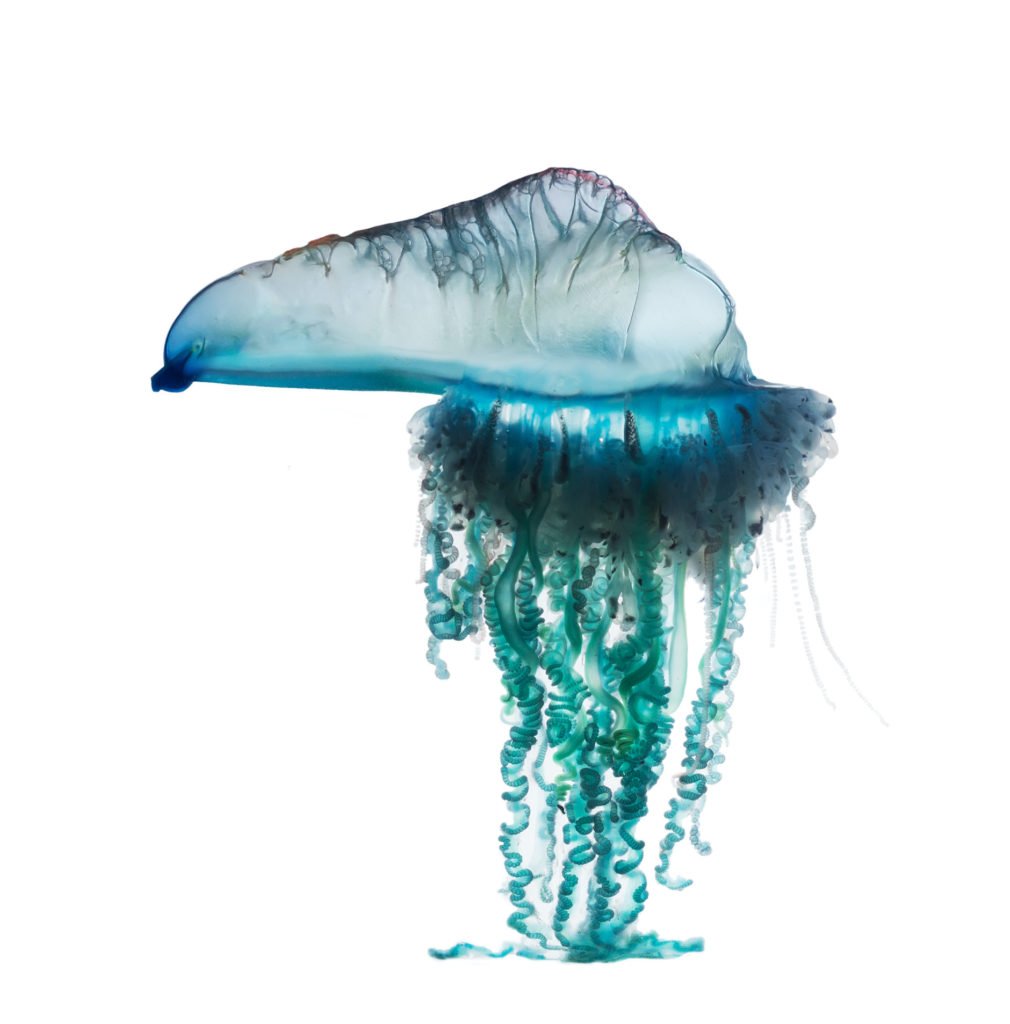
A frequenter of our eastern and southern coasts, the surface-living Portuguese man o’ war is part of the same group and closely related, but it is not a true jellyfish. The interesting thing about the Portuguese man o’ war is that it is not one organism but a colony of specialists that survive together but not apart. The telltale violet sail is one organism, and the stinging tentacles are another.
11. There Is an “Immortal” Jellyfish
One tiny species, Turritopsis dohrnii, has a trick no other animal can match. When it is injured, starving, or simply old, it can revert from its adult medusa form back into a polyp and start its life cycle over again. Because it can repeat this reset, scientists have nicknamed it the immortal jellyfish. It does not actually live forever, since predators and disease still take their toll, but on paper it can dodge old age indefinitely.
That Classic Urban Myth About Peeing on Jellyfish Stings
You have heard that urban myth before, that you should urinate on a jellyfish sting to reduce the pain. This could actually do more harm than good. The salts and compounds in urine can set off any nematocysts still on the skin and make the sting worse. Rinse with vinegar or seawater instead, carefully pick off any remaining tentacles, and skip the dramatics. If you want to plan your beach trips around the calmest tides, our full moon dates and times are a handy guide, since the Moon drives the tides along every coast. And before you pack the cooler, check the long-range weather forecast for your part of the country.

Jellyfish Facts: Frequently Asked Questions
Are jellyfish really fish?
No. Jellyfish have no bones, gills, fins, or scales, and no brain or heart either, so they are not fish at all. Marine educators prefer the term “jellies.” They belong to the phylum Cnidaria, the same group as sea anemones and corals.
What should you do for a jellyfish sting?
Rinse the area with vinegar, not fresh water, and do not scrub. Carefully pick off any tentacles left on the skin. Skip the old myth about peeing on a sting, which can set off any remaining stinging cells and make it worse. Most stings are painful but not life-threatening, though there are dangerous exceptions in Pacific waters.
How many species of jellyfish are there?
There are at least 9,000 known species of Cnidaria, found in every ocean. They range from medusae barely visible to the eye up to the Nomura’s jellyfish, which can grow six feet across and weigh up to 200 pounds.
What are jellyfish made of?
A jellyfish is about 95% water. The body is essentially two thin cell layers, an outer epidermis and an inner gastrodermis, with a jellylike filling called mesoglea in between. That is why a jelly looks elegant in the water but collapses into a blob of goo on the sand.
Is the Portuguese man o’ war a jellyfish?
Not a true one. The Portuguese man o’ war is closely related and lives at the surface along eastern and southern coasts, but it is a colony of specialized organisms rather than a single animal. The violet sail is one organism and the stinging tentacles are another, and together they survive but not apart.
Is there really an immortal jellyfish?
Sort of. The species Turritopsis dohrnii can revert from its adult form back into a polyp and restart its life cycle, which has earned it the nickname immortal jellyfish. It cannot truly live forever because predators and disease still take a toll, but it can sidestep dying of old age.
Why do jellyfish blooms happen?
A bloom is a sudden, massive surge in jellyfish numbers. Blooms can deplete local fish supplies, ruin fishing nets, and even shut down nuclear plants by clogging cooling water intakes. The exact cause is still not fully understood, though warmer water and shifting currents are thought to play a role.


Glenn Morris
North Carolina native Glenn Morris is a freelance Travel and Garden writer. He is the author of Taylor's Weekend Gardening Guide to Small Gardens, and North Carolina Beaches. His article What in the World is Workamping? appears in the 2021 Farmers' Almanac.

Love the information. I used it to make a book.
Wow! That’s great!
Great info!!
urinating on a jellyfish sting to reduce the pain is not an urban myth
Adolph’s Meat Tenderizer put on the wet skin to completely cover the jelly fish sting area works very well to kill the sting’s pain. Texas State Park rangers showed us that “trick” many years ago. I always have some in my vehicle when I go to the Texas coast.