On This Day in 1983: Sally Ride Returned to Earth After Becoming the First American Woman in Space
Quick Reference
- Return to Earth: June 24, 1983, 6:56 a.m. Pacific Time, Edwards Air Force Base, California.
- Mission: STS-7, Space Shuttle Challenger, launched June 18, 1983, from Kennedy Space Center.
- Mission length: 6 days, 2 hours, 23 minutes, 59 seconds (source: NASA).
- Age at flight: 32. Ride was the youngest American to reach space at that time.
- Second flight: STS-41-G, October 1984, on Challenger again.
- Honors after death: Presidential Medal of Freedom (2013, posthumous), NASA Distinguished Service Medal, US Postal Service Forever stamp (2018).
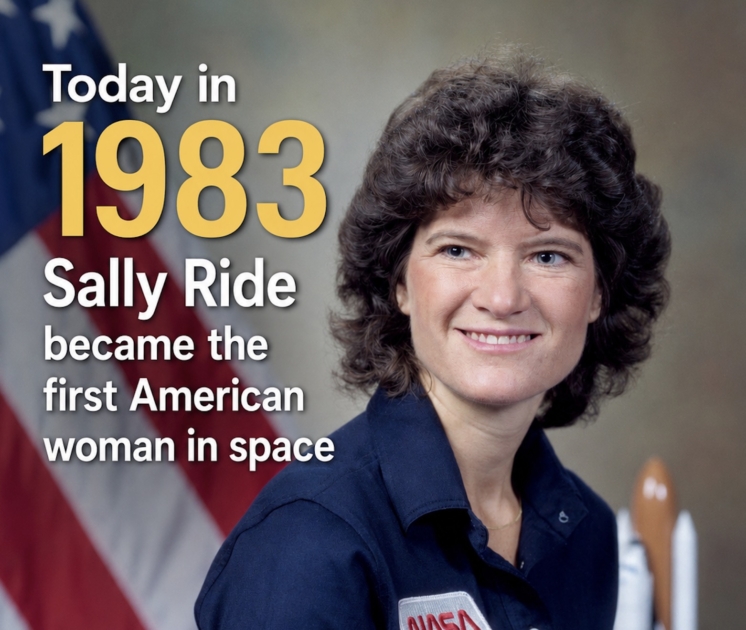
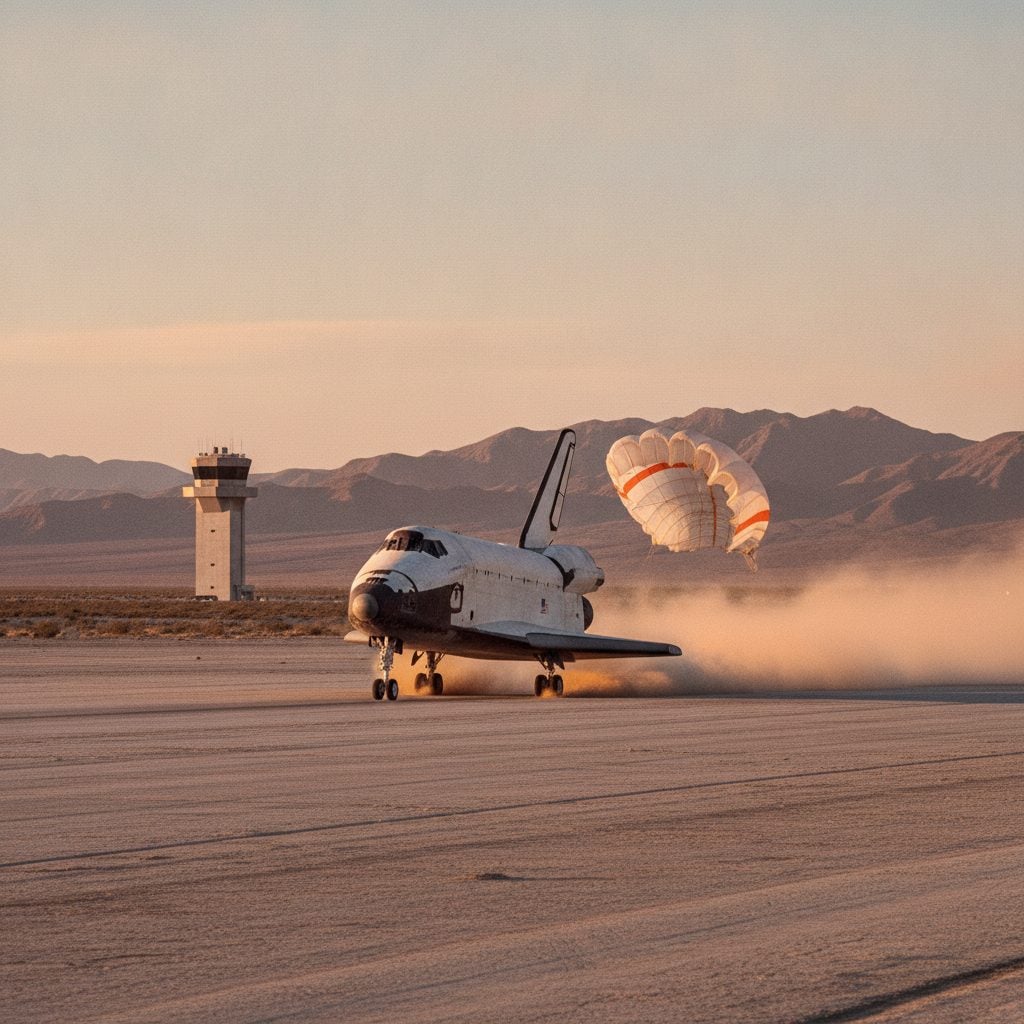
June 24 marks a milestone in American spaceflight history. On this day in 1983, the Space Shuttle Challenger landed safely at Edwards Air Force Base in California, bringing home a crew that included Dr. Sally Ride, the first American woman to travel into space.
The touchdown wrapped up STS-7, a six-day mission that launched on June 18, 1983, from Kennedy Space Center and represented a major step forward for NASA and for women in science and engineering. At just 32 years old, Ride became one of the youngest Americans ever to reach space and instantly became a national icon.

A California Girl Turned Stanford Physicist
Born in Los Angeles on May 26, 1951, Sally Kristen Ride earned degrees in physics and English from Stanford University before joining NASA’s astronaut corps in 1978. She was selected as part of the agency’s first astronaut class to include women, a group known informally as the Thirty-Five New Guys, which also included Judith Resnik, Kathryn Sullivan, Anna Fisher, Shannon Lucid, and Rhea Seddon. That single 1978 class doubled the size of the American astronaut corps and, in one stroke, ended almost two decades of male-only selection.
What Happened on STS-7
During the STS-7 mission, Ride served as a mission specialist and helped deploy communications satellites while conducting scientific experiments aboard Challenger. She was also the first person to operate the shuttle’s Canadian-built robotic arm, the Canadarm, to deploy and retrieve a payload in orbit, a technical first that fed directly into the Hubble Space Telescope and International Space Station programs a decade later. While the mission itself was a technical success, its cultural impact proved even more significant. Millions of Americans watched as Ride broke a barrier that had existed since the dawn of the Space Age.
The crew was commanded by Robert Crippen, with Frederick Hauck as pilot and John Fabian and Norman Thagard as fellow mission specialists. It was the first American human spaceflight to include five crew members and the first with a female crew member of any nationality on a US mission.
A Cultural Turning Point
Her achievement inspired a generation of young women to pursue careers in science, technology, engineering, and mathematics. For many, seeing Sally Ride aboard Challenger was proof that space exploration, and scientific discovery itself, was no longer reserved for men. Ride herself pushed back on the framing of her flight as an image event, telling reporters at the pre-launch press conference: “It’s too bad this is such a big deal. It’s too bad our society isn’t further along.”
Media coverage from June 1983 also captures the pressures she navigated. Reporters famously asked her whether she cried under stress and whether spaceflight would affect her reproductive organs, questions no male crewmate faced. Ride handled the questions with dry patience and steered every interview back to the mission plan.
A Second Flight, and a Second Act
Ride flew into space again the following year, on STS-41-G in October 1984, again aboard Challenger, logging a career total of 343 hours in orbit. After the January 1986 Challenger disaster, she served on the Rogers Commission investigating the accident, and years later on the Columbia Accident Investigation Board in 2003. She is the only person to have served on both.
She then dedicated much of her career to science education. In 2001 she co-founded Sally Ride Science at the University of California, San Diego, a company that ran STEM programs and camps for middle-school students, and especially for girls. Following her death in July 2012, at 61, she was awarded the Presidential Medal of Freedom in 2013, the nation’s highest civilian honor. The US Postal Service issued a Sally Ride Forever stamp in 2018.
Why June 24 Still Matters
More than four decades later, Sally Ride’s historic flight remains one of the defining moments in American space history. Her flight helped expand who could imagine themselves among the stars, and changed the future of space exploration in the process. Since 1983, more than 70 American women have followed Ride into orbit, including Peggy Whitson, who logged the most cumulative time in space of any American, and Christina Koch, whose 328-day mission set the record for the longest single spaceflight by a woman.
Today, June 24 serves as a reminder of the day Sally Ride returned home after making history, completing a mission that inspired generations and cemented her place among America’s pioneering astronauts.

Frequently Asked Questions
What day did Sally Ride return to Earth from space?
Sally Ride returned to Earth on Friday, June 24, 1983, when Space Shuttle Challenger touched down at Edwards Air Force Base in California at 6:56 a.m. Pacific Time. She had launched on STS-7 six days earlier, on June 18, 1983.
How old was Sally Ride when she became the first American woman in space?
She was 32 years old. That made her the youngest American to reach space up to that point, a record that stood for years after her flight.
What did Sally Ride study before joining NASA?
Ride earned a bachelor’s degree in physics and a bachelor’s in English from Stanford University, followed by a master’s and a doctorate in physics, also from Stanford. She joined NASA’s astronaut corps in 1978 as part of the agency’s first class of astronauts to include women.
Was she the first woman in space overall?
No. Soviet cosmonaut Valentina Tereshkova was the first woman in space, in 1963, followed by Svetlana Savitskaya in 1982. Ride was the first American woman, and the third woman ever, to fly to space.
Did Sally Ride fly to space more than once?
Yes. She flew a second mission, STS-41-G, in October 1984, again aboard Challenger. She was scheduled for a third flight, but the January 1986 Challenger disaster ended shuttle operations for a stretch, and she moved into leadership roles at NASA, including serving on both the Rogers Commission and later the Columbia Accident Investigation Board.
What did she do after NASA?
Ride devoted the rest of her career to science education. In 2001 she co-founded Sally Ride Science at the University of California, San Diego, a company built around getting middle-school girls into STEM classrooms and camps. She died in July 2012, at 61, and was awarded the Presidential Medal of Freedom the following year.
Where can I learn more about the STS-7 mission?
NASA maintains a full mission archive for STS-7, including crew, launch and landing times, and payload notes, at nasa.gov/mission/sts-7. The Smithsonian National Air and Space Museum holds several Ride artifacts, including her flight suit from STS-7.

- Tim Konrad

- Tim Konrad
- Tim Konrad
- Tim Konrad